Plan and listen to Villa Of Livia with Audiala.
Audio guide in your pocket, itinerary in your browser. Built for the way you actually visit.
Introduction: The Villa of Livia and Its Significance
The Villa of Livia, nestled in Prima Porta just north of Rome, is one of the most extraordinary archaeological sites from ancient Rome’s imperial era. Once the opulent countryside residence of Livia Drusilla—wife of Emperor Augustus—this villa stands as a testament to the sophistication, political power, and artistic grandeur of the early Roman Empire. Its world-renowned garden frescoes, featuring botanically accurate flora and avifauna, evoke the Augustan ideals of peace and abundance. Today, the Villa of Livia offers visitors a unique opportunity to step into the refined world of Rome’s first imperial family, blending immersive history, architecture, and art (Wikipedia; History Tools; Liebermann Villa).

Origins and Historical Background
The Villa of Livia, also known as Ad Gallinas Albas, is situated about 12 kilometers north of Rome along the ancient Via Flaminia (Wikipedia). The estate’s origins are intertwined with Livia Drusilla, whose marriage to Octavian (later Augustus) in 39 BCE marked the beginning of her influence over Roman politics and society. The villa is believed to have been part of Livia’s dowry or a personal gift from Augustus, serving as her cherished rural retreat. Over the centuries, the villa was expanded and embellished, reflecting the evolving tastes and aspirations of the imperial household.
Livia Drusilla: Rome’s First Empress
Livia Drusilla (58 BCE – 29 CE) was a pivotal figure in Roman history. Far more than just Augustus’s wife, she wielded significant political influence, shaped the imperial image, and was ultimately deified—the first Roman woman to receive such an honor (History Tools). Tacitus famously declared that speaking ill of her became a crime, highlighting her revered position in Roman society. The Villa of Livia thus stands not just as an architectural marvel, but as a living reflection of her enduring legacy.
Architectural Features and Artistic Treasures
Layout and Structure
Strategically perched overlooking the Tiber Valley, the villa showcases the classic Roman villa model, balancing luxury with practicality (Wandering Italy). The estate featured multiple terraces supported by robust retaining walls, a large peristyle courtyard, and a summer triclinium—a semi-subterranean banquet hall designed for cool retreat during the hot months. Service corridors beneath the floors enabled servants to move discreetly, a testament to the sophistication of elite Roman domestic design (Biblioteka Nauki).
The Famous Garden Frescoes
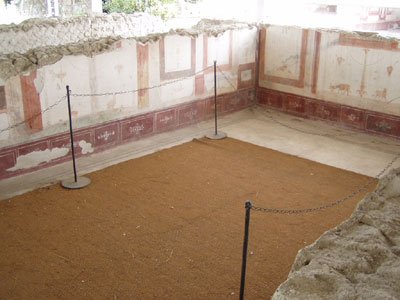
The villa’s greatest artistic treasure is its cycle of illusionistic garden frescoes, discovered in the underground triclinium during 19th-century excavations. Painted in the Second Style, these frescoes create the illusion of an endless, verdant garden filled with fruit trees, flowering plants, and a myriad of birds. Their remarkable naturalism and vibrant colors embody the Augustan vision of a harmonious and prosperous empire (Liebermann Villa; History Hit). The original frescoes are now preserved at the Museo Nazionale Romano (Palazzo Massimo alle Terme), while detailed reproductions decorate the villa itself.
Mosaics and Decorative Art
The villa’s interiors once boasted intricate mosaics, marble cladding, and stucco reliefs. The entrance corridor featured classic geometric motifs, while vaulted ceilings of key rooms were adorned with scenes of Victory and sacred iconography (Biblioteka Nauki). These artistic details underscore the villa’s opulent atmosphere and the high standards of Augustan patronage.
Visiting the Villa of Livia
Opening Hours and Tickets
- Standard Visiting Days: Thursday and Friday
- Hours: 09:30 to 13:30 (last entry at 13:00)
- Admission: Free of charge (wantedinrome.com)
Note: Hours and access can vary due to ongoing conservation work or special events. Always confirm with the official site or local tourist boards before visiting.
Accessibility and Facilities
- Mobility: Some areas, especially the underground triclinium, have limited accessibility due to ancient stairs and uneven terrain. Contact the site in advance for specific accommodations.
- Amenities: Facilities are basic; there are restrooms and shaded areas but limited refreshment options—plan accordingly.
- Photography: Non-flash photography is generally permitted outdoors. No flash is allowed inside frescoed areas.
Getting There
- Public Transport: Take ATAC bus #200 from Rome Termini to the Villa of Livia stop in Prima Porta, or bus C3 from Ponte Milvio to Saxa Rubra, followed by a short walk (Wandering Italy).
- By Car: Limited parking is available; public transport is recommended.
Guided Tours and Events
- Guided Tours: Offered periodically, especially during cultural weekends or by arrangement with local universities and organizations. Advance booking is recommended.
- Special Events: Occasional exhibitions, lectures, or cultural evenings take place at the site—check local listings for details.
Nearby Attractions
- Museo Nazionale Romano (Palazzo Massimo alle Terme): Home to the original garden frescoes.
- House of Livia (Palatine Hill): Recently reopened; a perfect complement to your visit (wantedinrome.com).
- Augustus of Prima Porta: The iconic statue, now in the Vatican Museums, was found at the villa (worldhistoryedu.com).
Archaeological Research and Preservation
Rediscovery and Excavation
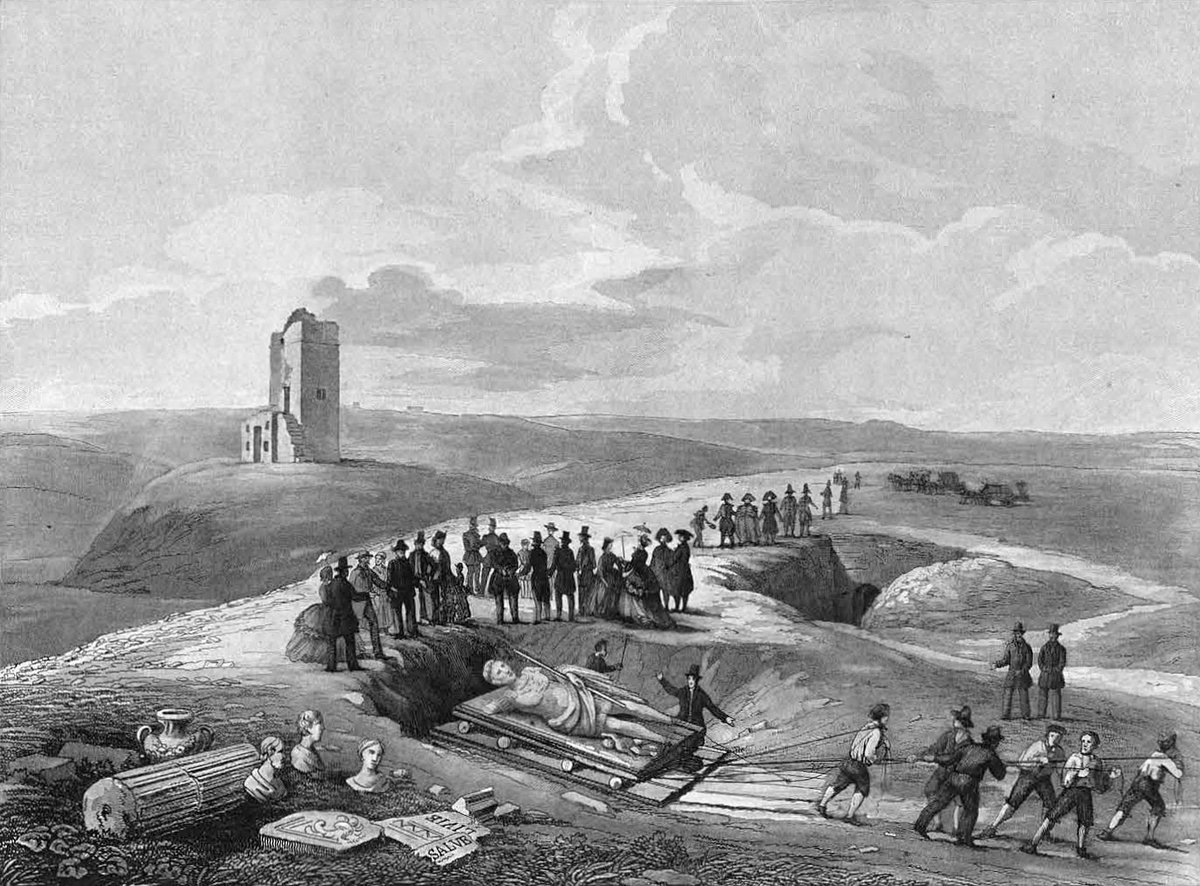
Although the site was known in the 16th century, scientific excavations began in the 19th century. Notably, the discovery of the Augustus of Prima Porta statue and garden frescoes in 1863 placed the Villa of Livia at the center of Roman archaeological scholarship. Modern campaigns, especially since 1995, have employed advanced techniques such as stratigraphic excavation, 3D modeling, and ground-penetrating radar to reveal new aspects of the villa’s construction and use (athensjournals.gr).
Conservation and Site Management
Conservation efforts focus on protecting the fragile frescoes, mosaics, and structural remains from environmental and human impact. Environmental controls, digital reconstructions, and careful visitor management are ongoing priorities. Many original artifacts are exhibited off-site to ensure their long-term preservation, while high-quality reproductions and digital displays at the villa help recreate its historical ambiance (Biblioteka Nauki; athensjournals.gr).
Frequently Asked Questions (FAQ)
Q: What days and hours is the Villa of Livia open?
A: Thursdays and Fridays, from 09:30 to 13:30. Last entry at 13:00.
Q: Is there an entrance fee?
A: No, admission is free.
Q: Are guided tours available?
A: Yes, but they are periodic and often must be booked in advance through local cultural organizations.
Q: How accessible is the site?
A: Some areas, especially underground, may be difficult for visitors with limited mobility. Contact the site in advance for details.
Q: Where can I see the original frescoes?
A: At the Museo Nazionale Romano, Palazzo Massimo alle Terme, in central Rome.
Listen to the full story in the app
The whole Villa Of Livia,
told well.
Audio guides for 1,100+ cities across 96 countries. History, stories, and local insight — offline ready.
Verified, and shown.
Researched and written by the Audiala editorial team from historical records, architectural archives, and local expertise.
Researched from Wikidata, Wikipedia & official sources · fact-checked · How we make our guides →