Plan and listen to Trajan'S Column with Audiala.
Audio guide in your pocket, itinerary in your browser. Built for the way you actually visit.
Introduction
Trajan’s Column is one of Rome’s most renowned monuments, offering a remarkable window into the city’s imperial past. Erected in 113 AD to commemorate Emperor Trajan’s victory in the Dacian Wars, this architectural marvel stands as a testament to Roman engineering, artistry, and imperial propaganda. Its spiral frieze, depicting over 2,600 figures in 155 scenes, makes it not only a historical record but also a masterpiece of narrative sculpture. Situated within Trajan’s Forum, close to other must-see sites like the Roman Forum and Colosseum, the column remains a central attraction for history enthusiasts and travelers alike.
This comprehensive guide presents everything you need to know about visiting Trajan’s Column, including opening hours, ticketing, accessibility, travel tips, and cultural context to enrich your experience of one of Rome’s most iconic historical sites. For in-depth historical background, artistic analysis, and up-to-date visitor information, consult resources such as Britannica, Smarthistory, and The Brain Chamber.

History and Construction
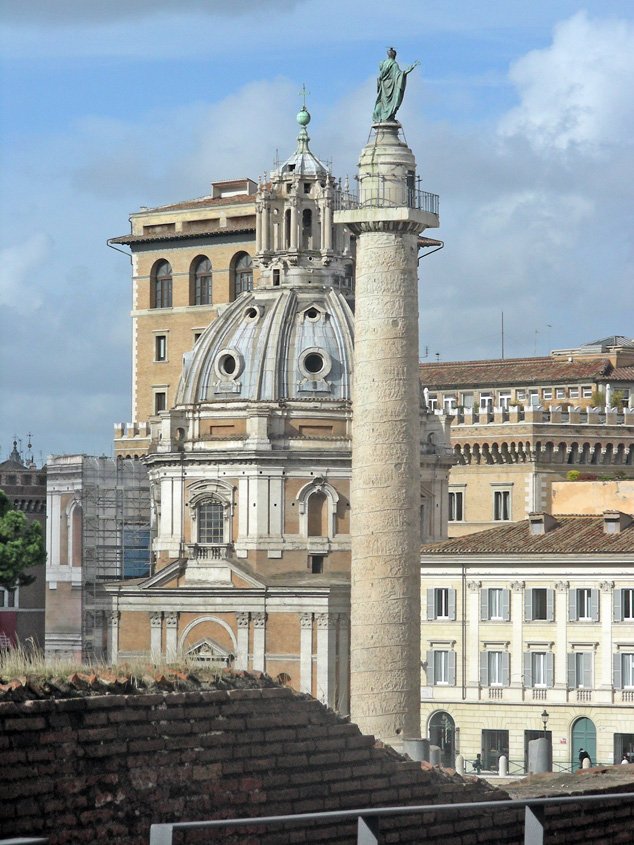
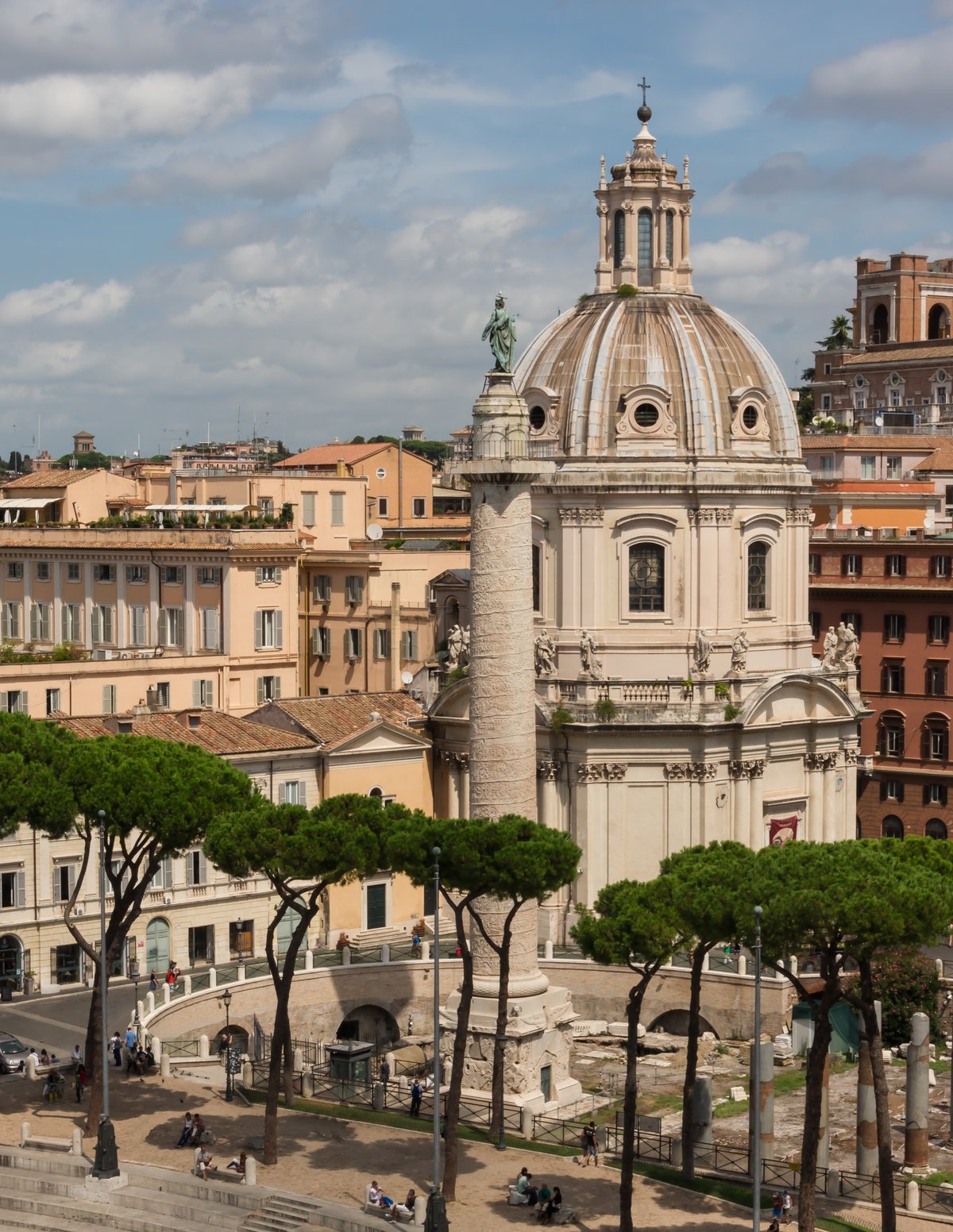
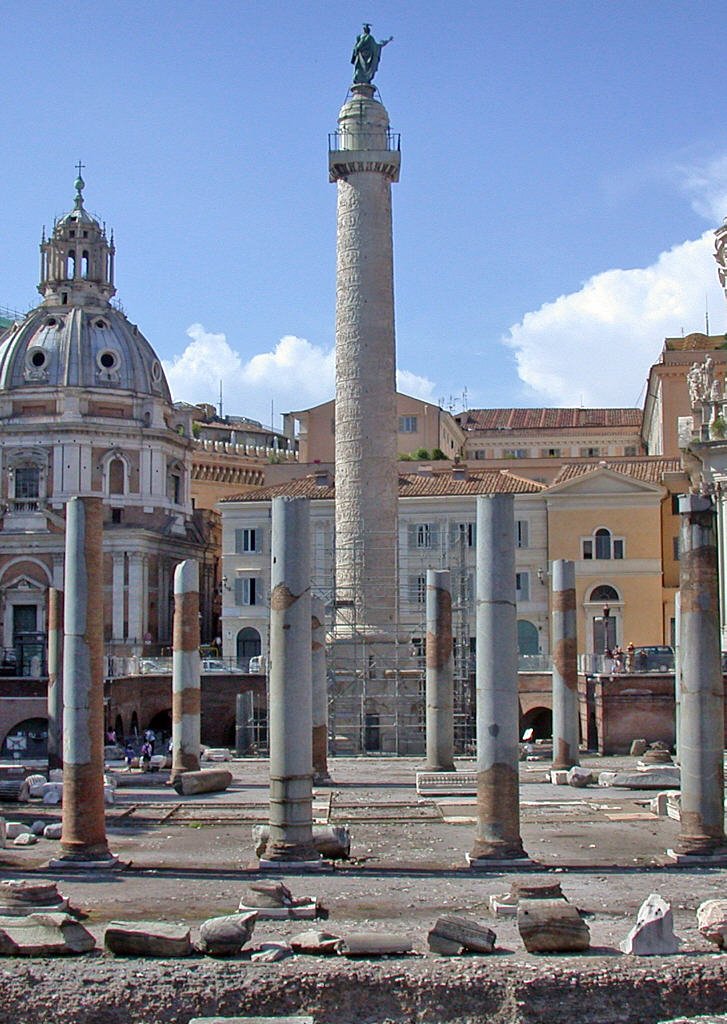
Trajan’s Column was commissioned by Emperor Trajan to celebrate his two successful campaigns against the Dacians (101–102 and 105–106 AD). Designed by Apollodorus of Damascus, the column was completed in 113 AD and became the centerpiece of Trajan’s Forum (Britannica; audiala.com). Constructed from 18–20 massive Carrara marble drums, each weighing up to 32 tons, the column stands approximately 35 meters (114 feet) high, or about 40 meters (125 feet) including its pedestal (turismoroma.it; winedharma.com).
Inside, a spiral staircase of 185 steps leads to a viewing platform at the top, though this is not open to the public. The base of the column serves as a funerary chamber, originally housing golden urns with the ashes of Trajan and his wife, an exceptional honor for a Roman emperor (Visual Arts Cork; ArchitectureCourses.org).
Architectural and Artistic Features
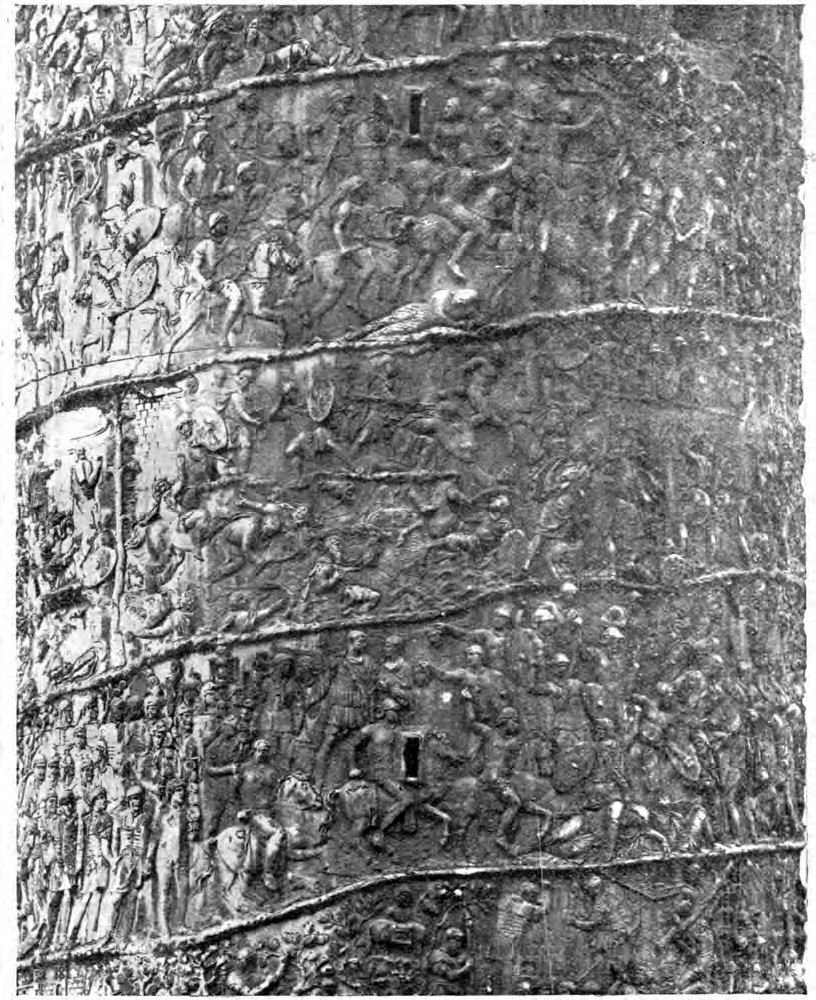
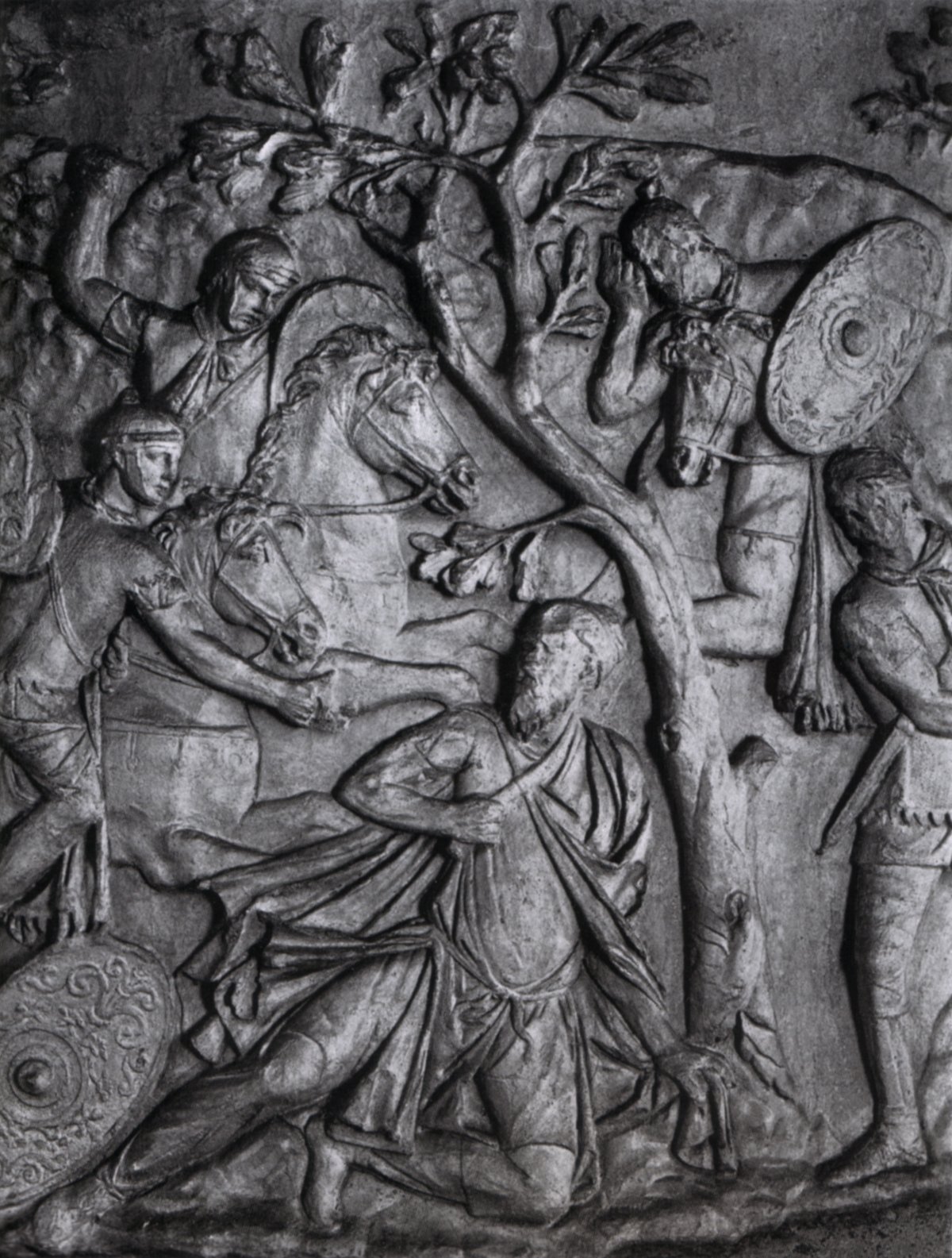
Trajan’s Column is celebrated for its continuous spiral frieze, which wraps around the shaft 23 times and extends nearly 200 meters if uncoiled (Smarthistory; Wikipedia). The frieze features over 2,600 figures in 155 scenes, chronicling the events of the Dacian Wars in vivid detail. The reliefs portray military maneuvers, engineering feats, religious ceremonies, and moments of diplomacy, with Trajan himself appearing nearly 60 times (rome.net; turismoroma.it).
Originally, the column was topped with a bronze statue of Trajan, later replaced by a statue of St. Peter in 1587, symbolizing Rome’s Christian transformation (ArchitectureCourses.org). The artistic innovations of the frieze—including its composition, narrative technique, and use of perspective—have influenced monumental art for centuries (Visual Arts Cork; The Brain Chamber).
Symbolism and Cultural Significance
Beyond its commemorative purpose, Trajan’s Column is an enduring symbol of Roman power and imperial ideology. Its prominent placement in the forum and the elaborate narrative reliefs functioned as both a celebration of imperial achievement and a tool of propaganda, promoting Roman virtues and the legitimacy of conquest (winedharma.com; The Brain Chamber).
The funerary chamber at the base reflects Trajan’s deification and lasting presence in Roman memory. The replacement of Trajan’s statue with St. Peter’s in the late 16th century illustrates the monument’s adaptability and layered significance across eras (The Brain Chamber).
Visiting Hours and Ticketing
Trajan’s Column is located in the open-air Trajan’s Forum, which is generally accessible daily from dawn until dusk. However, for a more immersive experience—including exhibitions and elevated views of the column—tickets are required for the adjacent Trajan’s Markets and Museum of the Imperial Fora.
- Column Viewing: Free and accessible at all hours from the surrounding piazza. The column’s base and reliefs are best viewed during daylight.
- Trajan’s Markets & Museum of the Imperial Fora: Open daily, 9:30 AM – 7:30 PM (last entry at 6:30 PM). Reduced hours on December 24, 31, and January 1; closed May 1 and December 25 (Official Museum Info).
- Admission: €11.50 for adults, €9.50 for ages 6–25, free for children under 6 and on the first Sunday of every month. Additional discounts may apply for Roma Pass holders and ICOM members.
- Combined Tickets: Packages including multimedia experiences and video guides are available at higher rates (Multimedia Tour Details).
- Ticket Purchase: Recommended online in advance to avoid lines (Official Rome Archaeological Sites).
Accessibility
The area surrounding Trajan’s Column is largely pedestrian and paved, making it accessible for most visitors. The Museum of the Imperial Fora provides accessible entrances and facilities. However, the column’s interior spiral staircase is closed to the public for safety and conservation reasons. Visitors with mobility needs should consult official resources for current accessibility details (turismoroma.it).
Travel Tips and Nearby Attractions
Getting There
- By Metro: Nearest stop is Cavour (Line B), a 10-minute walk away. From Termini Station, take Line B towards Laurentina (Metro Directions).
- By Bus: Numerous bus routes stop at Piazza Venezia, adjacent to the forum.
- On Foot: Rome’s main historical sites—such as the Colosseum, Roman Forum, and Capitoline Museums—are within a 10–15 minute walk.
Best Times to Visit
- Early morning or late afternoon for optimal lighting and fewer crowds.
- Evening: The column is beautifully illuminated and suitable for night photography.
- First Sunday of the Month: Free museum entry, but expect higher visitor numbers (Free Admission Details).
Nearby Sites
- Trajan’s Markets and Museum of the Imperial Fora: In-depth exhibitions on Roman urban life.
- Roman Forum and Colosseum: Iconic archaeological areas just minutes away.
- Piazza Venezia and Vittoriano: Panoramic city views and further historical context.
Amenities
Restaurants, cafés, and shops abound along Via dei Fori Imperiali and nearby piazzas, making breaks convenient during your visit (Local Amenities).
Guided Tours and Special Events
Expert-led walking tours and multimedia guides are available through the Museum of the Imperial Fora and local tour providers. These experiences offer rich historical context and bring the monument’s narrative reliefs to life (Audio Guide Info; Walking Tours). Special virtual tours and temporary exhibitions further enhance the visitor experience (Virtual Tours).
Photography Advice
- Use a zoom lens or binoculars to capture the intricate high-relief details.
- Best photo spots: Piazza Foro Traiano, nearby rooftop terraces, and evening when the column is illuminated.
- Respect all barriers and preservation measures.
Frequently Asked Questions (FAQ)
Is there an entry fee to visit Trajan’s Column?
No fee is required to view the column from outside. Tickets are needed for entry to Trajan’s Markets and the Museum of the Imperial Fora.
Can visitors climb the column’s staircase?
Public access to the interior spiral staircase is not permitted.
What are the best times to visit?
Early mornings, late afternoons, and evenings (for illumination) are recommended.
Are guided tours available?
Yes, guided tours and multimedia guides are offered at the museum and by independent tour operators.
Is the area accessible for visitors with disabilities?
The forum and museum are generally accessible, but the column’s interior is not.
Which attractions can I combine with Trajan’s Column?
Nearby highlights include the Roman Forum, Colosseum, Trajan’s Markets, and Piazza Venezia.
Tickets & tours.
These are guided options from our partners — same price as booking direct.
Prices are indicative — final pricing and availability are confirmed at checkout. Audiala may earn a commission from bookings made through these links.
Listen to the full story in the app
The whole Trajan'S Column,
told well.
Audio guides for 1,100+ cities across 96 countries. History, stories, and local insight — offline ready.
Verified, and shown.
Researched and written by the Audiala editorial team from historical records, architectural archives, and local expertise.
Researched from Wikidata, Wikipedia & official sources · fact-checked · How we make our guides →