Plan and listen to Tomb Of Priscilla with Audiala.
Audio guide in your pocket, itinerary in your browser. Built for the way you actually visit.
Introduction
Rome’s layered history is vividly expressed in its funerary monuments, with the Tomb of Priscilla and the Catacombs of Priscilla standing as remarkable witnesses to the city’s religious and social evolution. Located along the ancient Via Salaria, these sites offer an invaluable window into the transition from pagan Rome to early Christianity, showcasing unique architectural features and some of the earliest Christian art (Soprintendenza Speciale Roma; Catacombepriscilla.com; Smarthistory). This guide details the historical context, artistic highlights, visiting logistics, and practical tips to help you plan an enriching visit.

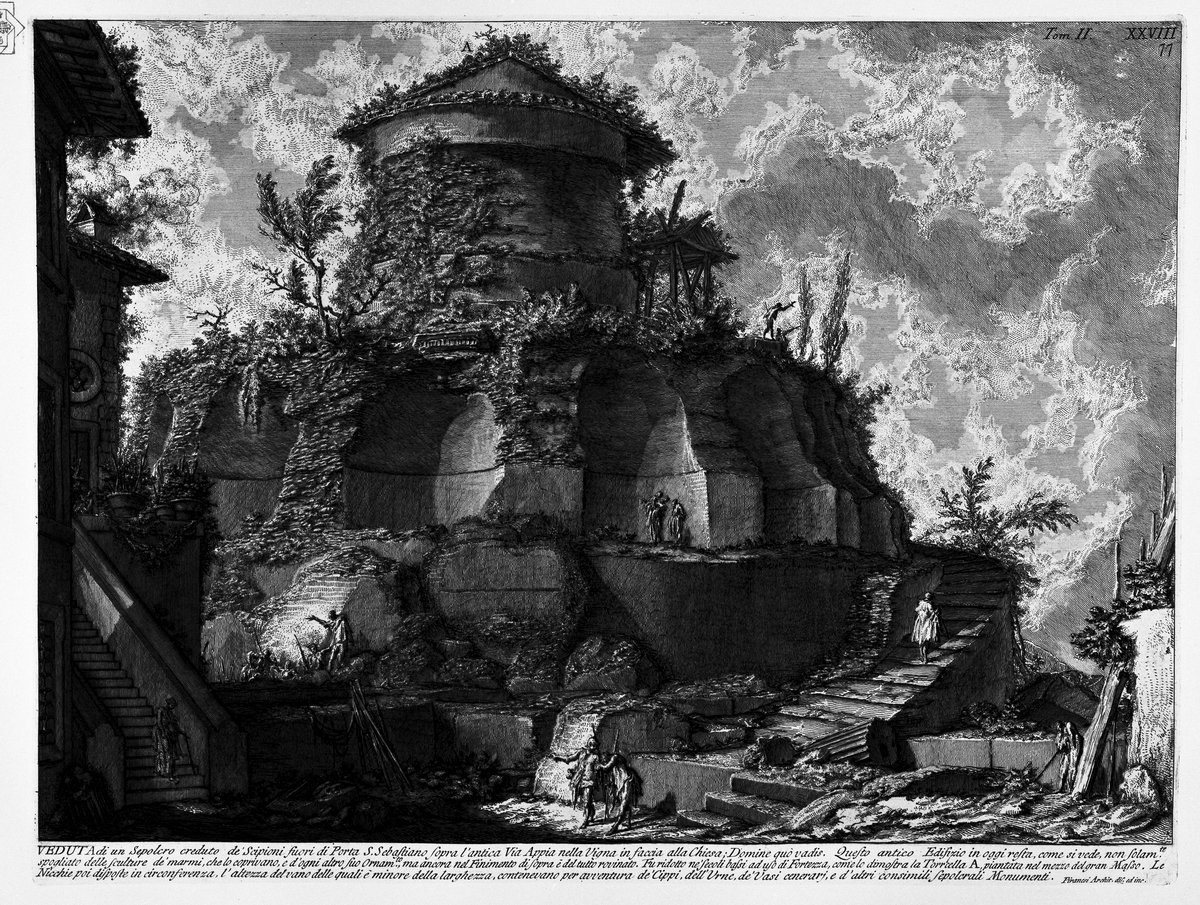
History of the Tomb of Priscilla
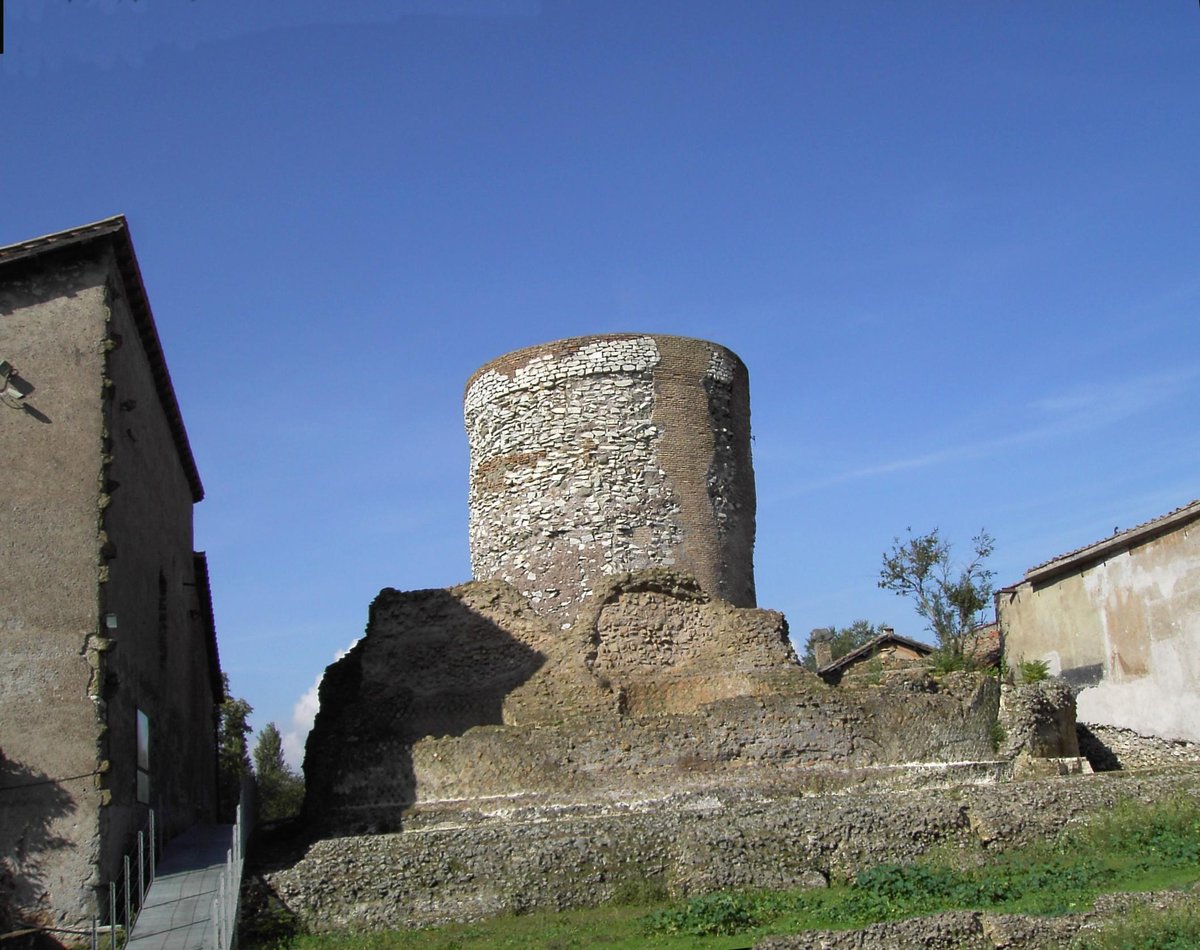
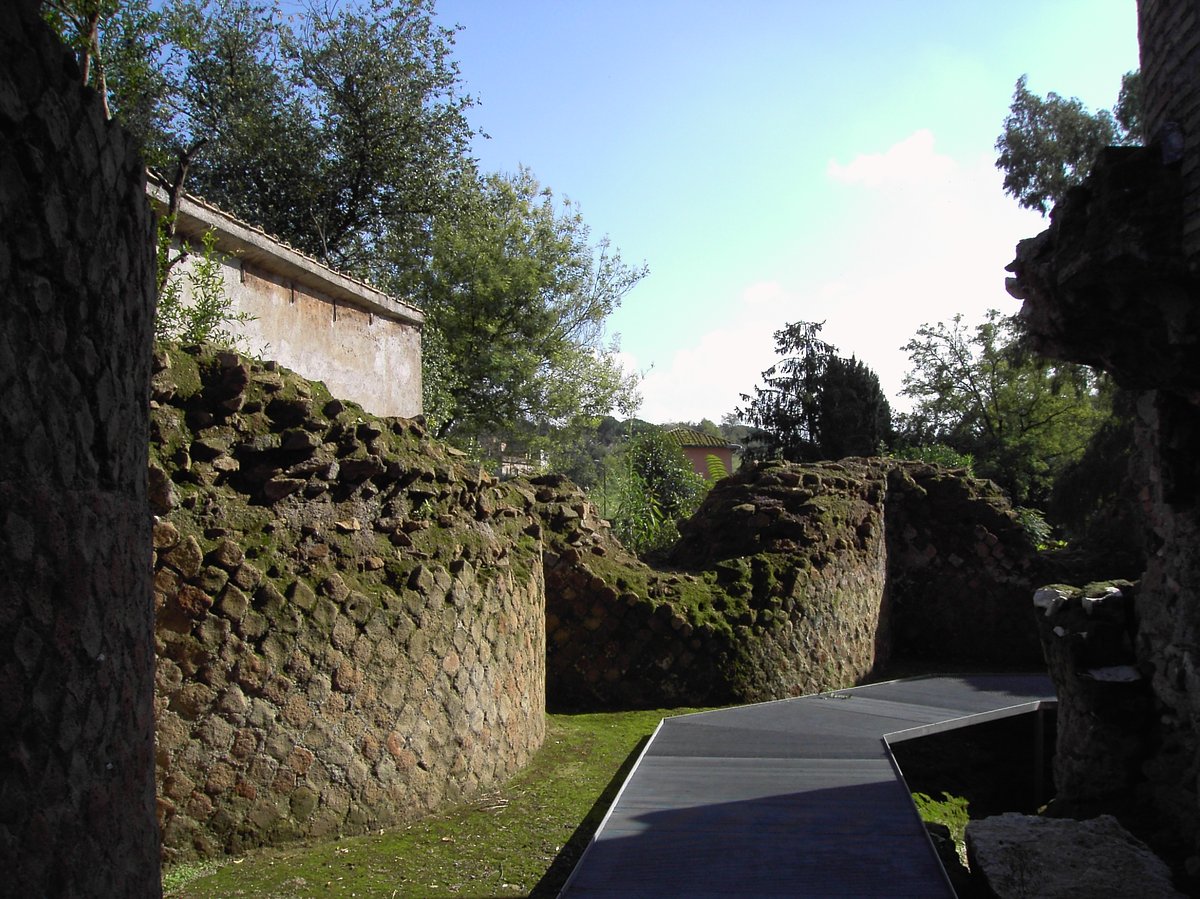
Constructed in the late 1st century BCE or early 1st century CE, the Tomb of Priscilla was commissioned for Priscilla, wife of Titus Flavius Abascanto, a freedman and imperial official under Emperor Domitian (Rome Art Lover). Its monumental form—a cylindrical drum made with opus reticulatum masonry—was inspired by prominent imperial tombs, reflecting the aspirations and status of Rome’s freedmen class. Inscriptions celebrate Priscilla’s forty years of marriage and highlight the cultural value placed on marital devotion (Epigraphic Database Roma).
Architectural Features
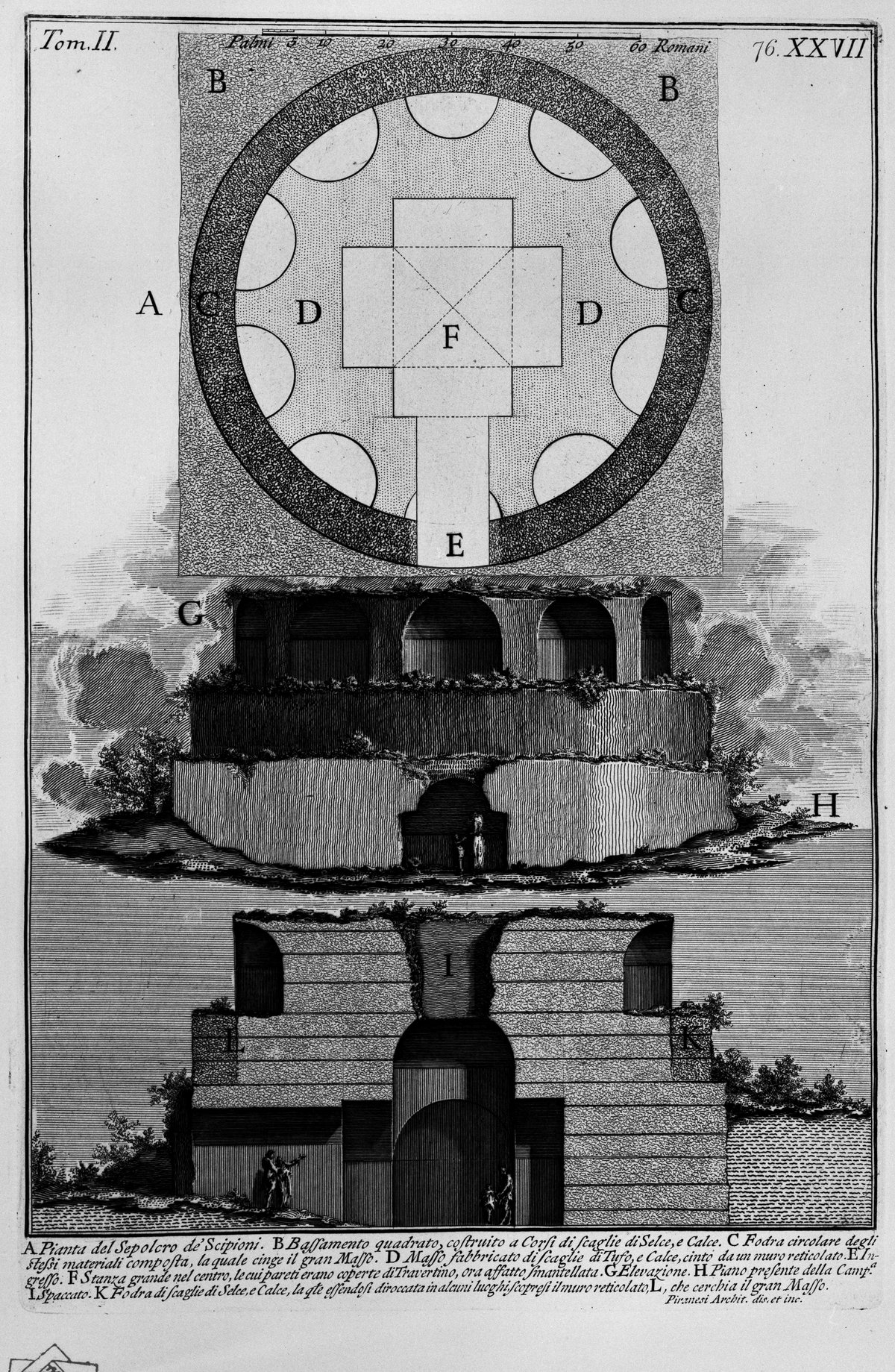
The tomb features a cylindrical core (about 13 meters in diameter) once surrounded by a colonnaded portico. Inside, multiple sarcophagi and urns were placed in a burial chamber accessed from the main entrance. Original decorations—now largely lost—once included stucco reliefs, garlands, and mythological motifs characteristic of the Augustan and Flavian periods (Soprintendenza Speciale Roma). The imposing travertine façade and cypress trees would have underscored the monument’s prominence.
Visiting the Tomb of Priscilla: Hours, Tickets, and Accessibility
- Location: Via Salaria, Rome, Italy
- Opening Hours: Tuesday–Sunday, 9:00 AM–5:00 PM; closed Mondays and public holidays (verify on the official site)
- Tickets: Typically free; fees may apply for special exhibitions or guided tours
- Accessibility: Limited for wheelchairs due to ancient structure—contact in advance for assistance
- Guided Tours: Available via local operators or the Soprintendenza Speciale Roma; advance booking recommended
- Transport: Reachable by bus from city center; nearest metro is Piazza Bologna, then bus 38 or 62
Nearby Attractions
Enhance your visit by exploring:
- The Catacombs of Priscilla
- Villa Ada Park
- Porta Salaria
These nearby sites add context to Roman funerary customs and city life.
The Catacombs of Priscilla: Layout and Artistry
Subterranean Design
The Catacombs of Priscilla, often called the “Queen of the Catacombs,” extend for 10–13 kilometers beneath Via Salaria across two to three levels (Smarthistory; Toorists). Narrow passages carved in tufa rock are lined with loculi (horizontal burial niches), and larger cubicula for wealthier families.
The Greek Chapel
A highlight is the Greek Chapel, named for its Greek inscriptions. Here, walls are decorated in the Roman First Style, simulating marble panels and featuring early Christian frescoes (Smarthistory).
Artistic and Iconographic Highlights
The catacombs host some of the oldest Christian frescoes:
- Earliest Madonna and Child: The oldest known image of the Virgin Mary with Christ Child
- Fractio Panis: An early Eucharistic scene, possibly depicting women’s participation
- Biblical Narratives: Jonah, the Three Hebrews, and Lazarus, all underlining themes of salvation
- Symbolism: Fish, doves, lambs, and orant figures symbolize Christ, peace, and hope (Smarthistory)
The art reflects the transition from pagan imagery to Christian iconography, executed in buon fresco with simple lines and subdued hues.
Inscriptions
Greek and Latin inscriptions honor the deceased and offer prayers, underscoring the multicultural character of early Christian Rome (Smarthistory).
Funerary Practices and Social Stratification
Burials ranged from simple loculi for the poor to elaborately decorated cubicula for the affluent. The catacombs are the resting place of martyrs and at least seven early popes, making them a significant pilgrimage site (Toorists).
Visiting the Catacombs of Priscilla: Hours, Tickets, and Tours
- Location: Via Salaria, 430, 00199 Rome, Italy (official site)
- Opening Hours: Tuesday–Sunday, 9:00–13:00 and 14:00–17:00; closed Mondays
- Tickets: Adults €15; children (7–16) €12; under 7 free; discounts for students and residents—book online to secure your spot (Catacombepriscilla.com)
- Tours: Guided tours only, lasting ~45 minutes, in English, Italian, and Spanish. Private and group tours available with advance booking.
- Accessibility: Not wheelchair accessible due to stairs and narrow passages
- Dress Code: Modest (shoulders/knees covered); comfortable shoes recommended
- Photography: Allowed without flash; silence is encouraged
Note: The catacombs maintain a cool temperature (15–17°C/59–63°F), so bring a jacket.
Practical Visitor Information
- Facilities: Restrooms are available at the entrance; no café on-site
- Transport: Metro Annibaliano (Line B) + short walk; several buses serve Via Salaria
- Nearby: Villa Ada Park, other catacombs (St. Callixtus, Domitilla), and sites along Via Salaria are ideal for extended exploration
Modern Cultural and Religious Significance
Both the tomb and catacombs are protected by Italian heritage authorities (Soprintendenza Speciale Roma), serving as touchstones for archaeological research, interfaith dialogue, and public memory. Their layered pagan and Christian history invites reflection on Rome’s spiritual evolution (Rome Reports).
Visitor Conduct and Recommendations
- Maintain a respectful demeanor; avoid loud noise
- Follow photography rules to help preserve artworks
- Guided tours provide valuable context—take advantage of expert insights
Frequently Asked Questions (FAQ)
Q: What are the Tomb of Priscilla and Catacombs visiting hours?
A: Tomb: Tuesday–Sunday, 9:00 AM–5:00 PM; Catacombs: Tuesday–Sunday, 9:00–13:00 & 14:00–17:00; both closed Mondays and holidays.
Q: How do I buy tickets?
A: Tickets can be purchased online or at the entrance; booking ahead is recommended, especially for the catacombs.
Q: Are the sites wheelchair accessible?
A: The tomb offers partial accessibility; the catacombs are not accessible due to stairs and narrow corridors.
Q: Are guided tours required?
A: Catacombs require guided tours; tomb tours are strongly recommended.
Q: Is photography allowed?
A: Yes, in most areas, but flash is discouraged to preserve the frescoes.
Q: What should I wear?
A: Modest attire with comfortable, closed-toe shoes.
Q: Can I visit both sites in one day?
A: Yes, as they are located near each other along Via Salaria.
Listen to the full story in the app
The whole Tomb Of Priscilla,
told well.
Audio guides for 1,100+ cities across 96 countries. History, stories, and local insight — offline ready.
Verified, and shown.
Researched and written by the Audiala editorial team from historical records, architectural archives, and local expertise.
Researched from Wikidata, Wikipedia & official sources · fact-checked · How we make our guides →