Plan and listen to Temple Of Romulus with Audiala.
Audio guide in your pocket, itinerary in your browser. Built for the way you actually visit.
Introduction
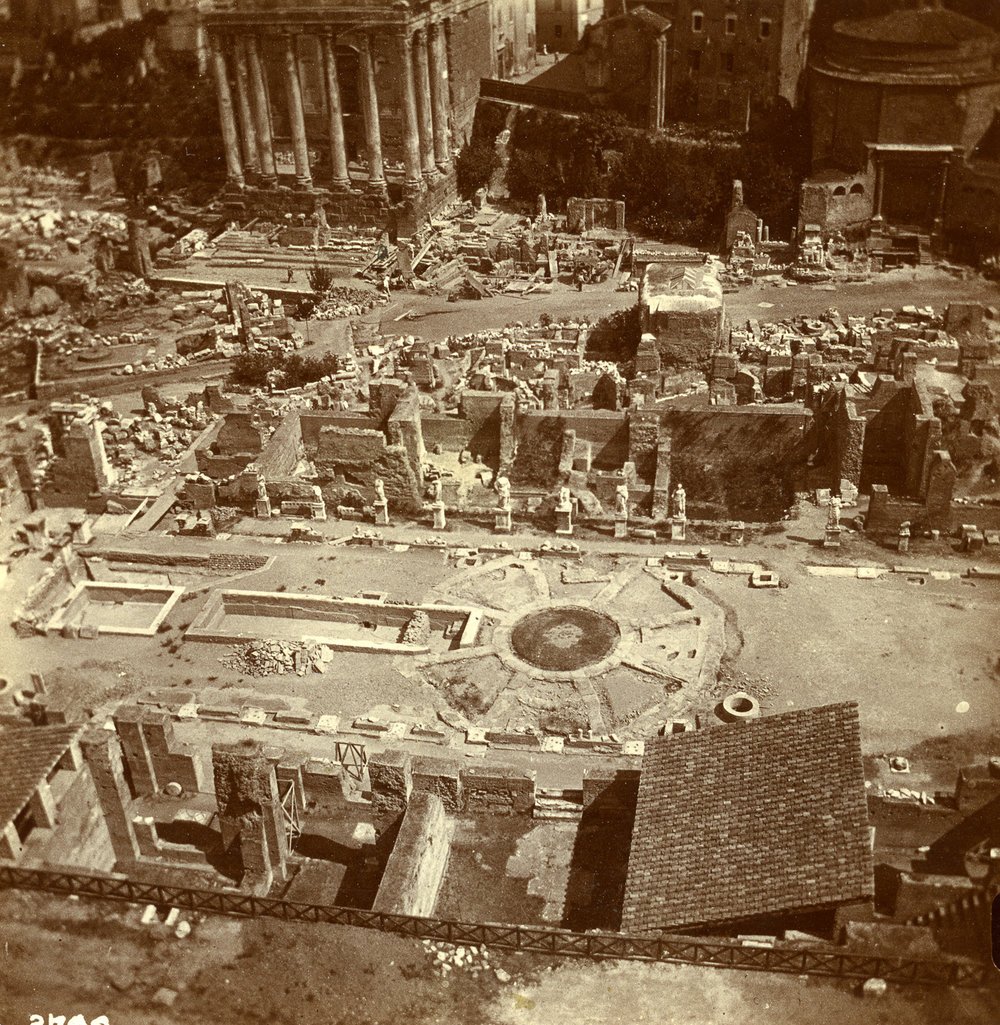
The Temple of Romulus, one of the Roman Forum’s most striking and best-preserved monuments, provides an unparalleled window into Rome’s imperial heritage, religious transformations, and architectural mastery. Despite its evocative name, the temple is not dedicated to the legendary founder of Rome, but rather to Valerius Romulus, the deified son of Emperor Maxentius. Its exceptional state of preservation, thanks to its integration into a Christian church in the 6th century, allows modern visitors to experience the continuity and change that have defined Rome’s urban and cultural landscape (The Geographical Cure; Imperium Romanum).
This comprehensive guide covers the Temple of Romulus’s origins, architecture, visiting hours, ticketing, accessibility, and practical travel tips for exploring Rome’s historical sites.

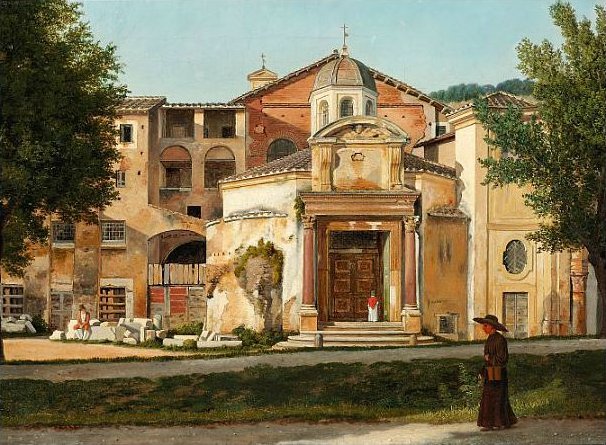
Origins and Dedication
The Temple of Romulus stands along the Via Sacra in the Roman Forum and is often mistaken for a shrine to the city’s mythical founder. In reality, it was constructed by Emperor Maxentius in the early 4th century CE to honor his son, Valerius Romulus, who died young and was subsequently deified. This act of commemoration reflects both personal grief and the political strategy of dynastic legitimization, as deification of imperial family members was common among Roman emperors (The Geographical Cure; Colosseum.info).
The association with Romulus the founder, while persistent in popular tradition, is a result of historical confusion and the imperial tendency to appropriate foundational myths for contemporary purposes.
Architectural Features and Preservation
Design and Construction
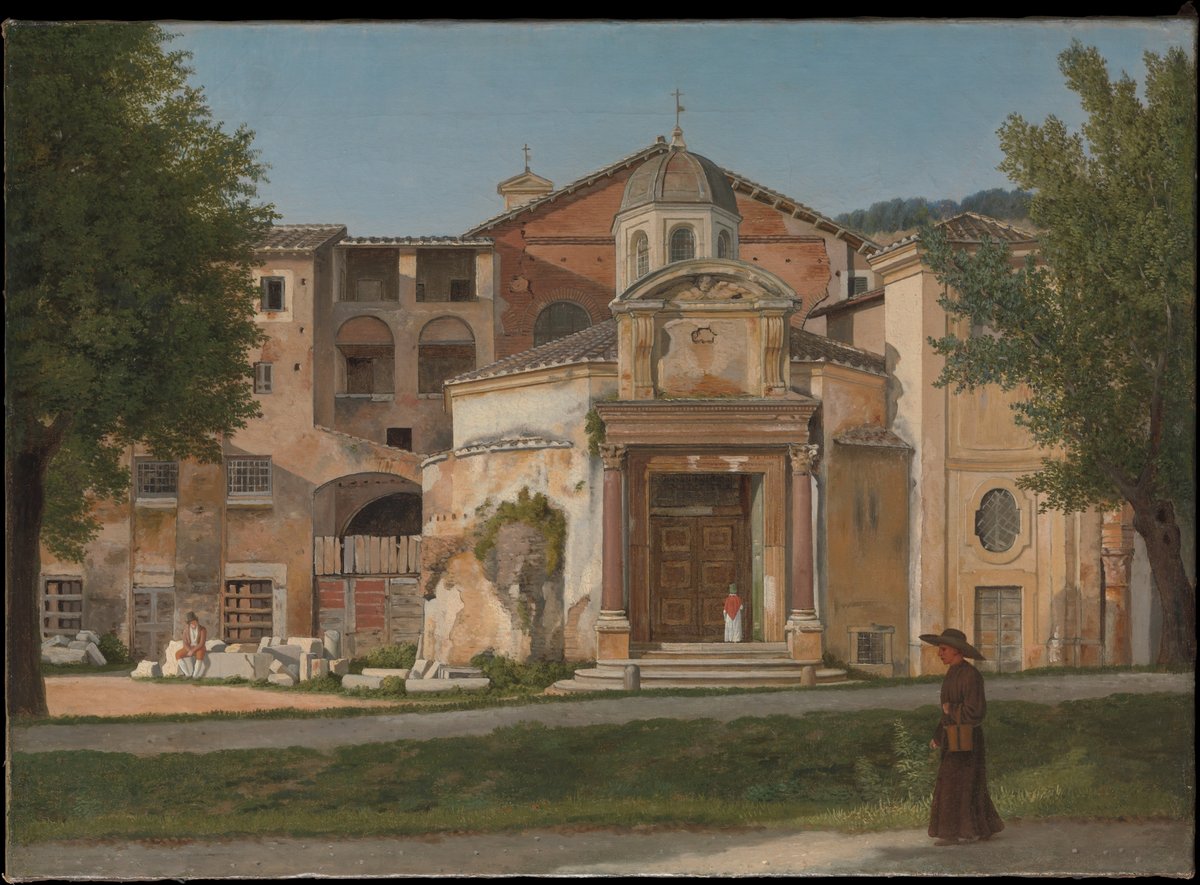
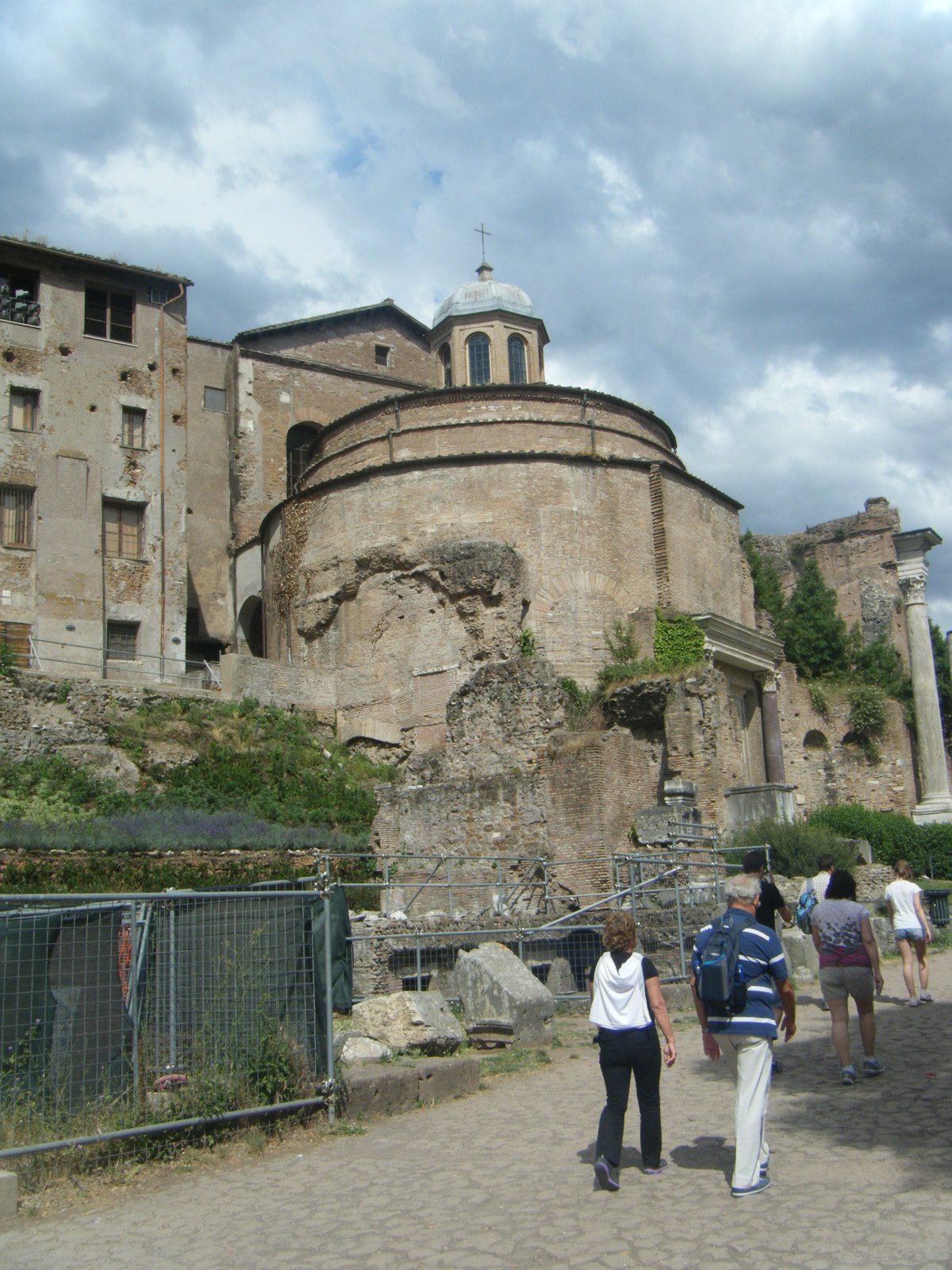
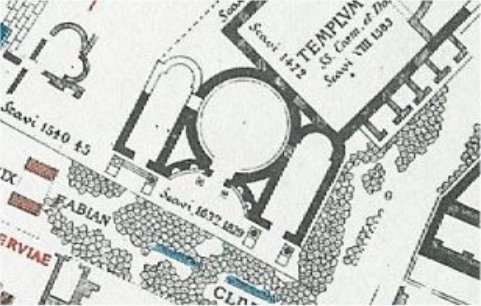
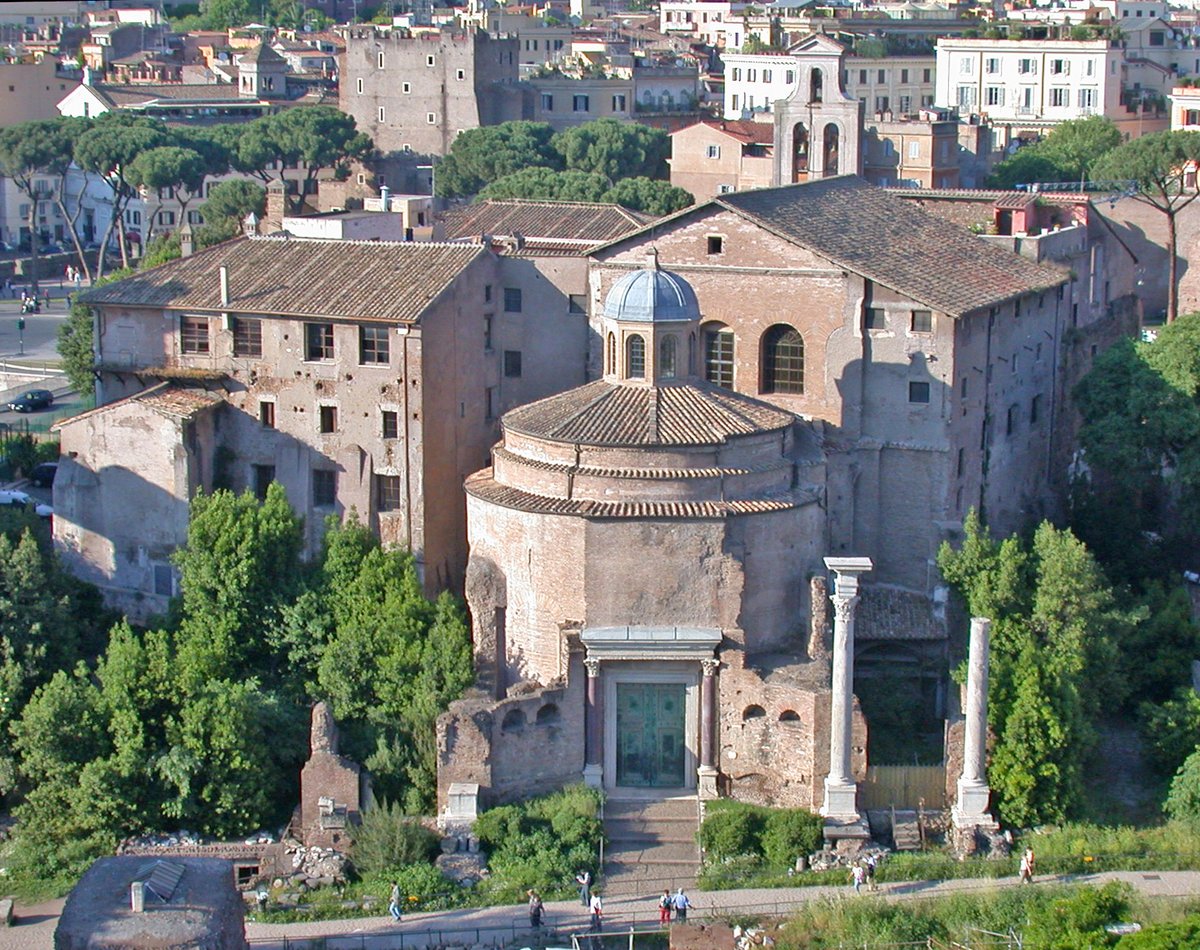
- Plan and Structure: The temple is notable for its rare round (rotunda) design, constructed with brick-faced concrete and capped by a solid dome. This circular form is atypical of Roman temples, which are generally rectangular, and may have been inspired by imperial mausolea or the Pantheon (madainproject.com).
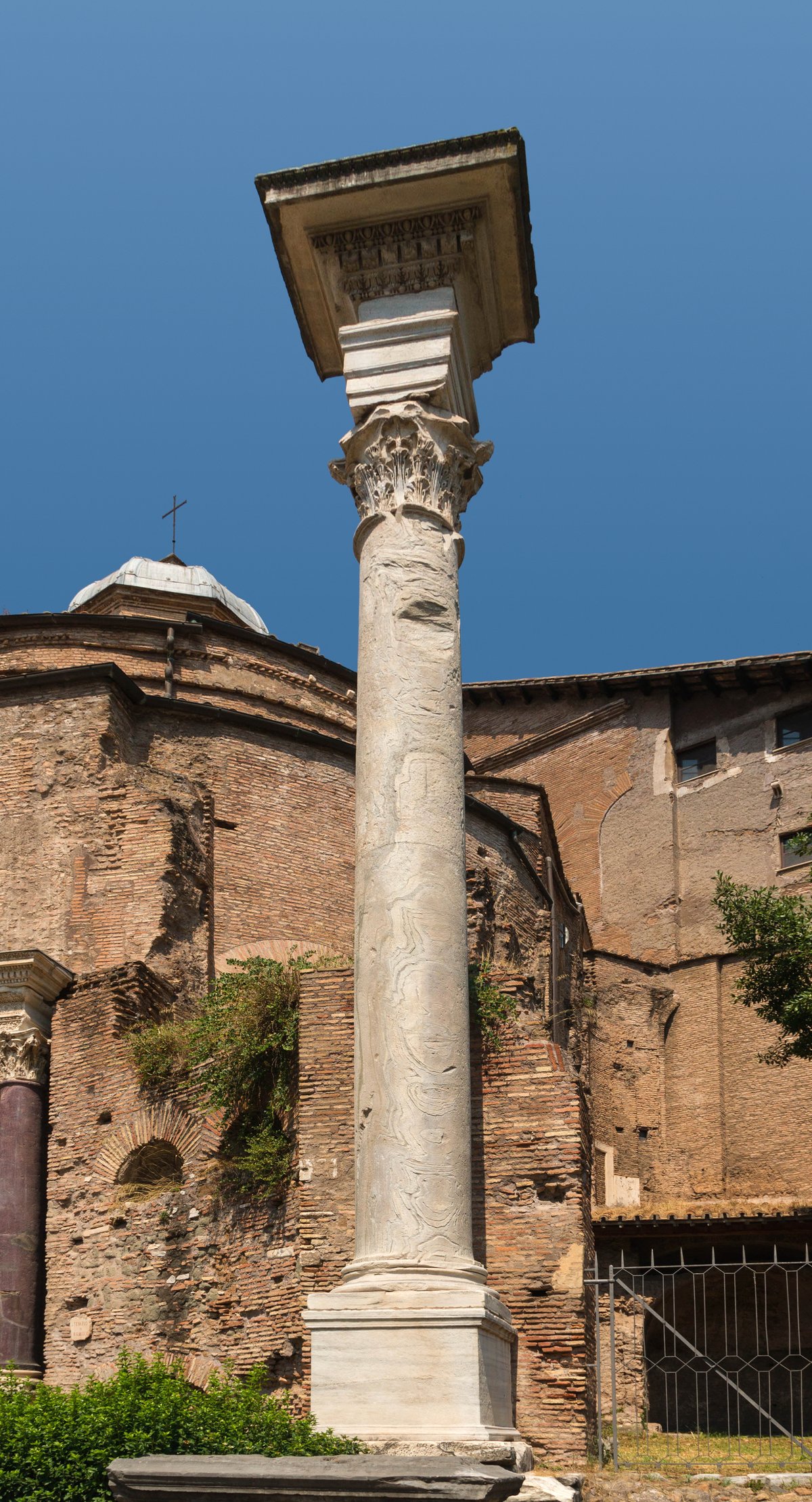
- Facade: The entrance features two impressive purple porphyry columns imported from Egypt, a luxury material signifying imperial prestige. The columns are set on travertine bases with marble Corinthian capitals and support a marble architrave (througheternity.com).
- Bronze Doors: The original 4th-century bronze doors, with their ancient locking mechanism and green patina, are among the best preserved in Rome (theromanguy.com).
- Interior: The rotunda is illuminated by torchlight and houses remnants of marble paving, porphyry inlays, and 13th-century frescoes imitating curtain drapery—evidence of the temple’s later Christian use (Nomad Epicureans).
- Side Chambers: Apsidal wings flanking the central space may have functioned as sanctuaries for the Penates or other deities (sights.seindal.dk).
Preservation and Adaptation
The temple owes its survival to its conversion into the Church of Saints Cosmas and Damian in the early 6th century CE, commissioned by Pope Felix IV. This adaptive reuse protected the structure from destruction and pillaging, a fate that befell many ancient Roman buildings. Since the Renaissance, the temple has attracted scholars and travelers, and it remains a focal point for exhibitions and educational initiatives (Mamma Loves Rome; Finestre sull’Arte).
The Temple’s Place in the Roman Forum
The Roman Forum was the nucleus of political, religious, and commercial life in ancient Rome. The Temple of Romulus occupies a prominent position along the Via Sacra, close to the Temple of Antoninus and Faustina and the Basilica of Maxentius. Its placement underscores the importance of imperial cult and dynastic memory during a period of political upheaval (Colosseum.info).
Religious and Political Significance
The deification of Valerius Romulus and the erection of a temple in his name illustrate the intertwining of religion and politics in the late Roman Empire. The building’s later conversion into a Christian church reflects the city’s transformation as pagan monuments were repurposed for new religious functions. Today, the rotunda serves as the vestibule for the Church of Saints Cosmas and Damian, symbolizing the continuity and layering of Rome’s religious history (Mamma Loves Rome).
Visitor Information: Hours, Tickets, and Accessibility
Visiting Hours
- General Hours: The Temple of Romulus is accessible during the Roman Forum’s opening hours—typically from 8:30 AM to one hour before sunset. Check the official Colosseum Archaeological Park website for current times, as hours may change with seasons or special events.
- Closed: January 1, May 1, and December 25.
Tickets and Admission
- Standard Ticket: €16 (adults), €2 (EU citizens aged 18–25), free for children under 18 and other eligible groups (ItalyGuides).
- Validity: 24 hours, includes the Roman Forum, Palatine Hill, and Colosseum.
- Booking: Advance purchase is recommended. Tickets are available online, at Forum entrances, or via authorized resellers.
- Special Access: Interior visits to the temple may be limited; when closed, the interior is visible through a window from the adjacent church (Jeff Bondono).
Accessibility
- Terrain: The Roman Forum features uneven paths and some stairs. While improvements have been made, accessibility inside the temple is limited.
- Facilities: Wheelchair access is possible along designated Forum routes; assistance is available at entry points.
Guided Tours and Audio Guides
- Guided Tours: Many include the Temple of Romulus and provide vital historical context.
- Audio Guides: Available for rent onsite or via apps.
Travel Tips and Nearby Attractions
- Arrive Early: Beat the crowds and summer heat by visiting early or late in the afternoon.
- Footwear and Essentials: Wear comfortable shoes, bring water, sunscreen, and a hat.
- Security: Expect bag checks; large bags may be restricted.
- Photography: Permitted, but flash/tripods may be limited.
- Amenities: Restrooms and seating at main entrances; no food inside the Forum, but options abound nearby.
Nearby Sites
- Colosseum: Iconic amphitheater, included with the Forum ticket.
- Palatine Hill: Offers panoramic views and archaeological ruins.
- Temple of Antoninus and Faustina, Basilica of Maxentius, Arch of Titus: All within walking distance.
- Capitoline Museums: Accessible on foot, for further exploration of Rome’s history.
Visuals, Multimedia, and Educational Value
Enhance your visit with high-quality images, interactive maps, and virtual tours available on official and reputable travel websites. Recent exhibitions, like “The Gaze of Time. The Roman Forum in the Modern Age,” use digital reproductions and historical artifacts to help visualize the ancient landscape (Finestre sull’Arte).
Frequently Asked Questions (FAQ)
Q: What are the Temple of Romulus visiting hours?
A: Generally 8:30 AM to one hour before sunset; check official updates.
Q: How much are tickets?
A: €16 for adults, €2 for EU youth, free for children under 18.
Q: Is the Temple of Romulus wheelchair accessible?
A: Limited accessibility; pathways in the Forum have designated routes for wheelchairs.
Q: Can I visit the temple’s interior?
A: Interior access is occasional; otherwise, view through the church vestibule.
Q: Are guided tours available?
A: Yes, many official tours include the temple.
Listen to the full story in the app
The whole Temple Of Romulus,
told well.
Audio guides for 1,100+ cities across 96 countries. History, stories, and local insight — offline ready.
Verified, and shown.
Researched and written by the Audiala editorial team from historical records, architectural archives, and local expertise.
Researched from Wikidata, Wikipedia & official sources · fact-checked · How we make our guides →