Plan and listen to Temple Of Mars Ultor with Audiala.
Audio guide in your pocket, itinerary in your browser. Built for the way you actually visit.
Introduction
The Temple of Mars Ultor ("Mars the Avenger") stands as a commanding relic of Rome's imperial glory, deeply interwoven with the political ambitions and religious fervor of the Augustan age. Completed in 2 BCE and situated in the Forum of Augustus, this iconic monument reflects not only the architectural innovation of its era but also the complex interplay between power, faith, and civic identity that defined ancient Rome. This detailed guide explores the temple’s history, architecture, cultural significance, and offers practical advice for planning your visit—including hours, ticketing, accessibility, and nearby attractions (World History Edu; World History Encyclopedia).



Historical Background: Augustus and the Vow to Mars Ultor
The temple’s origins trace back to the turbulent aftermath of Julius Caesar’s assassination in 44 BCE. Seeking to avenge Caesar and restore order, Octavian (later Augustus) vowed to dedicate a temple to Mars Ultor if victorious at the Battle of Philippi in 42 BCE. His triumph set the stage for the rise of the Roman Empire, and the vow to Mars, god of war and vengeance, became both a religious gesture and a potent political statement (GradesFixer). The temple’s eventual completion in 2 BCE marked the fulfillment of this promise and a visible assertion of Augustus’ legitimacy.
Construction Timeline and Dedication
Although vowed in 42 BCE, construction did not begin until decades later as Augustus initiated vast urban renewal in Rome. The temple was strategically placed in the newly created Forum of Augustus, adjacent to the Forum of Caesar. Its dedication in 2 BCE was a grand public event, symbolizing peace, divine favor, and the enduring legacy of Augustus as Rome’s restorer (World History Encyclopedia).
Political and Religious Significance
The Temple of Mars Ultor functioned as both a sacred space and a stage for imperial ideology. Augustus positioned himself as Caesar’s avenger and Rome’s protector, intertwining his political authority with divine endorsement. The temple hosted ceremonies such as the bestowal of military standards to generals, Senate meetings on war and peace, and religious festivals like the October Horse, reinforcing Mars’ martial aspect and Augustus’ role as supreme leader (World History Edu; roman.mythologyworldwide.com).
Architectural Features and Innovations
Constructed from gleaming Carrara and Luna marble, the temple embodies Roman architectural mastery. Key features include:
- High Podium and Stairs: Commanding elevation, reinforcing its sanctity and visibility.
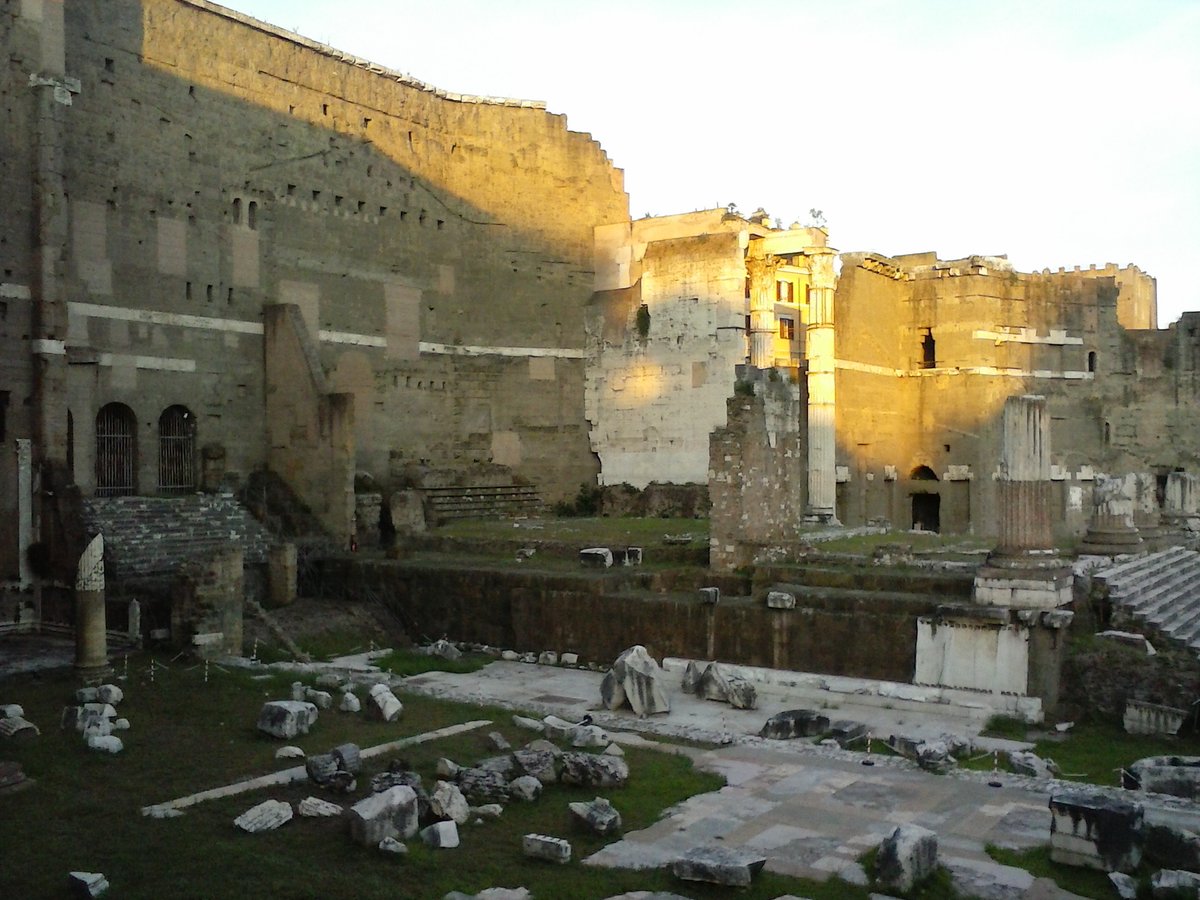
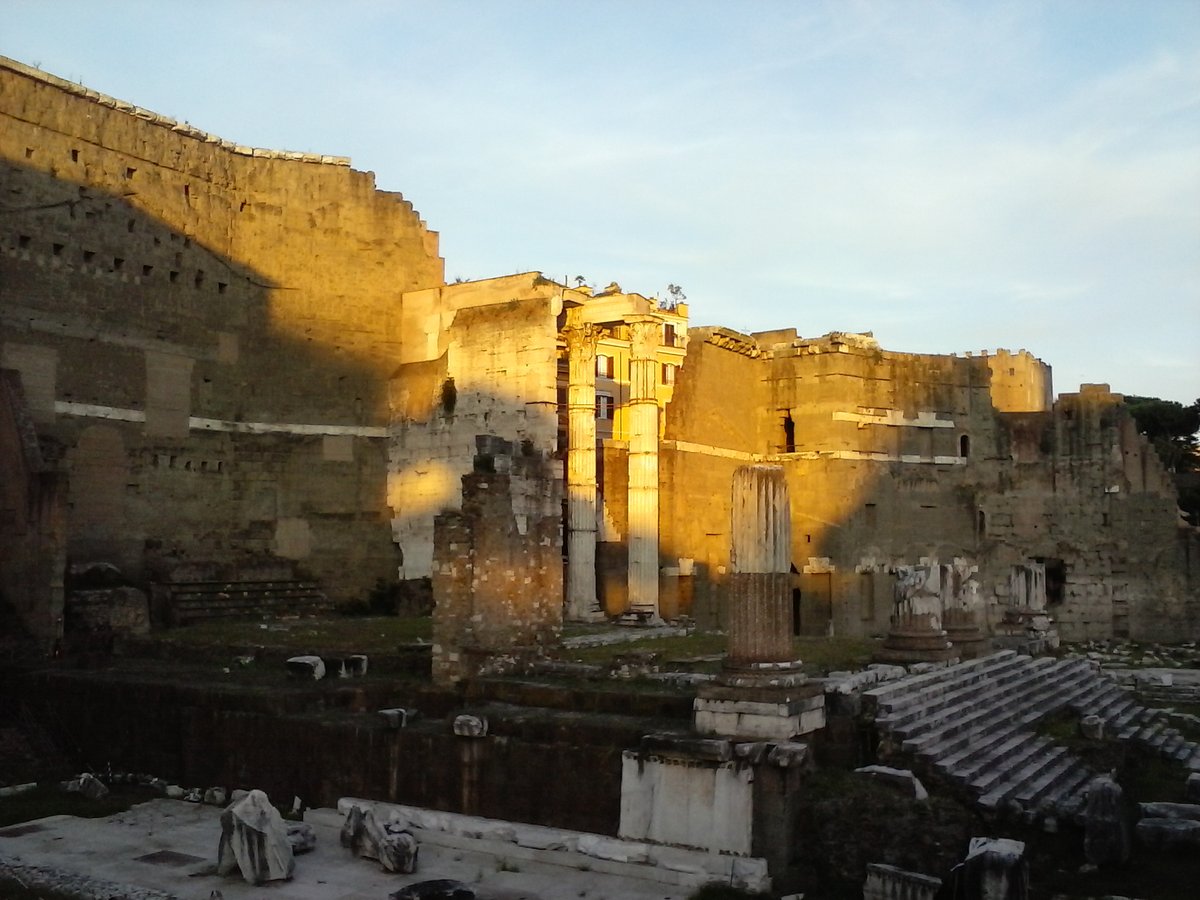
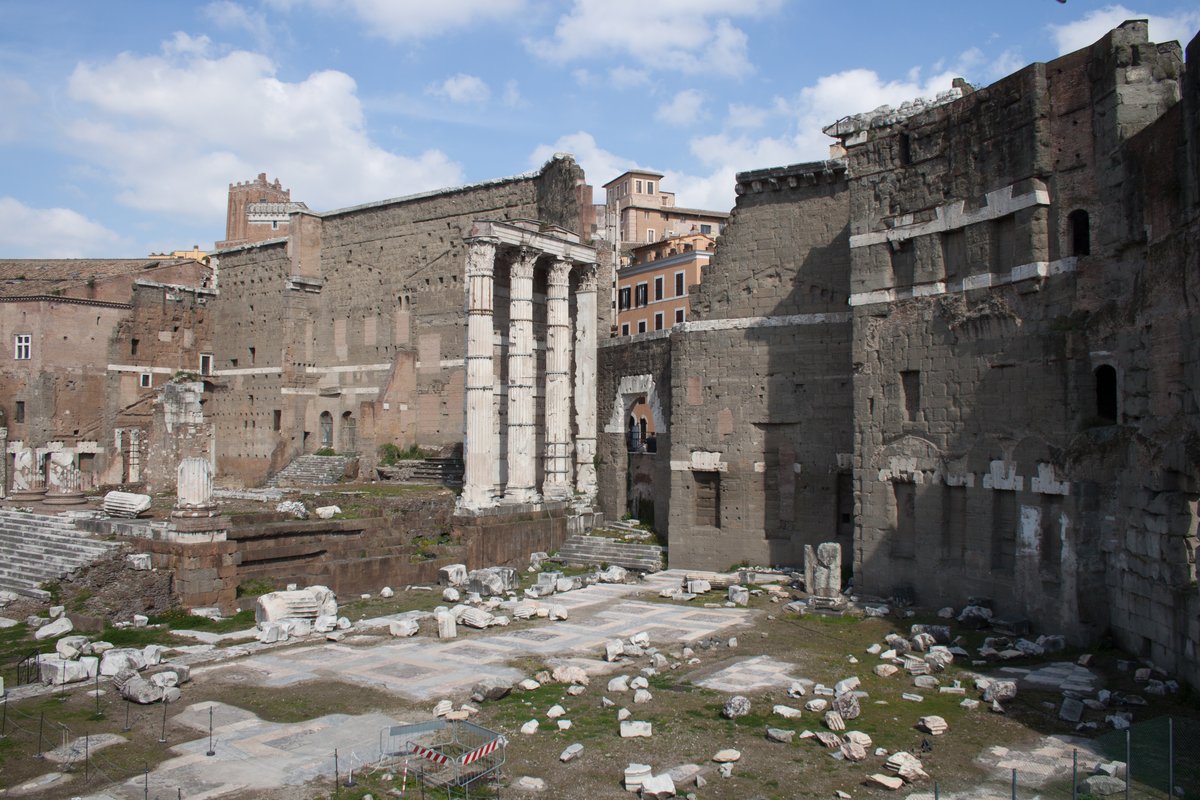
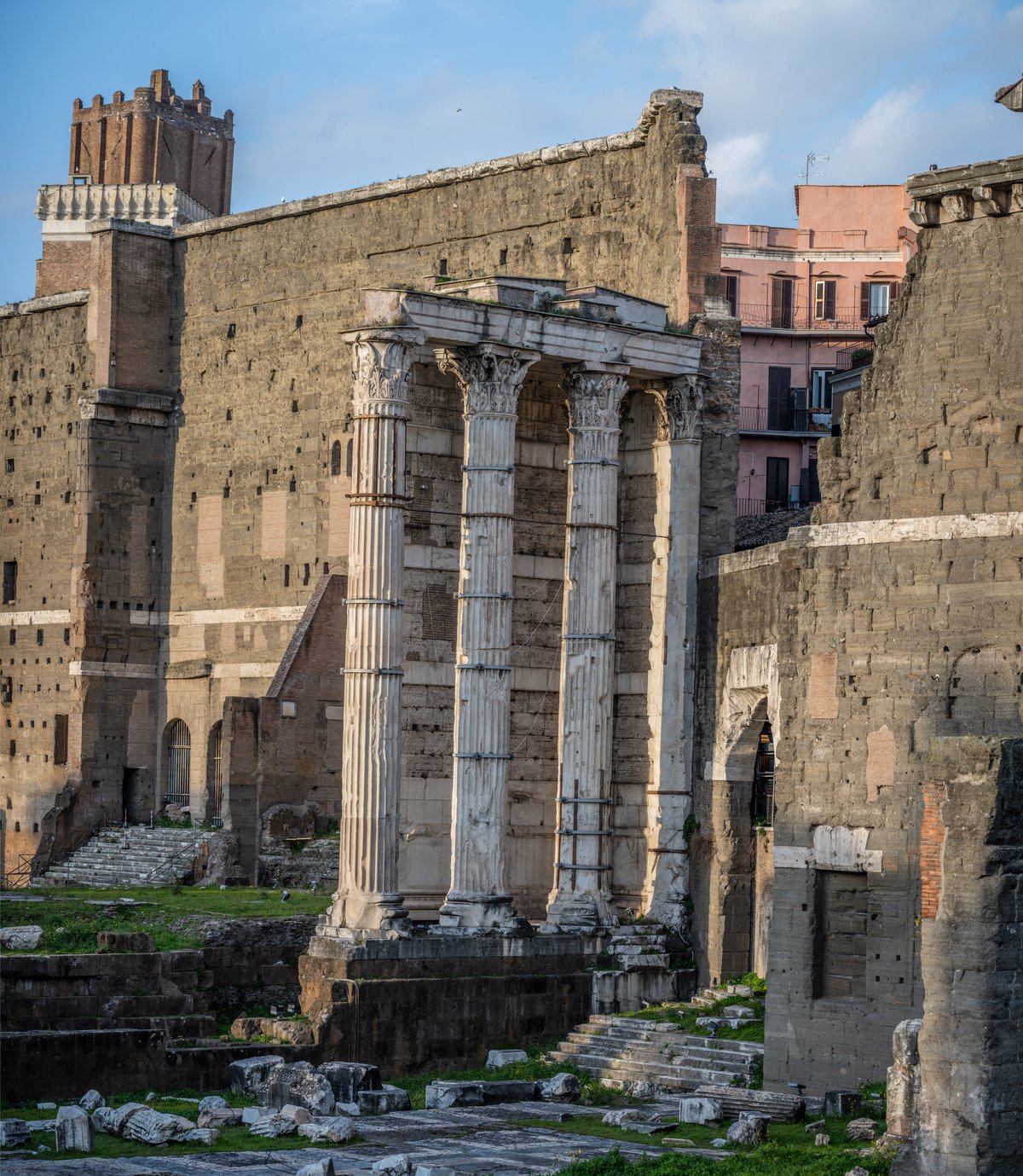
- Octastyle Pronaos: Eight Corinthian columns at the front, each over 17 meters tall, with eleven columns on each side.
- Cella and Statues: The inner sanctuary housed colossal statues of Mars Ultor, Venus Genetrix, and the deified Julius Caesar, visually linking Augustus to divine ancestry (Cambridge University Press PDF, p. 134).
- Porticoes and Exedrae: Flanking porticoes curved into exedras displayed statues of legendary Romans, reinforcing Augustus’ legitimacy.
- Rich Decoration: Colored marble panels, gilded ceilings, and reliefs depicting military triumphs and Augustan victories (GradesFixer).
The Forum of Augustus: Urban Planning and Civic Identity
Spanning roughly 8,000 square meters, the Forum of Augustus centered around the temple and provided venues for judicial, military, and public events. Statues of Rome’s mythical founders and Republican heroes adorned the forum, creating a visual narrative that linked Augustus to Rome’s storied past (World History Encyclopedia).
Visiting the Temple: Practical Information
Visiting Hours and Tickets
- Hours: Generally open daily from 9:00 AM to 7:00 PM (last entry 45 minutes before closing). Hours may vary seasonally or due to special events; always check the official website before your visit (adequatetravel.com).
- Tickets: Entry is included in the combined ticket for the Imperial Fora, Roman Forum, and Colosseum. Prices range from €12–€18 for adults, with reductions for EU citizens under 25 and free entry for children under 18.
- Booking: Advance purchase is recommended, especially during high season.
Accessibility
The site is partially accessible, with ramps and some adapted pathways. However, uneven ancient surfaces and steps present challenges for those with mobility impairments. Contact the visitor center for assistance or special arrangements (travo.me).
Guided Tours and Audio Guides
Guided tours and audio guides (e.g., via the Audiala app) are available and highly recommended for in-depth exploration. These resources provide expert commentary, context, and digital reconstructions of the temple and forum.
Getting There
- Location: Forum of Augustus, off Via dei Fori Imperiali, central Rome.
- Transport: Closest metro station is Colosseo (Line B), about a 5–10 minute walk. Numerous bus lines and taxis serve the area.
- Nearby Attractions: The Roman Forum, Colosseum, Palatine Hill, Capitoline Museums, and Trajan’s Forum are all within walking distance.
Special Events
The site occasionally hosts cultural events and historical reenactments. Check official resources and local listings for upcoming events.
Decline, Rediscovery, and Legacy
Decline and Spoliation
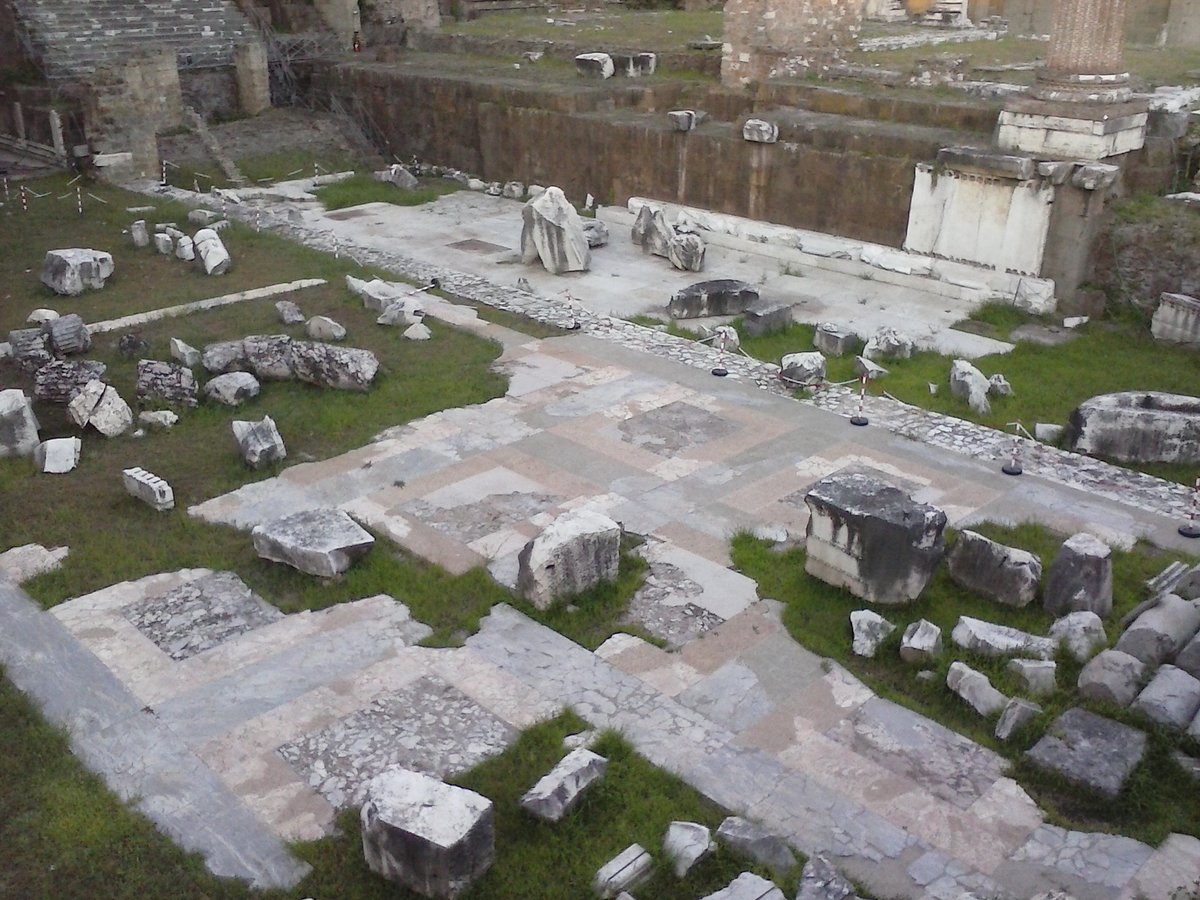
After the fall of the Roman Empire, the temple fell into gradual decline. Changing religious priorities, especially the rise of Christianity, led to its de-monumentalization and eventual spoliation—its marble and decorative elements were repurposed for newer buildings (roman.mythologyworldwide.com; academia.edu).
Archaeological Rediscovery
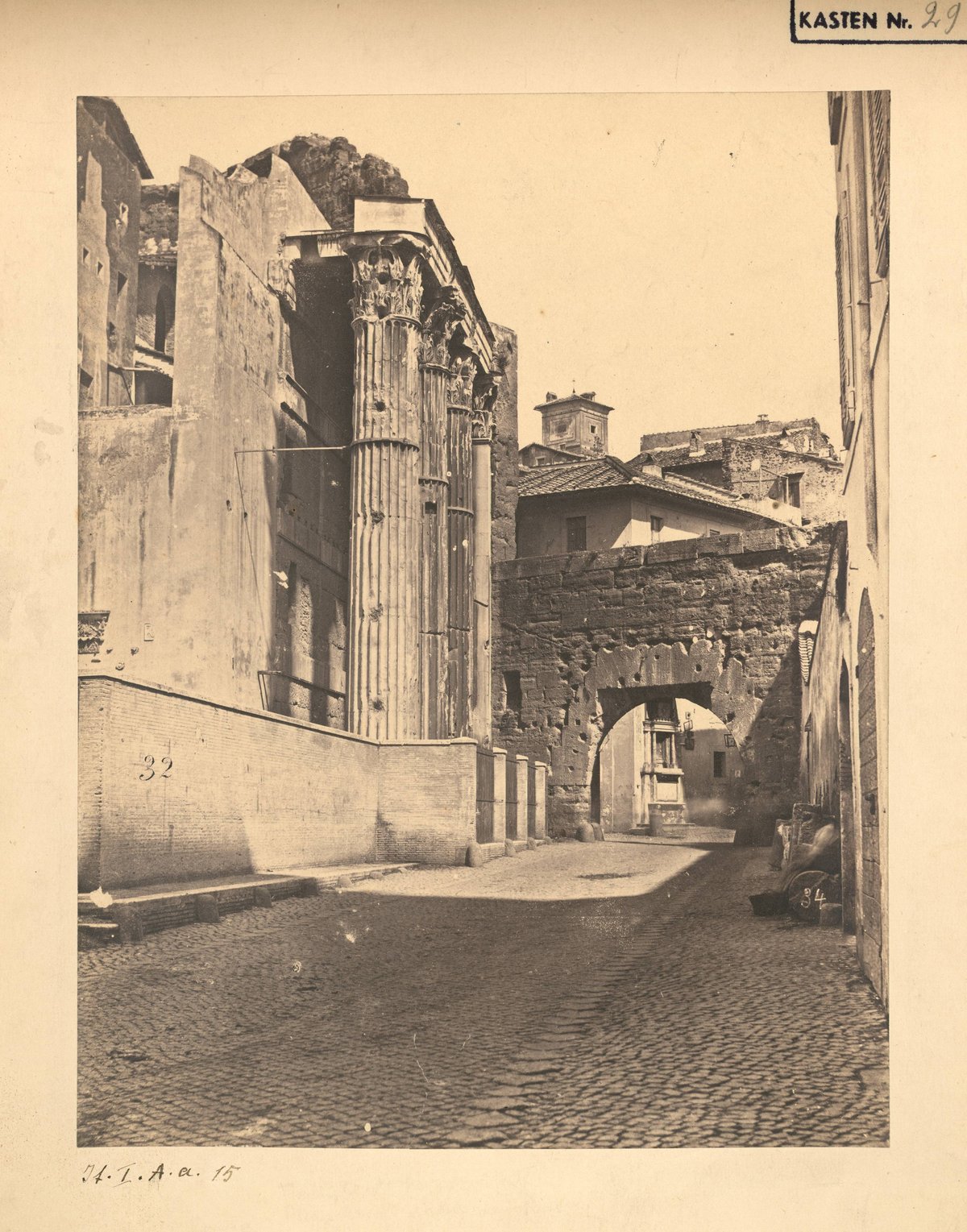
Systematic excavations in the 19th and 20th centuries uncovered the temple’s foundations, podium, columns, and sculptural fragments. Today, visitors can view these remains and appreciate the scale and artistry of this Augustan masterpiece (travo.me).
Modern Legacy
The Temple of Mars Ultor remains a symbol of Rome’s imperial power and its complex relationship with religion and politics. Its surviving columns, detailed capitals, and friezes continue to inspire scholarship, art, and public fascination (Cambridge University Press PDF, p. 156).
Frequently Asked Questions (FAQ)
Q: What are the opening hours of the Temple of Mars Ultor?
A: Generally 9:00 AM to 7:00 PM, but hours may vary. Check the official website for current times.
Q: Is there an entrance fee?
A: Yes, entry is included in the combined ticket for the Imperial Fora complex; adult tickets are around €12–€18.
Q: Is the site accessible to wheelchair users?
A: Partial accessibility is provided. Contact the visitor center for assistance and the latest information.
Q: Are guided tours available?
A: Yes, both guided tours and audio guides are offered; booking in advance is recommended.
Q: What else can I visit nearby?
A: The Roman Forum, Colosseum, Palatine Hill, Capitoline Museums, and Trajan’s Forum are all close by.
Listen to the full story in the app
The whole Temple Of Mars Ultor,
told well.
Audio guides for 1,100+ cities across 96 countries. History, stories, and local insight — offline ready.
Verified, and shown.
Researched and written by the Audiala editorial team from historical records, architectural archives, and local expertise.
Researched from Wikidata, Wikipedia & official sources · fact-checked · How we make our guides →