Plan and listen to Santa Maria Dei Miracoli with Audiala.
Audio guide in your pocket, itinerary in your browser. Built for the way you actually visit.
Introduction
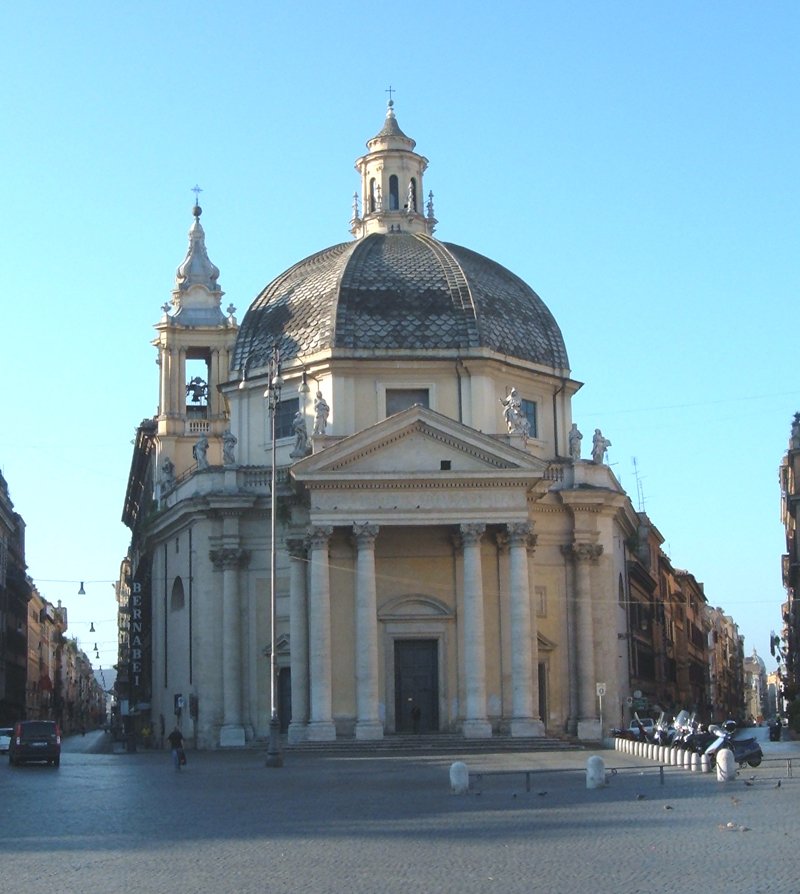
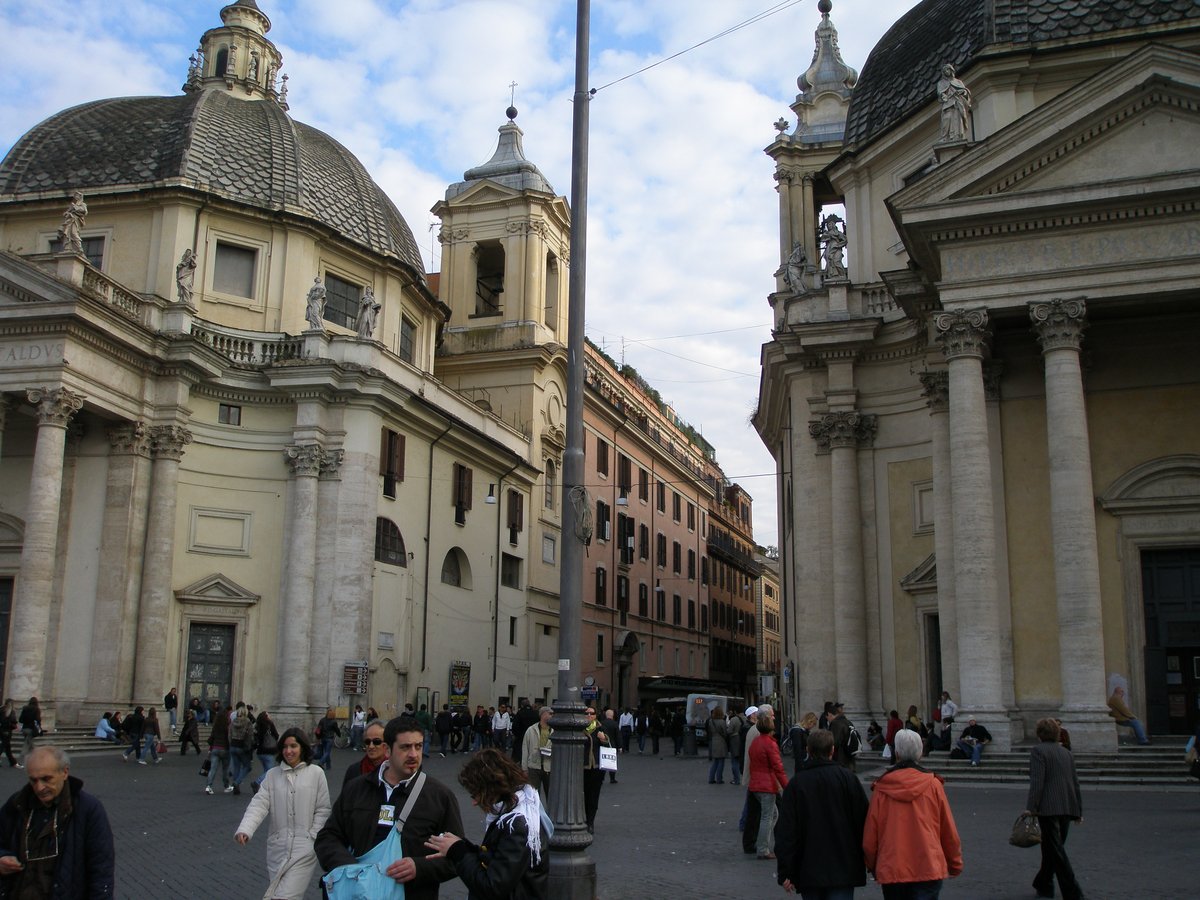
Santa Maria dei Miracoli, located at the southern edge of Rome’s renowned Piazza del Popolo, is a masterpiece of Baroque architecture and an enduring symbol of Marian devotion. As one of the iconic “twin churches” that welcome visitors into the city’s historic center, Santa Maria dei Miracoli is celebrated for its unique circular design, artistic treasures, and spiritual legacy. This guide provides a comprehensive overview for visitors, encompassing the church’s history, architectural highlights, practical visiting details, travel tips, accessibility information, and answers to frequently asked questions.
For further information, official details, and virtual exploration, see these resources: HelloMondo, Roma Wonder, and Museum With No Frontiers.

Historical and Cultural Background
Miraculous Origins and Marian Significance
Santa Maria dei Miracoli’s origins are rooted in a revered legend: in 1325, a desperate mother’s prayers to the Virgin Mary miraculously saved her child from drowning in the Tiber. The miraculous icon became the focus of devotion, inspiring the original riverside chapel and, centuries later, the construction of the present church to house a duplicate of the venerated image (Roma Wonder).
Baroque Vision: Papal Urban Renewal
In the 17th century, Pope Alexander VII initiated sweeping urban renewal projects, commissioning the twin churches at Piazza del Popolo as grand symbols of Catholic unity and artistic splendor. Designed by Carlo Rainaldi and completed by Carlo Fontana, Santa Maria dei Miracoli was finished in 1678, embodying the theatricality and devotional power of Baroque Rome (HelloMondo).
Key Figures and Artistic Contributions
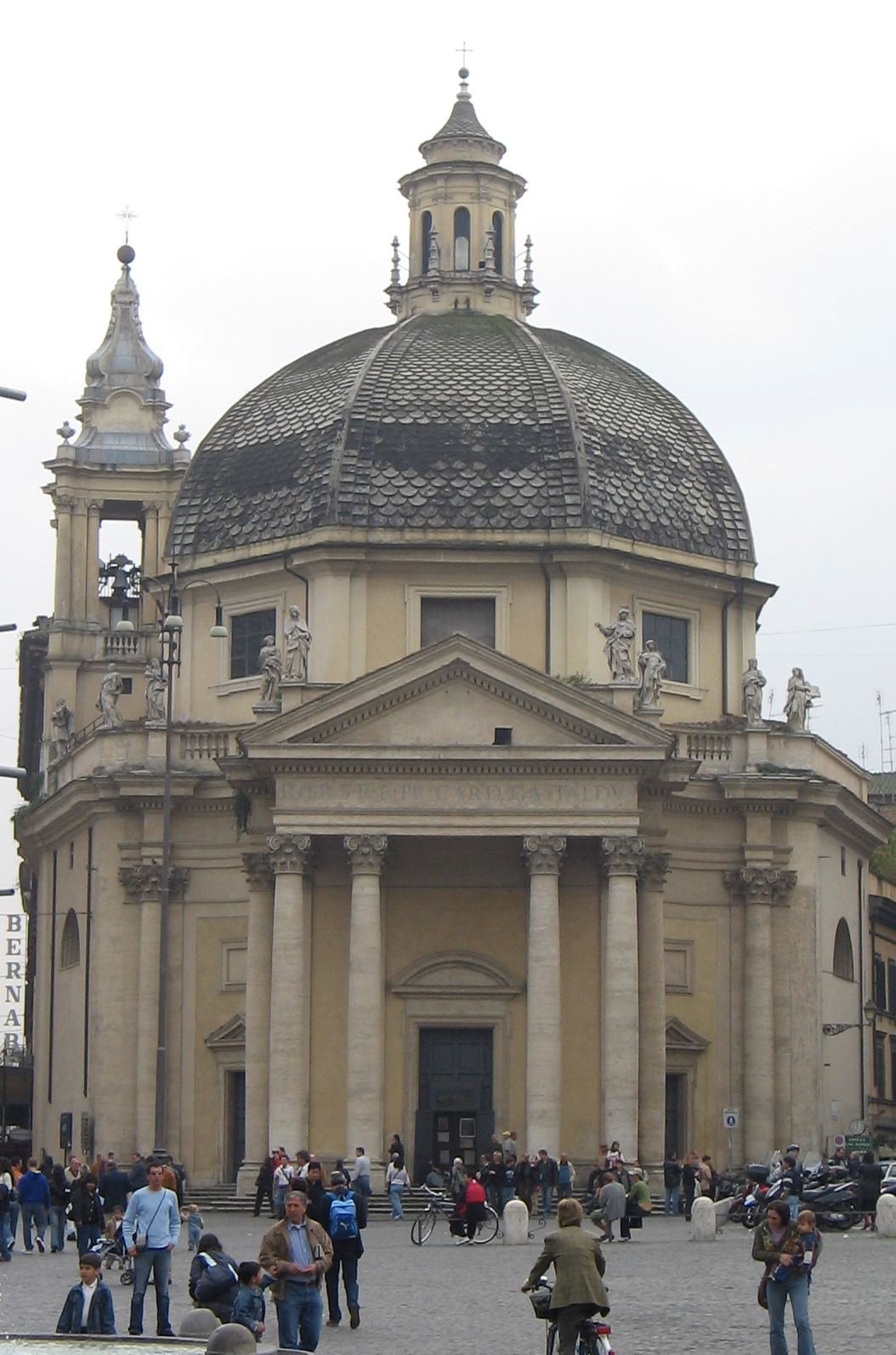
The church’s façade is adorned with statues by Filippo Carcani and Ercole Ferrata, while its interiors feature stuccoes by Antonio Raggi and frescoes by prominent artists, creating a richly immersive spiritual setting (HelloMondo). The high altar enshrines the Madonna dei Miracoli, which remains central to the church’s spiritual identity.
Urban and Civic Significance
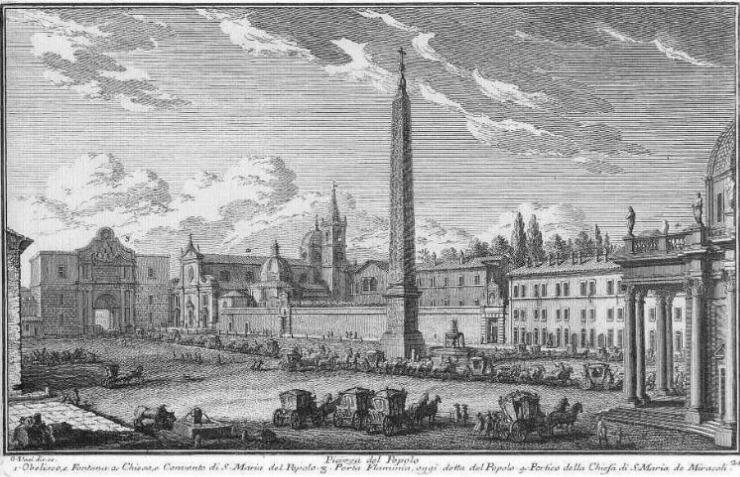
Santa Maria dei Miracoli, together with its twin Santa Maria in Montesanto, frames the ceremonial entrance to Rome and marks the convergence of the Tridente—the three major streets radiating south from Piazza del Popolo. The churches’ domes echo the grandeur of St. Peter’s Basilica and serve as spiritual and visual landmarks for pilgrims and visitors alike (Museum With No Frontiers).
Architectural and Artistic Highlights
Façade and Dome
The elegant façade features Corinthian columns, a classical tympanum, and an inscription honoring Cardinal Gastaldi, the church’s principal benefactor (Rome-Roma.net). The octagonal slate-covered dome, designed by Carlo Fontana, gives the church a distinctive silhouette on the Roman skyline.
Interior Layout and Chapels
Santa Maria dei Miracoli’s circular plan is unique among Rome’s churches, symbolizing harmony and divine perfection. The interior includes four chapels, each with distinctive Baroque artwork and altarpieces. The interplay of natural light, gilded stuccoes, and frescoes creates a vibrant and contemplative atmosphere (HelloMondo).
- First Chapel (Sant’Antonio): Features a Baroque altarpiece by Henry Gascard.
- Chapel of the Rosary: Houses a 19th-century painting of the Madonna del Rosario.
The main altar, lavishly decorated, is home to the revered Madonna dei Miracoli icon (Rome-Roma.net).
Sculptural and Decorative Program
Ten statues of saints adorn the balustrade, and the church’s interior is richly embellished with stuccoes and polychrome marble. Tombs and memorials commemorate notable figures from Baroque Rome (HelloMondo).
Practical Visitor Information
Location and Access
- Address: Via del Corso, 528, Piazza del Popolo, Rome
- Metro: Flaminio (Line A), a 5-minute walk
- Bus: Multiple lines serve Piazza del Popolo
- By Foot: Easily accessible from central landmarks such as the Spanish Steps and Villa Borghese (Renato Prosciutto)
Visiting Hours
- Monday – Saturday: 6:00 – 12:30 and 16:00 – 18:30
- Sunday: 8:00 – 19:00
Note: Hours may vary on public holidays and during special events. Always check the official website or trusted travel sites for current schedules (Tourist in Rom).
Admission and Tickets
- Entry: Free of charge; no tickets required
- Donations: Appreciated to support preservation
Accessibility
- The church is wheelchair accessible, with a small step at the entrance (assistance may be needed).
- No dedicated restrooms; public facilities are available in Piazza del Popolo.
Guided Tours
- Guided tours can be arranged through local operators and often include both twin churches and Piazza del Popolo.
- Informational plaques and audio guide apps are recommended for self-guided visits (Renato Prosciutto).
Visitor Tips and Amenities
Dress Code and Etiquette
- Shoulders and knees should be covered; hats removed upon entry.
- Maintain respectful silence, especially during Mass or prayer.
- Photography is allowed (no flash or tripods).
Best Times to Visit
- Early mornings and late afternoons provide a quieter, more contemplative experience.
- Peak seasons (April–June, October) and the 2025 Jubilee Year may bring larger crowds (Untold Italy).
Facilities
- No cloakroom or luggage storage; travel light.
- No on-site gift shop, but religious souvenirs are available nearby (This Way to Italy).
Nearby Attractions
- Santa Maria in Montesanto: The “twin” church, directly across the piazza
- Piazza del Popolo: A grand square with an Egyptian obelisk and fountains
- Via del Corso: Rome’s main shopping street
- Villa Borghese Gardens: Green space and panoramic city views
- Spanish Steps: A short walk to the southeast
Numerous cafes and restaurants in the area make it easy to combine your visit with a meal or shopping.
Special Events and Jubilee 2025
Santa Maria dei Miracoli is an active parish and hosts regular Masses, religious feasts, and community events. In 2025, Rome’s Jubilee is expected to draw millions of pilgrims, increasing visitor numbers and activity in the area (Visit Italy). Plan accordingly, book accommodation early, and consult the Jubilee Calendar for special schedules.
Frequently Asked Questions (FAQ)
Q: Are tickets required to enter Santa Maria dei Miracoli?
A: No, entry is free to all visitors.
Q: What are the current visiting hours?
A: Monday–Saturday: 6:00–12:30 and 16:00–18:30; Sunday: 8:00–19:00.
Q: Is the church wheelchair accessible?
A: The church is mostly accessible, with a small step at the entrance; assistance may be required.
Q: Can I attend Mass?
A: Yes, regular Masses are held. Check posted schedules and arrive early.
Q: Is photography allowed?
A: Yes, but flash and tripods are discouraged.
Q: How do I get there?
A: Take Metro Line A to Flaminio or buses to Piazza del Popolo; the church is a short walk from both.
Discover More
Santa Maria dei Miracoli is a jewel of Baroque Rome, bridging history, art, and faith. With its free entry, accessible location, and architectural beauty, it is a must-see for anyone exploring Rome’s historic core. Plan your visit early in the day or late in the afternoon for a peaceful experience, and consider pairing your trip with nearby cultural attractions and walking tours.
To stay updated on visiting hours, special events, or travel tips, download the Audiala app and follow us on social media. For additional insights and the latest news, consult trusted resources such as Visit Italy, Free-City-Guides.com, and Untold Italy.
Listen to the full story in the app
The whole Santa Maria Dei Miracoli,
told well.
Audio guides for 1,100+ cities across 96 countries. History, stories, and local insight — offline ready.
Verified, and shown.
Researched and written by the Audiala editorial team from historical records, architectural archives, and local expertise.
Researched from Wikidata, Wikipedia & official sources · fact-checked · How we make our guides →