Plan and listen to Porticus Octaviae with Audiala.
Audio guide in your pocket, itinerary in your browser. Built for the way you actually visit.
Introduction to the Porticus Octaviae
The Porticus Octaviae, situated in the heart of Rome’s Sant’Angelo district and the historic Jewish Ghetto, is a striking testament to the city's layered past. Originally constructed in 146 BCE as the Porticus Metelli and later magnificently refurbished by Emperor Augustus in 27 BCE, this monumental structure was dedicated to his sister, Octavia Minor. Enclosing the Temples of Juno Regina and Jupiter Stator, the portico served as a religious, civic, and cultural hub—housing libraries, assembly halls, and art collections. Through centuries of transformation—from a Republican monument to an imperial center, a medieval church, and a bustling fish market—the Porticus Octaviae remains a vital archaeological site that offers unique insights into Rome’s enduring historical and cultural continuity.
This comprehensive guide delves into the monument’s rich history, notable architectural features, practical visitor information (including opening hours, tickets, and accessibility), nearby attractions such as the Theatre of Marcellus and the Jewish Ghetto, and insider tips for guided tours and photography. Whether your passion lies in history, architecture, or cultural travel, the Porticus Octaviae provides an enriching experience at the heart of Rome’s urban tapestry. For official tourism details and virtual tours, see Roma Turismo and Jeff Bondono’s Rome Guide.


Origins and Early Development
The Porticus Octaviae began its story as the Porticus Metelli, constructed by Quintus Caecilius Metellus Macedonicus in 146 BCE to celebrate Rome’s victory in the Achaean War. Erected near the Circus Flaminius, it enclosed the Temple of Juno Regina (dating from 179 BCE) and the newly built Temple of Jupiter Stator. Richly adorned with Greek statuary brought from conquered territories, the portico symbolized Rome’s triumph and its embrace of Hellenistic culture.
Augustan Refurbishment and Dedication
Following the rise of Augustus, the portico underwent a grand transformation in 27–26 BCE. Augustus rededicated the complex to his sister, Octavia Minor, reinforcing both familial honor and dynastic legitimacy. The refurbishment expanded the complex’s role to include libraries (Greek and Latin), assembly halls, and lecture rooms, making it an intellectual and political hub.
Architectural Features and Artistic Significance
Architecturally, the Porticus Octaviae was a rectangular enclosure, approximately 119 by 132 meters, featuring a double row of around 300 Corinthian marble columns. The two temples within—Juno Regina and Jupiter Stator—were focal points, with the latter being Rome’s first all-marble temple, designed by Hermodorus of Salamis. The portico also displayed significant artworks, such as the turma Alexandri (a bronze equestrian group by Lysippos) and statues representing Roman virtues.
Fires, Restorations, and Later History
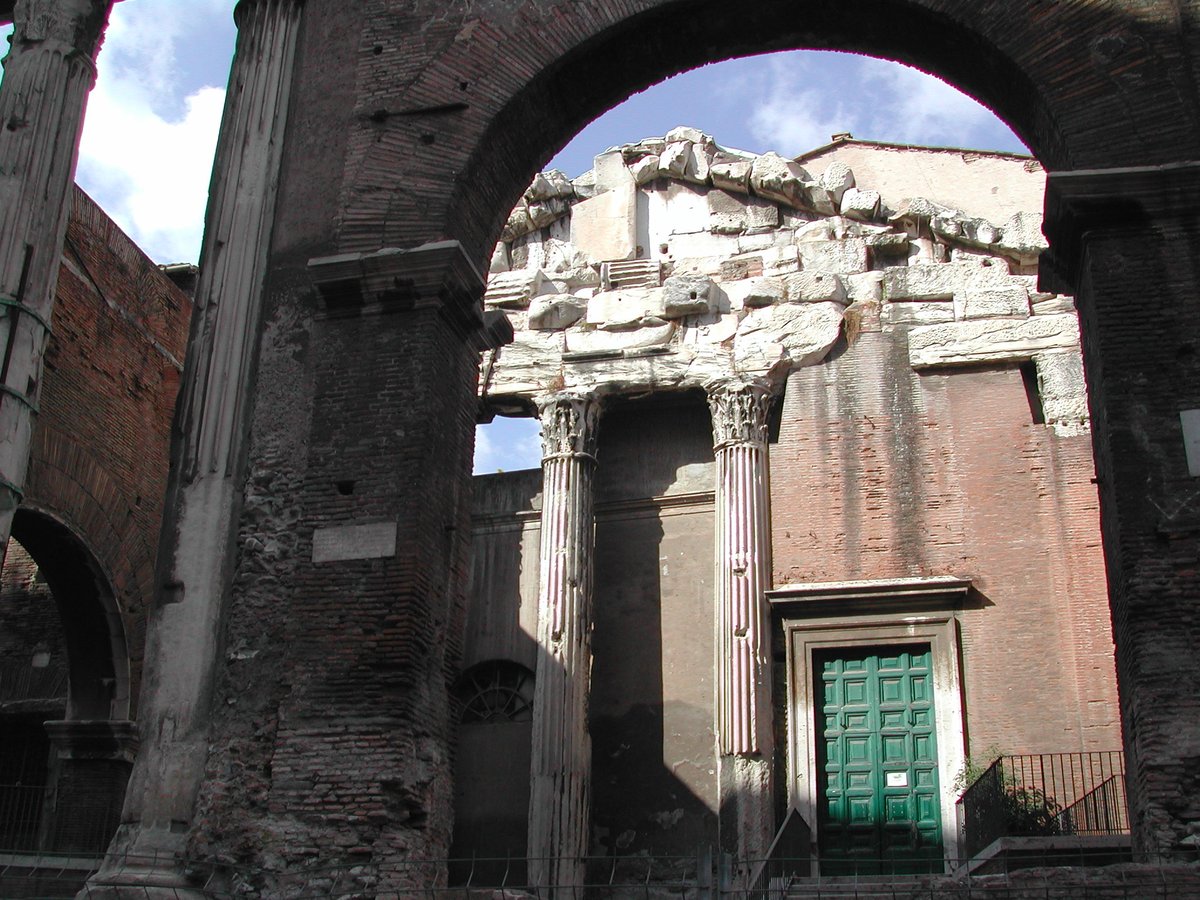
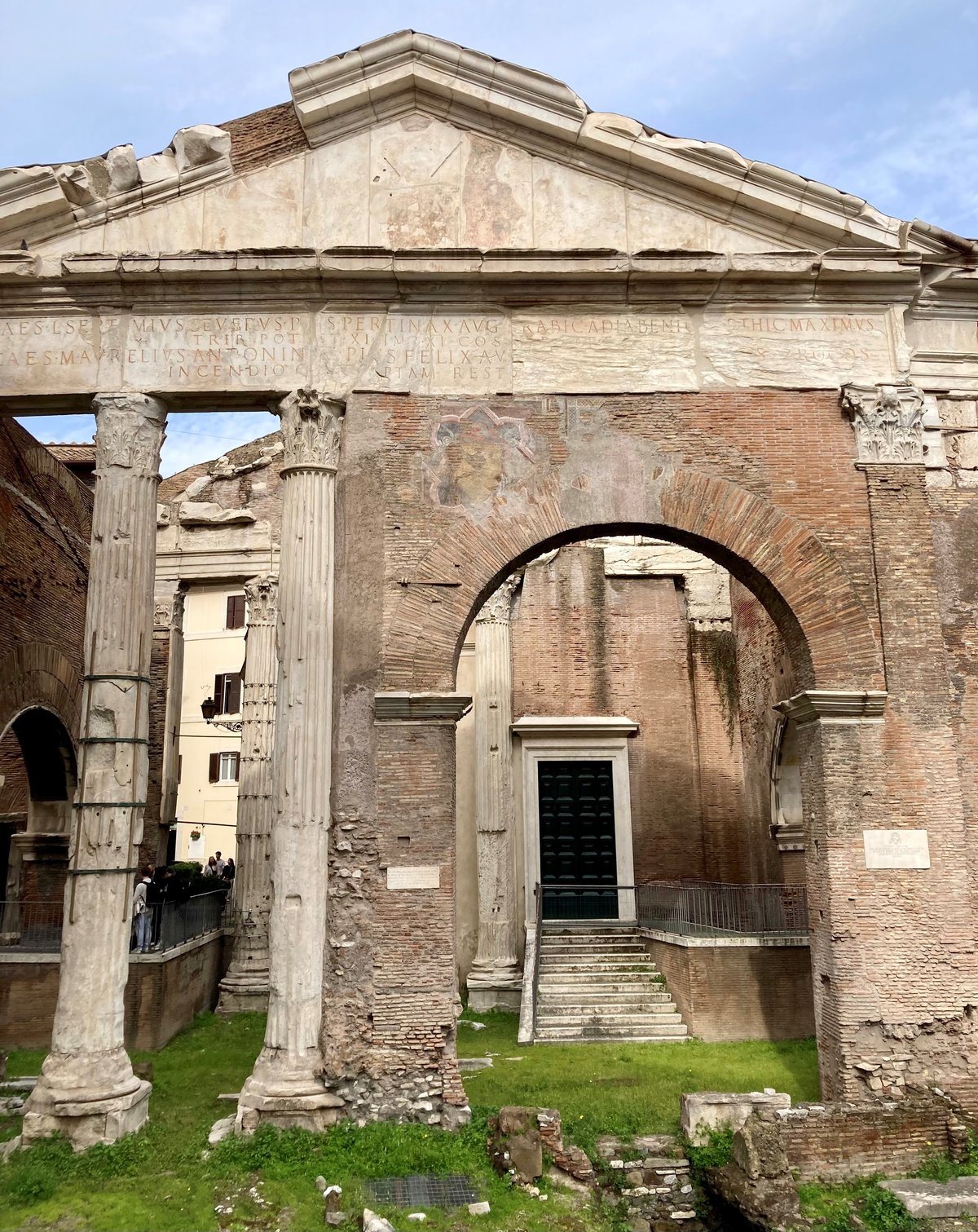
The monument suffered fires in 80 CE and 203 CE, with subsequent restorations by Emperors Domitian, Septimius Severus, and Caracalla. An earthquake in 442 CE resulted in the replacement of two columns with the now-iconic brick archway at the entrance—a distinctive feature visible today.
Medieval and Early Modern Transformations
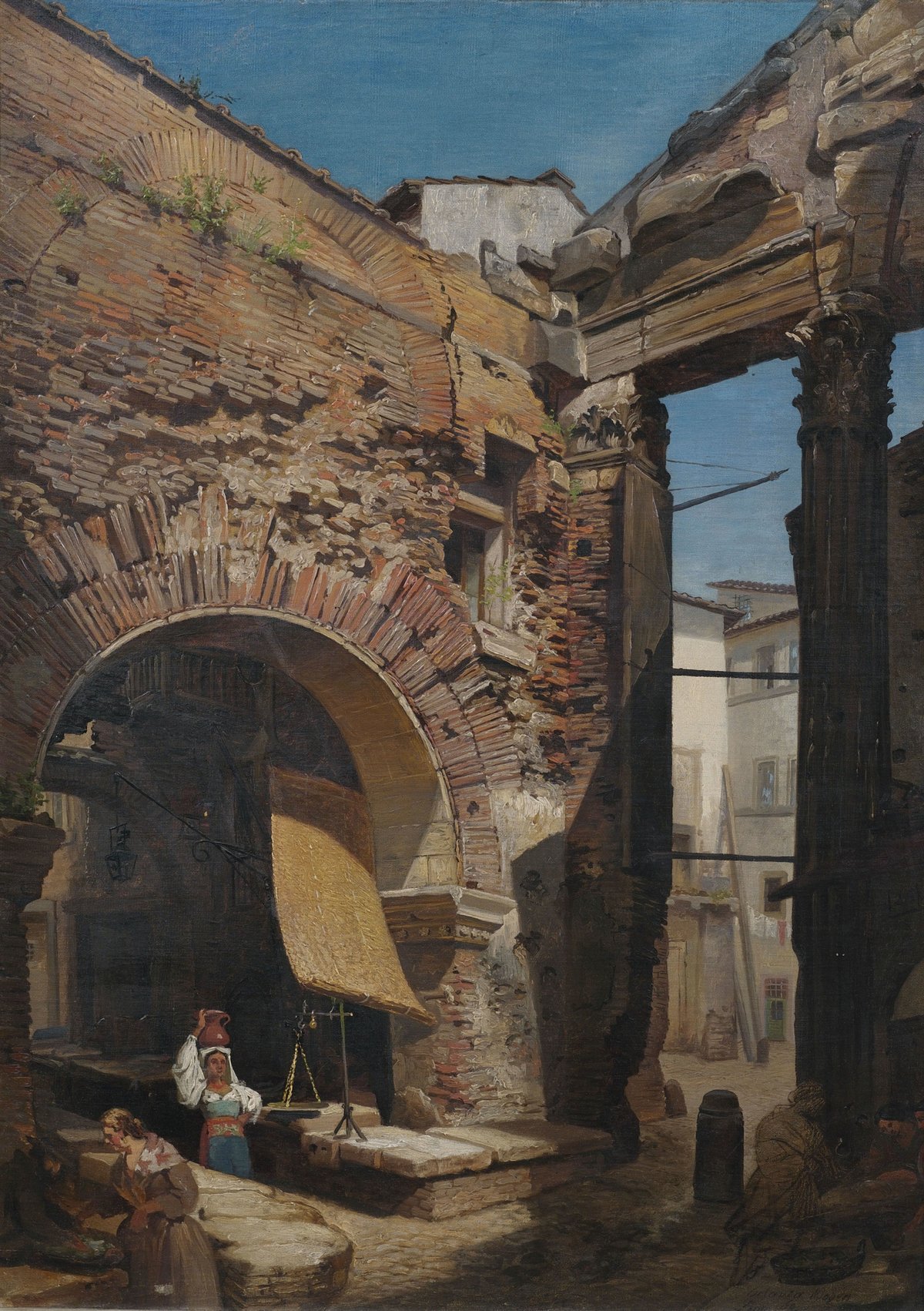
By the 8th century, the portico was repurposed to house the church of Sant’Angelo in Pescheria and functioned as Rome’s main fish market until the late 19th century. As the area became part of the Roman Ghetto, the portico’s ruins remained a central part of community life and urban development.
Relationship to Other Ancient Porticoes
The Porticus Octaviae is sometimes confused with the nearby Porticus Octavia, constructed in 168 BCE by Gnaeus Octavius. Both structures stood in the Campus Martius and underwent Augustan refurbishment, underscoring the district’s architectural and political importance in ancient Rome.
Visiting the Porticus Octaviae
Visiting Hours and Tickets
- Opening Hours: The Porticus Octaviae is an open-air archaeological site accessible daily from 9:00 AM to 7:00 PM, with last entry at 6:30 PM. As there is no ticketed entry, visiting is flexible; for safety and the best experience, daylight hours are recommended.
- Admission: Entry to the site is free. Guided tours or combined tickets with nearby attractions may have a fee.
Accessibility
The site is partially accessible. A gently sloping ramp from Via del Portico d’Ottavia provides access, but visitors should be aware of uneven surfaces and ancient steps. Wheelchair users and those with mobility concerns are advised to plan ahead and wear comfortable footwear.
Guided Tours and Events
Numerous local operators offer guided walking tours that include the Porticus Octaviae, often as part of broader explorations of the Jewish Ghetto and central Rome. Special events, such as summer concerts or heritage days, are occasionally held in the portico or its vicinity—check local listings for updates.
Nearby Attractions
- Jewish Quarter (Ghetto): Discover centuries of heritage, vibrant streets, and acclaimed Roman-Jewish cuisine.
- Theatre of Marcellus: An imposing ancient theatre, just steps from the portico.
- Great Synagogue of Rome: A landmark of the Jewish community and open for tours.
- Piazza Mattei and Turtle Fountain: A picturesque spot nearby.
- Tiber River Waterfront: Ideal for scenic walks.
Photography Tips
The best lighting for photography is during the golden hour—early mornings or late afternoons. The juxtaposition of ancient ruins with the lively neighborhood creates memorable images. Please be mindful of religious events and local residents when photographing.
Architectural Features and Visitor Guide
Layout and Dimensions
The Porticus Octaviae was designed as a monumental rectangular enclosure measuring approximately 119 by 132 meters (turismoroma.it). The main entrance, or propylaeum, faced the Circus Flaminius and featured a pediment atop Corinthian columns.
Colonnades and Structural Elements
Its double colonnade of roughly 300 marble Corinthian columns created an impressive covered walkway. The complex rested on a low podium, with the temples and libraries integrated into the overall layout (italyguides.it).
Propylaeum (Monumental Entrance)
The propylaeum, now visible as the main entrance on Via del Portico d’Ottavia, combines ancient marble columns and a distinctive brick arch added after the 5th-century earthquake (romeactually.com).
Temples Within the Portico
- Temple of Juno Regina: Dates from 179 BCE; preserved and incorporated during Augustus’s renovation.
- Temple of Jupiter Stator: Built in 146 BCE, it was Rome’s first all-marble temple, reflecting Greek design (aviewoncities.com).
Additional Structures
The complex included Greek and Latin libraries, an assembly hall (Curia Octaviae), and spaces for displaying artworks (madainproject.com).
Artistic Embellishments
Among the famed artworks were the turma Alexandri and statues of Roman women symbolizing virtue (turismoroma.it).
Visitor Experience and Practical Tips
Getting There
The Porticus Octaviae is located at Via del Portico d’Ottavia, easily reached by foot from landmarks such as Piazza Venezia and the Tiber River. The nearest metro stop is Circo Massimo (Line B), about a 10-minute walk; multiple bus routes also serve the area.
Best Times to Visit
Spring (April–June) and early autumn (September–October) offer the most pleasant weather. For fewer crowds and optimal lighting, visit early in the morning or late in the afternoon.
Amenities and Safety
Nearby, you’ll find restrooms, cafes, and restaurants—many serving Roman-Jewish specialties. The neighborhood is lively and safe, but as with all archaeological sites, watch your step on uneven surfaces.
Frequently Asked Questions (FAQ)
Is there an entrance fee?
No, visiting the Porticus Octaviae is free of charge.
Are guided tours available?
Yes, many local guides and tour companies include the portico in their itineraries.
What are the best visiting hours?
Daytime hours are best, particularly early morning or late afternoon for photography and fewer crowds.
Is the site accessible for wheelchairs?
The site has ramp access, but some surfaces are uneven; visitors with mobility needs should take care.
Can I visit independently?
Yes, the site is open to the public and can be explored on your own or as part of a guided tour.
Are there special events?
Occasionally, concerts and cultural events are held at or near the portico—check local event calendars.
Preservation and Ongoing Research
The Porticus Octaviae is the subject of ongoing conservation by Rome’s archaeological authorities, focusing on structural stabilization and public safety. Continued research and excavations reveal new insights into the monument’s significance. Visitors are encouraged to respect site guidelines and support preservation efforts.
Listen to the full story in the app
The whole Porticus Octaviae,
told well.
Audio guides for 1,100+ cities across 96 countries. History, stories, and local insight — offline ready.
Verified, and shown.
Researched and written by the Audiala editorial team from historical records, architectural archives, and local expertise.
Researched from Wikidata, Wikipedia & official sources · fact-checked · How we make our guides →