Plan and listen to Porticus Aemilia with Audiala.
Audio guide in your pocket, itinerary in your browser. Built for the way you actually visit.
Introduction: History and Significance
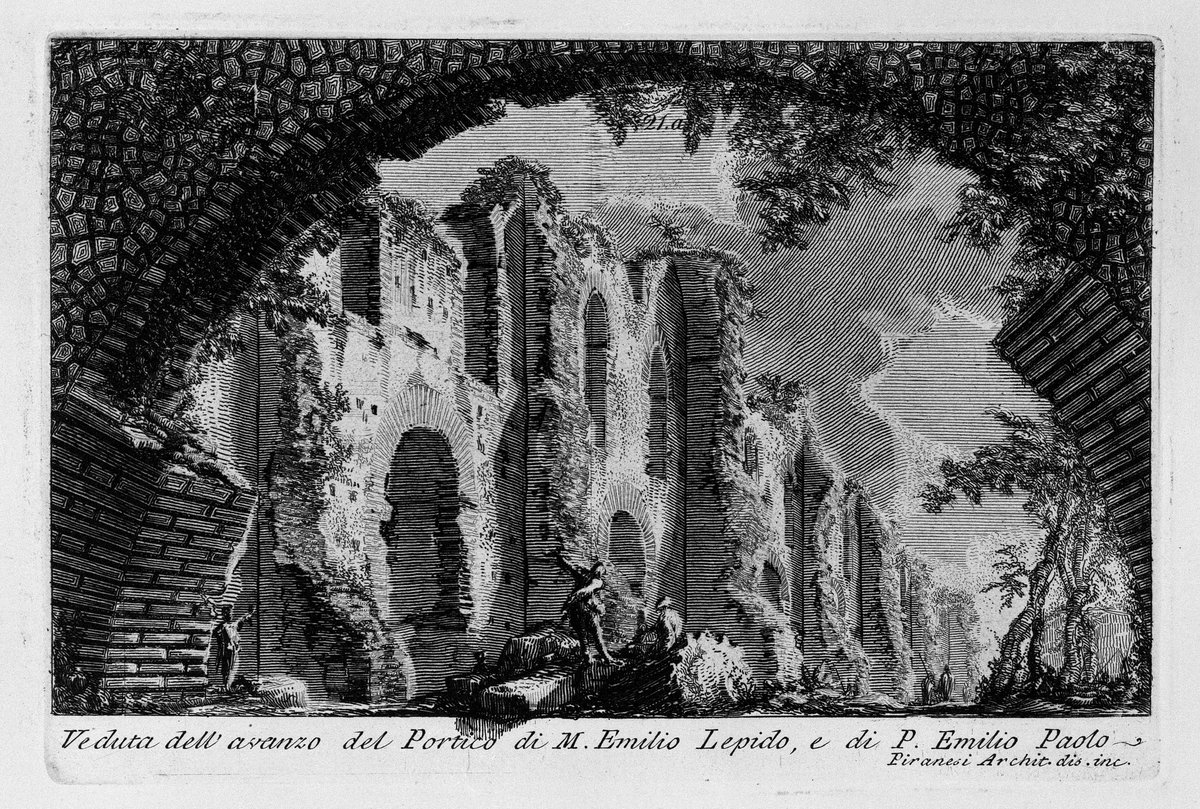
In Rome’s lively Testaccio district, the Porticus Aemilia stands as a monumental testament to Roman engineering and commercial organization. Built in 193 BCE by Marcus Aemilius Lepidus and Lucius Aemilius Paulus, this colossal structure was a key warehouse supporting the Emporium—Rome’s main river port on the Tiber (Burgers et al., 2015). With its vast size—nearly 487 meters long and 60 meters wide—the Porticus Aemilia exemplifies early Roman innovation in concrete construction, notably featuring opus incertum masonry and pioneering barrel vaults, which set new standards for architectural achievement (Academia.edu).
Today, the site is an open archaeological landmark, accessible free of charge, offering a tangible glimpse into ancient Rome’s commercial infrastructure. Its setting in Testaccio—a neighborhood celebrated for its authentic local culture, bustling markets, and vibrant dining scene—makes a visit both historically enriching and culturally immersive (Roma Segreta; Turismo Roma).
This guide details everything you need: visiting hours, accessibility, transport, architectural highlights, history, and suggestions for exploring nearby attractions. Whether you’re a dedicated history enthusiast or a curious traveler, the Porticus Aemilia offers a unique window into the evolution of Rome’s urban landscape (Stanford Nash Exhibit; De Rerum Gestarum).

Essential Visitor Information
Visiting Hours and Ticket Information
The Porticus Aemilia is an open-air archaeological site with no official ticketing or entry requirements. The ruins can be viewed at any time from surrounding streets, with the best experience during daylight hours (typically 9:00 AM to sunset). There are no entrance fees (Turismo Roma).
Accessibility
The site’s perimeter is paved and accessible for most visitors, though the terrain along the fences can be uneven. While ramps and walkways improve accessibility, the fenced-off ruins themselves are not wheelchair accessible. Comfortable walking shoes are recommended.
Guided Tours and Special Events
While there are no permanent on-site tours, local associations and archaeological authorities occasionally offer guided visits and cultural events (Roma Segreta; Sovrintendenza Capitolina). For updates, check official tourism sites or local event calendars.
Directions
Location: Between Via Rubattino and Via Beniamino Franklin, with additional views from Via Florio and Via Amerigo Vespucci in Testaccio.
- By Metro: Line B to Piramide station, then a 10-minute walk.
- By Bus: Multiple lines serve the area.
- By Foot: Testaccio is pedestrian-friendly and easily explored on foot.
Nearby Attractions
- Pyramid of Cestius: An ancient Roman pyramid near Piramide station.
- Monte Testaccio: An artificial mound of pottery shards, a unique archaeological site.
- Testaccio Market: Renowned for local food and authentic Roman atmosphere.
- Aventine Hill: Offers scenic views and tranquil gardens.
Origins and Construction
Built in 193 BCE and expanded in 174 BCE, the Porticus Aemilia was one of the ancient world’s largest warehouses, constructed with opus incertum concrete and tufa blocks (Britannica). It served as the logistical backbone for the Emporium port, storing and distributing grain and other goods arriving via the Tiber.
Evolution Through the Centuries
Initially a warehouse, the Porticus Aemilia was later adapted into public horrea (warehouses) as Rome’s population and logistical needs grew (Burgers et al., 2015, p.202). The structure remained in use through late antiquity, eventually falling into disrepair and repurposed as a burial ground in the Middle Ages.
Architectural and Urban Significance
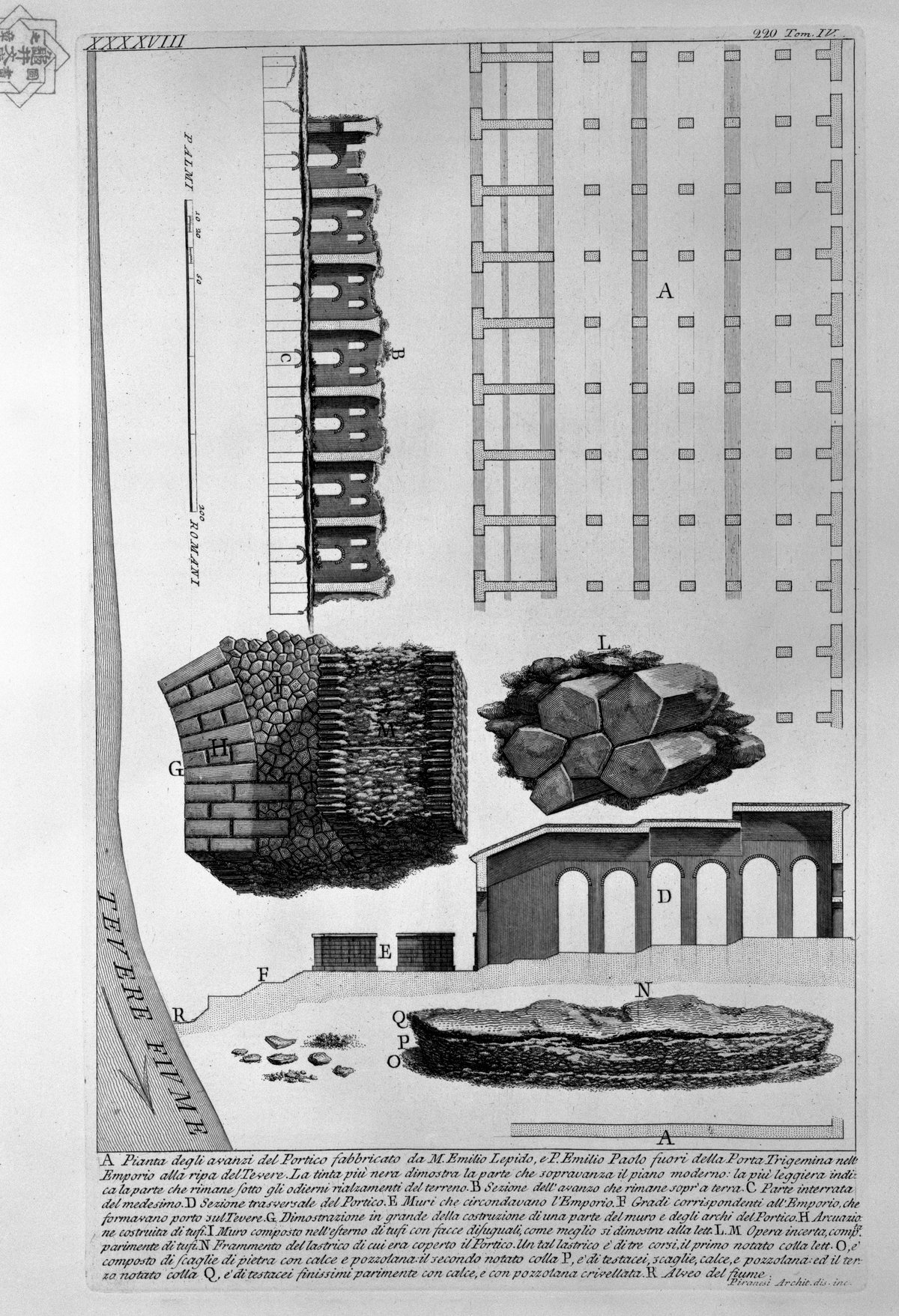
The Porticus Aemilia was a pioneering example of concrete construction, its design influencing later Roman architecture. Surviving sections, including massive concrete piers and barrel vaults, are among the earliest and most impressive uses of Roman concrete (Academia.edu).
Architectural Features
Location and Urban Context
Situated along the Tiber in what was once the Emporium, the Porticus Aemilia’s proximity to the river enabled efficient unloading and storage of goods (Stanford Nash Exhibit).
Layout and Structural System
With over 50 parallel bays covered by barrel vaults and supported by a “forest” of concrete piers, the building stretched nearly half a kilometer. The sloping levels followed the riverbank’s descent, aiding the gravity-assisted movement of cargo (De Rerum Gestarum).
Functional Design and Logistics
Each bay had entrances at both ends, facilitating the rapid transfer of goods from ship to storage. The structure’s role in grain distribution was central to the annona, Rome’s grain supply system, with an efficient system for distributing rations to citizens.
Lighting and Ventilation
The open bays, arcades, and possible windows at level changes allowed for ample natural light and ventilation, crucial for storing perishable goods and ensuring worker safety.
Decorative Elements
Primarily utilitarian, the Porticus Aemilia may have included some engaged columns or pilasters, though ornamentation was minimal, emphasizing durability and function.
Modifications and Modern Remains
The structure was expanded in 174 BCE and further modified under the emperors Claudius and Trajan with the addition of docks and ramps. In later centuries, parts of the Porticus were repurposed, and the site became known as “Marmorata” due to marble storage (Stanford Nash Exhibit). Significant remains are visible along Via Rubattino and Via Florio.
Tips for Visitors
- Best time to visit: Early morning or late afternoon for optimal lighting and minimal crowds (Voyage Tips).
- What to bring: Comfortable shoes, sun protection, water, and a camera.
- Amenities: Testaccio offers cafes, restaurants, and public restrooms nearby.
- Etiquette: Respect fencing and preservation efforts; do not attempt to enter restricted areas.
Frequently Asked Questions (FAQ)
Q: Are there entrance fees or tickets required?
A: No, viewing the ruins from public streets is free.
Q: What are the visiting hours?
A: Open-air access is available at all hours, but daylight is best for viewing.
Q: Is the site wheelchair accessible?
A: The surrounding streets are accessible, though the fenced ruins are not.
Q: Can I enter the ruins?
A: No, access is restricted to viewing from outside the fences.
Q: Are guided tours available?
A: Yes, occasionally, through local associations or as part of broader Testaccio tours.
Q: What else is nearby?
A: Visit the Pyramid of Cestius, Monte Testaccio, and the Testaccio market.
Further Engagement
Ready to explore more of Rome’s hidden treasures? Download the Audiala app for expert audio guides and up-to-date visitor information. Follow us on social media for travel tips and the latest updates from the Eternal City.
Listen to the full story in the app
The whole Porticus Aemilia,
told well.
Audio guides for 1,100+ cities across 96 countries. History, stories, and local insight — offline ready.
Verified, and shown.
Researched and written by the Audiala editorial team from historical records, architectural archives, and local expertise.
Researched from Wikidata, Wikipedia & official sources · fact-checked · How we make our guides →