Plan and listen to Porta Settimiana with Audiala.
Audio guide in your pocket, itinerary in your browser. Built for the way you actually visit.
Introduction
Via di Porta Settimiana offers a fascinating journey through Rome's rich historical and cultural landscape. Situated in the vibrant Trastevere district, this iconic street begins at Porta Settimiana, a gate that dates back to the Roman Empire and has witnessed centuries of transformations. Named after Emperor Septimius Severus, Porta Settimiana stands as a testament to Rome's architectural and historical heritage, serving as a crucial entry point into the Trastevere district and a connection to the Vatican area. This guide delves into the historical significance of Via di Porta Settimiana, provides practical visitor information, and highlights nearby attractions and travel tips to help you make the most of your visit. Whether you're a history enthusiast, architecture aficionado, or casual traveler, Via di Porta Settimiana offers a unique glimpse into the Eternal City's past and present (Jeff Bondono, Wikipedia).

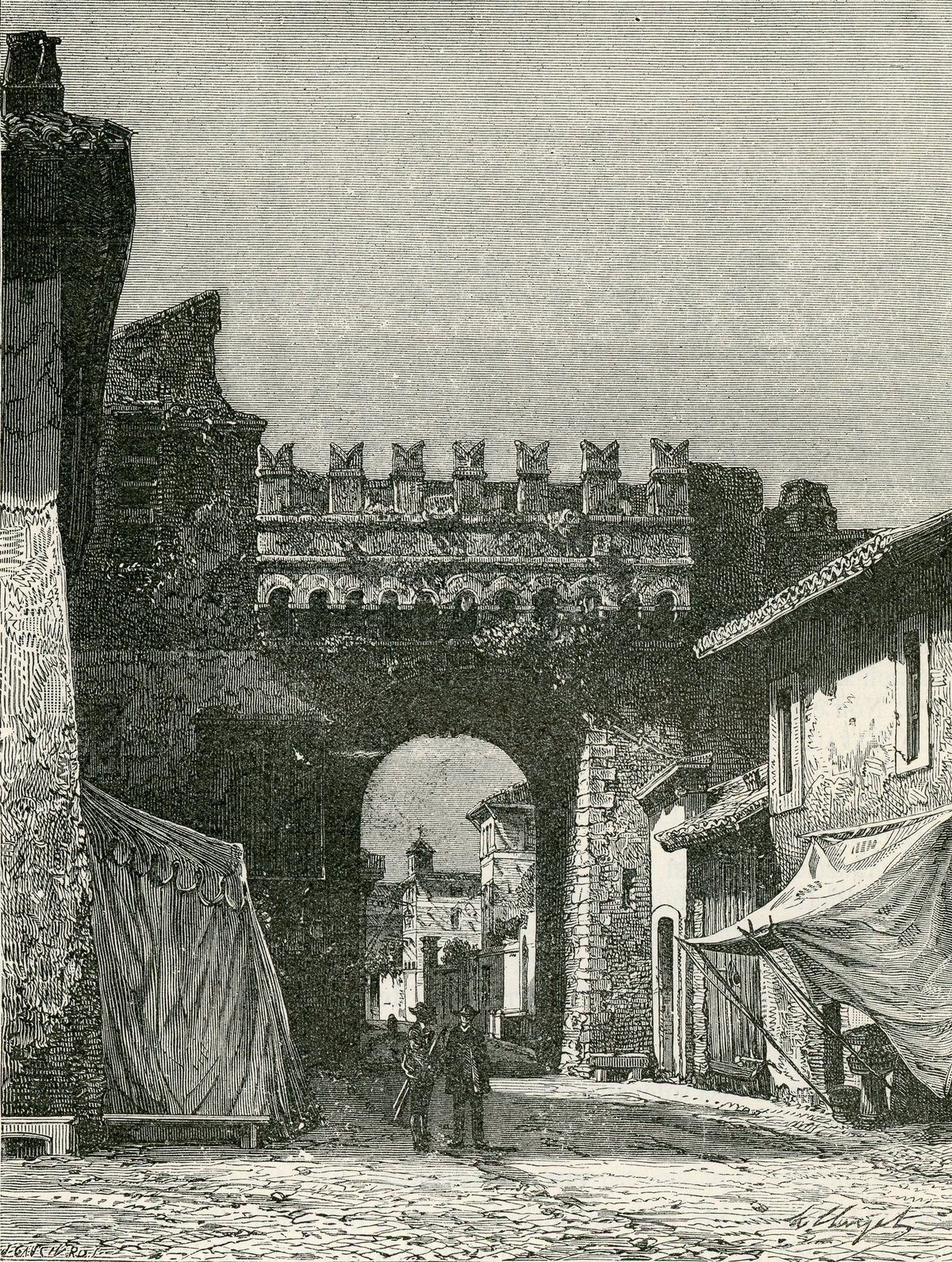
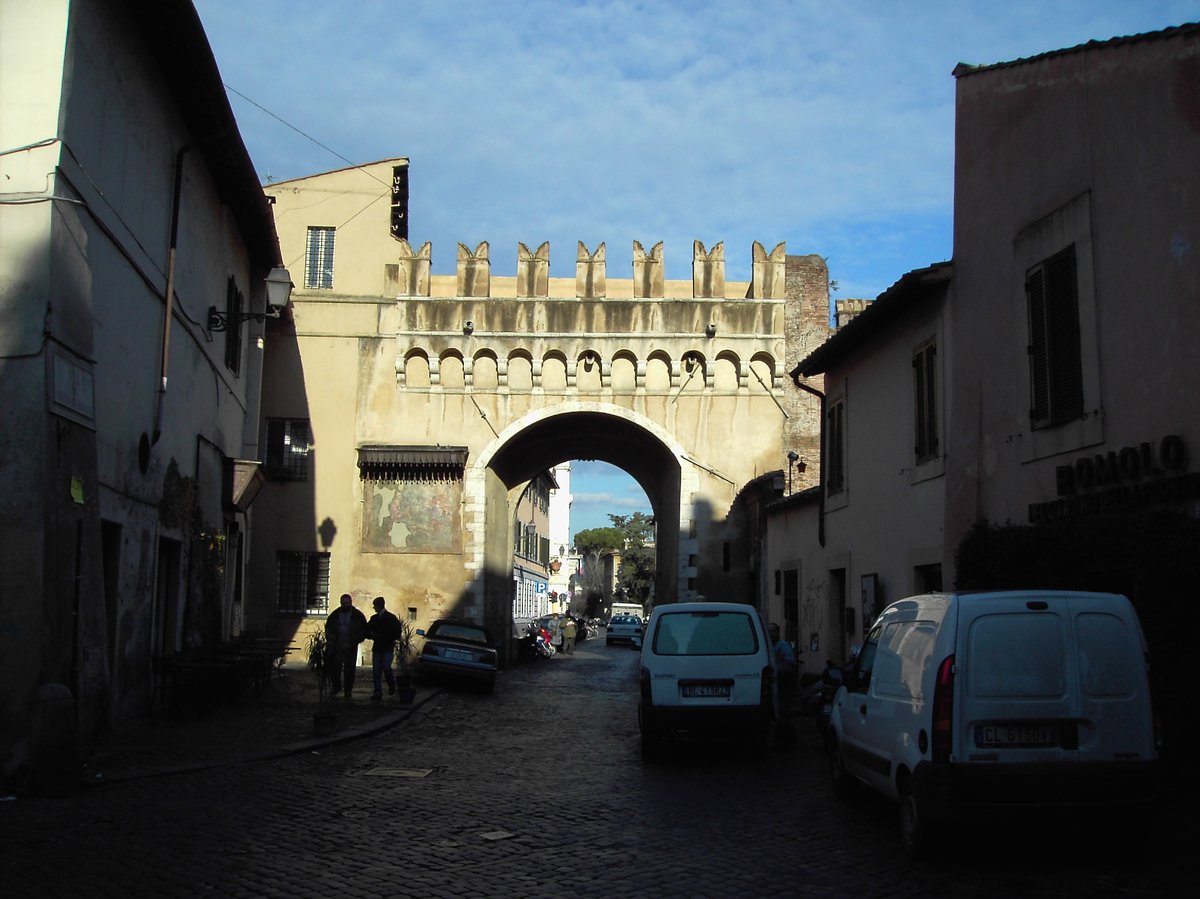
Historical Background
Origins and Early History
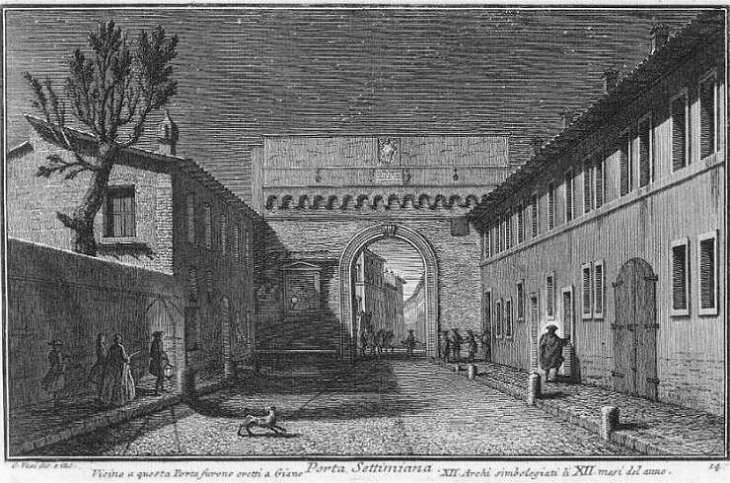
The origins of Porta Settimiana are deeply rooted in the Roman Empire's history. The gate is named after Emperor Septimius Severus, who reigned from 193 to 211 AD. During his rule, Severus constructed a set of baths in the Trastevere district, although the exact location of these baths remains unknown. The entrance to these baths was marked by what would later become Porta Settimiana (Jeff Bondono).
The Aurelian Wall
In 275 AD, Emperor Aurelian undertook the construction of a new city wall to protect Rome from increasing external threats. This wall, known as the Aurelian Wall, replaced the older and insufficient Servian Wall. The Aurelian Wall was a massive structure, stretching 12 miles and enclosing an area of 5.3 square miles. It was 11 feet thick and 26 feet high, with square towers every 97 feet. The wall enclosed all seven hills of Rome, the Campus Martius, and the Trastevere district across the Tiber River (Jeff Bondono).
Transformation into a Gate
When the Aurelian Wall was constructed, the entrance to Septimius Severus' baths was incorporated into the wall, transforming it into a gate. This gate, initially built to serve as an entrance to the baths, became a crucial part of Rome's defensive structure. The gate's strategic location at the start of Via della Lungara, a road connecting Trastevere with the Vatican area, further enhanced its significance (Jeff Bondono).
Medieval and Renaissance Modifications
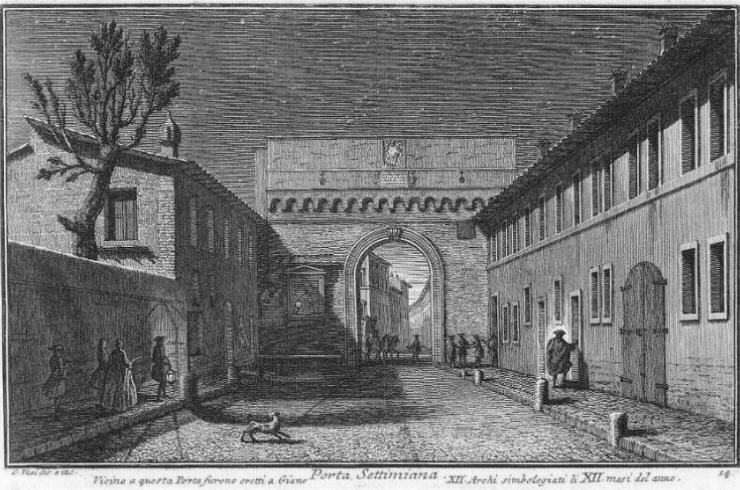
The gate underwent significant modifications in the medieval and Renaissance periods. In 1498, Pope Alexander VI ordered the reconstruction of Porta Settimiana, giving it its current form. This reconstruction was part of a broader effort to fortify and beautify Rome. The gate's design from this period has remained largely unchanged, as it has not required enlargement due to the construction of a parallel road that handles most of the traffic (Jeff Bondono).
Enhancements Under Emperor Honorius
In 401 AD, under the reign of Emperor Honorius, further enhancements were made to the Aurelian Wall and its gates. The gates were faced with thick white stone, semicircular towers were added, and the second arch in two-arched gates was walled up. Additionally, gate doors on hinges were replaced with portcullises that dropped down from above. Despite these improvements, Rome fell to Alaric I, king of the Visigoths, in 410 AD. His army entered the city through Porta Salaria (Jeff Bondono).
Destruction and Repairs
The Aurelian Wall and its gates faced further challenges in the following centuries. In 545 AD, Totila, king of the Ostrogoths, destroyed one-third of the wall when he sacked Rome, entering the city through Porta Asinaria. The wall was subsequently repaired and continued to serve as a defensive structure until 1870. In that year, the army of King Victor Emmanuel II of the Kingdom of Italy breached the wall near Porta Pia and captured Rome, marking the end of the Papal States and the unification of Italy (Jeff Bondono).
Preservation and Current State
Today, several parts of the Aurelian Wall are still well-preserved. The best-preserved sections are along the northern edge from the Muro Torto (Villa Borghese) to Corso d'Italia to Castro Pretorio; along the eastern edge from Porta Maggiore to Porta San Giovanni; along the southern edge from Porta Metronia to Porta Ardeatina and from Porta Ostiense to the Tiber; and along the western edge near Porta San Pancrazio on the Janiculum Hill. The Museo delle Mura near Porta San Sebastiano provides detailed explanations of how the wall was built and defended (Jeff Bondono).
Significance in Modern Rome
Porta Settimiana remains a significant historical landmark in modern Rome. Its preservation allows visitors to step back in time and appreciate the architectural and historical heritage of the city. The gate's location at the start of Via della Lungara makes it a convenient starting point for exploring the Trastevere district and the Vatican area. The gate's unchanged appearance since its reconstruction in 1498 offers a glimpse into the Renaissance period's architectural style and urban planning (Jeff Bondono).
Visitor Information
Visiting Hours
Porta Settimiana is accessible 24/7, as it is a public gate.
Tickets
There is no entry fee to visit Porta Settimiana.
Accessibility
The gate is easily accessible by foot, and the surrounding areas are pedestrian-friendly.
Travel Tips and Nearby Attractions
Trastevere
A vibrant district known for its narrow streets, lively nightlife, and historic churches.
Vatican City
Home to St. Peter's Basilica, the Vatican Museums, and the Sistine Chapel.
Aurelian Wall
Walk along the preserved sections of the wall to gain a deeper understanding of Rome's ancient defensive structures.
Museo delle Mura
Located near Porta San Sebastiano, this museum provides detailed insights into the construction and history of the Aurelian Wall.
Frequently Asked Questions (FAQ)
Q: What are the visiting hours for Porta Settimiana?
A: Porta Settimiana is accessible 24/7, as it is a public gate.
Q: Do I need tickets to visit Porta Settimiana?
A: No, there is no entry fee to visit Porta Settimiana.
Q: Is Porta Settimiana wheelchair accessible?
A: Yes, the gate and surrounding areas are pedestrian-friendly and accessible.
Q: What are some nearby attractions?
A: Trastevere, Vatican City, sections of the Aurelian Wall, and the Museo delle Mura are all nearby attractions worth visiting.
Listen to the full story in the app
The whole Porta Settimiana,
told well.
Audio guides for 1,100+ cities across 96 countries. History, stories, and local insight — offline ready.
Verified, and shown.
Researched and written by the Audiala editorial team from historical records, architectural archives, and local expertise.
'Porta Settimiana.'
'Porta Settimiana.'
'Porta Settimiana Rome.'
'Porta Settimiana.'
'Via della Lungara: A Hidden Treasure in Trastevere.'
'Porta Settimiana.'
'Discovering an Unknown Trastevere: A Walking Tour.'
Researched from Wikidata, Wikipedia & official sources · fact-checked · How we make our guides →