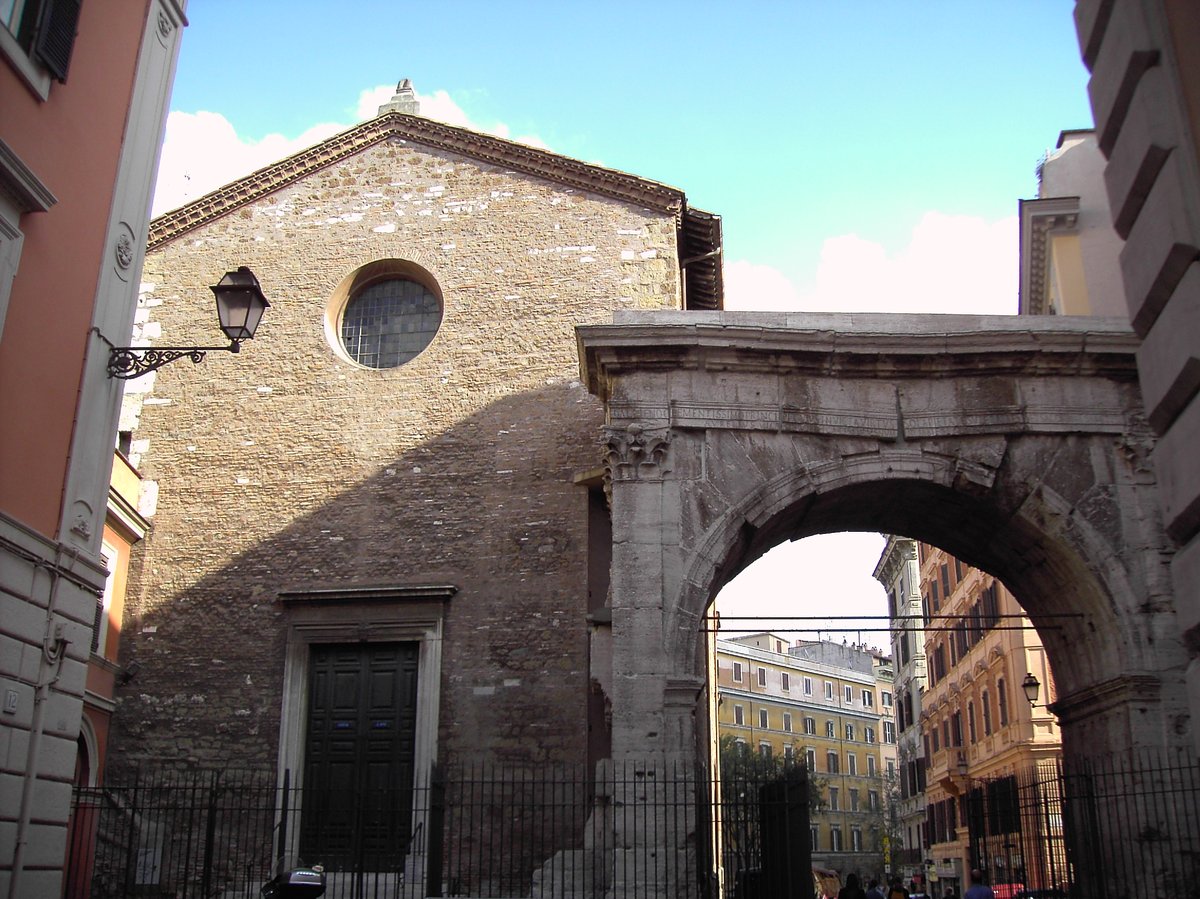
Plan and listen to Porta Esquilina with Audiala.
Audio guide in your pocket, itinerary in your browser. Built for the way you actually visit.
Introduction: Porta Esquilina and Its Enduring Legacy
Porta Esquilina, once a prominent gateway in Rome’s ancient Servian Wall, stands as a vital link to the city’s expansive history. Originally constructed in the early 4th century BCE, following the Gallic sack, this eastern entrance regulated trade and military movement along the Via Tiburtina, shaping the urban and economic landscape of ancient Rome. Over centuries, the modest gate was transformed architecturally—most notably into the monumental Arch of Gallienus, which remains a testament to the grandeur of imperial Rome.
Today, Porta Esquilina is seamlessly integrated into the multicultural Esquilino district, where layers of history blend with dynamic urban life. Its open-air setting, free access, and proximity to major transport hubs make it an ideal destination for both history enthusiasts and casual travelers. This comprehensive guide provides detailed information on visiting hours, accessibility, nearby attractions, and practical tips, ensuring a rewarding experience at one of Rome’s lesser-known but deeply significant historical sites. For further historical background, consult the Ancient History Blog and Turismo Roma.

Origins and Early Development
Porta Esquilina was a key component of the Servian Wall, which, according to tradition, was linked to Rome’s sixth king, Servius Tullius, but is now dated to the early 4th century BCE (Turismo Roma, Academia.edu). The gate controlled a major route into the city, funnelling people and goods from the east and serving as a strategic defensive and commercial hub.
Architectural Evolution
- Original Structure: The earliest form was a post-and-lintel gate built from local tuff stone.
- Augustan and Imperial Eras: In the late 1st century BCE, the gate was transformed into a monumental triple-arched passage, clad in travertine, reflecting the architectural ambitions of imperial Rome.
- The Arch of Gallienus: In 262 CE, the central arch was rededicated to Emperor Gallienus and his wife Salonina. Today, this single arch—8.8 meters tall—remains the most visible remnant of the original structure (wikipedia.org).
Visiting Porta Esquilina: Essential Information
Visiting Hours & Tickets
- Hours: Porta Esquilina (Arch of Gallienus) is an open-air monument accessible at all times, 24/7.
- Tickets: No entry fee or ticket is required; the site is located in a public pedestrian area (mamalovesrome.com).
Accessibility
- The area is mostly flat and pedestrian-friendly, with curb cuts at major intersections. Some nearby streets, especially in Monti, have cobblestones and uneven pavement, which may pose minor challenges for wheelchair users or those with mobility needs.
- Benches and shaded areas are available nearby for rest.
Getting There
- By Metro: Take Line A or B to Termini Station, then walk about 10 minutes southeast along Via Cavour and Via di San Vito.
- By Bus: Lines 16, 75, and 714 stop at Termini or Piazza Vittorio Emanuele II.
- On Foot: Porta Esquilina is a 15-minute walk from the Colosseum or Santa Maria Maggiore (myadventuresacrosstheworld.com).
Best Times to Visit
- Early Morning or Late Afternoon: These times offer pleasant lighting for photography and fewer crowds.
- Spring and Autumn: Mild temperatures make for a comfortable visit.
- Public Holidays: Rome is busier during Easter, Christmas, and Ferragosto. For a quieter experience, visit outside these peak periods (Rome Tourism Practical Information).
Safety and Practical Tips
- Exercise standard urban precautions, especially near Termini Station, which is busy and can be prone to pickpocketing.
- Visit during daylight hours for optimal safety and ambiance.
- Keep valuables secure and be mindful in crowded areas.
- Carry water, sun protection, and wear comfortable shoes due to uneven pavements.
Nearby Amenities
- Restrooms: Available at Termini Station and local cafes (some may charge non-customers).
- Food & Drink: Options range from traditional Roman trattorias to international eateries and food markets.
- Accommodation: Choices include budget and boutique hotels in the Esquilino and Monti neighborhoods (Visit Colosseum Rome – Hotels).
Exploring Porta Esquilina and Surroundings
What to Expect
- The Arch of Gallienus is fully accessible for close viewing and photography, with no fences or barriers. Interpretive signage is limited, so consider using a guidebook or mobile app for historical context (wikipedia.org).
- The monument is surrounded by vibrant urban life, including markets, artisan shops, and historical churches.
Guided Tours & Special Events
- Numerous local tour operators offer guided walking tours of the Esquilino and Monti districts, often including Porta Esquilina and other ancient sites. Check listings for accessibility and schedule details.
- The area hosts multicultural festivals, art exhibitions, and religious processions, reflecting the district’s diversity (Romeing).
Nearby Attractions
- Basilica di Santa Maria Maggiore: One of Rome’s four papal basilicas, noted for its mosaics (Visit Colosseum Rome – Santa Maria Basilica).
- Church of Santa Prassede: Known for its stunning Byzantine mosaics.
- Mercato Esquilino: A multicultural market offering global products and fresh produce (Romeing).
- Colle Oppio Park: Offers greenery and panoramic views of the Colosseum.
- San Pietro in Vincoli: Home to Michelangelo’s Moses statue.
Cultural, Economic, and Urban Significance
Porta Esquilina was not only a military and commercial gateway but also a symbolic boundary between ancient Rome and the sacred Esquiline necropolis (Cambridge University Press). This duality influenced the spatial organization, religious practices, and economic life of the neighborhood. In modern times, the Esquilino district is a vibrant, multicultural hub—home to diverse communities, bustling markets, and a lively arts scene (Rome Actually).
Urban renewal efforts in the late 19th century brought new streets and reshaped historic buildings, reflecting ongoing changes in the area’s identity and infrastructure. The balance between heritage conservation and modern development remains central to the district’s character.
Frequently Asked Questions (FAQ)
Is there an entry fee for Porta Esquilina?
No, the Arch of Gallienus is freely accessible in a public area, with no ticket required.
Can I visit Porta Esquilina at any time?
Yes, the site is open 24/7 as it is outdoors.
Are guided tours available?
Yes, several tour operators offer guided walking tours that include Porta Esquilina.
Is Porta Esquilina accessible for people with disabilities?
The site and surrounding area are generally accessible, although some nearby streets have uneven surfaces.
How do I get there from Termini Station?
It’s a 10-minute walk southeast via Via Cavour and Via di San Vito.
Can I take photographs at Porta Esquilina?
Photography is allowed with no restrictions.
Planning Your Visit
- Combine Visits: Enhance your itinerary by visiting nearby attractions such as Santa Maria Maggiore, the Domus Aurea, and Monti’s artisan shops and cafes.
- Budgeting: Porta Esquilina is free; nearby attractions may have entrance fees. Budget for meals and transportation as needed.
- Responsible Tourism: Dispose of litter properly, respect the monument, and support local businesses.
For a richer experience, download the Audiala app for guided walking tours and interactive maps.
Listen to the full story in the app
The whole Porta Esquilina,
told well.
Audio guides for 1,100+ cities across 96 countries. History, stories, and local insight — offline ready.
Verified, and shown.
Researched and written by the Audiala editorial team from historical records, architectural archives, and local expertise.
Researched from Wikidata, Wikipedia & official sources · fact-checked · How we make our guides →