Plan and listen to Porta Del Popolo with Audiala.
Audio guide in your pocket, itinerary in your browser. Built for the way you actually visit.
Introduction: Rome’s Iconic Northern Gateway
Porta del Popolo is one of Rome’s most historically significant and architecturally impressive city gates. Serving as the principal northern entrance to the Eternal City, it has welcomed pilgrims, merchants, and dignitaries for centuries. Originally constructed as Porta Flaminia in the 3rd century CE as part of Emperor Aurelian’s defensive walls, the gate stands at the heart of urban transformation. With its Renaissance and Baroque redesigns—most notably by Nanni di Baccio Bigio and Gian Lorenzo Bernini—Porta del Popolo bridges Rome’s ancient and modern eras. Today, the gate is freely accessible as part of Piazza del Popolo, a vibrant cultural hub framed by stately churches, fountains, and an ancient Egyptian obelisk. This comprehensive guide covers everything you need to know about visiting, from historical context to practical travel tips, accessibility, and nearby attractions.
For official information, visit the Official Rome Tourism site, RomeWise's Piazza del Popolo Guide, and Rome.us's overview.

Visiting Porta del Popolo: Essential Information
Visiting Hours
Porta del Popolo is an open-air monument and public gateway, accessible at all times. While the gate and piazza can be visited 24/7, it's best to explore during daylight for safety and optimal viewing. Special events or guided tours may occur at specific times; check local listings for details.
Tickets and Admission
There is no admission fee to visit Porta del Popolo or stroll through Piazza del Popolo. The gate is part of the city’s historical walls and is always open to the public. However, entry to nearby attractions like the Church of Santa Maria del Popolo may require a small fee.
Accessibility
The area around Porta del Popolo and Piazza del Popolo is pedestrian-friendly and mostly wheelchair accessible. Paved walkways and ramps facilitate easy movement, though some cobblestone areas may require caution.
Getting There
- Metro: Take Line A to Flaminio station; the gate is a short walk away.
- Bus/Tram: Numerous lines serve Piazza del Popolo and Flaminio.
- Walking/Bike: Easily accessible by foot or bike from the city center, with scenic routes connecting major landmarks.
Nearby Attractions
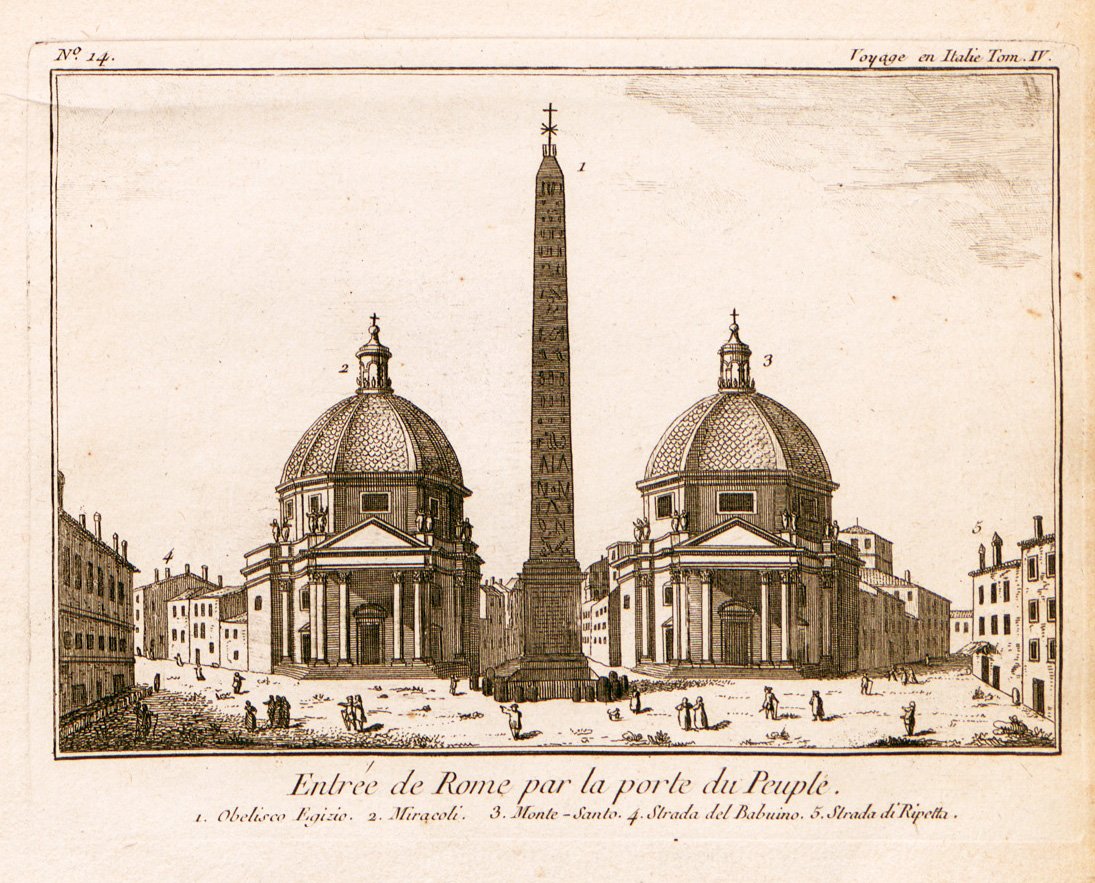
- Piazza del Popolo: A grand elliptical square with twin Baroque churches, fountains, and an Egyptian obelisk.
- Santa Maria del Popolo: Renowned for works by Caravaggio and Bernini.
- Pincian Hill (Pincio Terrace): Offers panoramic views of Rome.
- Via del Corso: A bustling street lined with shops and historic buildings.
- Villa Borghese: A vast park perfect for strolls, picnics, and cultural visits.
Travel Tips
- Visit early morning or late afternoon to avoid crowds and enjoy optimal lighting for photos.
- Combine your visit with a walk to Pincio Terrace for sweeping city vistas.
- Wear comfortable shoes; cobblestones are common in the area.
- Bring a camera to capture architectural details and the lively piazza atmosphere.
Origins and Early History
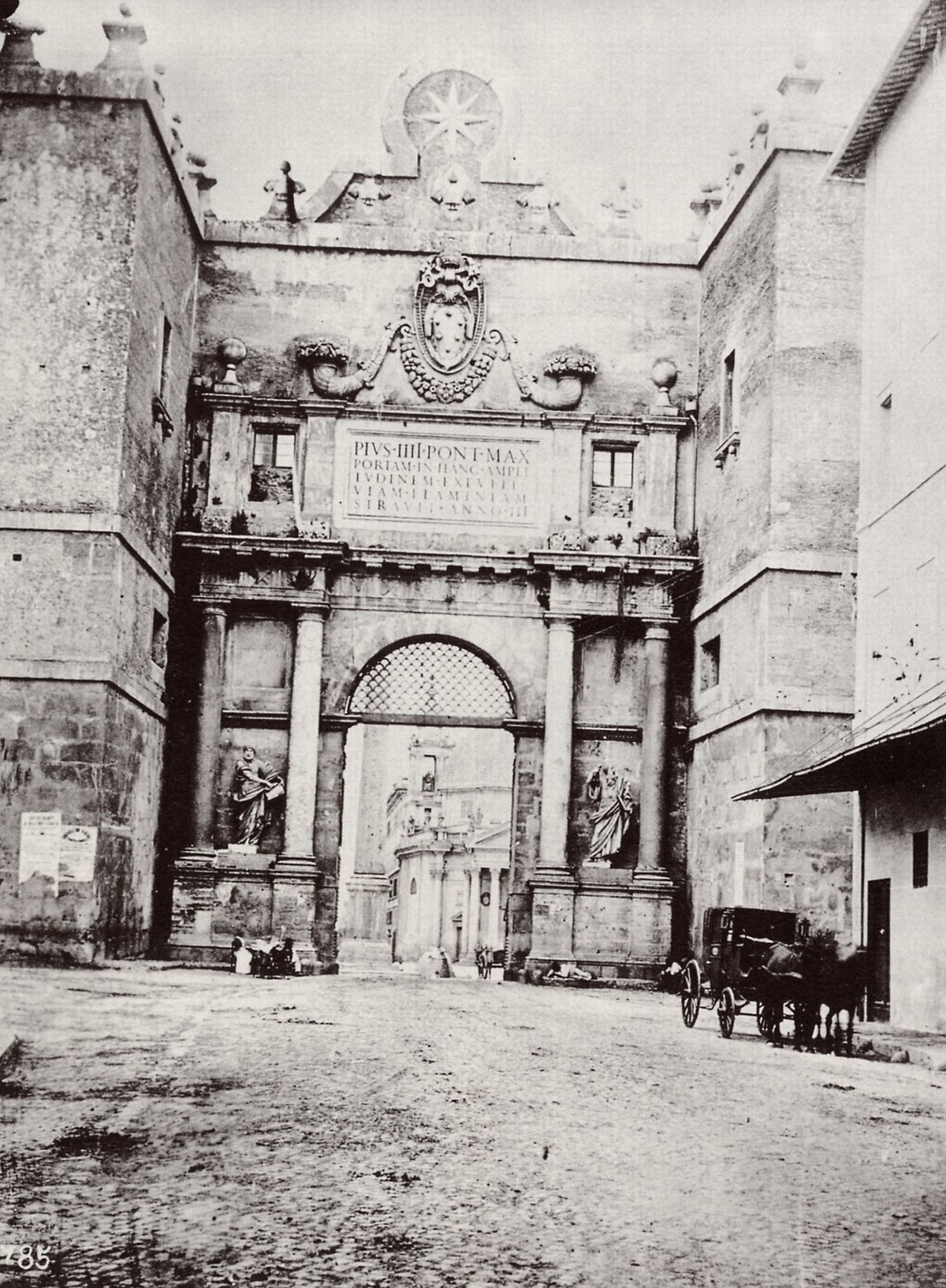
Porta del Popolo, originally Porta Flaminia, was built in the 3rd century CE as part of the Aurelian Walls under Emperor Aurelian. It marked the beginning of Via Flaminia—Rome’s critical link to northern Italy and the Adriatic. In medieval times, it was known as Porta San Valentino, after the nearby catacombs. Its current name stems from the Church of Santa Maria del Popolo adjacent to the gate (Wikipedia).
Architectural Evolution
- Renaissance Redesign (1561–1565): Pope Pius IV commissioned Nanni di Baccio Bigio to create a triumphal-arch style façade, adorned with papal insignia. The design reflected Renaissance ideals of symmetry and monumentality (RomeWise; Rome Actually).
- Baroque Enhancements (1655): Bernini revamped the inner façade to commemorate Queen Christina of Sweden’s entrance, adding grandeur and theatricality (rome.us).
- Neoclassical Urban Planning (19th Century): Giuseppe Valadier redesigned Piazza del Popolo, creating the elliptical piazza and integrating the gate with the “Tridente”—three streets radiating into Rome’s heart (Italy Travel Secrets).
Cultural and Symbolic Significance
- Gateway to Rome: Historically, Porta del Popolo was the ceremonial entrance for pilgrims and dignitaries arriving from northern Europe, symbolizing welcome and transition.
- Religious Importance: The neighboring Church of Santa Maria del Popolo was built on a site associated with Emperor Nero and later Christianized, reinforcing the spiritual identity of the area (papalaudience.org).
- Urban Identity: The gate anchors the Tridente, shaping the flow of people and framing dramatic city vistas (Academia.edu).
Notable Events
- Queen Christina of Sweden’s Entrance (1655): Her conversion to Catholicism and ceremonial entry into Rome prompted Bernini’s Baroque redesign, commemorated by a Latin inscription.
- Festivals and Executions: The piazza was historically a site for public gatherings, celebrations, and executions (last in 1826). Today, it hosts concerts, rallies, and art events (myadventuresacrosstheworld.com).
Architectural Features and Piazza Integration
- Gate Structure: Central arch flanked by two smaller pedestrian arches; decorated with papal coats of arms and Bernini’s ornate inner façade.
- Piazza del Popolo: The elliptical square is framed by twin churches, fountains, and a 24-meter Egyptian obelisk, creating a monumental urban ensemble.
- Urban Connectivity: The gate serves as the northern anchor of the Tridente, connecting visitors to Via del Corso, Via del Babuino, and Via di Ripetta (Italy Travel Secrets).
Frequently Asked Questions (FAQ)
Q: Do I need a ticket to visit Porta del Popolo?
A: No, the gate and piazza are open to the public free of charge.
Q: What are the best times to visit?
A: Early mornings and late afternoons are ideal for fewer crowds and great lighting.
Q: Is the area wheelchair accessible?
A: Yes, the piazza and surrounding streets are generally accessible, though cobblestones may pose minor challenges.
Q: How do I get there by public transport?
A: Use Metro Line A (Flaminio), tram, or bus lines serving Piazza del Popolo.
Q: Are guided tours available?
A: Yes, many walking tours include Porta del Popolo and nearby sites.
Photo Opportunities
- Capture the gate’s Renaissance and Baroque façades with papal insignia.
- Photograph the Latin inscription commemorating Queen Christina’s arrival.
- Take panoramic shots from Pincian Hill or the Villa Borghese terraces.
- Frame the gate with the twin churches and obelisk for classic Roman vistas.
Visual Gallery and Interactive Map
- ItalyGuides: Piazza del Popolo – For high-quality images and video tours.
- Britannica: Piazza del Popolo – For historical photographs and context.
(Embed or link to an interactive map highlighting Porta del Popolo, Piazza del Popolo, nearby churches, and transport links.)
Discover More
Porta del Popolo is not just a historic monument—it is a living gateway into the heart of Rome, blending centuries of architectural splendor, religious significance, and vibrant urban life. Whether you’re a history enthusiast, art lover, or casual visitor, this iconic entrance offers a unique starting point for exploring Rome’s treasures.
For more in-depth guides, download the Audiala app for audio tours, insider tips, and real-time updates. Follow us on social media for the latest news and cultural events at Porta del Popolo and other Roman landmarks.
Tickets & tours.
These are guided options from our partners — same price as booking direct.
Prices are indicative — final pricing and availability are confirmed at checkout. Audiala may earn a commission from bookings made through these links.
Listen to the full story in the app
The whole Porta Del Popolo,
told well.
Audio guides for 1,100+ cities across 96 countries. History, stories, and local insight — offline ready.
Verified, and shown.
Researched and written by the Audiala editorial team from historical records, architectural archives, and local expertise.
Researched from Wikidata, Wikipedia & official sources · fact-checked · How we make our guides →