Plan and listen to Pons Fabricius with Audiala.
Audio guide in your pocket, itinerary in your browser. Built for the way you actually visit.
Introduction to Ponte Fabricio
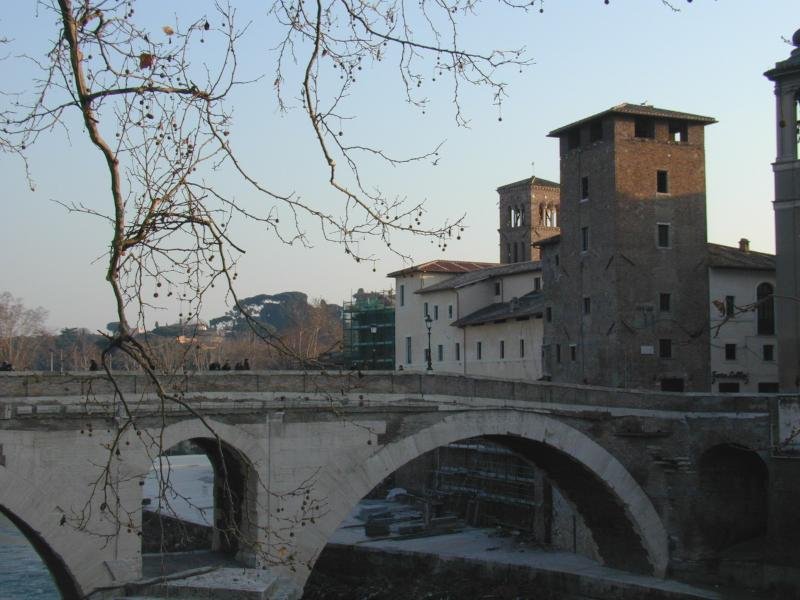
Ponte Fabricio, also known as Pons Fabricius, is a remarkable testament to the ingenuity and resilience of Roman engineering. Constructed in 62 BCE by Lucius Fabricius, the bridge has the distinction of being the oldest Roman bridge in Rome, Italy, still standing in its original state (Rome Art Lover). This ancient structure spans the Tiber River, connecting the eastern bank to Tiber Island, a location historically significant for housing the Temple of Aesculapius, the Roman god of medicine (Ancient History Encyclopedia). Ponte Fabricio is not merely a relic of the past; it has been a vital artery in Rome's urban development, facilitating the movement of people and goods for over two millennia (Structurae). Today, it continues to captivate visitors with its architectural marvel, historical significance, and cultural impact. This guide delves into the rich history of Ponte Fabricio, provides practical visiting information, and offers tips to enhance your visit to this iconic landmark.
History
Origins and Construction
Ponte Fabricio was constructed in 62 BCE by Lucius Fabricius, the curator of roads, as indicated by the inscription on the bridge itself: "L. Fabricius, C.F., Curator Viarum, Faciundum Coeravit" (Rome Art Lover). The bridge was built to replace an earlier wooden structure that had been destroyed by fire.
Architectural Design
The bridge spans the Tiber River, connecting the eastern bank to Tiber Island. It is constructed primarily of tuff and peperino stone, with a facing of travertine. The bridge measures approximately 62 meters in length and 5.5 meters in width, featuring two main arches with a smaller central arch designed to reduce the pressure of the water flow (Structurae).
Cultural and Historical Significance
Ponte Fabricio has played a crucial role in the urban development of Rome. It facilitated the movement of people and goods between the city and Tiber Island, which housed the Temple of Aesculapius, the Roman god of medicine (Ancient History Encyclopedia). During the medieval period, it was known as the "Ponte dei Quattro Capi" or "Bridge of the Four Heads," a name derived from the four-faced herms (pillars) added in the 14th century (Rome.net). In the Renaissance period, Pope Sixtus V ordered repairs in 1584, ensuring the bridge's structural integrity and continued use.
Preservation Efforts
In the modern era, Ponte Fabricio has been preserved as a historical monument. It remains a pedestrian bridge, allowing visitors to experience a piece of ancient Roman engineering firsthand. Preservation efforts have been supported by various archaeological and historical studies, ensuring that its legacy continues to be appreciated by future generations (UNESCO).
Practical Information
Visiting Hours
Ponte Fabricio is accessible to pedestrians 24/7. However, it is advisable to visit during daylight hours to fully appreciate its architectural details and scenic views.
Getting There
Ponte Fabricio is centrally located in Rome, connecting the Tiber Island to the left bank of the Tiber River. The nearest metro station is Colosseo (Line B), from which you can take a short bus ride or a pleasant walk. Several bus lines, including 23, 44, and 280, stop near the bridge. For those preferring to walk, the bridge is about a 20-minute stroll from the Roman Forum and the Colosseum.
Travel Tips
- Best Time to Visit: Early morning or late afternoon to avoid crowds and enjoy the best lighting for photography.
- Nearby Attractions: Tiber Island, Trastevere neighborhood, the Temple of Aesculapius, and the Jewish Ghetto.
- Accessibility: The bridge is accessible to pedestrians and offers a smooth, flat walking surface suitable for all visitors.
- Guided Tours: Consider joining a guided tour to gain deeper insights into the bridge's history and significance. Companies like Walks of Italy and Context Travel offer highly-rated tours.
FAQ
What are the visiting hours for Ponte Fabricio? Ponte Fabricio is open to visitors 24/7. It is recommended to visit during daylight hours.
How much are tickets for Ponte Fabricio? There is no charge to visit Ponte Fabricio; it is freely accessible to the public.
Are there guided tours available? Yes, guided tours are available and can provide valuable insights into the bridge's history and context. Check with local tour operators for options.
Listen to the full story in the app
The whole Pons Fabricius,
told well.
Audio guides for 1,100+ cities across 96 countries. History, stories, and local insight — offline ready.

Verified, and shown.
Researched and written by the Audiala editorial team from historical records, architectural archives, and local expertise.
Last reviewed
Researched from Wikidata, Wikipedia & official sources · fact-checked · How we make our guides →


