An introduction.
Researched by the Audiala editorial team from historical records, architectural archives, and local expertise.
WWhy does this 'square' curve like a chariot track? Walk into Piazza Navona, in the heart of Rome, Italy, and the answer sits under your feet — six metres down lies the arena floor of Emperor Domitian's athletic stadium, dedicated in 86 AD, its 275-metre oval still dictating where every baroque facade can stand. Come for Bernini's Fountain of the Four Rivers; stay because the whole piazza is a 1,900-year-old building arguing with itself.
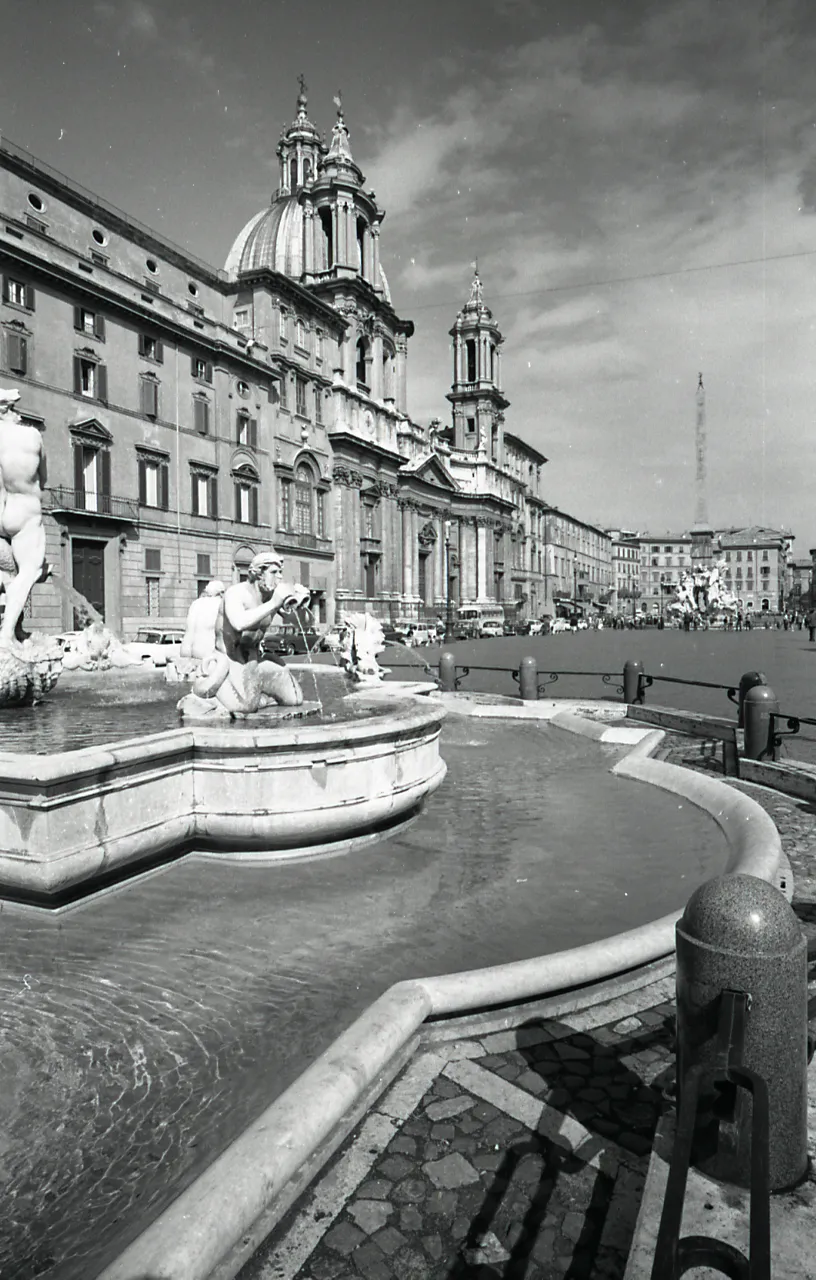
The piazza now reads as one continuous theatre. Three fountains spit water under ochre and travertine. Footsteps echo against facades that trace the dead stadium's hemicycle exactly. Café tables spill toward the centre, street painters set up easels, and at the south end the Fontana del Moro keeps watch — a copy, after a 2011 vandal smashed the originals with a rock and was identified by his shoes on CCTV.
Two Romes run in parallel here. The visible one — Bernini's swirling river gods, Borromini's curving Sant'Agnese facade, the Domitian-era obelisk faking pharaonic hieroglyphs in homage to a vanished Egypt — is the tip. The buried one is everything you can't see: 30,000 spectators cheering the Capitoline Games, gladiator shows held here in 217 AD after lightning torched the Colosseum, and arcades that, according to the Historia Augusta, ran a tax-regulated brothel trade.
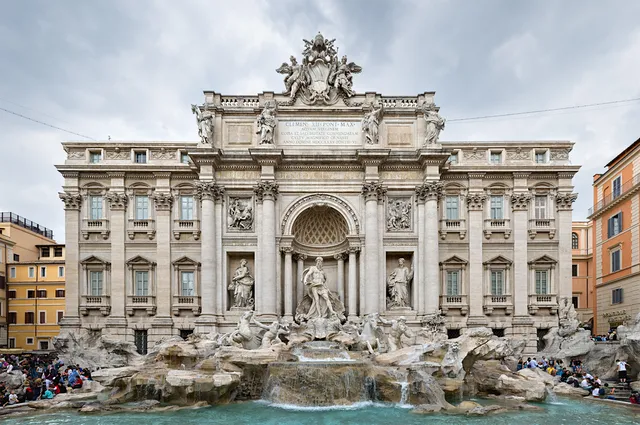
It sits ten minutes from the Pantheon and twenty from the Trevi Fountain, and most visitors walk straight through without realising they are crossing an arena. Slow down. The square does not reward quick looks.
Piazza Navona, One Of Rome's Best Places To Base From.
Rozier Roma01 What to see.
Fontana dei Quattro Fiumi
Bernini unveiled it on 12 June 1651, and the trick still works. A 16-metre red granite obelisk, hauled in from the Circus of Maxentius on the Appian Way, balances on a hollowed travertine grotto so the whole multi-ton spike appears to float. Walk around the base — most visitors photograph the front and miss the gap underneath.
Four river gods sprawl on the rock: Danube with the Pamphilj arms, Ganges with his oar, veiled Nile, and a bald Río de la Plata clutching coins beside an armadillo Bernini invented from hearsay. The horse next to the Danube and the lion drinking from the Nile are the master's own chisel work; the rest came from his workshop. Guides will tell you the Plata's raised hand shields him from Borromini's Sant'Ignazio-style facade across the way — charming, but the fountain was finished before Sant'Agnese was even designed.
Look up. Tiny dove with an olive branch on the obelisk's apex. Holy Spirit and Pamphilj crest in one bird, and almost nobody sees it.
Sant'Agnese in Agone
Borromini's concave facade pulls you in like a slow inhale. The twin bell towers frame the dome so it reads as part of the front itself, and the window beneath the left campanile isn't church at all — it belongs to Palazzo Pamphilj next door, an architectural cheat that Sorrentino's cameras lingered on in La Grande Bellezza.
Inside, the Greek-cross plan opens under an octagon banded in peach-pink persichino and red Cottanello marble. The verde antico columns at the high altar were salvaged from the Arch of Marcus Aurelius. Baciccio painted the four cardinal virtues into the pendentives between 1666 and 1672, and the dome above shows Agnes carried into paradise by Ciro Ferri. Clap once: the reverb runs five seconds.
Duck down to the crypt. A medieval oratory sits beneath the marble, lit recently by a Webuild donation, and Algardi's relief of Agnes's miraculous hair — she was martyred at thirteen on this exact spot in 304 AD, when the stadium's outer arches housed a brothel — is almost always alone with you.
Stadio di Domiziano underground
The piazza's oval isn't a coincidence — you're standing six metres above Domitian's stadium of 80 AD, the only masonry athletics arena Rome ever built, and the entrance at the north end drops you straight into it.
Travertine arches of the curved end still stand in opus latericium brick. The temperature falls to a steady 15°C, the street noise vanishes, and on a few unprotected thresholds you can see grooves polished smooth by athletes' feet entering the carceres. Open daily 10–19, last entry 18:20, and it's quiet even when the piazza above is packed shoulder to shoulder.
Watch & Explore Piazza Navona.
Plan and listen to Piazza Navona with Audiala.
Audio guide in your pocket, itinerary in your browser. Built for the way you actually visit.
Tickets & tours.
These are guided options from our partners — same price as booking direct.
Prices are indicative — final pricing and availability are confirmed at checkout. Audiala may earn a commission from bookings made through these links.
Also on GetYourGuide
More tours for Piazza Navona
Curated from GetYourGuide. Same price as official, free cancellation on most.
 GetYourGuide
Rome: Traditional Pizza Cooking Class near Piazza Navona
from
€40
 GetYourGuide
Rome: Pasta and Tiramisu Cooking Class in Piazza Navona
from
€54
 GetYourGuide
Rome: Pizza and Tiramisu Cooking Class in Piazza Navona
from
€46
 GetYourGuide
Gelato and Pasta Cooking Class in Rome - Piazza Navona
from
€56
Prices shown are indicative — final pricing and availability are confirmed at checkout. Audiala may receive a commission from bookings made via these links.
03 Visitor logistics.
The practical scaffolding for a good visit — kept short.
Getting There
No metro at the piazza — closest is Barberini (Line A), an 18-minute walk west. Buses 30, 70, 81, 87, 492 and 628 stop at Senato or Rinascimento on Corso del Rinascimento, one minute from the square. Tram 8 ends at Piazza Venezia, then 10 minutes on foot via Corso Vittorio Emanuele II. The whole zone sits inside the ZTL, so skip the rental car.
Opening Hours
The piazza itself is a free public square, open 24/7 with no gates. The Stadio di Domiziano underground site below it runs daily 10:00–19:00 in 2026, last admission 18:20. Romatoday and Fever sometimes list reduced or closed schedules — call +39 06 6880 5311 or check stadiodomiziano.com the morning of your visit.
Time Needed
Quick fountains-and-Sant'Agnese loop: 20–30 minutes. A proper visit with all three fountains, the church interior, a coffee and some street-artist watching: 60–90 minutes. Add 40 minutes for the standard Stadio di Domiziano tour, or 60 for the exclusive underground route into the Tribuna.
Cost & Tickets
The piazza and all three fountains are free. Stadio di Domiziano in 2026: €10 adult, €8 reduced (12–17 / 65+), €6 junior 8–11, free under 8 — audioguide included on the 40-minute Curva tour. The 60-minute exclusive tour with the Tribuna is €15 and must be booked online; only 10 spots per slot.
Accessibility
The square is flat with no curbs or steps, and you can roll right up to all three fountains. The sampietrini cobblestones make for a bumpy ride — slow going for wheelchairs and strollers. Important: the stair-lift down to the Stadio di Domiziano is currently out of service, so the underground site is not wheelchair-accessible until further notice.
04 Tips for visitors.
Small things that change the day.
Don't Sit on the Fountains
Roman ordinance bans sitting, eating or drinking on the fountain rims, and wading in counts as a €450 fine. Police walk through constantly — they will ticket you, not just wave you off.
Bracelet & Rose Scams
Men working the piazza will try to grab your wrist to tie on a friendship bracelet, then demand €10–20; others press roses into women's hands with the same trick. Keep hands in pockets, ignore eye contact, and stay alert for petition-signers — the clipboard is a distraction while a partner works your bag.
Eat One Street Out
Piazza-front cafés stack coperto, servizio and a view surcharge — espresso jumps from €1 standing at a bar to €4 sitting here. Walk two minutes to Cul de Sac on Piazza Pasquino for wine and €15–25 plates, or Da Tonino on Via del Governo Vecchio for cash-only Roman trattoria classics.
Gelato Worth the Walk
Skip the piazza gelaterie. Frigidarium at Via del Governo Vecchio 112 (€3–5) and La Gelateria del Teatro at Via dei Coronari 65 (€4–6) are the artisan spots Romans actually queue for, both under five minutes away.
Cover Up for Sant'Agnese
The Borromini church on the west side enforces standard Italian rules: shoulders and knees covered, no hats, silence during Mass. Entry is free, but you'll be turned away in shorts or a tank top — pack a light scarf in summer.
Photography Rules
Handheld shots anywhere outside are fine. Tripods and any commercial shoot need a Sovrintendenza Capitolina permit, and the centro storico is a hard no-fly zone for hobby drones. Inside Sant'Agnese, no flash and no tripods.
Come at Dawn or After 22:00
Cafés peak 18:00–20:00 and the piazza is shoulder-to-shoulder midday. Show up before 08:00 for empty fountains and raking light on Bernini's travertine, or after 22:00 when the street artists pack up and the square belongs to passeggiata couples.
Christmas Market & Befana
From 1 December to 6 January the piazza fills with the Festa di Piazza Navona — wooden stalls, witch-figure Befana statues, coal-shaped sweets for kids. The 6 January Befana climax is packed with Roman families; come weekday mornings to actually see the stalls.
Where to Eat
Don't Leave Without Trying
Mimì e Cocò
local favoriteOrder: The pinsa is generous and delicious, and the spaghetti carbonara is a dream.
A vibrant, cozy spot that captures the Roman spirit perfectly; it's popular for a reason, so get there early to grab a table.
Cantina e Cucina
local favoriteOrder: Don't skip the amatriciana and the smooth, perfectly balanced tiramisu.
A rustic, vintage-style atmosphere where the staff goes above and beyond to make you feel at home with authentic regional fare.
Ponte e Parione - Ristorante Piazza Navona
local favoriteOrder: The wood-oven pizza with its crispy crust and the perfectly cooked pasta are local standouts.
This spot offers an authentic Roman vibe with incredibly welcoming service that makes you feel like a regular from your first visit.
La Nuova Piazzetta Navona
local favoriteOrder: Try the mushroom pizza and save room for the pistachio tiramisu.
A long-standing institution since 1926 that offers a fantastic location near the piazza without the usual tourist-trap feel.
Dining Tips
- check Tipping is not mandatory; round up or leave a few euros if you wish.
- check Avoid restaurants with photo menus or barkers standing outside.
- check Cappuccino is strictly a morning drink; avoid ordering it after meals.
- check Lunch is typically between 13:00 and 14:00; dinner starts around 19:30 or 20:00.
- check Walk at least 5–10 minutes away from the main piazza for a better price-to-quality ratio.
- check Carry cash for tips and small transactions, even if cards are widely accepted.
Restaurant data powered by Google
05 The Square That Kept Its Job
For nineteen centuries this oval has done one thing: hold a crowd. Capitoline Games in 86 AD. Gladiator combats in 217. A food market relocated here from the Capitoline Hill in the late 1400s. Baroque water-spectacles every August Saturday and Sunday from 1652 to 1866. Today, a Christmas market that opens around 8 December and runs through Epiphany, when La Befana — the broomstick-witch who fills children's stockings with sweets or coal — descends into the crowd at 10:00 on 6 January. The function never quit. Only the costumes changed.
What stays constant is the role of the ground: civic theatre, public assembly, organised play. What shifts is the meaning of the play. The continuity is so total that scholars mark the same dates on the same plot of stone, and the buildings have learned to leave the centre clear.
The Widow Who Hired Bernini
The Fontana dei Quattro Fiumi, finished in 1651, is the surface story every guidebook tells — Pope Innocent X's masterpiece, his family's piazza, his Bernini commission. Stand in front of the Río de la Plata's raised arm, the Nile's veiled head, the obelisk balanced over an empty travertine cave, and the credit traditionally goes to the pope.
Except Innocent X (Giovanni Battista Pamphili, reign 1644–1655) had refused to consider Bernini at all. The sculptor was tainted by his Barberini patronage under the previous pope, and a fresh competition had been thrown open without him. The credit belongs instead to Donna Olimpia Maidalchini-Pamphilj — the pope's widowed sister-in-law, called 'la Pimpaccia' by Romans, the de facto co-ruler of the Papal States. Records show she controlled access to Innocent and brokered cardinal appointments for cash. When Bernini sent her a silver scale model of the fountain, she had it placed in a corridor where the pope would walk past it. He gave Bernini the job within days.
That single act of corridor politics produced what art historians treat as the high point of Roman baroque sculpture. When Innocent died in September 1655, Olimpia allegedly refused to pay for his coffin; he lay unburied in a storeroom, rats nibbling, before she was banished to Orvieto and died of plague in 1657. Now look at the four river-gods again. The pope's piazza is, in the most literal sense, hers.
What Changed
What Endured
Listen to the full story in the app
The whole Piazza Navona,
told well.
Audio guides for 1,100+ cities across 96 countries. History, stories, and local insight — offline ready.
06 Frequently asked.
The questions travellers send us most about Piazza Navona.
Is Piazza Navona worth visiting?
Yes — it's Baroque Rome's showcase square and entry is free, 24/7. You get Bernini's Fountain of the Four Rivers, Borromini's concave Sant'Agnese facade, and the footprint of Domitian's 86 AD stadium all in one elongated oval. Skip the piazza-front cafés (€3–4 espresso sitting) and walk one street out for fair prices.
How long do you need at Piazza Navona?
Budget 60–90 minutes for the three fountains, Sant'Agnese interior, and a coffee. A quick fountain-and-photo stop takes 20–30 minutes. Add 40 minutes for the Stadium of Domitian underground site (€10 adult, daily 10:00–19:00, last entry 18:20).
How do I get to Piazza Navona from the Vatican?
Easiest is bus 70 from Piazza Risorgimento — get off at Senato or Rinascimento, one minute walk. Or walk it in about 20 minutes via Castel Sant'Angelo and Ponte Sant'Angelo. No metro reaches the piazza; closest stop is Barberini (Line A), an 18-minute walk.
What is the best time to visit Piazza Navona?
Sunrise around 6–7am — empty square, golden light on travertine, only the fountains making noise. Blue hour is the photographer's pick once the fountains light up. Avoid 18:00–20:00 when the cafés and crowds peak; December through 6 January brings the Befana Christmas market.
Can you visit Piazza Navona for free?
Yes — the square itself is an open public space with no gate, ticket, or closing time. Sant'Agnese in Agone is also free (shoulders and knees covered, no flash). Only the underground Stadium of Domitian charges: €10 adult, €8 reduced, €6 junior.
What should I not miss at Piazza Navona?
Walk under the Four Rivers obelisk — Bernini hollowed the base so the 16m granite shaft looks unsupported, and most visitors never spot the dove on top (Pamphilj emblem). Inside Sant'Agnese, the verde antico columns at the high altar were salvaged from the Arch of Marcus Aurelius. At the south end, the paving still curves with the ancient stadium's hemicycle — you're standing 6m above the original arena floor.
Is the Bernini-Borromini feud at the fountain real?
The rivalry was real, the fountain story is folklore. Guides claim the Nile is veiled and Río de la Plata raises his arm to shield from Borromini's collapsing facade — but the fountain was unveiled 12 June 1651, before Sant'Agnese designs even existed. The Nile is veiled because the river's source was unknown in 1651.
Are there scams at Piazza Navona?
Yes — pickpockets work the crowds, and friendship-bracelet scammers grab wrists then demand cash. Watch for rose hand-offs to women, petition signers (distraction for an accomplice), and restaurant bills stacked with coperto, servizio, and view surcharges. Coffee at the bar costs €1; sitting on the piazza pushes it to €3–4.
Verified, and shown.
Researched and written by the Audiala editorial team from historical records, architectural archives, and local expertise.
Reconciled commission/dedication dates (80 AD / 86 AD), capacity (~30,000), dimensions 275×106 m, naumachia bracket 1652–1866, 2011 Moor vandalism.
Capitoline Games context, modeled on Greek Olympics, 4.5m below modern street level.
Unveiling date 12 June 1651, obelisk origin (Circus of Maxentius, Via Appia), Pamphilj dove emblem on apex.
Stadium dimensions, etymology in agone → navona, Donna Olimpia and the Bernini commission, Tritons-now-copies note.
Donna Olimpia silver-model story, debunked Borromini-feud myth, June 1652 lago inauguration.
Opening hours (daily 10:00–19:00, last entry 18:20), full price tiers, stair-lift out-of-service notice.
Archaeologist-led tour pricing (€12/€14/€16) and booking contact.
Hollow grotto under obelisk, Bernini's personally-carved Danube horse, river god attributions.
Bernini's personal carving of Nile lion and palm, evening atmosphere notes.
Greek-cross plan, Ciro Ferri/Corbellini dome fresco, Baciccio pendentives 1666–1672.
Borromini facade extending into Palazzo Pamphilj, verde antico from Arch of Marcus Aurelius, La Grande Bellezza window detail.
Three-fountain dating, St. Agnes martyrdom legend, pavement raised 6m above stadium floor.
Pamphilj naumachia tradition, weekend August flooding ritual.
Bus lines (30, 70, 81, 87, 492, 628), nearest metro Barberini ~18 min walk, stops at Senato/Rinascimento.
Flat piazza confirmed accessible, sampietrini cobblestones noted as bumpy.
Open 24/7 free public square, UNESCO inscription context.
Costanza De Cupis legend, Palazzo Tuccimei rampant-ram coat of arms.
Counter-clockwise lovers' curse legend at the Four Rivers fountain.
Researched from Wikidata, Wikipedia & official sources · fact-checked · How we make our guides →