Plan and listen to Piazza Del Quirinale with Audiala.
Audio guide in your pocket, itinerary in your browser. Built for the way you actually visit.
Introduction to Piazza del Quirinale and Its Significance
Perched atop the Quirinal Hill—Rome’s highest and most storied—Piazza del Quirinale stands as a testament to the city’s layered history and political evolution. Once the domain of Sabine settlers and Roman patricians, today it is the symbolic heart of Italy’s republic, housing the Quirinal Palace, the official residence of the President of the Italian Republic. The piazza’s monumental statues and ancient obelisk narrate centuries of cultural and political heritage, while its panoramic views and architectural grandeur make it an essential destination for visitors to Rome (artandtraditiontours.com; rome.net; myromepass.com).


Ancient and Early History of the Quirinal Hill
The Quirinal Hill’s significance stretches back to Rome’s earliest days. Its name is linked to Quirinus, an ancient Roman deity, and the Sabine King Tatius (turismoroma.it). In antiquity, the area became a prestigious residential quarter, home to temples dedicated to deities such as Flora and Quirinus. Its healthy air and greenery attracted patricians and emperors alike (rome.us). The hill’s imperial legacy is underscored by the Baths of Constantine, whose entrance was adorned with colossal statues of Castor and Pollux—now prominent features of the piazza (colosseumrometickets.com). The obelisk that now towers in the square originally marked the Mausoleum of Augustus (rome.net).
Medieval and Renaissance Transformations
During the Middle Ages, the hill became known as Monte Cavallo, its slopes dotted with vineyards and gardens (it.wikipedia.org). The site’s transformation accelerated in the late 16th century when Pope Gregory XIII commissioned the construction of a new papal residence, seeking refuge from the Tiber’s malarial air. The palace’s development, led by architects such as Ottaviano Mascherino, Giovanni and Domenico Fontana, Carlo Maderno, and Gian Lorenzo Bernini, created a vast architectural complex that blended Renaissance and Baroque influences (everycastle.com). By the 18th century, the palace had expanded to include extensive gardens and new wings, forming the foundation of today’s Quirinal complex (colosseumrometickets.com).
Architectural Evolution of the Piazza
Piazza del Quirinale harmoniously unites ancient, Renaissance, and Baroque elements (everycastle.com). The vast Quirinal Palace, with its stately façade and grand portals, dominates the northeastern side. At its heart stands the Fontana dei Dioscuri, flanked by the monumental statues of Castor and Pollux—Roman copies of Greek originals—each taming a horse. The 14-meter-high obelisk, relocated here in 1786, adds a vertical accent, while the fountain’s granite basin and water jet serve as the piazza’s refreshing focal point (rome.net; rome.us).
On the right, the Palazzo della Consulta, built by Ferdinando Fuga in 1732, now houses the Italian Constitutional Court (turismoroma.it). The square’s open expanse and symmetrical design provide panoramic views across Rome’s rooftops, with St. Peter’s Basilica visible on the horizon (neuralword.com).
Political and Cultural Significance
The Quirinal Hill has served as a power center since antiquity. The palace hosted thirty popes (1592–1870), the House of Savoy during the monarchy, and—since 1946—the President of the Italian Republic (everycastle.com; rome.net). Official ceremonies, state visits, and the daily changing of the guard ceremony (at 15:00) underscore its ongoing role as a living symbol of Italian democracy (journeystoitaly.com).
Visiting Hours, Tickets, and Accessibility
Piazza del Quirinale
- Open 24/7 as a public square; free of charge.
Quirinal Palace
- Guided Tours: Available Tuesday to Sunday, typically from 9:00 AM to 6:00 PM (myromepass.com; Wanted in Rome). Advance booking is mandatory and must be completed at least five days in advance.
- Tickets:
- Standard Tour: Free (plus €1.50 booking fee), approx. 1 hour 20 minutes.
- Extended Tour: €10 (discounts for seniors and students), includes gardens and carriage museum, approx. 2.5 hours.
- Children under 18, students in relevant fields, and disabled visitors (with carer): Free.
- Accessibility: Most areas are wheelchair accessible; special assistance available with prior arrangement.
- Security: Valid ID required; large bags prohibited; photography restricted in some areas.
Scuderie del Quirinale
- Hours: 10:00–20:00 (last entry at 19:00).
- Tickets: Vary by exhibition; advance booking recommended (scuderiequirinale.it).
Nearby Attractions and Travel Tips
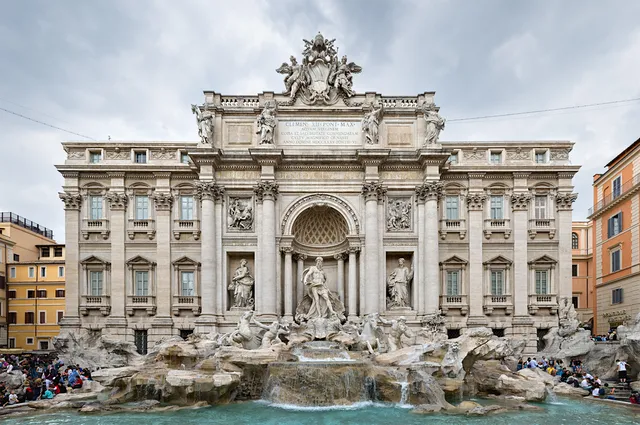
- Trevi Fountain: 10-minute walk.
- Spanish Steps, Roman Forum, Barberini Metro Station: All within easy reach.
- Villa Borghese Gardens: Ideal for a relaxing stroll.
- Sant’Andrea al Quirinale: Bernini-designed church nearby.
Travel Tips:
- Use Barberini metro station (Line A) or local buses; tickets must be purchased in advance (Time Out Rome).
- Visit early or late in the day for the best photos and fewer crowds.
- Comfortable shoes are recommended due to cobblestones and uphill walking (Lonely Planet).
Frequently Asked Questions (FAQ)
Q: What are Piazza del Quirinale’s opening hours?
A: The piazza is open around the clock, year-round.
Q: How do I buy tickets for the Quirinal Palace?
A: Book online through the official website or by phone; reservations must be made at least five days ahead.
Q: Is the Quirinal Palace accessible?
A: Yes, with ramps and elevators. Contact ahead for specific needs.
Q: When is the changing of the guard?
A: Daily at 15:00 in front of the Quirinal Palace.
Q: Can I take photos inside the palace?
A: Photography is restricted in certain areas; follow staff or guide instructions.
Q: Are there restrooms or cafés on the piazza?
A: Restrooms are available inside the palace and Scuderie during tours/exhibitions. Cafés are nearby on Via XXIV Maggio and Via Nazionale.
Visual Gallery
Suggested images:
- Quirinal Palace façade (alt: "Quirinal Palace façade, Piazza del Quirinale, Rome")
- Obelisk and Dioscuri statues (alt: "Obelisk and statues of Castor and Pollux at Piazza del Quirinale")
- Panoramic city view from the piazza (alt: "Panoramic view of Rome from Piazza del Quirinale")
- Changing of the guard ceremony (alt: "Italian Presidential Guard at Piazza del Quirinale")
For virtual tours and interactive maps, visit official resources such as myromepass.com.
Discover More
Piazza del Quirinale is a living crossroads of history, art, and Italian statehood, offering visitors an immersive experience of Rome’s grandeur and continuity. Plan your visit in advance, secure tickets for the Quirinal Palace, and make time for the daily changing of the guard. For the latest updates and personalized itineraries, download the Audiala app and explore our related articles.
Related Articles
- Top 10 Historical Sites to Visit in Rome
- Exploring Bernini’s Masterpieces in Rome
- A Guide to Rome’s Seven Hills
Summary and Final Tips for Visiting Piazza del Quirinale
Piazza del Quirinale is a monumental showcase of Rome’s evolution—from ancient religious center to modern seat of the presidency—artfully blending mythological symbolism, architectural splendor, and civic tradition. Its accessibility, guided tours, and cultural events such as the changing of the guard enrich every visit. Plan ahead, check official schedules, and use helpful resources like the Audiala app to maximize your experience. Piazza del Quirinale is not just a destination, but a living emblem of Rome’s storied past and vibrant present (colosseumrometickets.com; neuralword.com; myromepass.com).
Listen to the full story in the app
The whole Piazza Del Quirinale,
told well.
Audio guides for 1,100+ cities across 96 countries. History, stories, and local insight — offline ready.
Verified, and shown.
Researched and written by the Audiala editorial team from historical records, architectural archives, and local expertise.
Researched from Wikidata, Wikipedia & official sources · fact-checked · How we make our guides →