An introduction.
Researched by the Audiala editorial team from historical records, architectural archives, and local expertise.
AA keyhole on Rome’s Aventine lines up a laurel tunnel, a church garden, and the dome of St Peter’s with the precision of a stage trick. Piazza dei Cavalieri di Malta, in Rome, Italy, is worth the climb because it gives you more than a photograph: Piranesi’s only built urban set piece, the headquarters of the Order of Malta, and one of those Roman corners where power learned to disguise itself as silence. People come for the keyhole. They should stay for the square.
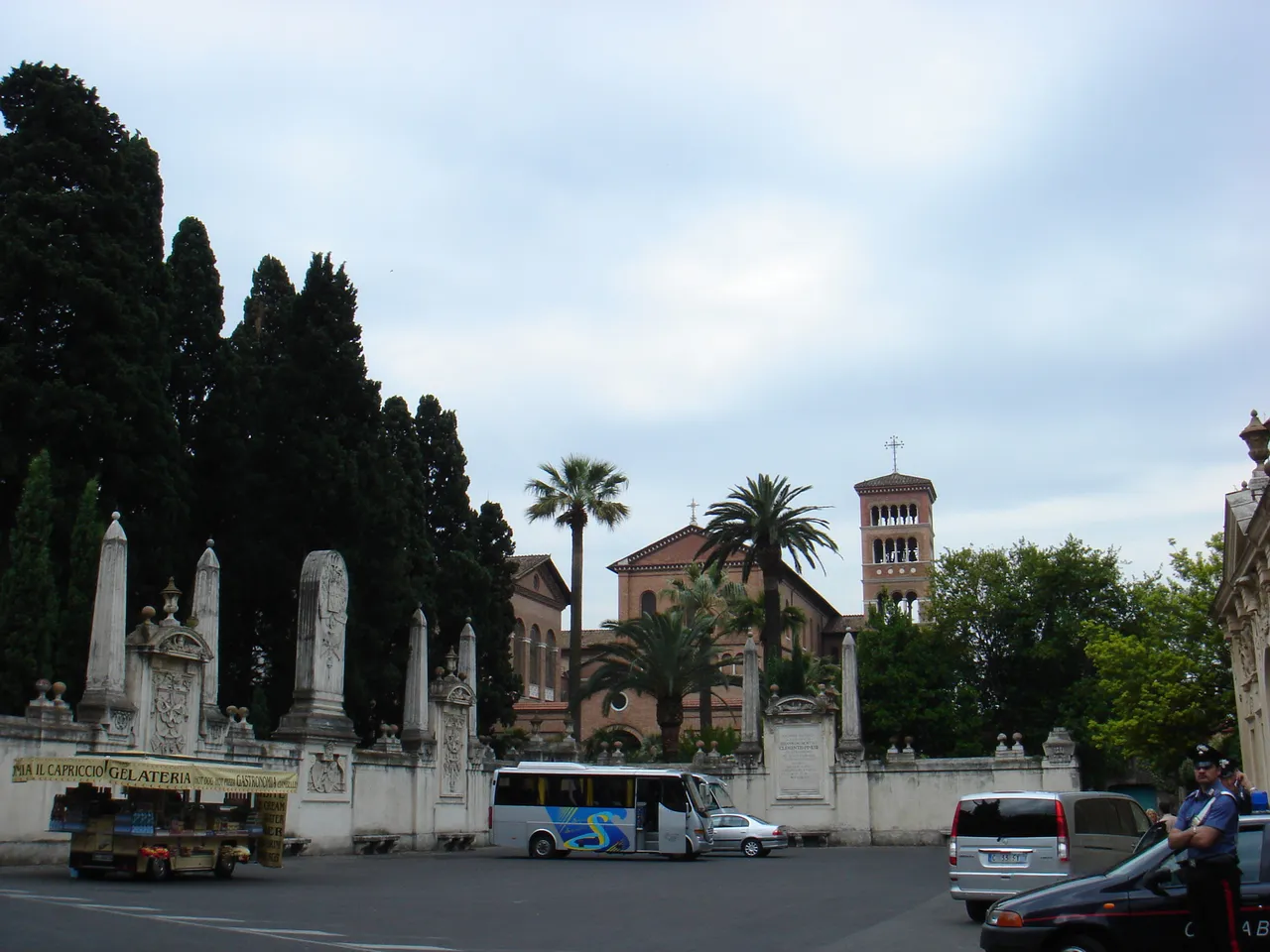
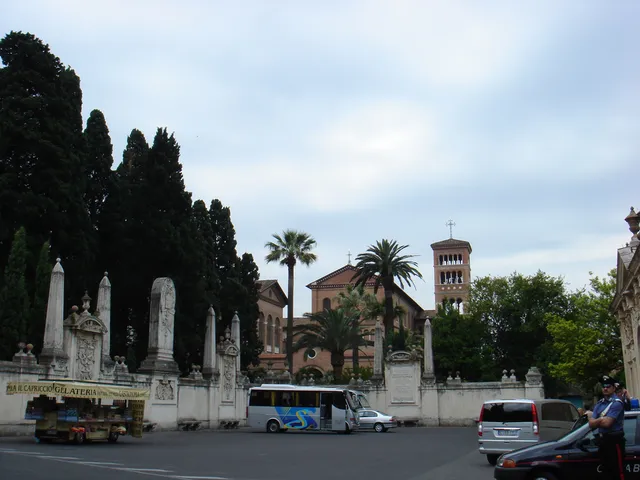
The square feels almost too composed, which is exactly the point. Giovanni Battista Piranesi reworked it in the 1760s as a ceremonial forecourt of obelisks, shields, trophies, and clipped geometry, a controlled pause before the gate at number 3 and the Magistral Villa at number 4.
That famous peek through the lock is the bait, but the place around it is the real story. Records show this hilltop passed from a 10th-century princely stronghold to a fortified monastery, then to the Templars, then in 1312 to the Hospitallers who became the Order of Malta, all within the wider historic fabric that links the Aventine to sites like Capitoline Hill and, across the city, the dome beyond the Sistine Chapel.
Come early if you can. Footsteps echo off the walls, the queue is shorter, and the light on the pale stucco has that Roman talent for making an 18th-century design look older than it is.
01 What to see.
Piranesi's Forecourt
The Keyhole at No. 3
Book the Villa, Then Walk the Aventine
02 In pictures.


Plan and listen to Piazza Dei Cavalieri Di Malta (Rome) with Audiala.
Audio guide in your pocket, itinerary in your browser. Built for the way you actually visit.
03 Visitor logistics.
The practical scaffolding for a good visit — kept short.
Getting There
From Circo Massimo on Metro B, walk uphill across the Aventine for 10 to 15 minutes via the Orange Garden and Santa Sabina; the climb is short but steady, like taking a small hill after the flat bowl of the Circus Maximus. Bus lines serving the Circo Massimo area include 170, 30, 51, 628, 781, 81, 83, and C3, while drivers are better off parking lower down near Via del Circo Massimo, Testaccio, or Trastevere and walking up.
Opening Hours
As of 2026, the square and the keyhole at Piazza dei Cavalieri di Malta 3 are effectively viewable at any hour, and the Order of Malta says people queue there day and night. The Magistral Villa and Santa Maria del Priorato are different: visits run by permission, usually Friday 9:30-12:30 from mid-September to mid-June, plus two Saturdays a month, and they close in July, August, Easter, Christmas, and on May 2, June 24, and December 9.
Time Needed
Give the keyhole 10 to 15 minutes if you arrive lucky and the line moves fast. A more honest stop takes 20 to 30 minutes, and 45 to 90 minutes works better if you fold in the Aventine walk, the Orange Garden, or nearby churches; booked interior visits need at least 60 to 90 minutes.
Accessibility
The hard part is the approach, not the destination: from Circo Massimo, the route climbs uphill on Aventine streets, and no official 2026 source confirms a fully step-free path right to the keyhole or inside the villa. Circo Massimo station on Metro B does offer a bookable ATAC stair-lift service for reduced-mobility passengers, but an accessible taxi up the hill is the safer plan.
Cost & Tickets
As of 2026, the square and keyhole are free, with no ticket and no booking system. Interior visits to the Magistral Villa and Santa Maria del Priorato require advance email booking, groups of 10 to 25 people, a €5 per person fee, and a mandatory guide costing €80 in Italian or €100 in foreign languages.
04 Tips for visitors.
Small things that change the day.
Beat The Queue
Go early in the morning or later in the evening if you want the Aventine at its best: quiet air, softer light, and fewer phones held aloft. Midday turns the stop into a line for a one-second view.
Keep It Brief
This gate fronts a working religious-diplomatic compound, not a street-performance backdrop. Take your look, take your photo, then move aside so the next person can peer through the keyhole without hearing your entire lunch plan.
Photo Rules
Phone photography in the square is normal, but tripods and drawn-out shoots clog a very narrow queue fast. Drones are a bad idea in central Rome unless you have explicit authorization and have checked current Italian airspace rules.
Watch Transit Pockets
The piazza itself feels calm; the bigger nuisance sits down the hill around Metro B and busy bus stops near Circo Massimo. Keep your phone zipped away after photos and pay attention on the ride back.
Eat Downhill
Skip the idea of lunch on the piazza itself and head down toward Aventino or Testaccio instead. Casa Manfredi on Viale Aventino is strong for coffee and maritozzo, Mercato Testaccio works for a budget graze, and Flavio al Velavevodetto is the right move if you want a serious Roman meal.
Make It A Walk
The local version of this stop is simple: keyhole, Orange Garden, Santa Sabina, then lunch in Testaccio. If you are already near the Colosseum, the walk here takes about 20 minutes and shows Rome doing what it does best: saving the reveal for the last corner.
Where to Eat
Don't Leave Without Trying
Il Grottino a Testaccio
local favoriteOrder: Try the classic Roman pasta dishes like carbonara and amatriciana, but especially the tonnarelli cacio e pepe tossed tableside.
A beloved Testaccio institution where locals flock for authentic Roman pasta done right. The casual vibe and generous portions make it a neighborhood favorite.
Ristorante Consolini
local favoriteOrder: Don't miss the coda alla vaccinara (oxtail stew) or the rigatoni with pajata (veal intestines), both deeply rooted in Testaccio's history.
A historic spot that specializes in Rome's quintessential offal dishes, serving them with the respect and technique they deserve.
EOS - The Sushi Temple by Domò
fine diningOrder: Opt for the omakase or sashimi platter for the freshest fish. The tempura is also a standout.
A sleek, modern sushi spot with high-quality ingredients and a chic atmosphere, offering a welcome change from traditional Roman fare.
OASI
local favoriteOrder: The cacio e pepe is a must, but don't skip the supplì (fried rice balls) for a classic Roman snack.
A hidden gem with a loyal following, OASI delivers hearty, well-executed Roman dishes in a cozy setting away from the tourist crowds.
Dining Tips
- check Testaccio is a great neighborhood for Roman classics, especially offal dishes like coda alla vaccinara and trippa alla romana.
- check Mercato Testaccio is a great spot for quick bites, offering everything from Roman sandwiches to pizza al taglio.
- check Piazza dei Cavalieri di Malta is near Testaccio and Circo Massimo, both food-rich areas.
Restaurant data powered by Google
05 A Quiet Square Built for Power
Piazza dei Cavalieri di Malta looks like a tucked-away Roman cul-de-sac, then starts behaving like a history lesson with good manners. Documented sources place a fortified Benedictine monastery here by the 10th century, and according to strong local tradition the site began in 939 when Alberic II gave his Aventine palace to Odo of Cluny, turning a noble residence into a religious stronghold.
That shift set the tone for everything that followed. The property moved through the afterlife of the Templars, passed in 1312 to the Order of St John, and by the time Piranesi arrived in 1764 he was not decorating a quaint corner of Rome but refitting a hilltop charged with crusading memory, papal patronage, and the odd political fact that this address still belongs to a sovereign order without ordinary territory.
Piranesi’s One Chance to Build
Giovanni Battista Piranesi had spent years remaking Rome on paper before Cardinal Giovanni Battista Rezzonico gave him a real commission here in 1764. The stakes were personal. An engraver famous for imaginary prisons and imperial fantasies finally had to prove he could turn obsession into stone, stucco, and measured space on a budget that was tighter than the grandeur he wanted.
The turning point came when he stopped treating the priory as a simple restoration and made the whole forecourt into an argument. Records show the redesign of 1764 to 1766 folded the church of Santa Maria del Priorato, the piazza, and the gate into one theatrical sequence of Roman trophies, funerary symbols, naval emblems, and anti-Ottoman references, all serving Rezzonico, the Order, and Piranesi’s own idea of what ancient Rome still meant.
He won, though not in the way architects usually do. This remained his only completed architectural work, and the church he remade also became the place where his ashes were kept after his death in 1778. Few commissions close the circle so neatly.
From Alberic to the Hospitallers
The Square That Still Governs
Listen to the full story in the app
The whole Piazza Dei Cavalieri Di Malta (Rome),
told well.
Listen to sourced travel stories with local history and practical context — ready offline.
06 Frequently asked.
The questions travellers send us most about Piazza Dei Cavalieri Di Malta (Rome).
Is Piazza dei Cavalieri di Malta worth visiting?
Yes, if you like Rome at its slyest. The keyhole view takes seconds, but the real pleasure is the whole sequence: the uphill walk on the Aventine, Piranesi's tight little forecourt, then St. Peter's dome appearing through a lock as if the city had been folded into a stage trick. Pair it with the Orange Garden and nearby churches or it can feel too slight.
How long do you need at Piazza dei Cavalieri di Malta?
Most people need 20 to 30 minutes. That gives you time for the queue, the square itself, and a slow look at the heraldic walls people usually ignore; if you add the Aventine walk and Giardino degli Aranci, give it 45 to 90 minutes. A booked interior visit to the Magistral Villa and Santa Maria del Priorato needs more time and advance planning.
How do I get to Piazza dei Cavalieri di Malta from Rome?
The easiest route is Metro B to Circo Massimo, then a 10 to 15 minute uphill walk across the Aventine. You can also come on buses serving the Circo Massimo area, then climb past Santa Sabina or the Orange Garden. A taxi is the simplest choice if you want to avoid the hill.
What is the best time to visit Piazza dei Cavalieri di Malta?
Early morning is the best time if you want quiet and a shorter line. Sunset gives the keyhole its most theatrical light, but that's when the queue thickens and the so-called secret feels least secret. The square is public and the view is effectively available all day and night, though temporary closures can happen for Order of Malta events.
Can you visit Piazza dei Cavalieri di Malta for free?
Yes, the square and the keyhole are free. You do not need a ticket or booking for the public stop, but the interior of the Magistral Villa and Santa Maria del Priorato is different: official visits require permission, groups of 10 to 25, and currently cost €5 per person plus a compulsory guide fee. Think of the keyhole as a public ritual and the villa as a separate, controlled visit.
What should I not miss at Piazza dei Cavalieri di Malta?
Do not miss the square itself. Most visitors rush to the keyhole, but Piranesi designed the whole forecourt as a piece of visual mischief, with trophies, obelisks, and inscriptions priming your eye before the dome appears through the lock. If you have access to the interior, Santa Maria del Priorato matters even more: it was Piranesi's only completed architectural work, and it feels stranger than the pretty keyhole myth suggests.
Verified, and shown.
Researched and written by the Audiala editorial team from historical records, architectural archives, and local expertise.
Confirmed that the piazza sits within the Historic Centre of Rome UNESCO property, inscribed in 1980 and extended in 1990.
Used for the public status of the keyhole, queue conditions, history of the site, and the explanation of the framed view through the gate.
Provided history of Santa Maria del Priorato, Piranesi's commission, interior symbolism, and visit rules by permission.
Used as an official transit anchor near Circo Massimo and for practical access context.
Provided current visiting windows, booking method, group-size rules, closure periods, and general history of the Magistral Villa.
Italian official page used to confirm the site's 10th-century origins and historical framing.
Used for local historical detail, the 1765 inscription, and the commonly repeated 939 foundation date.
Used for local naming, background chronology, and popular understanding of the site.
Confirmed the 1312 transfer to the Order of St John and broader priory history.
Used for Piranesi's biography, dates, and the importance of the Aventine commission in his career.
Provided restoration history and confirmation of Piranesi's role in the church.
Used for the Piranesi chronology, symbolism, and the Order's interpretation of the site.
Used as scholarly support for the 1764-1766 redesign and attribution of the piazza to Piranesi.
Confirmed that the Magistral Villa hosted the election of the Grand Master on 3 May 2023.
Confirmed the result of the 3 May 2023 election and the site's continuing institutional role.
Used for the Magistral Villa's modern political and ceremonial role.
Italian Order page used for the keyhole story, the pre-Piranesi framing claim, and local phrasing around the dome view.
Used to explain the Order's legal status and the distinction between sovereignty and ordinary territory.
Used to clarify that extraterritoriality is not the same as full territorial sovereignty.
Used for the older historical tradition linking the site to Alberic II's 939 donation.
Used for later Piranesi-related commemorative details and the Napoleonic afterlife of site materials.
Spanish official page used for fuller chronology, including alterations before Piranesi and visiting season detail.
Used to confirm restoration history and the 1566 priory reference.
Used for the Order's post-1798 and 1834 Roman settlement chronology.
Used to support the 2015-2019 restoration campaign timing.
Used for local legend, neighborhood framing, and popular retellings of the site.
Used for local naming and popular versions of the keyhole story.
Used to treat the Gregory VII connection cautiously rather than as established fact.
Provided an example of temporary keyhole closure for official events in June 2023.
Used as a recent listing supporting the no-ticket public status and quick-stop timing.
Used for reduced-mobility assistance at Circo Massimo station.
Used for recent walking times and route descriptions from Circo Massimo.
Used for practical route and timing estimates from nearby Rome landmarks.
Used for nearby bus and tram references.
Used to flag recent tram service changes affecting line 3 in 2026.
Used for neighborhood context around the Aventine and nearby sights.
Used for parking context near Via del Circo Massimo.
Used for nearby parking options in the broader area.
Used for practical timing estimates for a quick visit.
Used for nearby food and café recommendations close to Circo Massimo.
Used for current posted opening hours.
Used as a nearby sit-down restaurant option downhill from the piazza.
Used as a nearby pizzeria and trattoria option in Testaccio.
Used for practical notes about the Orange Garden, including toilets and rest potential.
Used for rest-area context and market seating.
Used for nearby third-party luggage storage options.
Used for nearby third-party luggage storage options in the Circo Massimo/Testaccio area.
Used for physical description of the square and its decorative program.
Used for art-historical framing of Piranesi and the importance of the piazza and church.
Used for interior decorative details including stucco work and chapel context.
Used for time-of-day atmosphere and popular visiting advice.
Used for the nearby Orange Garden as the natural companion stop.
Used for nearby quieter garden space and alternative panoramic stop.
Used to confirm the existence of media coverage of the Magistral Villa, though not an on-site audio guide.
Used for the 2025 bronze lion installation visible through the keyhole.
Used for recent visitor impressions and local opinion about the square.
Used for the 18 February 2026 Ash Wednesday procession context near the site.
Used for the recent papal liturgy calendar relating to the Aventine setting.
Used for Italian-language neighborhood context on the Aventine.
Used for nearby Sant'Anselmo and its ceremonial importance.
Used for practical safety advice, especially around transit points rather than the square itself.
Used for food culture context in nearby Testaccio and its old Roman dishes.
Used to ground the Testaccio food context in a classic Roman dish.
Used for local culinary context in Testaccio.
Used for the nearby Casa Manfredi coffee and pastry recommendation.
Used for the 2025-2026 change to the keyhole view created by Rivalta's bronze lion.
Used for recent restoration and lighting project status around the piazza enclosure.
Used for general decorum and visitor behavior context in Rome.
Used for standard Roman church dress expectations as a practical inference for interior visits.
Used for drone restrictions and airspace caution in central Rome.
Used for Italian drone regulation context relevant to photography warnings.
Used for the recommendation of Mercato Testaccio as a budget food stop after the Aventine walk.
Used to support the market recommendation in nearby Testaccio.
Used for the Trapizzino recommendation in Testaccio.
Used to support the Trapizzino recommendation in Testaccio.
Used for the Pizzeria Remo recommendation in Testaccio.
Used to reinforce the recommendation of nearby Roman pizza options.
Used for the Flavio al Velavevodetto recommendation.
Used to support the Flavio al Velavevodetto recommendation.
Used for the Trattoria Pennestri recommendation.
Used to support the Trattoria Pennestri recommendation.
Used for direct support of the nearby coffee and pastry stop recommendation.
Used for the splurge dining option near Viale Aventino.
Used to support the Michelin-level nearby dining recommendation.
Built from cited sources · see the method · How we make our guides →