Plan and listen to Mamertine Prison with Audiala.
Audio guide in your pocket, itinerary in your browser. Built for the way you actually visit.
Introduction
The Mamertine Prison in Rome, also known as the Tullianum, stands as a unique testament to the city’s ancient past and spiritual transformation. Located on the northeastern slope of Capitoline Hill, within walking distance of the Roman Forum and Colosseum, this subterranean site is considered one of Rome’s oldest prisons, dating back to the 7th century BCE. More than just a place of detention, the Mamertine Prison has played a pivotal role in Roman legal history, hosted renowned prisoners, and later became a sacred Christian pilgrimage site due to its association with apostles Peter and Paul (Turismo Roma; Wikipedia; Historical Vagabond).
This guide brings together essential historical context, visitor information, ticketing, accessibility details, and travel tips to help you make the most of your visit to the Mamertine Prison.

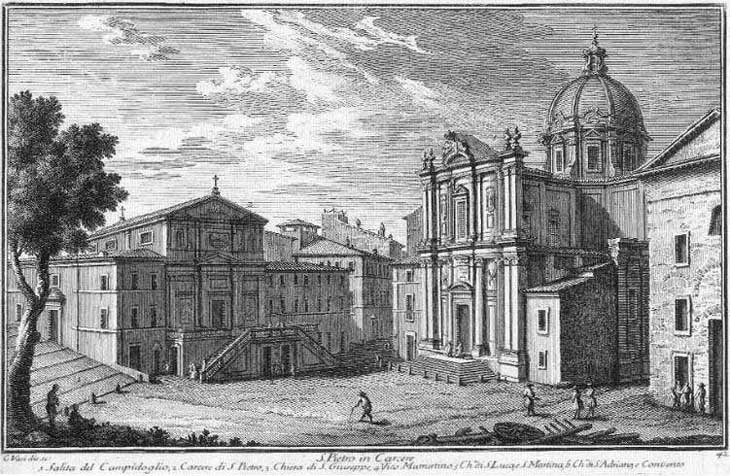
Origins and Construction
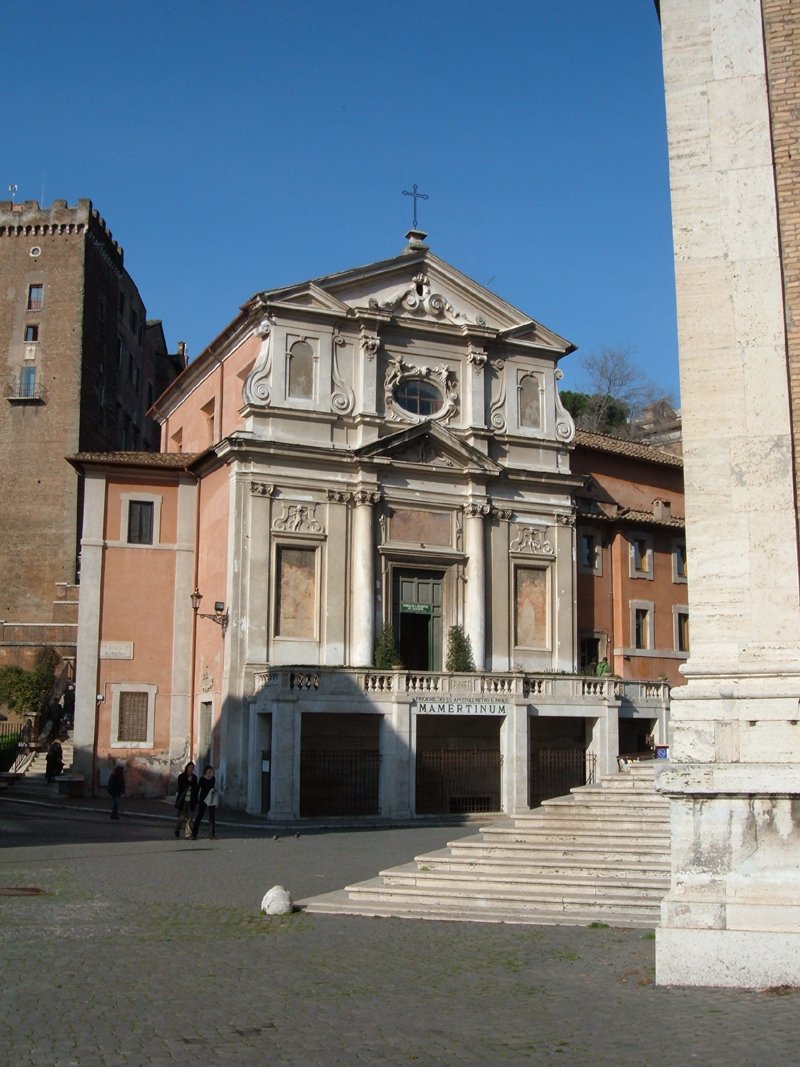
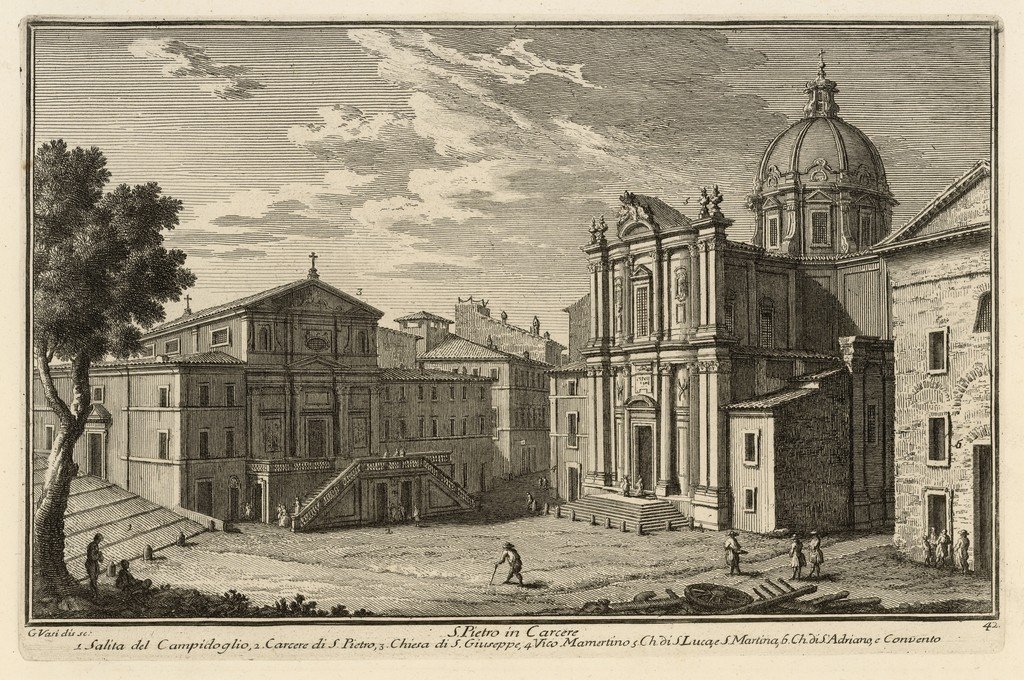
Traditionally attributed to King Ancus Marcius in the 7th century BCE, the Mamertine Prison, or Tullianum, was carved into volcanic tuff rock beneath what is now the Church of San Giuseppe dei Falegnami (Turismo Roma; Wikipedia). The complex features two main chambers:
- Tullianum (Lower Chamber): The original structure, initially a cistern, lies about twelve feet underground and contains a natural spring.
- Carcer (Upper Chamber): Added later, this served as the main holding area for prisoners awaiting trial or execution.
The prison’s strategic location near the Roman Forum and Capitoline Hill made it a central fixture in Rome’s judicial and political life.
Ancient Use and Notable Prisoners
The Mamertine Prison was not used for long-term incarceration but rather as a temporary holding place for high-profile captives prior to trial or execution (Wikipedia). Its reputation for neglect and darkness is well documented in Roman sources.
Notable prisoners and executions include:
- Jugurtha (King of Numidia): Starved to death following his capture (Turismo Roma).
- Vercingetorix (Gallic Chieftain): Executed in 46 BCE after Julius Caesar’s triumph.
- Conspirators of Catiline: Executed on Cicero’s orders.
- Sejanus (Praetorian Prefect): Held before execution under Tiberius.
The nearby Gemonian Stairs and Tarpeian Rock were also infamous execution sites closely linked to the prison (Wikipedia).
Christian Significance and Transformations
By the early Middle Ages, the site gained profound Christian significance. Tradition holds that Saints Peter and Paul were imprisoned here before their martyrdom (Turismo Roma). Christian lore credits Saint Peter with miraculously creating a spring within the prison to baptize fellow prisoners, commemorated today by a small baptismal font in the lower chamber.
The construction of the Church of San Giuseppe dei Falegnami above the prison in the 16th century physically symbolizes Rome’s conversion from paganism to Christianity (Wikipedia).
Archaeology and Restoration
The Mamertine Prison has seen several phases of renovation and archaeological investigation. Its upper chamber features a travertine façade from the Imperial period, while medieval modifications allowed for Christian worship (Turismo Roma). Recent excavations have revealed artifacts and led to the creation of a small museum space within the site (Historical Vagabond).
Visiting Mamertine Prison: Practical Information
Hours and Tickets
- Opening Hours: Generally Tuesday to Sunday, 9:00 AM – 7:00 PM (last admission at 6:00 PM). Closed Mondays and public holidays. Hours may vary seasonally (Kim’s History Travel; The Geographical Cure).
- Tickets: Standard adult tickets cost €10–€11. Reduced rates for children (6–17 years) and free entry for children under 6 and visitors with significant disability. Entry is included with the Roma Pass and OMNIA Vatican Card (Headout; omniavaticanrome.org).
- Where to Buy: Online booking is highly recommended for timed entry and to skip lines. E-tickets are accepted on smartphones (toorists.com; visit-colosseum-rome.com).
- Combo Tickets: Combined entry options are available for the Mamertine Prison, Colosseum, Roman Forum, and Palatine Hill.
Accessibility
Due to the ancient structure—steep stairs, uneven floors, and confined underground spaces—Mamertine Prison is not accessible for wheelchairs or strollers. Visitors with mobility challenges should inquire in advance (omniavaticanrome.org).
Directions
- Address: Clivo Argentario, 1, 00186 Roma RM, Italy.
- Metro: Colosseo (Line B), roughly a 10-minute walk.
- Bus: Stops at Piazza Venezia, a 5-minute walk away.
- On Foot: Easily accessible from the Roman Forum, Capitoline Museums, and Colosseum (thebettervacation.com).
Best Time to Visit
For the most pleasant experience, plan to visit early in the morning or late in the afternoon, especially on weekdays and outside peak summer months (June–August).
Nearby Attractions
Mamertine Prison is ideally located for a combined itinerary with the Roman Forum, Capitoline Museums, Colosseum, and Pantheon. Christian pilgrims may also wish to visit St. Peter’s Basilica, Basilica of St. Paul Outside the Walls, or the Roman catacombs.
Visitor Highlights and Photography
- Lower Chamber (Tullianum): Atmospheric dungeon associated with Saints Peter and Paul.
- Upper Chamber (Carcer): Features a stone altar, medieval frescoes, and inscriptions.
- Sacred Well: Linked to the legend of Saint Peter.
- Architectural Details: Opus reticulatum brickwork and ancient vaults.
- Photography: Allowed without flash or tripod; be respectful of religious spaces.
Frequently Asked Questions (FAQ)
Q: What are the opening hours for Mamertine Prison?
A: Typically Tuesday to Sunday, 9:00 AM – 7:00 PM, last entry at 6:00 PM. Closed Mondays and major holidays. Check official sources for seasonal updates.
Q: How much do tickets cost?
A: Adult tickets are €10–€11, with reduced rates for children and free entry for young children and some disabled visitors.
Q: Is the site accessible for wheelchairs or strollers?
A: No, due to steep stairs and narrow spaces.
Q: Can I take photos?
A: Yes, but flash and tripods are not permitted.
Q: Are audio or guided tours available?
A: Yes, audio guides (included with most tickets) are available in several languages. Guided tours can be booked through various providers.
Q: Are combo tickets available?
A: Yes, combination tickets for the Mamertine Prison, Colosseum, and Roman Forum are available.
Practical Tips
- Book tickets online in advance to secure your preferred time slot.
- Dress modestly and wear sturdy shoes; chambers are cool and damp.
- Duration: Most visits last 30–40 minutes.
- Facilities: No restrooms on-site; use nearby amenities at the Roman Forum or Capitoline Hill.
- No food or drink allowed inside due to the site’s religious and archaeological importance.
- Supervise children closely—the site is not suitable for very young children or those with claustrophobia.
Tickets & tours.
These are guided options from our partners — same price as booking direct.
Prices are indicative — final pricing and availability are confirmed at checkout. Audiala may earn a commission from bookings made through these links.
Listen to the full story in the app
The whole Mamertine Prison,
told well.
Audio guides for 1,100+ cities across 96 countries. History, stories, and local insight — offline ready.
Verified, and shown.
Researched and written by the Audiala editorial team from historical records, architectural archives, and local expertise.
Researched from Wikidata, Wikipedia & official sources · fact-checked · How we make our guides →