Plan and listen to Forum Holitorium with Audiala.
Audio guide in your pocket, itinerary in your browser. Built for the way you actually visit.
Introduction: The Forum Holitorium in Rome’s Layered Past
Tucked between the Capitoline Hill and the Tiber River, the Forum Holitorium is a lesser-known yet essential site for anyone seeking a deeper understanding of Rome’s ancient heart. Once the city’s bustling vegetable market, it was both a commercial hub and a sacred precinct, reflecting the close interplay between daily life and religious practice in Republican and early Imperial Rome. Today, its remains are ingeniously incorporated into the medieval church of San Nicola in Carcere, offering a living testament to Rome’s ongoing transformation and the palimpsest of its urban fabric.
This comprehensive guide will walk you through the Forum Holitorium’s history, archaeological highlights, visiting hours, ticketing details, accessibility, and nearby attractions. Whether you are a history enthusiast, a curious traveler, or an educator, this resource will help you plan and enrich your visit.

Origins and Location
The Forum Holitorium, from the Latin holus (“vegetable”), was ancient Rome’s principal market for vegetables, herbs, and fresh produce. Situated on the western slopes of the Capitoline Hill, adjacent to the Tiber River and near the Carmental Gate, its location facilitated the easy delivery of goods by both road and river (Rome and Environs: An Archaeological Guide). This prime location, between the Forum Boarium (cattle market) and the Circus Flaminius, made it a vital commercial artery of the city.
Evolution Through the Republic and Empire
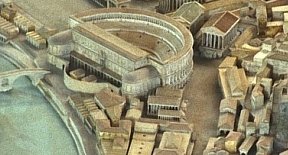
Dating back to at least the 5th century BCE, the Forum Holitorium began as an open, unpaved marketplace. By the 3rd century BCE, major temples were constructed and the area was paved with travertine, reflecting the city’s growing urban sophistication. Over time, its role as a market diminished as new trading centers like the Macellum and Trajan’s Market emerged. Monumental structures such as the Theatre of Marcellus, completed in 13 BCE, further transformed the area’s character, shifting its focus from commerce to monuments and religious activity (Rome and Environs: An Archaeological Guide).
Religious and Economic Significance
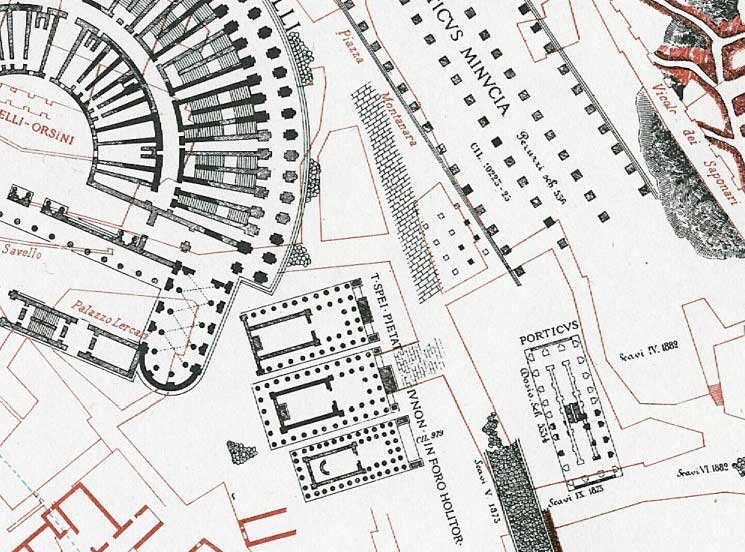
The Forum Holitorium was unique for its integration of commerce and religion. Merchants not only sold produce but also sought divine protection and legitimacy for their trade at temples within the market. The temples of Janus, Spes (Hope), and Juno Sospita—built during times of war and crisis—reflect the deep interconnection between economic vitality and spiritual well-being in Roman culture (Madain Project).
Archaeological Features and Key Monuments
Temples of Janus, Spes, and Juno Sospita
Three major Republican-era temples stood side by side in the Forum Holitorium:
- Temple of Janus: Dedicated to the god of beginnings and transitions, its foundations and columns are now visible as part of San Nicola in Carcere’s north wall.
- Temple of Spes (Hope): Symbolizing prosperity and optimism, its remains form the church’s southern wall.
- Temple of Juno Sospita: Representing protection and salvation, its columns are integrated into the central nave (Madain Project).
Built between the 3rd and 2nd centuries BCE, these temples were repeatedly restored, testifying to their ongoing importance to Roman identity.
San Nicola in Carcere: Medieval and Ancient Fusion
The church of San Nicola in Carcere is a remarkable example of Rome’s architectural layering. Constructed in the Middle Ages directly atop the ancient temples, it incorporates their columns and foundations into its own structure—a visible palimpsest of sacred continuity (Rome and Environs: An Archaeological Guide).
Market Infrastructure and Finds
Archaeological remains include paved surfaces, evidence of market stalls (postholes), drainage systems to manage runoff from the Tiber, and artifacts such as ceramic fragments, weights, and coins—each offering insight into the daily rhythms of ancient Roman market life.
Visiting the Forum Holitorium
Location and Access
- Address: Via del Teatro di Marcello, 46, 00186 Roma RM, Italy
- Transport: Easily accessible via bus lines 44, 51, 81, 85, 87, 160, 170, and 628 (Teatro Marcello or Piazza Venezia stops). The Colosseo metro station (Line B) is a 15-minute walk (Toorists.com).
Visiting Hours
- San Nicola in Carcere: Open Tuesday to Sunday, 9:00 AM–6:00 PM (hours may vary on religious holidays and during special events).
- Temple Remains (Exterior): Viewable at any time from the street.
Tickets and Guided Tours
- Exterior Viewing: Free
- Church Entry: Free; a small donation is appreciated.
- Archaeological Crypt Tours: Usually require a modest ticket (around €5); tickets available on-site or via local tour operators. Guided tours provide access to the temple remains beneath the church.
- Combined Tickets: For broader archaeological itineraries (e.g., Roman Forum, Colosseum), combined tickets are available (Rome.net).
Accessibility Information
- The church is accessible to visitors with limited mobility, but the crypt and some ancient remains involve stairs and uneven surfaces.
- Outdoor pathways are cobbled and may be challenging for wheelchairs.
- Visitors with accessibility needs are advised to contact the church in advance.
What to See: Highlights and Visuals
- Ancient Columns and Walls: Incorporated into the church’s structure, visible both inside and out.
- Archaeological Crypt: Reveals the foundations and podiums of the ancient temples.
- Open-Air Remains: Sections of ancient paving and market infrastructure along Via del Teatro di Marcello.
- Theatre of Marcellus: Adjacent monumental theater providing a dramatic historical backdrop.
For an enhanced experience, consult virtual tours and high-quality images from Madain Project and city tourism resources.
Nearby Attractions
- Theatre of Marcellus: Ancient Roman theater next door.
- Capitoline Hill and Museums: Ancient seat of Roman government and art collections.
- Roman Forum and Palatine Hill: The heart of political and religious Rome (Italy Tourist Information).
- Jewish Ghetto: Historic neighborhood with culture and cuisine.
- Piazza Venezia: A bustling modern square with monumental architecture.
Practical Visitor Tips
- Best Time to Visit: Early morning or late afternoon for cooler temperatures and fewer crowds, especially in summer (Italy in June – Your 2025 Complete Guide).
- Dress Code: Modest attire is required inside San Nicola in Carcere.
- Footwear: Wear comfortable shoes for uneven, ancient pavements.
- Photography: Non-flash photography is permitted unless otherwise indicated.
- Water and Shade: Bring water and sun protection, as shade is limited.
- Combine Visits: Plan to explore nearby sites for a full day of ancient Rome.
Frequently Asked Questions (FAQ)
Q: What are the Forum Holitorium visiting hours?
A: The church is typically open Tuesday–Sunday, 9:00 AM–6:00 PM. The outdoor remains are always accessible.
Q: Do I need a ticket to enter?
A: Exterior viewing is free; entry to the church is free (donations welcome), and archaeological tours of the crypt require a small fee.
Q: Are guided tours available?
A: Yes, on-site and through local operators, including archaeological and historical explanations.
Q: Is the site accessible for people with disabilities?
A: The church is partially accessible; the crypt and some ancient remains may pose challenges.
Q: How do I get there using public transport?
A: Multiple bus lines stop nearby; the closest metro station is Colosseo (Line B).
Q: Are there special events at the site?
A: Yes, the church hosts concerts, lectures, and religious festivals—check local listings.
Discover More
The Forum Holitorium is an evocative portal to Rome’s ancient past, blending sacred temples, commercial heritage, and medieval architecture. Its central, yet tranquil, location provides a quieter alternative to Rome’s most crowded attractions, allowing visitors to experience the city’s historical layers in a unique and intimate setting.
Enhance your visit by downloading the Audiala app for interactive tours, maps, and up-to-date visitor details. For more on Rome’s ancient markets and major monuments, consult the sources below and explore our related articles. Don’t forget to follow us on social media for the latest travel inspiration and updates!
Tickets & tours.
These are guided options from our partners — same price as booking direct.
Prices are indicative — final pricing and availability are confirmed at checkout. Audiala may earn a commission from bookings made through these links.
Listen to the full story in the app
The whole Forum Holitorium,
told well.
Audio guides for 1,100+ cities across 96 countries. History, stories, and local insight — offline ready.
Verified, and shown.
Researched and written by the Audiala editorial team from historical records, architectural archives, and local expertise.
Researched from Wikidata, Wikipedia & official sources · fact-checked · How we make our guides →