Plan and listen to Fontana Dell'Acqua Felice with Audiala.
Audio guide in your pocket, itinerary in your browser. Built for the way you actually visit.
Introduction to Fontana dell'Acqua Felice
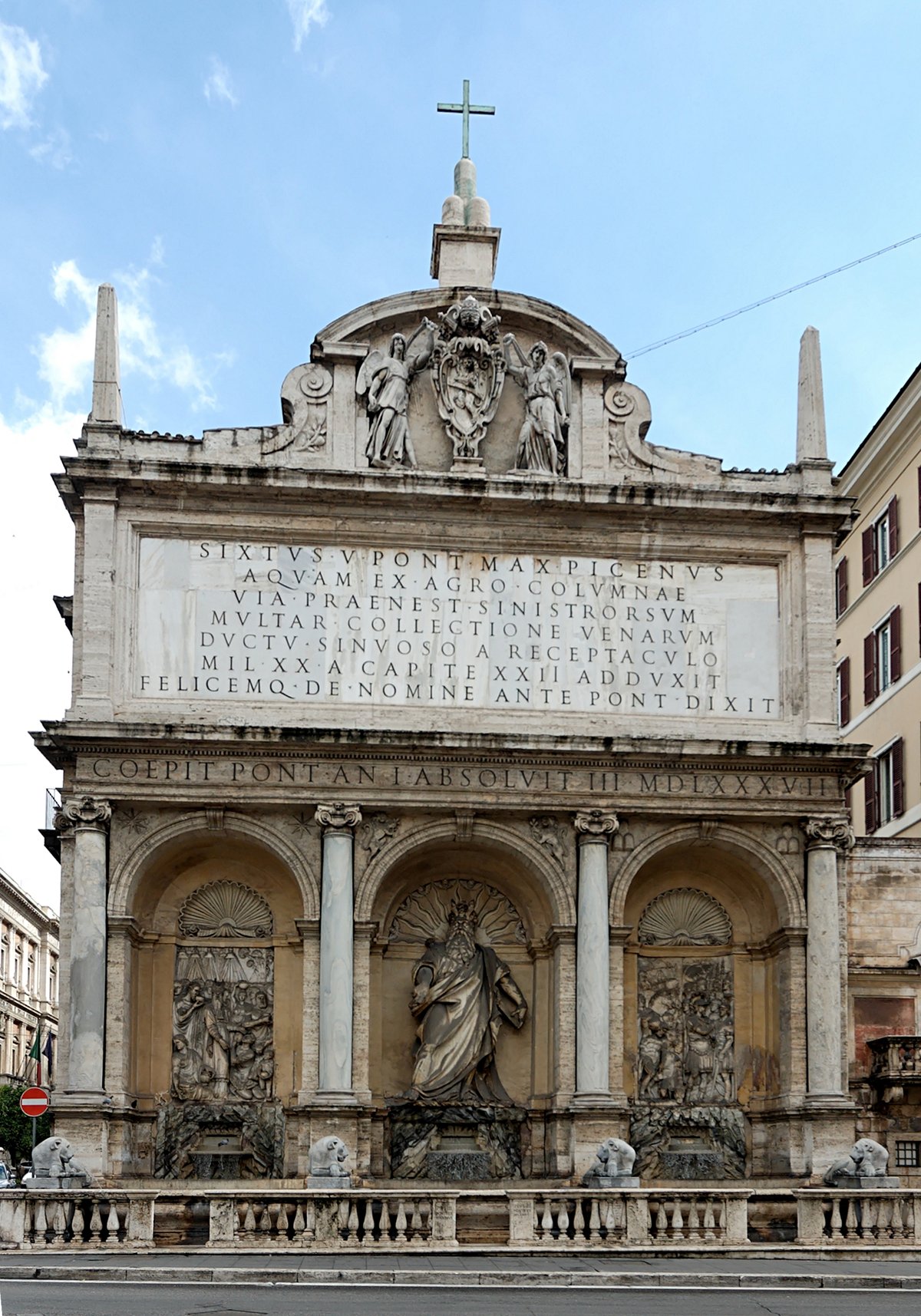
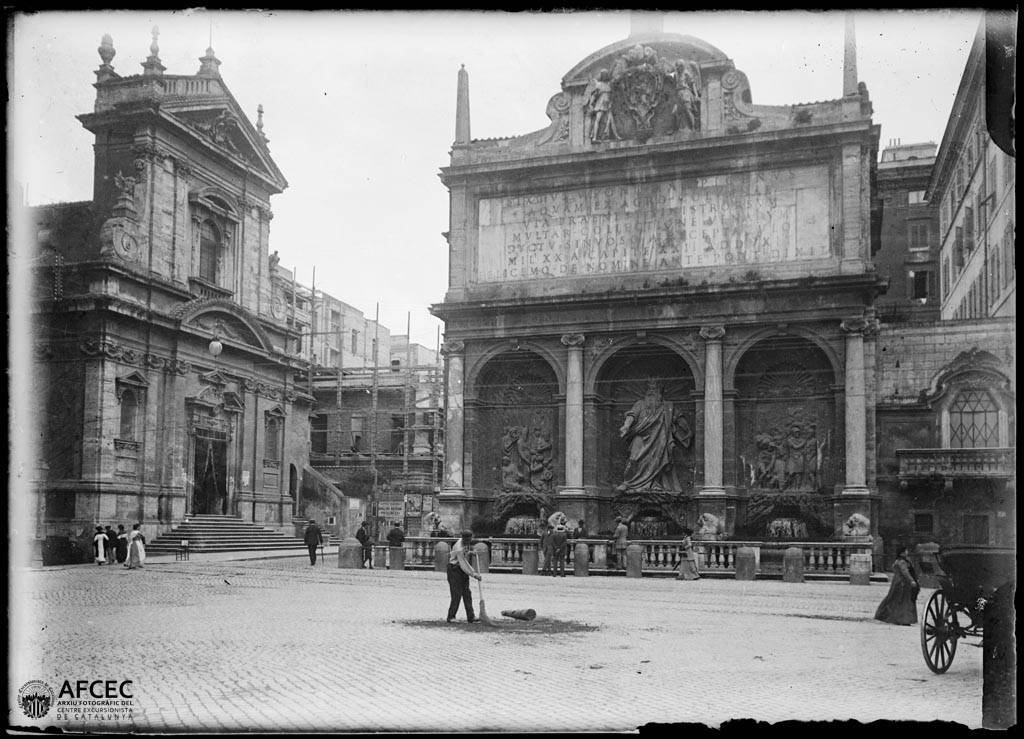
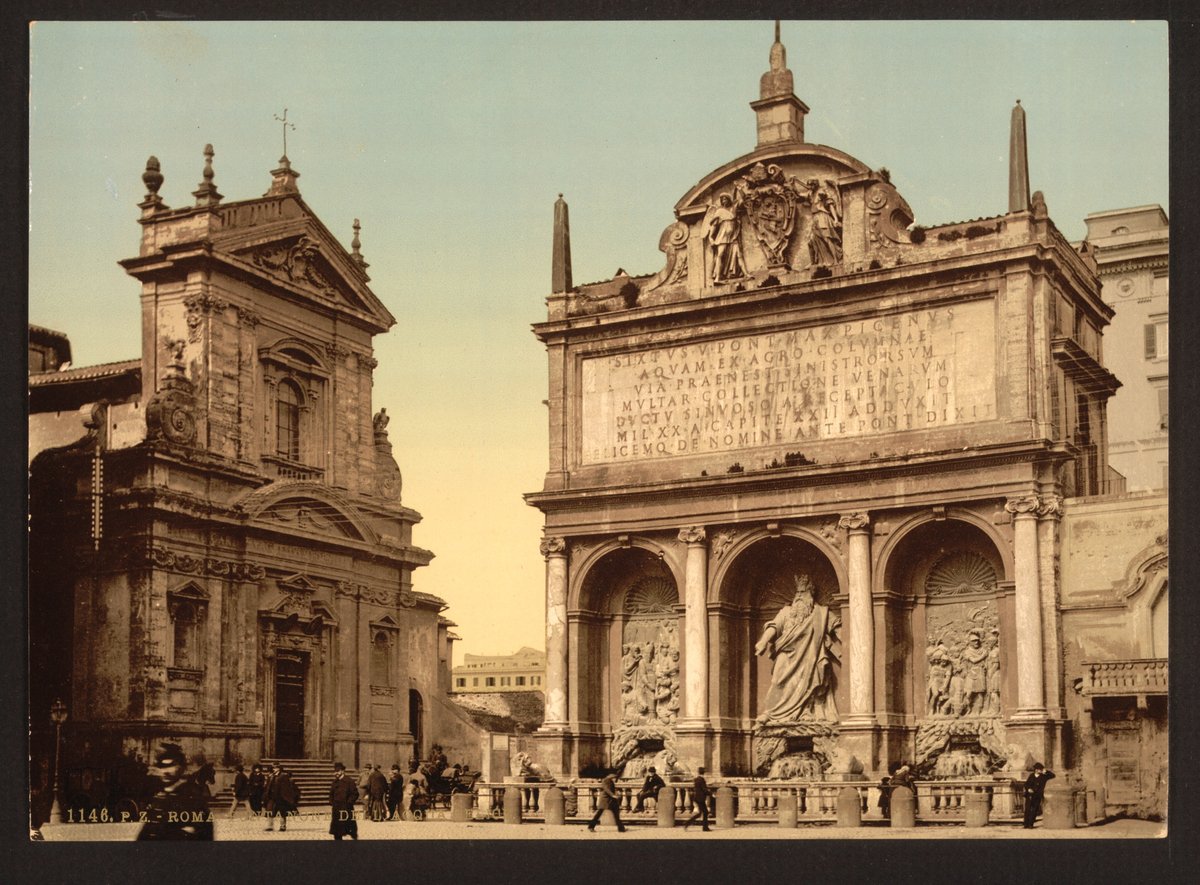
Rome, often referred to as the Eternal City, boasts an incredible array of historical landmarks that narrate the story of its rich cultural heritage. Among these, the Fontana dell'Acqua Felice, also known as the Fountain of Moses, stands out not just as a marvel of late Renaissance architecture but also as a testament to the city's urban revival under Pope Sixtus V. Commissioned in 1585 and completed in 1587, this grandiose fountain marks the terminus of the Acqua Felice aqueduct, which Pope Sixtus V restored to revitalize Rome's water supply (Rome Art Lover). Designed by Domenico Fontana, the fountain is an intricate blend of classical Roman triumphal arches and religious symbolism, featuring statues of Moses, Aaron, and Gideon (Rome.info). This guide offers a comprehensive look into the history, artistic significance, visitor information, and travel tips for those planning to explore this iconic Roman landmark.

History of Fontana dell'Acqua Felice
Origins and Construction
Commissioned by Pope Sixtus V and completed in 1587, the Fontana dell'Acqua Felice marks a significant achievement in late Renaissance Rome. Named after the Pope's birth name, Felice Peretti, the fountain was built to celebrate the restoration of the ancient Aqua Alexandrina aqueduct, renamed Acqua Felice in his honor. Originally constructed in 226 AD by Emperor Alexander Severus, the aqueduct had fallen into disrepair. The revitalization of Rome's water supply, including the Acqua Felice, was a key component of Pope Sixtus V's urban renewal projects (Rome Art Lover).
Architectural Design
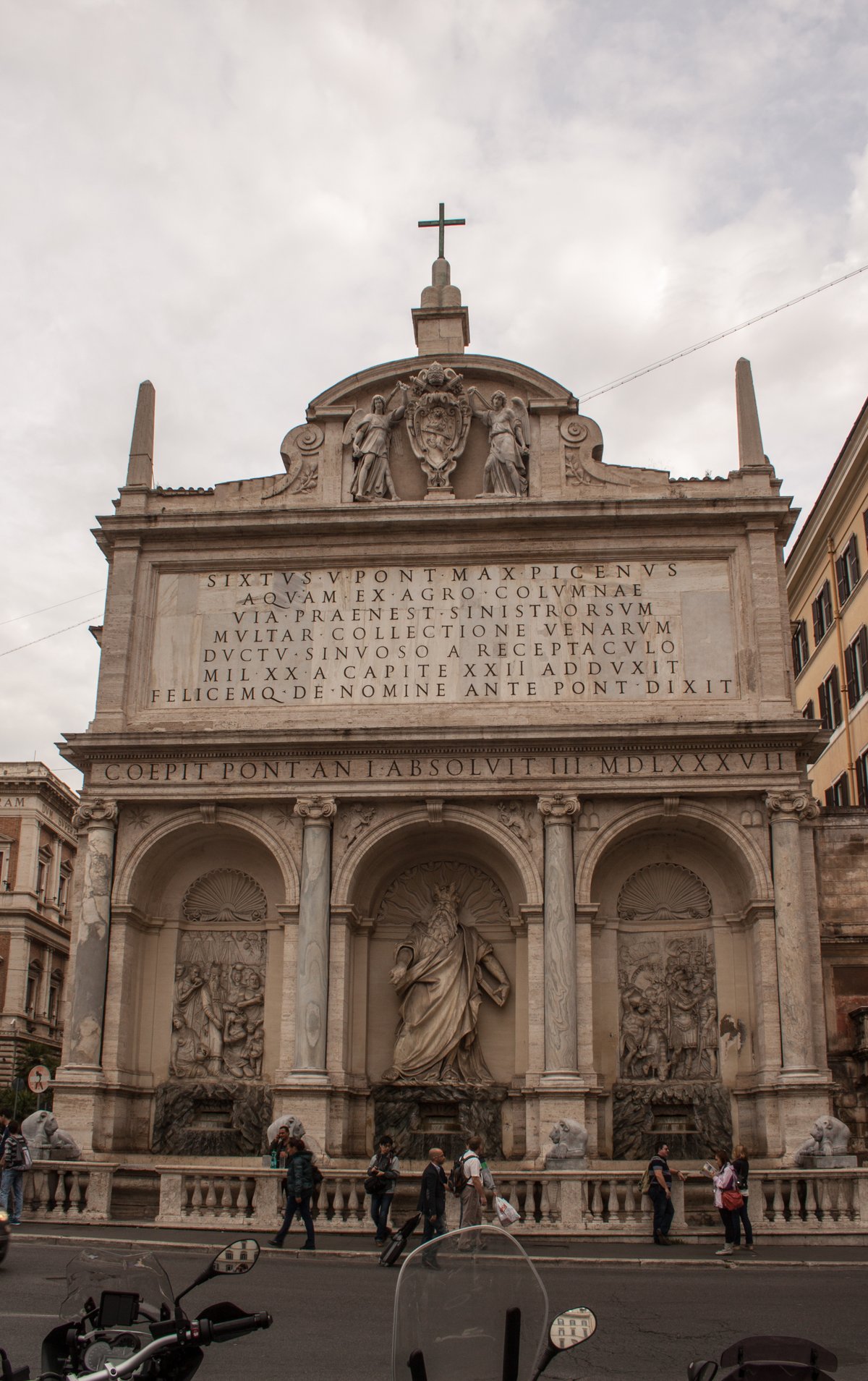
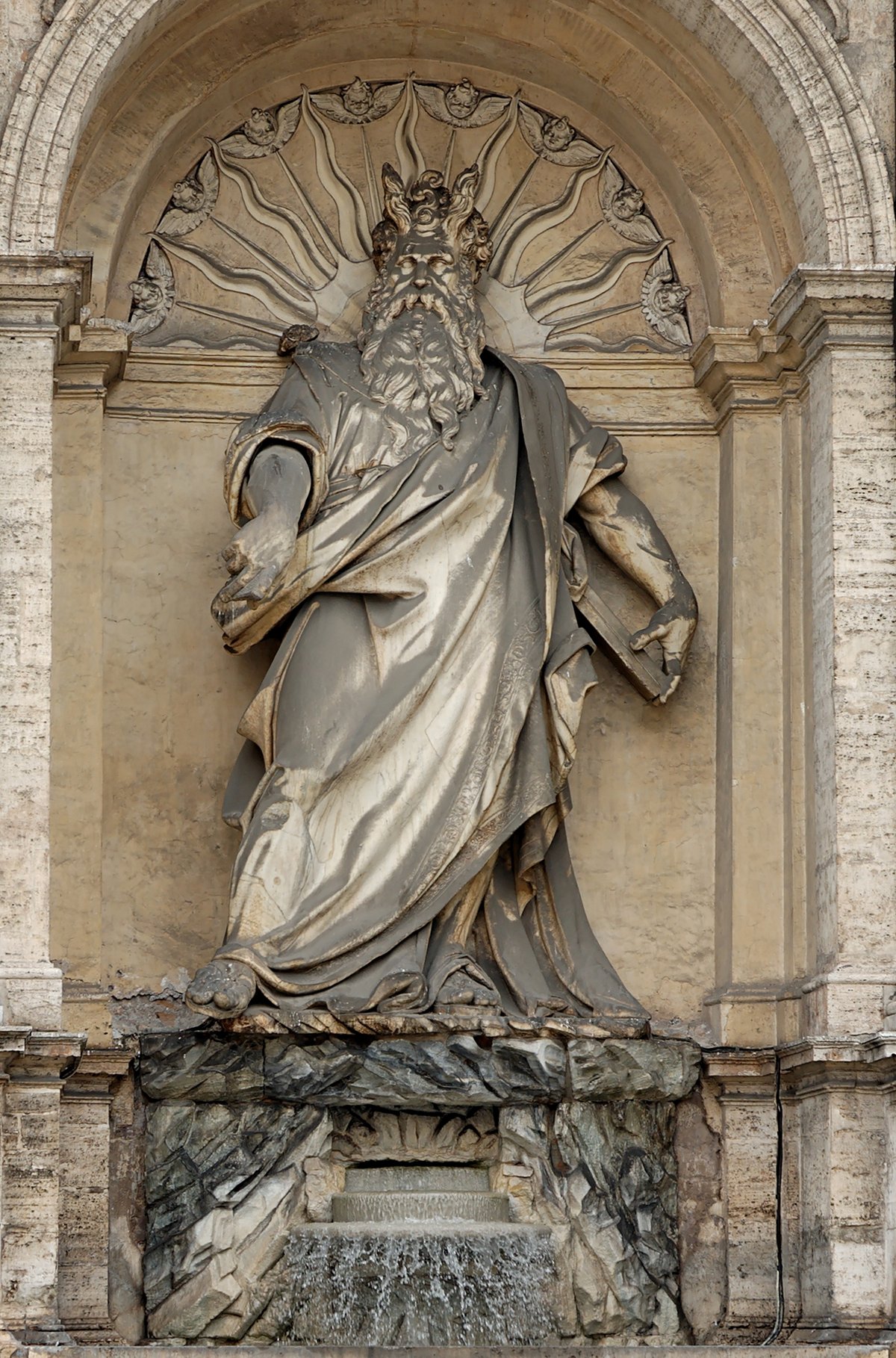
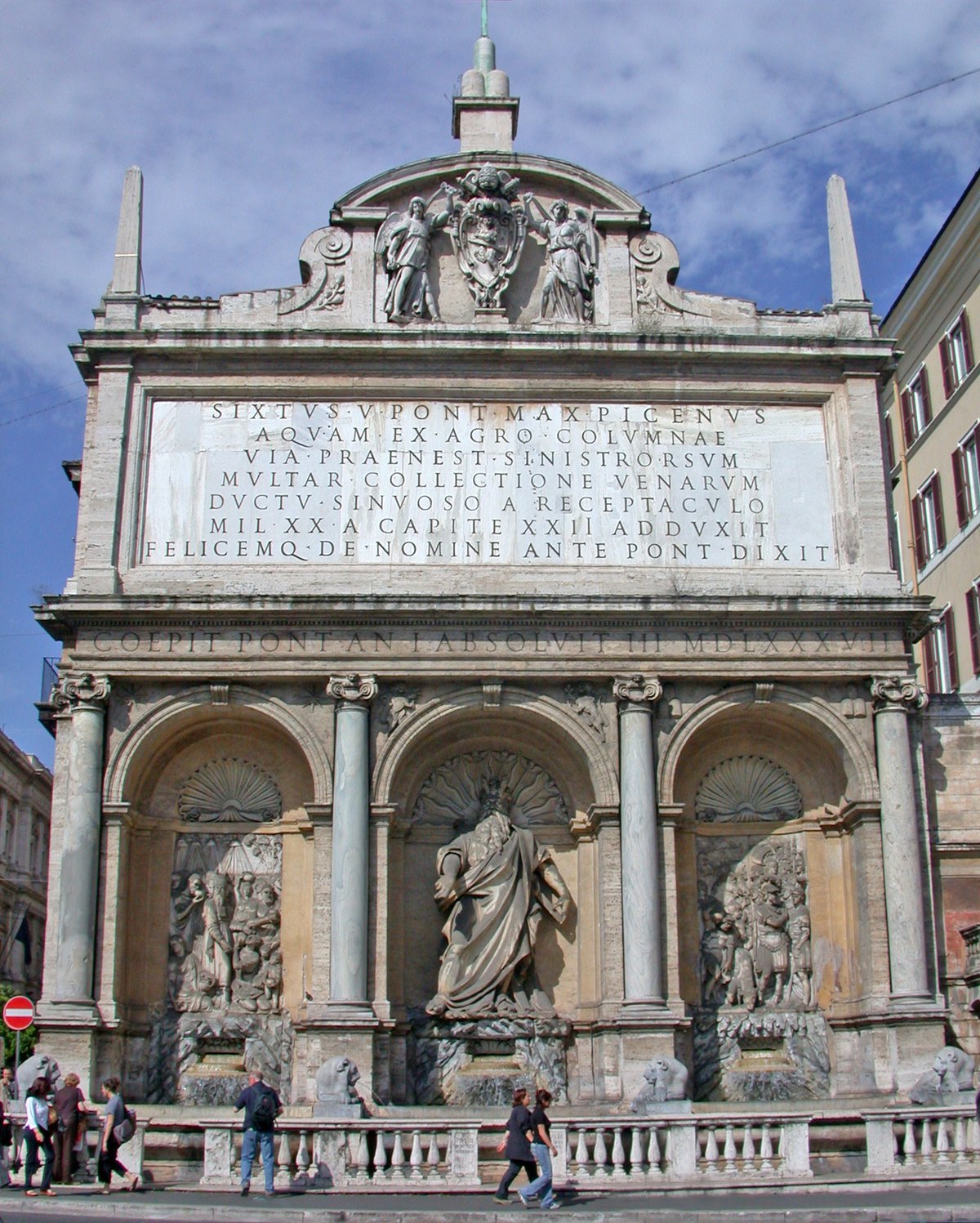
Designed by Domenico Fontana, a favored architect of Pope Sixtus V, the Fontana dell'Acqua Felice is heavily influenced by classical Roman triumphal arches. The grandiose structure features a large central niche flanked by two smaller niches, all adorned with statues and bas-reliefs. The central niche houses a colossal statue of Moses by sculptor Leonardo Sormani, depicting Moses striking a rock to bring forth water. The side niches contain statues of Aaron and Gideon, emphasizing the fountain's religious and historical significance (Rome.info).
Symbolism and Artistic Elements
Rich in symbolism, the Fontana dell'Acqua Felice reflects the religious and political aspirations of Pope Sixtus V. The statue of Moses symbolizes the Pope's role as a provider and protector. The bas-reliefs depict biblical scenes, such as the Israelites' journey through the desert and the miraculous provision of water, reminding viewers of divine providence and the Pope's spiritual leadership. Inscriptions on the fountain praise Pope Sixtus V's accomplishments and the restoration of the aqueduct (Rome Art Lover).
Historical Significance
The Fontana dell'Acqua Felice stands as a testament to Pope Sixtus V's efforts to revitalize Rome's infrastructure. The successful restoration of the Acqua Felice aqueduct was a monumental task that significantly improved the city's water supply. The fountain's design, blending classical and religious elements, set a precedent for future monumental fountains in Rome, symbolizing the city's rich cultural and historical heritage (Rome.info).
Visitor Information
Visiting Hours and Tickets
The Fontana dell'Acqua Felice is accessible to the public 24/7, and no tickets are required to visit this historical monument. Visitors can freely explore the area and admire the fountain at any time of day.
Guided Tours
For those interested in a more in-depth understanding of the fountain's history and artistic elements, guided tours are available. These tours often include visits to other nearby historical sites, providing a comprehensive experience of Rome's rich heritage.
Accessibility
The Fontana dell'Acqua Felice is located in a bustling area of Rome, making it easily accessible by public transportation. The site is also wheelchair accessible, ensuring that all visitors can enjoy its beauty and historical significance.
Travel Tips
Best Times to Visit
The best times to visit Fontana dell'Acqua Felice are early morning or late afternoon when the site is less crowded. Visiting during these times allows for a more peaceful and intimate experience.
Nearby Dining Options
Rome is renowned for its culinary delights, and there are several excellent dining options near Fontana dell'Acqua Felice. From traditional Italian trattorias to modern cafes, visitors can enjoy a variety of delicious meals while exploring the area.
Other Attractions in Rome
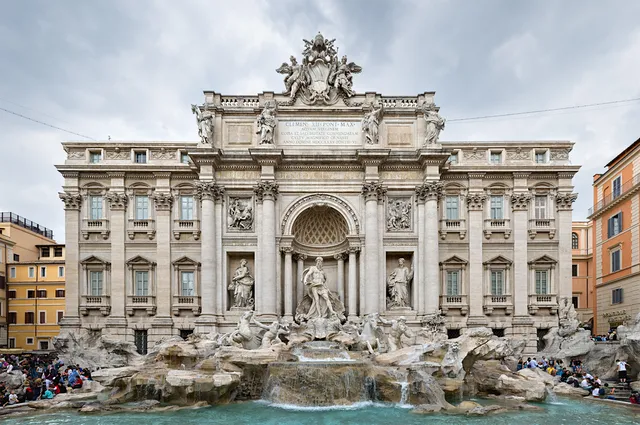
While in Rome, visitors should also explore other nearby attractions, such as the Trevi Fountain, the Colosseum, and the Pantheon. Each of these sites offers a unique glimpse into Rome's vast historical and cultural landscape.
Restoration and Preservation
Over the centuries, the Fontana dell'Acqua Felice has undergone several restoration efforts to maintain its beauty and structural integrity. Recent conservation work has focused on cleaning and repairing the statues and bas-reliefs, as well as addressing issues related to water flow and erosion. These ongoing efforts ensure that the fountain remains a prominent landmark for future generations (Rome.info).
Frequently Asked Questions (FAQ)
Q: What are the visiting hours for Fontana dell'Acqua Felice? A: The fountain is accessible to the public 24/7.
Q: Do I need a ticket to visit Fontana dell'Acqua Felice? A: No, there are no tickets required to visit the fountain.
Q: Are guided tours available? A: Yes, guided tours are available and often include visits to other nearby historical sites.
Q: Is the fountain wheelchair accessible? A: Yes, the site is wheelchair accessible.
Q: What are some nearby attractions? A: Nearby attractions include the Trevi Fountain, the Colosseum, and the Pantheon.
Tickets & tours.
These are guided options from our partners — same price as booking direct.
Prices are indicative — final pricing and availability are confirmed at checkout. Audiala may earn a commission from bookings made through these links.
Listen to the full story in the app
The whole Fontana Dell'Acqua Felice,
told well.
Audio guides for 1,100+ cities across 96 countries. History, stories, and local insight — offline ready.
Verified, and shown.
Researched and written by the Audiala editorial team from historical records, architectural archives, and local expertise.
Researched from Wikidata, Wikipedia & official sources · fact-checked · How we make our guides →