Plan and listen to Catacomb Of Commodilla with Audiala.
Audio guide in your pocket, itinerary in your browser. Built for the way you actually visit.
Introduction
The Catacomb of Commodilla, concealed beneath Rome’s Garbatella district near the Basilica of Saint Paul Outside the Walls, is a remarkable testament to the city’s early Christian history. Dating to the late 4th century CE, this multi-level subterranean complex provides a rare opportunity to explore the intersection of archaeology, art, faith, and linguistics in a period of transformation and resilience. From its origins as a pozzolana quarry to its use as a clandestine Christian burial and worship space, Commodilla stands out for its unique architecture, striking frescoes, and the earliest known example of vernacular Italian—an inscription that offers a vital glimpse into medieval language evolution.
This guide delivers comprehensive information for travelers and history enthusiasts, including practical details on visiting hours, ticketing, accessibility, and travel tips, as well as an in-depth look at the catacomb’s historical and artistic treasures. Whether you’re planning your visit or seeking to deepen your understanding of Rome’s hidden Christian heritage, this resource prepares you for an enlightening journey beneath the Eternal City (Romapedia; Medievalists.net; Wanted in Rome).

Historical Background
The Catacomb of Commodilla was established in the late 4th century CE, named for Commodilla—a Roman matron credited with donating the land (Romapedia). It was carved from soft volcanic tuff outside Rome’s city limits, in accordance with burial laws that prohibited interment within the urban core (Christian Publishing House). The catacomb’s most celebrated occupants are the martyrs Felix and Adauctus, whose tombs became pilgrimage sites and focal points for clandestine Christian worship during times of persecution.
Reflecting the transition from cremation to inhumation—driven by evolving religious beliefs and anticipation of bodily resurrection—the catacomb grew into a labyrinthine network over three levels, accommodating a rapidly expanding Christian population and providing space for both burial and spiritual gatherings.
Archaeological and Artistic Significance
Unique Architectural Features
Commodilla is distinguished by its deep, square burial pits—sometimes described as “well burials”—with up to 20 loculi (niches) stacked vertically, rather than the more typical horizontal arrangement. This rare vertical design maximized available space within the constraints of the original quarry (Arkeonews; TrastevereRome). The catacomb spans three levels, with the second being the oldest and most significant, and features galleries, cubicula (family chambers), and an underground basilica.
Artistic Heritage: Frescoes and Iconography
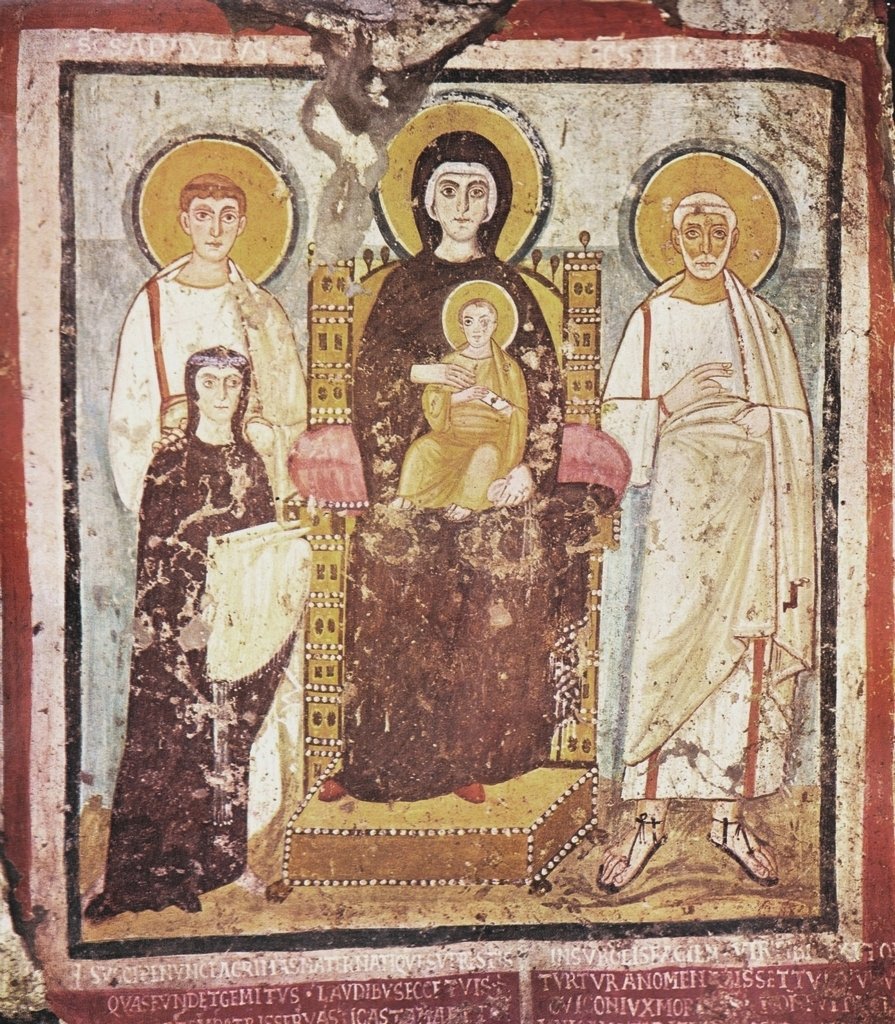
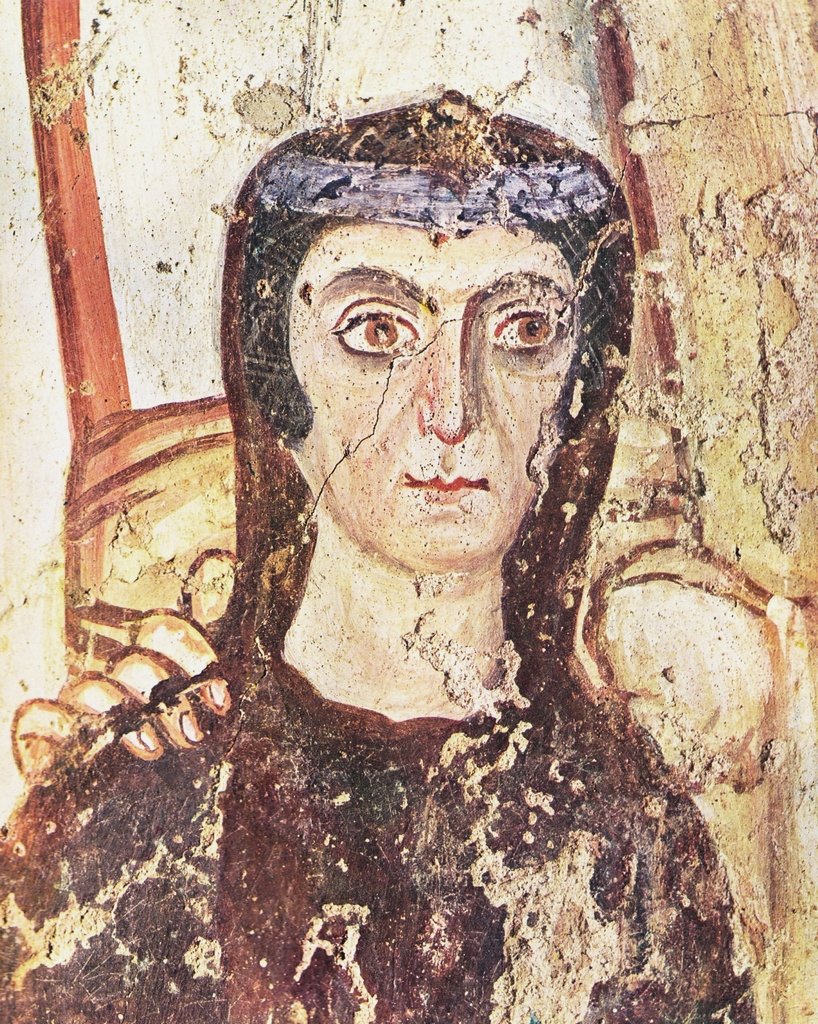
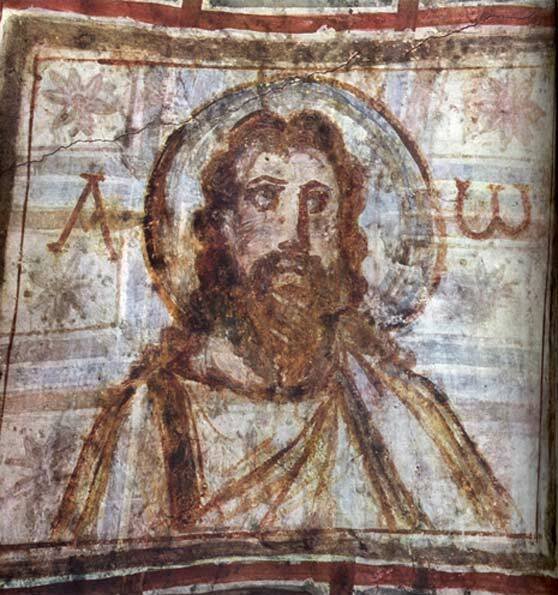
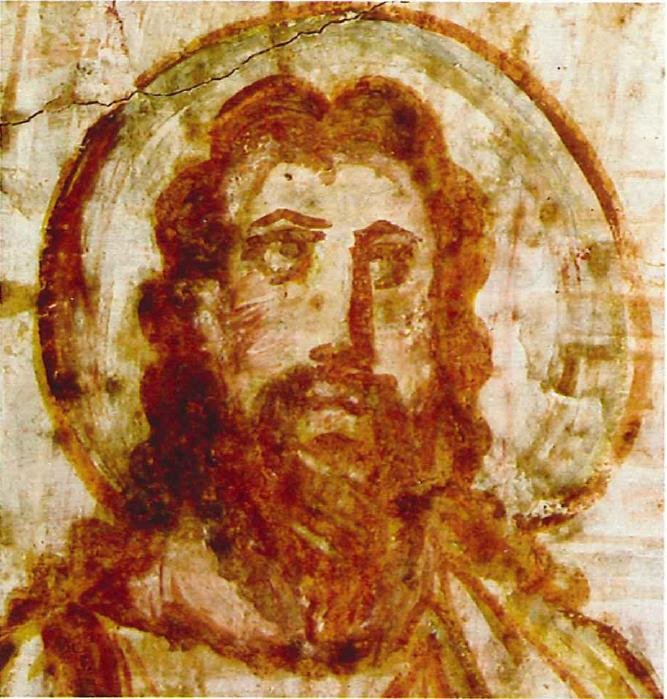
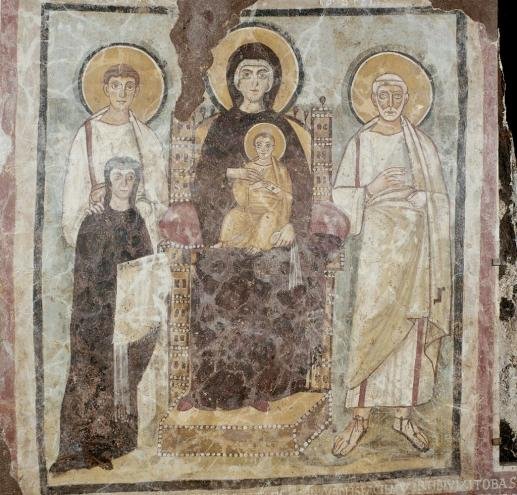
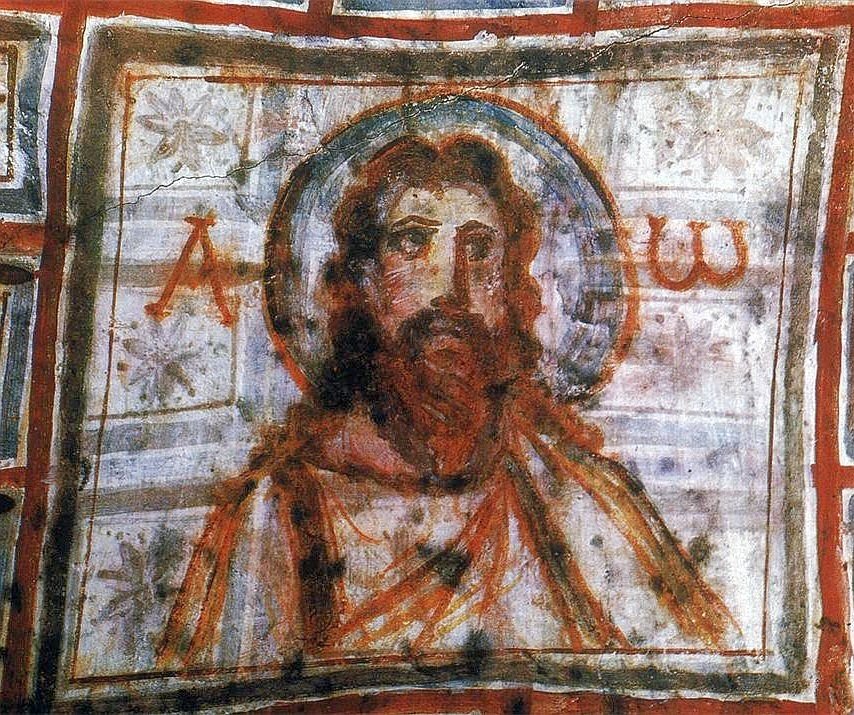
The Catacomb of Commodilla is home to some of the earliest extant Christian frescoes in Rome, particularly in the underground basilica that houses the tombs of Felix and Adauctus. Notable artworks include:
- Christ handing the keys to St. Peter, flanked by St. Adauctus and St. Merita—a motif central to later Christian iconography and the doctrine of apostolic succession.
- Portraits of St. Paul, St. Felix, and St. Stephen Orante.
- The widow Tùrtura presented to the Madonna and Child by Saints Felix and Adauctus.
- St. Luke holding medical instruments in a leather case (Turismo Roma).
The frescoes bridge classical Roman artistic conventions and the more symbolic, didactic style of early Christian art. Recent restoration by the Pontifical Commission of Sacred Archaeology has ensured their preservation (Arkeonews).
Epigraphy and Early Vernacular Language
One of Commodilla’s most important archaeological finds is a 9th-century graffito:
Non dicere ille secrita a bboce
(“Don’t say the secrets out loud”), written in a blend of Latin and early Italian. This inscription is a crucial document in the evolution of the Italian language and is believed to refer to the secret prayers of the Christian liturgy (Wanted in Rome). Numerous other Latin and Greek inscriptions, as well as graffiti from pilgrims, reflect the catacomb’s continued veneration through the Middle Ages.
Social and Religious Significance
Commodilla, like other catacombs, functioned as more than a cemetery. It was a hub of Christian community life—offering protection during persecution, a space for worship, and a setting for the veneration of martyrs. Burial within the catacomb reinforced communal identity and expressed hope in resurrection, as seen in its artistic and epigraphic record. The site’s transformation from an active burial ground to a pilgrimage destination mirrors the broader evolution of Christian practice in Rome (Russo, 1979).
Practical Visitor Information
Location and Access
- Address: Via delle Sette Chiese, 42, 00145 Rome RM, Italy (Catacombeditalia.va)
- Neighborhood: Garbatella, near the ancient Via Ostiensis and the Basilica of Saint Paul Outside the Walls.
Visiting Hours and Tickets
- Opening: As of 2025, the Catacomb of Commodilla is open to the public, but visits are by advance appointment only; there are no regular daily tours (Medievalists.net).
- Hours: Tours are generally scheduled Tuesday–Sunday, between 9:00 AM and 5:00 PM. Check with the Pontifical Commission for up-to-date times.
- Booking: To request a visit, contact the Pontifical Commission for Sacred Archaeology by phone (+39 064465610; +39 064467601) or email ([email protected]). Advance booking is essential, and not all requests are guaranteed (Catacombeditalia.va).
- Tickets: Prices typically range from €8–€15 (adults), with reductions for students, seniors, and children.
Guided Tours and Accessibility
- Guided tours are mandatory for all visitors, ensuring site preservation and providing expert context (Help Tourists in Rome).
- Tours are primarily in Italian, with limited availability in English or other languages; specify your preference when booking.
- Accessibility: Due to narrow passages and stairs, the catacomb is not suitable for wheelchair users or visitors with mobility challenges or severe claustrophobia (Roma Experience).
- Dress code: Modest attire (shoulders covered, no short skirts/shorts) is required.
- Photography: Flash photography is prohibited to protect the frescoes.
Travel Tips and Nearby Attractions
- Getting there: The nearest metro station is Garbatella (Line B), followed by a short walk (Turismo Roma).
- Combine your visit with the nearby Basilica of Saint Paul Outside the Walls and other catacombs along the Via Appia Antica.
- Tour duration: Approximately 45–60 minutes; underground temperatures remain around 15°C (59°F), so bring a light jacket.
- Group visits: May require special permits; advance coordination is necessary.
Frequently Asked Questions (FAQ)
What are the visiting hours?
Visits are by appointment only, generally Tuesday–Sunday, 9:00 AM–5:00 PM. Confirm with the Pontifical Commission for current schedules.
How do I book tickets?
Contact the Pontifical Commission for Sacred Archaeology by phone or email. Early booking is recommended due to limited availability.
Is the catacomb accessible for those with disabilities?
No, the site is not wheelchair accessible due to stairs and narrow tunnels.
Are tours available in English?
Limited English-language tours are available; request when booking.
What should I wear?
Dress modestly: cover shoulders and knees.
Can I take photos inside?
Photography is generally not permitted to preserve the artworks.
Cultural and Spiritual Insights
The Catacomb of Commodilla exemplifies the endurance and creativity of early Christian Rome, embodying both spiritual devotion and artistic innovation. Its continued use and veneration through the centuries, as well as its rare examples of early Christian art and language, offer visitors a profound connection to the city’s past (Wanted in Rome).
Essential Tips for a Memorable Visit
- Book well in advance, especially during major religious events.
- Prepare for challenging conditions: Wear comfortable shoes, bring a jacket, and be ready for stairs and confined spaces.
- Respect the site’s sanctity: Maintain silence, follow your guide’s instructions, and adhere to dress and photography rules.
- Enhance your visit by exploring nearby Christian monuments for a comprehensive understanding of early Christian Rome (Turismo Roma).


Interactive map and virtual tour of Catacomb of Commodilla
Listen to the full story in the app
The whole Catacomb Of Commodilla,
told well.
Audio guides for 1,100+ cities across 96 countries. History, stories, and local insight — offline ready.
Verified, and shown.
Researched and written by the Audiala editorial team from historical records, architectural archives, and local expertise.
Researched from Wikidata, Wikipedia & official sources · fact-checked · How we make our guides →