Plan and listen to Basilica Aemilia with Audiala.
Audio guide in your pocket, itinerary in your browser. Built for the way you actually visit.
Introduction
Nestled in the heart of the Roman Forum, the Basilica Aemilia is a profound testament to the architectural innovation, civic life, and enduring legacy of Ancient Rome. Constructed in 179 BCE by the consuls Marcus Aemilius Lepidus and Marcus Fulvius Nobilior, it served as a bustling center for legal, financial, and social exchange. As one of the city's earliest and most influential basilicas, it not only shaped the urban fabric of Rome but also set architectural precedents for centuries to come. Today, the basilica’s evocative ruins offer visitors a tangible link to Rome’s storied past, while comprehensive visitor resources help ensure a rewarding and accessible experience.
For the latest details on visiting hours and tickets, always consult the official Parco Colosseo website.

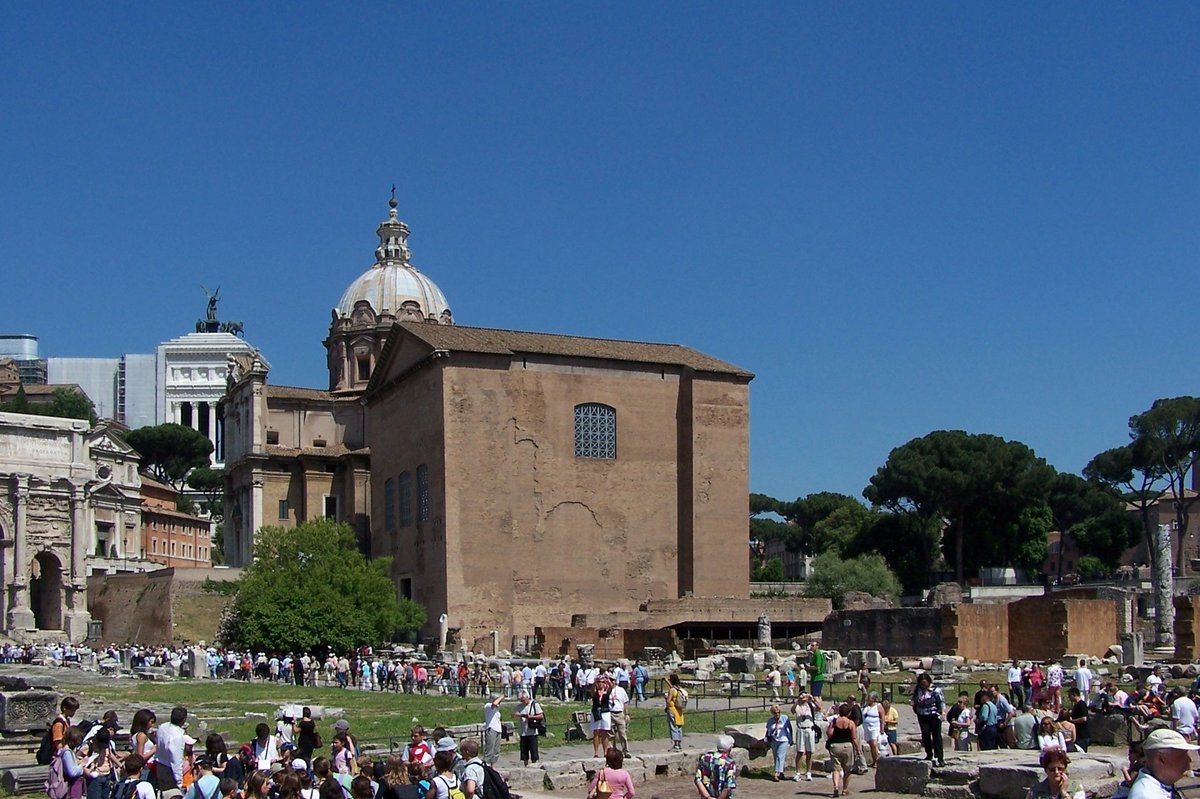

Origins and Construction
The Basilica Aemilia, the oldest basilica in the Roman Forum, was commissioned in 179 BCE by Marcus Aemilius Lepidus and Marcus Fulvius Nobilior (aViewOnCities). Named after the influential Aemilia family (gens Aemilia), it was constructed to serve as a venue for business transactions, legal proceedings, and public gatherings, providing shelter and structure to Rome’s civic core. The basilica’s location, opposite the Basilica Julia and along the Via Sacra, placed it at the epicenter of commerce and administration (Rome Tourist).
Architectural Evolution and Notable Features
Design and Layout
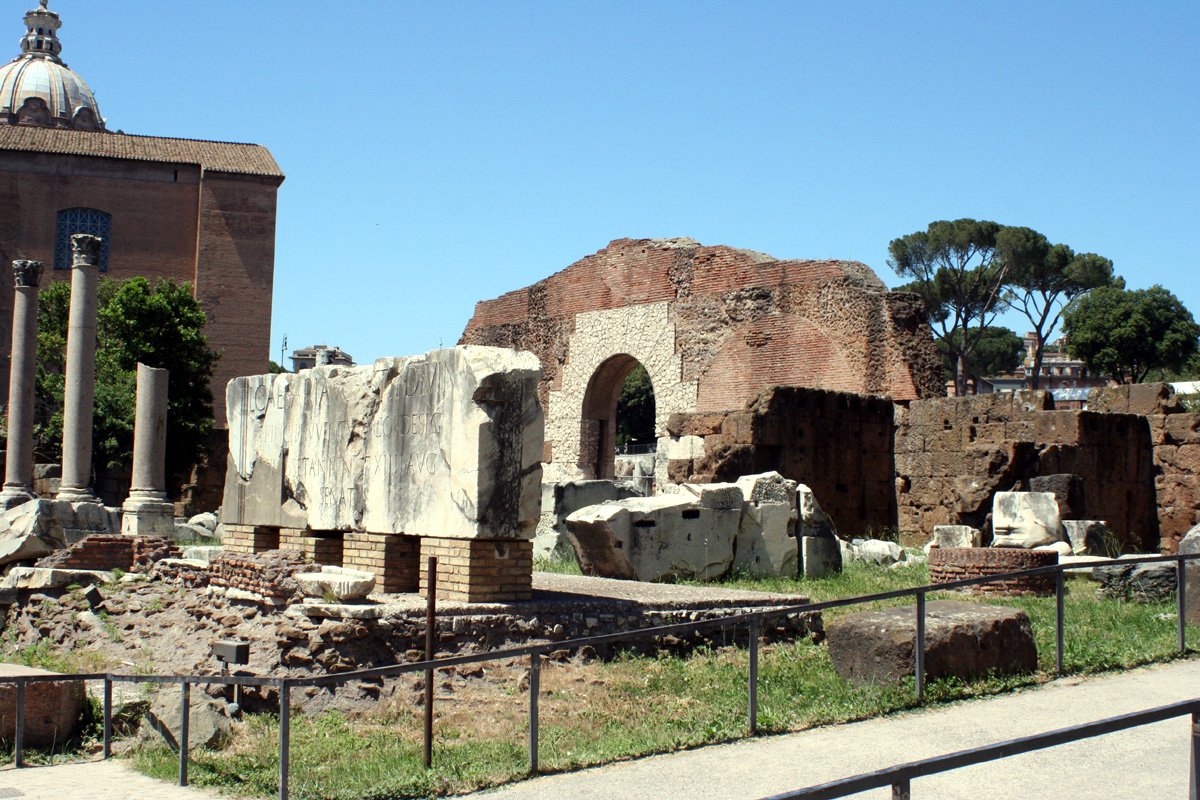
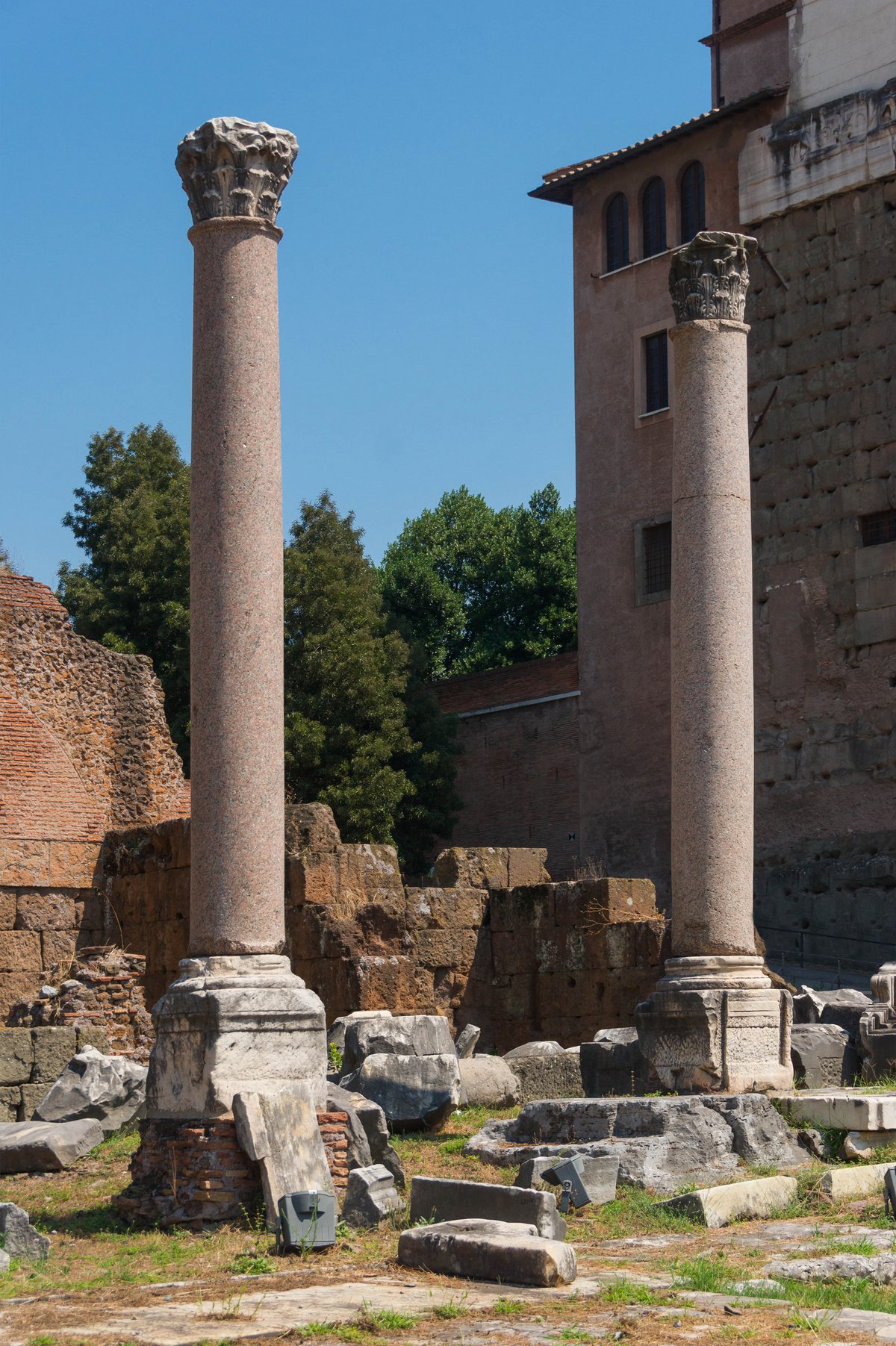
The basilica measured approximately 100–101 meters in length and 29.5 meters in width, comprising a central nave flanked by four aisles, all separated by rows of imposing columns. The Forum-facing façade boasted a grand portico, while the interior featured shops (tabernae argentariae) that underscored its role as a financial hub (aViewOnCities).
Materials and Decorative Elements
Restorations in 55 BCE and 22 CE saw the basilica embellished with monolithic African marble columns, polychrome marble flooring, and elaborate sculptural friezes depicting episodes from Roman mythology and the history of the Aemilia family (Museos). Fragments of these friezes are exhibited onsite and in the nearby Curia Julia (Colosseo.it).
Role in Roman Public Life
The basilica was a dynamic civic space rather than a religious one. It hosted law courts, financial dealings, and public assemblies, becoming an indispensable site for the daily business of Rome (Travel Yes Please). The tabernae along its perimeter facilitated the exchange of currency and finance, drawing merchants, bankers, and officials from across the city (aViewOnCities).
Destruction, Decline, and Rediscovery
Catastrophe and Abandonment
The basilica suffered major damage from a fire in 9 BCE but was promptly rebuilt. Its final destruction occurred in 410 CE during the Visigothic sack of Rome, after which it fell into ruin and was gradually quarried for building materials (Colosseum.info). By the Middle Ages, it was buried beneath debris and known as the “Campo Vaccino” or “cow field.”
Archaeological Rediscovery
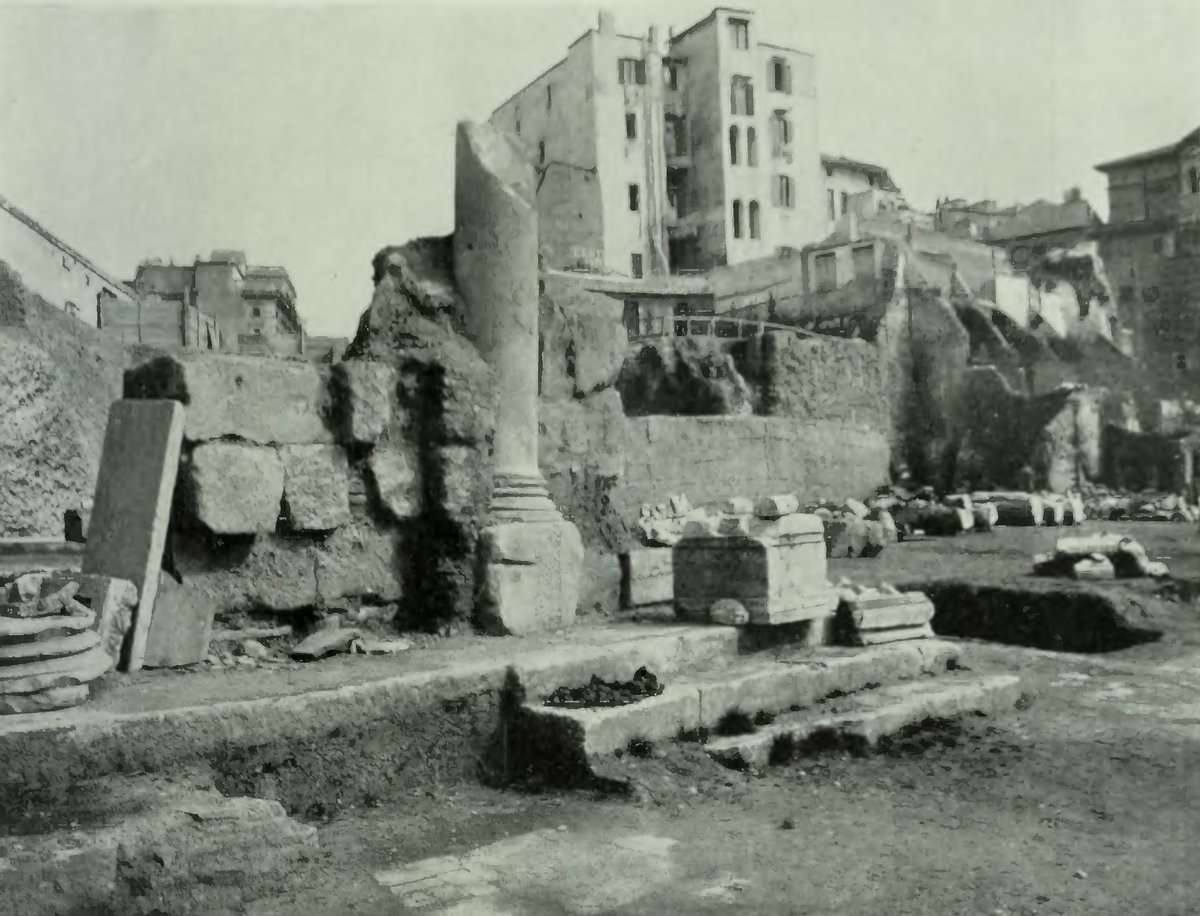
Systematic excavations in the 19th century unveiled the basilica’s foundations, column bases, and remnants of its marble flooring—some still embedded with coins melted in the fire of 410 CE (Sights.seindal.dk). These finds provide unique insights into Roman urbanism and the site’s turbulent history.
Visiting Hours and Tickets
- Hours: The basilica is accessible during Roman Forum hours—typically from 8:30 AM until one hour before sunset. Seasonal variations apply; check the official website for precise times.
- Tickets: Entry is included with the standard ticket covering the Roman Forum, Palatine Hill, and Colosseum. Adult tickets cost approximately €16, with reduced rates for EU citizens aged 18–25 and free entry for children under 18 (Toorists.com). Tickets are valid for 2 consecutive days and can be purchased online or at the venue. Advance booking is highly recommended during peak tourist seasons.
Accessibility and Visitor Tips
- Mobility: The site features uneven terrain and ancient paving stones. Partial accessibility is provided via certain ramps, but some areas remain challenging for visitors with mobility impairments (Full Suitcase). Comfortable footwear and water are essential, especially in summer.
- Facilities: Restrooms are available at main entrances. Cafés and shops are located outside the archaeological area.
- Travel: The Forum is easily reached via public transportation, including Metro Line B (Colosseo station).
Nearby Attractions and Guided Tours
- In the Forum: The Curia Julia (Senate House), Temple of Antoninus and Faustina, Arch of Titus, and House of the Vestal Virgins are all close by.
- Beyond: The Colosseum and Palatine Hill are within walking distance, enabling a full day of exploration (ItalyTravel101).
- Tours: Many guided tours include the basilica as part of a comprehensive Roman Forum visit, offering interpretive insights and access to areas not always open to independent visitors.
Photographic Spots and Visual Media
The basilica’s marble floors, column bases, and frieze fragments make for evocative photography, especially in early morning or late afternoon light. Onsite interpretive panels and digital guides (such as the Audiala app) enhance the visual and educational experience. Drones and tripods are generally prohibited.
Frequently Asked Questions (FAQ)
Q: What are the Basilica Aemilia visiting hours?
A: The basilica follows Roman Forum hours, generally 8:30 AM–one hour before sunset. Confirm current times on the official website.
Q: Is there an entrance fee?
A: Yes, entry is included with the Roman Forum ticket (approx. €16 for adults; reductions available).
Q: Are guided tours available?
A: Yes, guided tours and audio guides are offered and highly recommended.
Q: Is the site accessible for people with disabilities?
A: Some accessible routes exist, but uneven terrain may limit full access. Check official resources in advance.
Q: What other sites can I visit nearby?
A: The Colosseum, Palatine Hill, Curia Julia, and Capitoline Museums are all nearby.
Practical Visitor Information
| Feature | Details |
|---|---|
| Location | Northeast edge of Roman Forum, between Curia Julia and Temple of Antoninus and Faustina |
| Access | Included with Roman Forum/Colosseum/Palatine Hill ticket |
| Opening Hours | 8:30 am – varies by season |
| Best Time to Visit | Early morning or late afternoon |
| Facilities | Restrooms at entrances, cafés outside site |
| Accessibility | Partial; uneven terrain |
| On-Site Interpretation | Panels, frieze exhibition, guided tours |
| Nearby Attractions | Curia Julia, Temple of Antoninus and Faustina, Arch of Titus |
For current information, visit the Parco Colosseo website.
Cultural and Historical Significance
The Basilica Aemilia’s architectural form—a large rectangular hall with aisles and an apse—became a model for later Roman and Christian basilicas (Colosseum.info). Its integration of commercial, legal, and administrative functions set a precedent for multifunctional public buildings across the empire. Furthermore, the basilica’s association with the Aemilia family illustrates the interplay of political power and public benefaction in Roman society (Madain Project).
Conservation and Restoration Efforts
Recent conservation initiatives have focused on stabilizing the ruins, showcasing architectural fragments, and providing interpretive signage (Colosseo.it). Ongoing research continues to uncover new aspects of the basilica’s history and construction.
Summary Table: Key Visitor Information
| Feature | Details |
|---|---|
| Location | Northeast edge of Roman Forum |
| Ticket Access | Included with standard Roman Forum/Colosseum ticket |
| Hours | 8:30 AM–closing (seasonal variation) |
| Accessibility | Partial; uneven terrain |
| Facilities | Restrooms at entrances; cafés outside site |
| Key Attractions | Curia Julia, Temple of Antoninus and Faustina, Arch of Titus |
Listen to the full story in the app
The whole Basilica Aemilia,
told well.
Audio guides for 1,100+ cities across 96 countries. History, stories, and local insight — offline ready.
Verified, and shown.
Researched and written by the Audiala editorial team from historical records, architectural archives, and local expertise.
Researched from Wikidata, Wikipedia & official sources · fact-checked · How we make our guides →