Plan and listen to Arcus Argentariorum with Audiala.
Audio guide in your pocket, itinerary in your browser. Built for the way you actually visit.
Introduction
The Arcus Argentariorum—known as the Arch of the Money-Changers—stands quietly yet prominently near the Forum Boarium in Rome, offering a unique lens into the city’s ancient commercial, artistic, and political life. Erected in 204 CE by Rome’s guild of argentarii (money-changers) and merchants, this monument is not only a rare example of civic patronage but also a testament to the vibrant social dynamics of the Severan era. Unlike most Roman arches built for imperial triumphs, the Arcus Argentariorum reflects the aspirations and influence of the city’s economic classes, while its reliefs and inscriptions bear the traces of both celebration and political erasure. This guide provides comprehensive details on the arch’s history, architecture, visiting hours, accessibility, and nearby attractions, ensuring a rewarding experience for all who wish to explore this captivating landmark (Wikipedia; Ancient Rome Live; Evendo).

Historical Background
Origins and Dedication
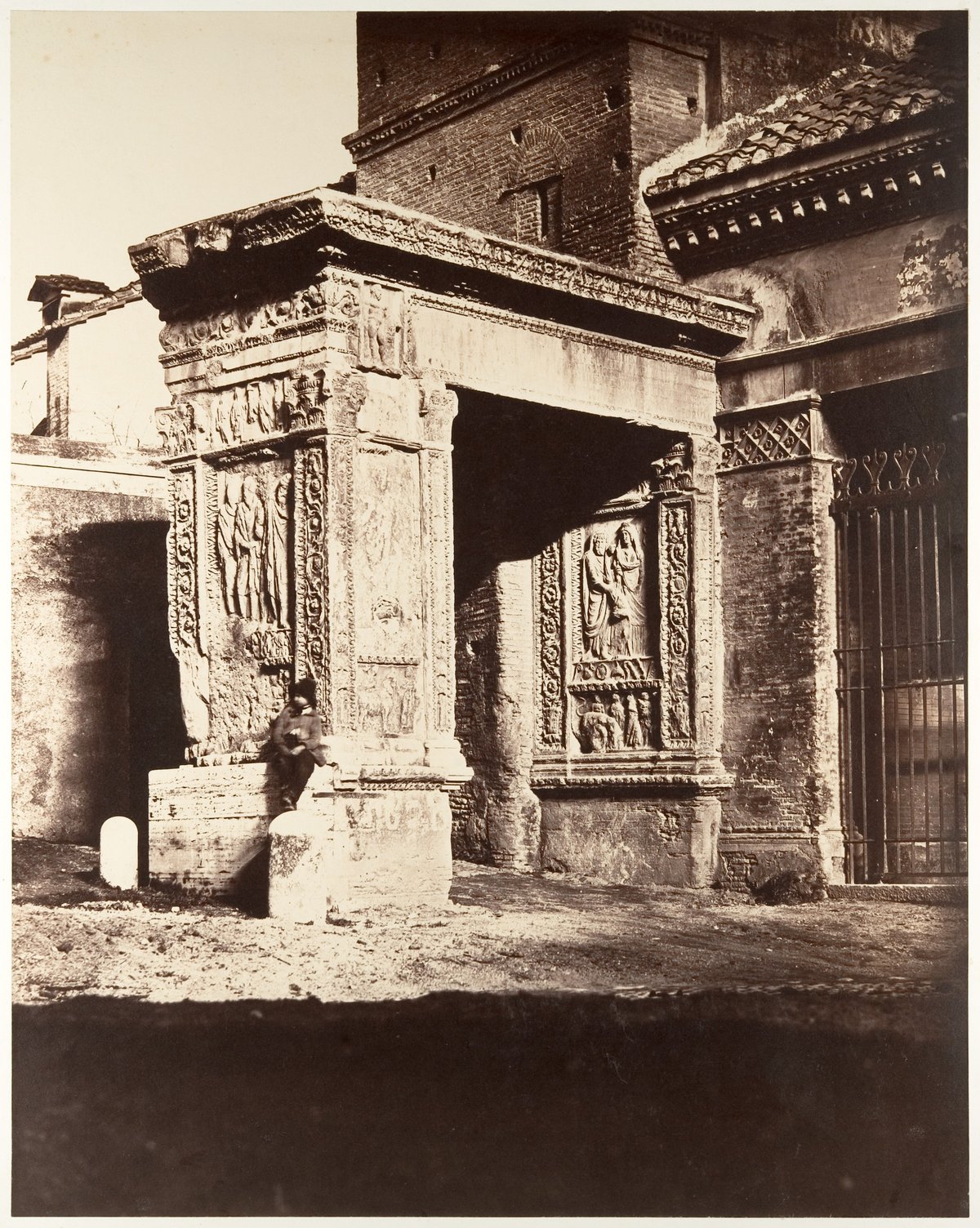
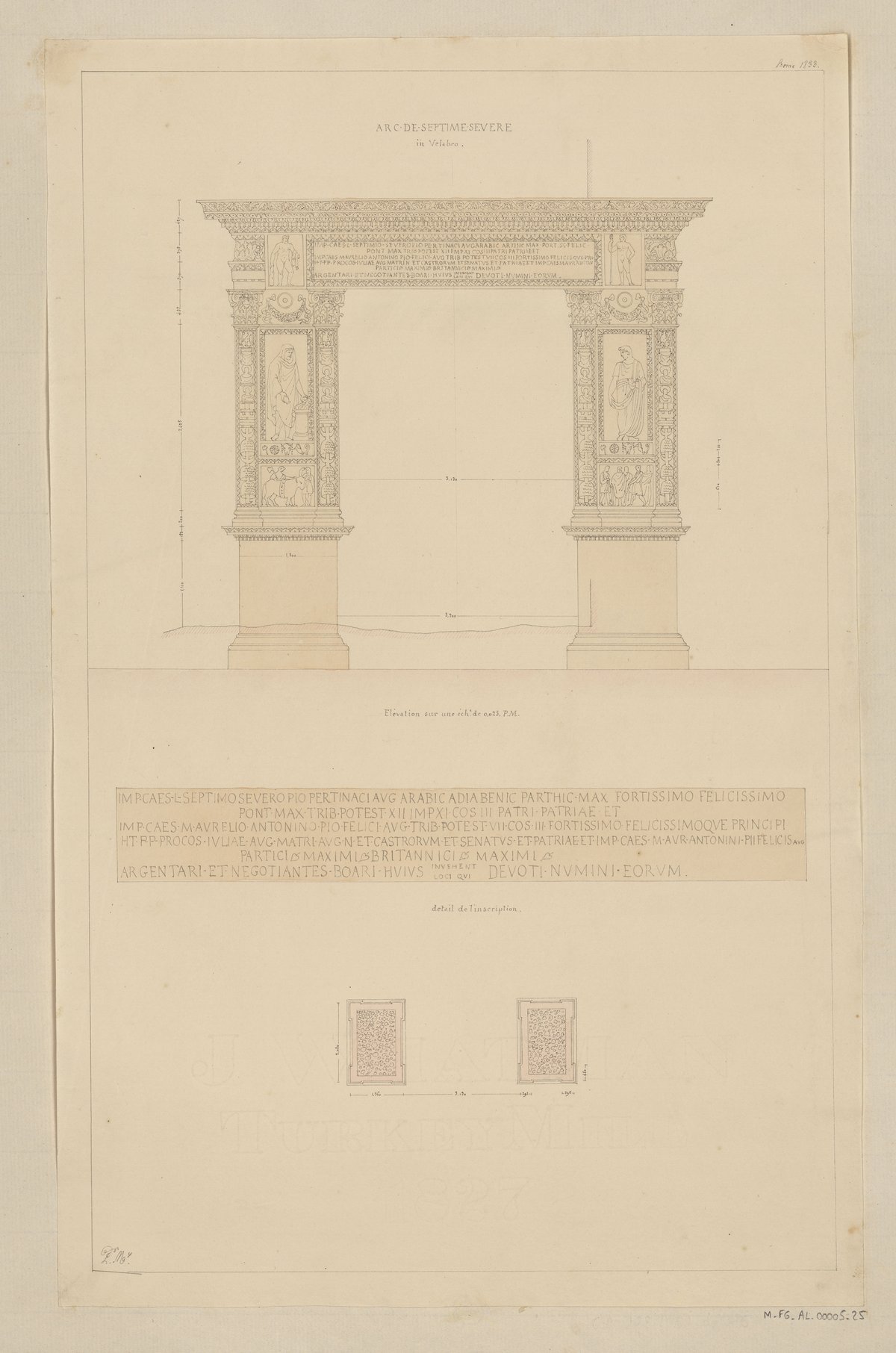
Constructed in 204 CE, the Arcus Argentariorum (Latin: Arcus Argentariorum; Italian: Arco degli Argentari) was commissioned by a consortium of local money-changers (argentarii) and merchants (negotiantes) operating in Rome’s Forum Boarium, the city’s ancient cattle market. This civic-funded monument was dedicated to Emperor Septimius Severus, his wife Julia Domna, their sons Caracalla and Geta, and Caracalla’s wife, Fulvia Plautilla, as stated in its original inscription (Wikipedia; Ancient Rome Live).
Political and Artistic Features
Damnatio Memoriae and Reliefs
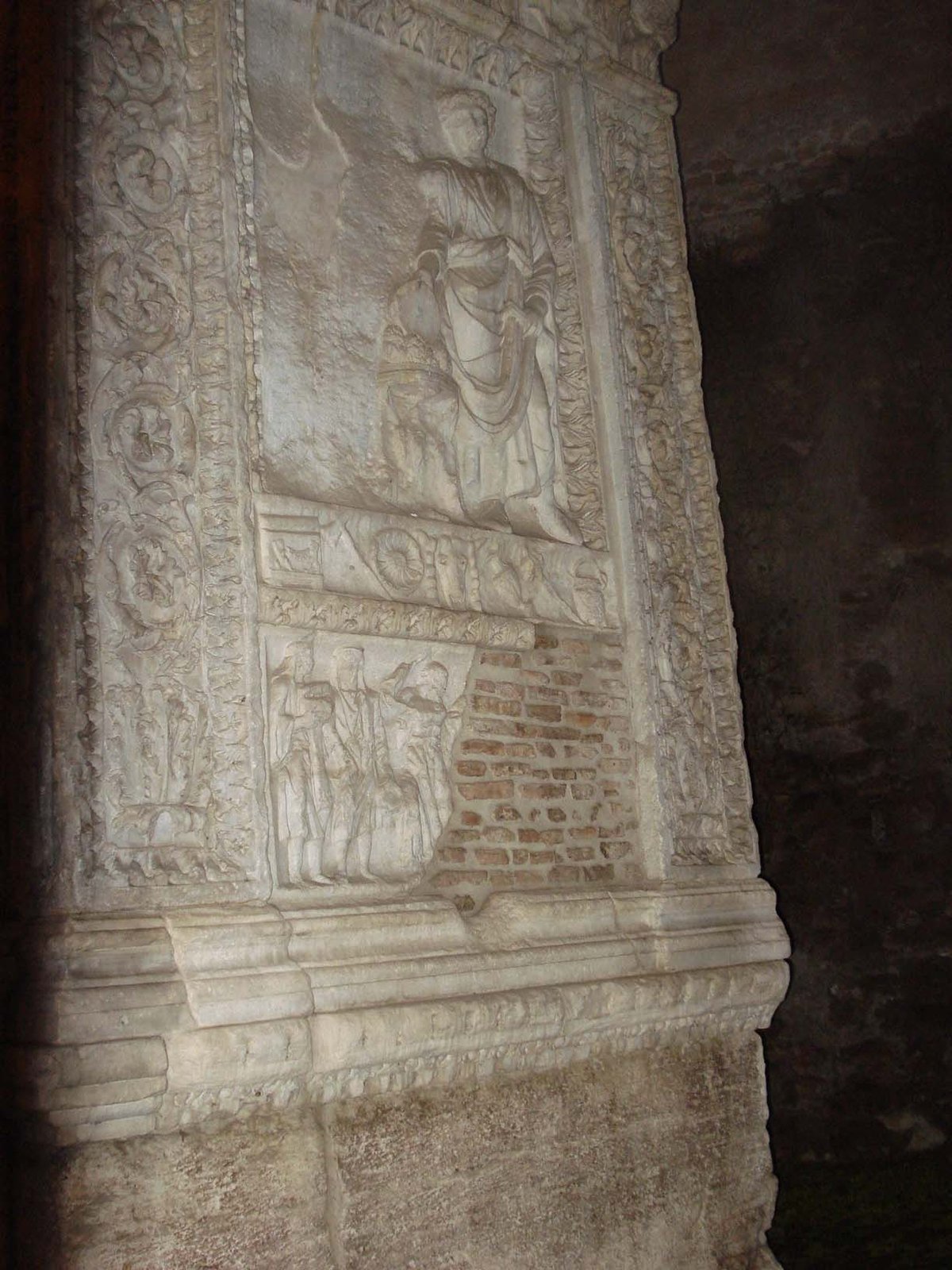
The arch’s sculptural program and inscriptions provide a vivid narrative of Severan dynasty politics. After the assassination of Geta and the executions of Plautilla and Plautianus, their names and images were deliberately erased—a practice known as damnatio memoriae—leaving visible scars on the marble. The high-relief panels inside the passage depict imperial family members performing sacrifices, processions involving merchants and deities, and mythological figures such as Hercules, underlining the monument’s religious and cultural resonance (Ancient Rome Live; Evendo; Touristlink).
Architectural Distinction
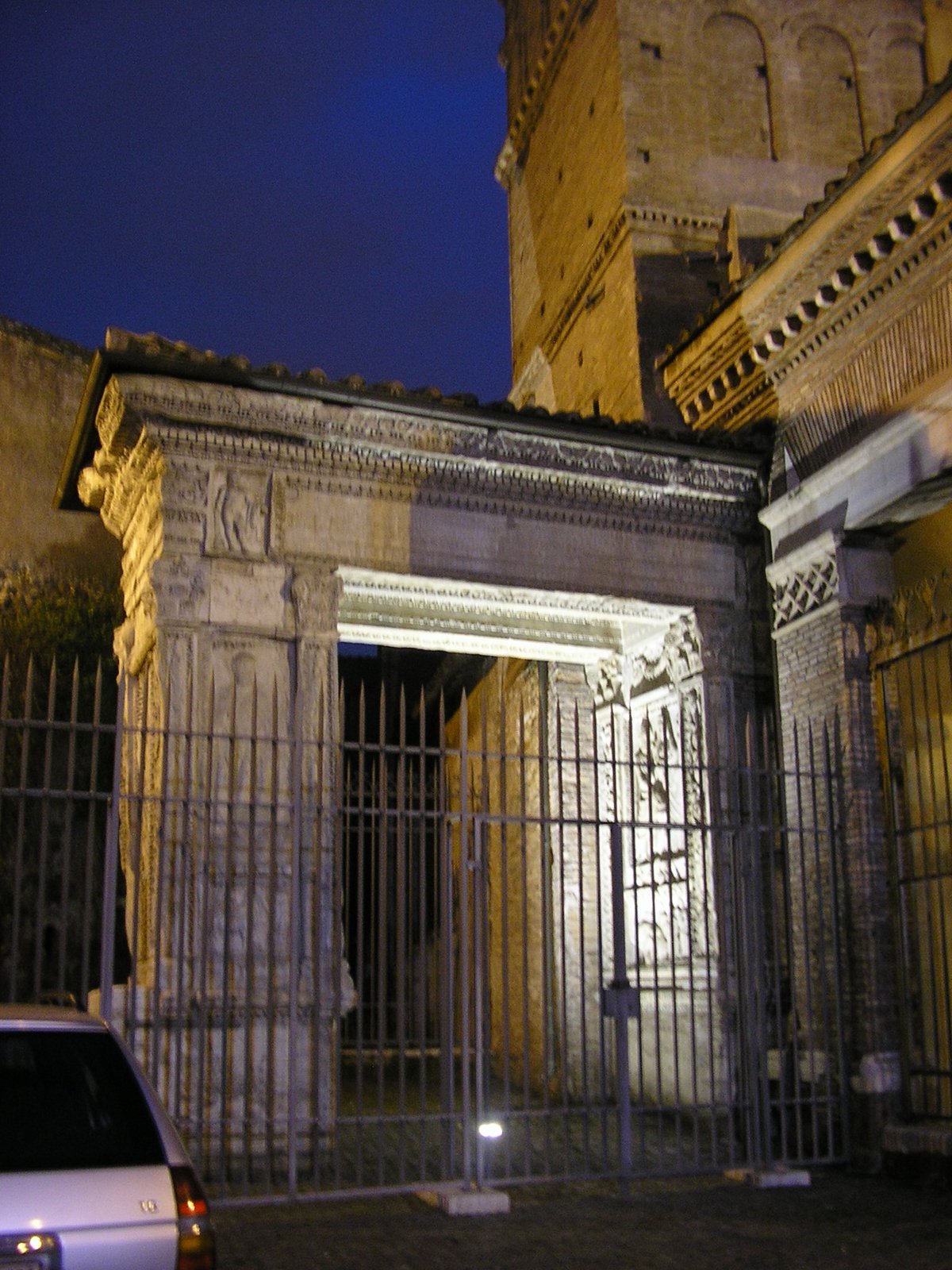
Unlike most Roman arches, the Arcus Argentariorum features a flat marble lintel supported by Corinthian pilasters, rather than a curved arch. The structure measures roughly 6.15 meters high and 3.3 meters wide, with detailed carvings of garlands, floral motifs, and sacrificial animals highlighting the high craftsmanship of Roman artisans (Villanova University).
Preservation and Urban Context
Survival of the arch into modern times is largely due to its incorporation into the 7th-century church of San Giorgio al Velabro, which shielded it from extensive deterioration. Its location at the entrance to the vicus Jugarius—an important commercial artery—emphasized its function as a passageway between commerce and religion. Today, its proximity to the Tiber River, the Roman Forum, and other ancient sites enhances its significance as both a historic artifact and a living part of Rome’s urban landscape (Trek Zone).
Visitor Information
Visiting Hours & Entry
The Arcus Argentariorum is an outdoor monument freely accessible to the public at any time, with no entry fees or ticket requirements. For the best experience—including optimal lighting for photography and fewer crowds—visit early in the morning or late in the afternoon. The arch is not artificially lit at night, so daylight hours are recommended for your visit (Evendo).
How to Get There
- Address: Via del Velabro, 19, Rome
- By Metro: Closest station is Circo Massimo (Line B), approximately a 10-minute walk.
- By Bus: Bus lines 23 and 280 stop nearby.
- On Foot: The arch is within walking distance from the Roman Forum, Colosseum, and Capitoline Hill.
Accessibility
The monument is accessible via paved pedestrian streets, but the surrounding area features cobblestone surfaces typical of Rome’s historic center. Wheelchair access is possible on the flat street adjacent to the arch, though some assistance may be necessary for uneven sections. Comfortable footwear is advised for all visitors.
Guided Tours
While there are currently no official guided tours specifically for the Arcus Argentariorum, many walking tours of ancient Rome’s commercial districts include the arch as a highlight. Check with local tour operators or the official Rome tourism website for schedules and booking information.
Nearby Attractions
- San Giorgio al Velabro: The medieval church adjoining the arch.
- Forum Boarium: Site of the ancient cattle market and temples such as Hercules Victor and Portunus.
- Mouth of Truth (Bocca della Verità): A popular photo spot at Santa Maria in Cosmedin.
- Circus Maximus and Theatre of Marcellus: Major Roman landmarks within walking distance.
Travel Tips
- Best Time to Visit: Early morning or late afternoon for ideal lighting and fewer crowds.
- Amenities: Cafes, restaurants, and public restrooms are available in the vicinity.
- Etiquette: Please respect the monument by not touching the reliefs or climbing on the structure. If entering the adjacent church, dress modestly.
- Photography: Take advantage of natural daylight to capture the arch’s detailed carvings.
FAQ
Q: What are the Arcus Argentariorum visiting hours?
A: The monument is accessible at all times, but best visited during daylight hours.
Q: Is there an entry fee or ticket required?
A: No, visiting the Arcus Argentariorum is free.
Q: Are guided tours available?
A: The arch is often included in broader walking tours of Rome’s historic center.
Q: Is the site wheelchair accessible?
A: The arch is on a flat street, but surrounding cobblestones may pose challenges for some visitors.
Q: What attractions are nearby?
A: San Giorgio al Velabro, Forum Boarium, Mouth of Truth, Circus Maximus, and Theatre of Marcellus.
Listen to the full story in the app
The whole Arcus Argentariorum,
told well.
Audio guides for 1,100+ cities across 96 countries. History, stories, and local insight — offline ready.
Verified, and shown.
Researched and written by the Audiala editorial team from historical records, architectural archives, and local expertise.
Researched from Wikidata, Wikipedia & official sources · fact-checked · How we make our guides →