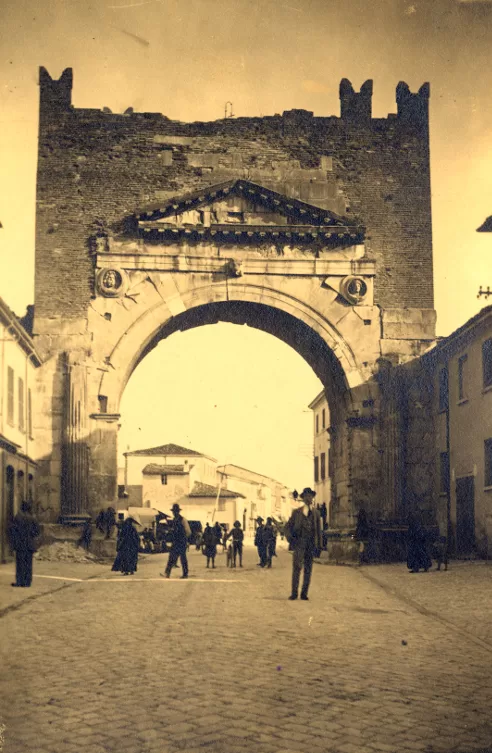
Plan and listen to Arco Di Augusto with Audiala.
Audio guide in your pocket, itinerary in your browser. Built for the way you actually visit.
Introduction
The Arco di Augusto in Rimini is Italy’s oldest surviving Roman triumphal arch and stands as a striking testament to Roman engineering, imperial ambition, and the city’s evolving urban identity. Built in 27 BC to honor Emperor Augustus, it once marked the northern end of the Via Flaminia—Rome’s gateway to the Adriatic coast and a key artery in the Roman road network. Today, the arch is not only a celebrated symbol of Rimini’s rich heritage but also a vibrant civic landmark, accessible without charge and woven into the city’s daily life. This comprehensive guide covers everything you need to know: historical context, architectural features, visiting hours, ticket details, accessibility, nearby attractions, and cultural significance.
For authoritative information and updates, consult official and reputable sources, including Wikipedia, Italyscapes, and Rimini Turismo.
Roman Foundations and Architectural Features
Construction and Urban Context
Commissioned by the Roman Senate in 27 BC, the Arco di Augusto was dedicated to the emperor as part of a major restoration of Italy’s roads, including the Via Flaminia, Via Emilia, and Via Popilia (History Hit). The arch marked Rimini’s principal entrance, positioned along the city’s decumanus maximus (now Corso d’Augusto).
Materials and Structure
Built of durable Istrian (Nabresina) stone, the arch stands approximately 10.4 meters tall and nearly 9 meters wide. Its broad single opening—unusually wide for Roman arches—symbolized the Pax Romana, the peace inaugurated under Augustus, making defensive city gates unnecessary (Italyscapes).
Decorative Elements
- Corinthian Pilasters: Flanking the main arch, these feature ornate capitals and frame the structure with classical grandeur.
- Inscriptions: The Latin inscription, partially preserved, celebrates Augustus’s consulships and the restoration of Italy’s roads.
- Reliefs: Carvings depict Jupiter, Apollo, Neptune, and Minerva, symbolizing power, wisdom, the sea, and the arts.
- Keystone: The central voussoir locks the arch and is adorned with a bull’s head, representing Roman strength.
- Attic: Originally supported a bronze quadriga and statue of Augustus, lost to time and earthquakes.
Symbolic and Civic Significance
The Arco di Augusto served both as a gateway and as powerful imperial propaganda. Its decorative scheme and inscriptions asserted Augustus’s authority and Rome’s enduring presence in the region (Joey is a Traveler). Over centuries, the arch evolved into a symbol of Rimini’s civic identity, featured in local emblems, art, and municipal branding (Comune di Rimini).
The arch’s location at the city’s threshold made it the backdrop for triumphal processions, public gatherings, and rituals—reinforcing its role as both a spiritual and communal landmark (Italy Magazine).
Medieval and Modern Transformations
Middle Ages and Later History
During the Middle Ages, the arch was integrated into Rimini’s defensive walls. Its attic was destroyed—likely by earthquakes—and replaced in the 10th century with brick crowning and Ghibelline merlons, reflecting shifting political powers (Travelemiliaromagna). A secondary gate, Porta Romana, once stood nearby but was lost after an 18th-century earthquake.
Modern Rediscovery and Preservation
Archaeological investigations in the 19th century confirmed the arch’s ancient urban context. Restoration campaigns in the 20th and 21st centuries have stabilized the structure, cleaned reliefs, and improved accessibility. Under Mussolini, the arch was isolated from adjacent buildings to highlight its historical importance (Italyscapes; Ministero della Cultura).
Today, ongoing preservation ensures the monument remains a focal point for residents and visitors alike.
Visiting Information: Hours, Tickets, and Accessibility
Visiting Hours
The Arco di Augusto is an open-air monument accessible 24 hours a day, year-round. There are no restricted hours or gates.
Tickets and Entrance Fees
There is no charge or ticket required to visit the arch itself; it is freely accessible as part of Rimini’s public urban space (Rimini Turismo).
Guided Tours
Local tour operators and the Rimini Tourist Information Office offer guided tours that include the Arco di Augusto and other key historical sites. Booking in advance is recommended, especially during peak seasons.
Accessibility
- The arch is located at the southern end of Corso d’Augusto, a pedestrian-friendly area easily reached on foot from Rimini train station (about 10 minutes).
- The surrounding zone has smooth, paved paths and is wheelchair accessible.
- Interpretive signage in multiple languages offers historical context on-site (Rimini Musei).
Travel Tips and Nearby Attractions
- Best Times to Visit: Early morning or late afternoon for ideal lighting and fewer crowds, especially in spring and autumn.
- Public Amenities: Cafés, gelaterias, and restrooms are located nearby.
- Photography: The arch is beautifully lit at sunrise and sunset; the view along Corso d’Augusto is especially photogenic.
- Nearby Sites: Tempio Malatestiano, Piazza Tre Martiri, Ponte di Tiberio, and Domus del Chirurgo are all within walking distance (PlanetWare).
Cultural Events and Community Life
The Arco di Augusto is more than an ancient relic—it is a vibrant hub for Rimini’s cultural life. Throughout the year, it serves as a backdrop for open-air concerts, art exhibitions, educational programs, and festivals such as “Notte Rosa,” when the arch is spectacularly illuminated (Rimini Turismo). Local schools use the monument for learning activities, and the arch is a popular meeting point for residents.
Efforts by heritage organizations, civic groups, and local authorities ensure ongoing preservation and promote community engagement, making the arch a living symbol of Rimini’s collective memory (UNESCO Tentative List).
Frequently Asked Questions (FAQ)
Q: What are the Arco di Augusto visiting hours?
A: The arch is accessible 24/7, year-round.
Q: Is there an entrance fee or ticket?
A: No, visiting the Arco di Augusto is free.
Q: How do I get to the arch from Rimini train station?
A: It’s a 10-minute walk along Corso d’Augusto.
Q: Is the site accessible for wheelchairs?
A: Yes, the area is fully accessible.
Q: Are guided tours available?
A: Yes, several local operators offer tours; check with the tourist office for details.
Q: When is the best time to visit?
A: Early morning or late afternoon for best lighting and fewer crowds; spring and autumn offer comfortable weather.
Summary and Visit Recommendations
The Arco di Augusto remains a defining emblem of Rimini’s Roman heritage and contemporary identity. Its open-access location, striking architecture, and integration into daily city life make it an essential stop for visitors interested in Rimini historical sites. Whether you’re exploring independently or joining a guided tour, the arch offers a unique opportunity to connect with two millennia of civic history, cultural continuity, and community pride.
For the latest information on events, guided tours, and accessibility, download the Audiala app and consult the official Rimini tourism channels. Immerse yourself in the stories and spirit of one of Italy’s most significant ancient monuments.
Listen to the full story in the app
The whole Arco Di Augusto,
told well.
Listen to sourced travel stories with local history and practical context — ready offline.

Verified, and shown.
Researched and written by the Audiala editorial team from historical records, architectural archives, and local expertise.
Built from cited sources · see the method · How we make our guides →