Introduction
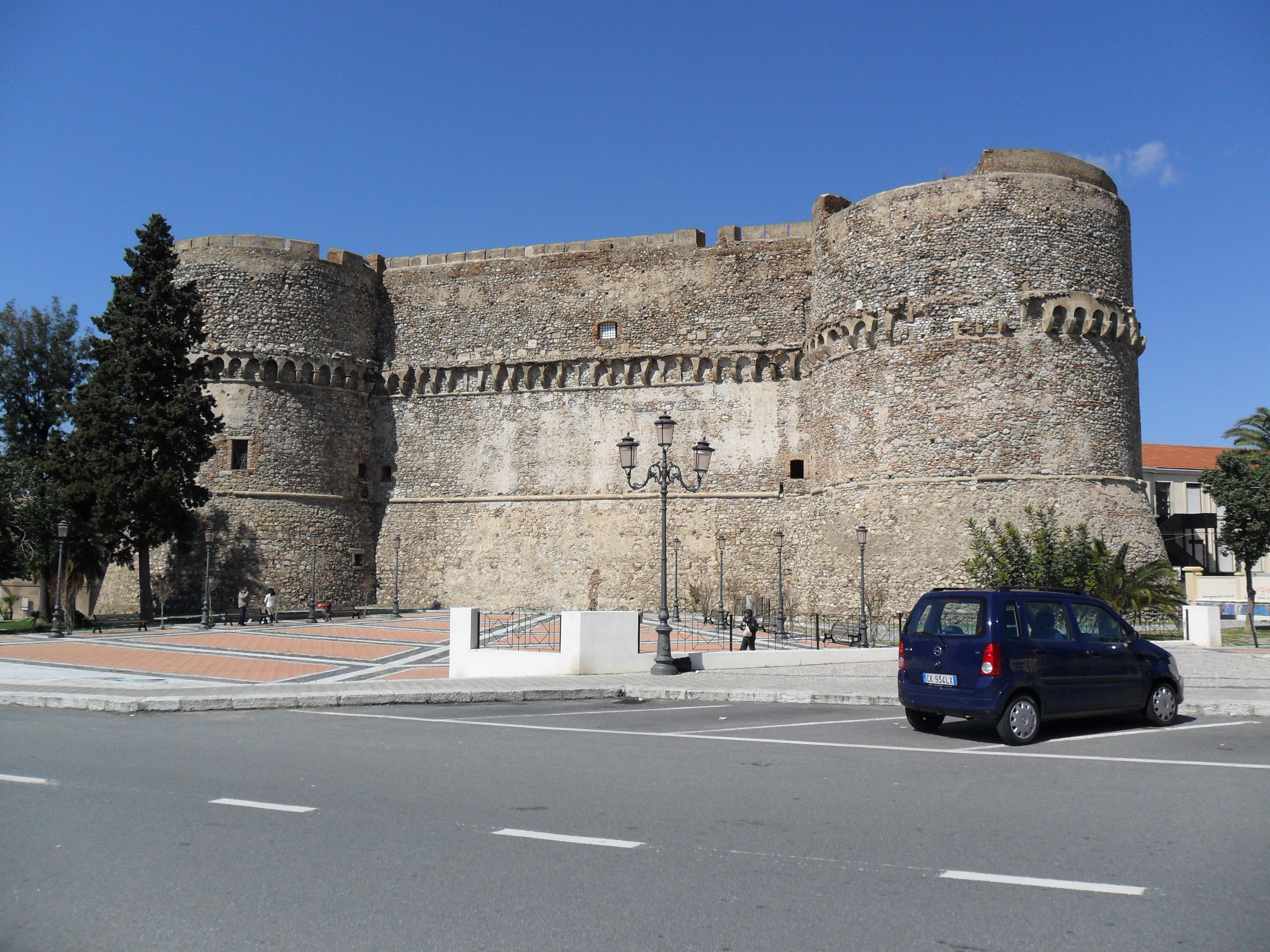
Towering above the historic heart of Reggio Calabria and overlooking the spectacular Strait of Messina, the Aragonese Castle (Castello Aragonese) stands as a striking emblem of southern Italy's rich and layered past. From its Byzantine origins in the 6th century to its Renaissance transformation under Aragonese rule, the castle’s robust towers, stone ramparts, and commanding panoramas have survived wars, earthquakes, and centuries of urban evolution. Today, the castle is not only a monument to military ingenuity and civic resilience but also a dynamic cultural center, welcoming visitors with accessible facilities, regular exhibitions, and engaging guided tours.
This comprehensive guide provides everything you need to plan your visit: in-depth historical context, detailed visitor information, accessibility advice, and practical tips for making the most of your experience at the Aragonese Castle in Reggio Calabria (Wikipedia; Mia Calabria; turismo.reggiocal.it).
Byzantine Foundations
The site of the Aragonese Castle has been fortified since at least the 6th century CE, when Emperor Justinian I ordered the strengthening of Reggio Calabria’s defenses after the Gothic Wars. The castle’s hilltop position was chosen for its tactical advantage, offering wide views over the Strait of Messina—a critical maritime passage between mainland Italy and Sicily (Wikipedia - Castello Aragonese).
Medieval and Aragonese Transformations
Through successive eras, the castle evolved dramatically:
- Norman Era (11th century): The Normans expanded and fortified the original structure, adding a donjon tower and adapting the keep to their military needs (Mia Calabria).
- Swabian and Angevin Dynasties: Further expansions and adaptations occurred under Frederick II and the Angevins, including conversion into a quadrangular fortress with four robust towers (Wikipedia - Castello Aragonese).
- Aragonese Period (15th century): King Ferdinand I commissioned significant Renaissance-era reinforcements, most notably the construction of two massive cylindrical towers to withstand gunpowder artillery. These towers remain the castle's most iconic features and gave the site its current name (Mia Calabria).
Modern Era and Restoration
The castle continued to play pivotal roles through the Spanish rule, the Napoleonic era, and Italian Unification. In the 19th century, it was used as barracks and a prison for political dissidents. After suffering damage in the devastating 1908 earthquake, the structure was largely preserved thanks to local advocacy. Restoration efforts in the 20th and 21st centuries stabilized the towers and revitalized the castle as a venue for cultural events and exhibitions (Leisure Guide; Wikipedia - Castello Aragonese).
Strategic Location and Urban Context
Situated at Piazza Castello, the Aragonese Castle crowns Reggio Calabria’s historic center. Its proximity to the Cathedral of Santa Maria Assunta (250 meters) and Reggio Calabria Stazione Centrale (900 meters) makes it easily accessible, whether on foot or by public transport (italyscapes.com). The castle’s terraces offer breathtaking views of the Strait and the city, making it a prime destination for both history enthusiasts and photographers.
Architectural Features
The castle’s architecture is a palimpsest of styles and defensive innovations:
- Structural Layout: A square keep with four cylindrical towers and projecting Renaissance bastions, surrounded by remnants of a historic moat (calabriastraordinaria.it).
- Materials: Constructed primarily from local stone with thick, crenellated walls, arrow slits, and machicolations—features reflecting its adaptation to changing military technologies.
- Archaeological Remains: Subterranean layers include a Byzantine necropolis and ancient tomb, attesting to the site’s deep historical significance (calabriastraordinaria.it).
- Adaptive Reuse: Modern restoration has repurposed internal halls and courtyards as exhibition spaces and venues for cultural events (cultureactivities.com).
Visitor Information
Hours and Ticket Prices
As of July 2025 (turismo.reggiocal.it):
- Monday to Friday: 08:30 – 13:00 (last entry 12:30) and 14:30 – 19:00 (last entry 18:30)
- Saturday: 14:30 – 19:00 (last entry 18:30)
- Sunday: 09:00 – 13:00 (last entry 12:30)
- Admission: €5.00 standard, €2.00 reduced for residents; children under 12 enter free
Tickets can be purchased onsite or online via the official Reggio Calabria tourism portal.
Accessibility and Facilities
- Wheelchair Access: The main entrance and ground-level sections are accessible, but upper floors and towers require navigating historic staircases. There are no elevators.
- Restrooms: On-site facilities are available.
- Assistance: Staff are helpful, and assistance can be requested at the entrance (turismo.reggiocal.it).
Guided Tours and Events
- Guided Tours: Offered periodically and by appointment, in Italian and English, with deeper insights into the castle’s evolution.
- Cultural Events: Regularly hosts exhibitions, art installations, and music concerts, especially in spring and summer (visitreggiocalabria.com).
Travel Tips and Nearby Attractions
- Best Time to Visit: Spring (April–June) and autumn (September–October) offer pleasant weather and fewer crowds (mybellavita.com).
- Nearby Attractions: National Archaeological Museum (Riace Bronzes), Reggio Cathedral, Lungomare Falcomatà, and Villa Comunale Umberto I are all within walking distance (visit-reggiocalabria.com).
- Dining: Numerous cafés, gelaterias, and restaurants are close by for sampling Calabrian cuisine.
Visitor Experience and Practical Advice
What to Expect
- Duration: Most visitors spend 45 minutes to 1.5 hours, depending on interest in exhibitions and photography.
- Dress and Comfort: Wear comfortable shoes for uneven surfaces and stairs; neat attire is appreciated.
- Photography: Permitted in most areas; restrictions may apply during exhibitions. Professional equipment may require prior authorization.
- Language: Italian is predominant; bring a translation app or learn basic phrases for a smoother experience (mybellavita.com).
- Families and Groups: The site is family-friendly, though children should be supervised due to stairs and open spaces. Group bookings and educational activities are available by prior arrangement.
Safety and Conduct
- Surfaces: Watch for uneven stones and narrow staircases, especially with children.
- Prohibitions: No smoking, and food or drink is not allowed inside exhibition areas.
Frequently Asked Questions (FAQ)
Q: What are the current visiting hours for the Aragonese Castle?
A: Monday to Friday: 08:30–13:00 and 14:30–19:00; Saturday: 14:30–19:00; Sunday: 09:00–13:00. Closed on holidays.
Q: How much are tickets?
A: €5 standard; €2 reduced for residents; free for children under 12.
Q: Are guided tours available?
A: Yes, during special events or by appointment. Check ahead for schedules.
Q: Is the castle accessible for visitors with limited mobility?
A: The main entrance is accessible, but some areas have stairs and no elevators.
Q: How do I get to the castle?
A: Located in central Reggio Calabria, the castle is easily reached by foot, bus, or taxi from main transit hubs.
Plan Your Visit
- Contact: (+39) 0965 362 4124 or [email protected] for up-to-date information and group arrangements.
- App: Download the Audiala app for audio guides, interactive maps, and real-time event updates.
- News and Events: Follow official channels and social media for the latest exhibitions and cultural happenings.
Listen to the full story in the app
Your Personal Curator, in Your Pocket.
Audio guides for 1,100+ cities across 96 countries. History, stories, and local insight — offline ready.
Audiala App
Available on iOS & Android
Join 50k+ Curators
Sources
-
verified
Castello Aragonese (Reggio Calabria), n.d., Wikipedia [https://it.wikipedia.org/wiki/Castello_Aragonese_(Reggio_Calabria)]
-
verified
Castles in Calabria, n.d., Mia Calabria [https://miacalabria.com/castles/]
-
verified
Aragonese Castle, n.d., turismo.reggiocal.it [https://turismo.reggiocal.it/en/culture/castles-and-fortifications/aragonese-castle]
-
verified
Exploring Italy’s South: Guide to Reggio Calabria, 2024, Italy Magazine [https://www.italymagazine.com/featured-story/exploring-italys-south-guide-reggio-calabria]
-
verified
Historical Monuments in Reggio Calabria, n.d., Leisure Guide [https://www.leisureguide.info/straipsniai/1277-the-historical-monuments-in-reggio-calabria]
-
verified
Medieval Castles in Calabria, n.d., Calabria Straordinaria [https://calabriastraordinaria.it/en/news/on-the-road-of-medieval-castles-in-calabria]
-
verified
Reggio Calabria Attractions, n.d., Culture Activities [https://cultureactivities.com/reggio-calabria-attractions/]
-
verified
Aragonese Castle Reggio Calabria, n.d., Italy Scapes [https://www.italyscapes.com/places/calabria/reggio-calabria/castles/aragonese-castle-reggio-calabria/]
-
verified
What to Do in One Day in Reggio Calabria, 2024, Visit Reggio Calabria [https://visit-reggiocalabria.com/en/2024/06/18/cosa-fare-in-un-giorno-a-reggio-calabria/]
-
verified
Eight Things to Know Before You Go to Calabria, n.d., My Bella Vita [https://mybellavita.com/eight-things-to-know-before-you-go-to-calabria/]
- verified
Last reviewed:


