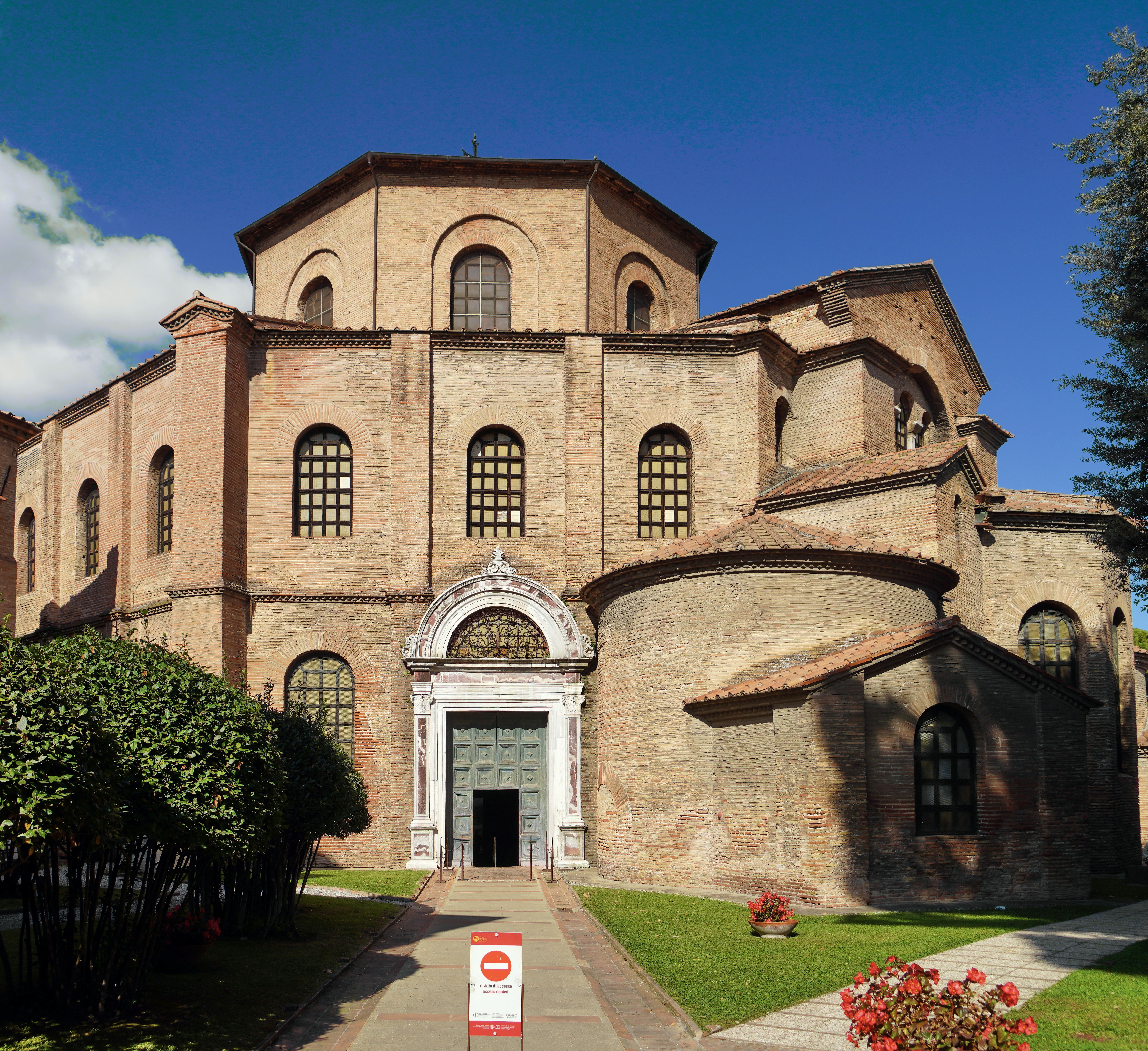
Plan and listen to Basilica Of San Vitale with Audiala.
Audio guide in your pocket, itinerary in your browser. Built for the way you actually visit.
Introduction
The Basilica of San Vitale in Ravenna, Italy, is celebrated as one of the finest examples of early Christian and Byzantine art and architecture in the West. Famed for its dazzling mosaics and innovative octagonal design, this UNESCO World Heritage Site offers an immersive journey into the theological, political, and artistic transformations of the sixth century. Whether you are a history enthusiast, art lover, or cultural traveler, San Vitale is an essential destination that embodies the fusion of Western Roman and Eastern Byzantine influences. This comprehensive guide provides everything you need to plan your visit—including current hours, ticket information, accessibility, and travel tips—while enriching your experience with historical and artistic insights.
- Historical Overview
- Architectural Innovations
- Artistic Masterpieces: Mosaics
- Cultural and Religious Importance
- Visitor Information
- FAQs
- Conclusion and Call to Action
- References
Early Foundations and Patronage
Construction of the Basilica of San Vitale began in 526 CE under Bishop Ecclesius during the Ostrogothic rule, a period marked by religious and political upheaval (Wikipedia). The principal patron, Julius Argentarius, was a wealthy banker who contributed 26,000 solidi to the project—an immense sum reflecting the basilica's intended importance (art-facts.com).
Political and Religious Context
Ravenna was the capital of the Western Roman Empire and later the Ostrogothic Kingdom, serving as a focal point of religious and political power (art-facts.com). In 540 CE, the city was reconquered by the Byzantine Empire under Justinian I. The basilica, completed and consecrated in 547 CE under Bishop Maximian, became a symbol of the city’s transformation and the melding of Western and Eastern Christian traditions (smarthistory.org).
Dedication and Martyrdom
San Vitale is dedicated to Saint Vitalis, a Christian martyr believed to have been buried on the site of the church (Wikipedia). The apse mosaic, depicting Christ offering a martyr’s crown to Vitalis, underscores this sacred association.
Architectural Innovations
Octagonal Plan and Dome Engineering
San Vitale’s double-shelled octagonal design is unique in Western Europe and reminiscent of churches in Constantinople (Wikipedia). The central plan, with its soaring dome supported by eight piers and a double ambulatory, creates a unified, immersive space (ancientengineeringmarvels.com). Early use of flying buttresses and hollow terra-cotta tubes in the vaulting demonstrates advanced engineering for its time.
Capitals and Materials
The capitals atop San Vitale’s columns are neither Doric, Ionic, nor Corinthian; instead, they blend Roman and Eastern motifs, symbolizing Ravenna’s role as a cultural crossroads (ancientengineeringmarvels.com). Building materials include brick, marble, and stone, paralleling construction styles seen in the Byzantine East.
Artistic Masterpieces: Mosaics
Apse and Imperial Panels
San Vitale’s mosaics are among the world’s most celebrated, enveloping the apse, presbytery, and triumphal arch in shimmering gold, blue, and green tesserae (fullsuitcase.com). The focal point is the apse mosaic: Christ in Majesty sits on a blue globe, flanked by angels, Saint Vitalis, and Bishop Ecclesius (ravennamosaici.it).
On either side of the apse, iconic panels portray Emperor Justinian and Empress Theodora with their retinues. These mosaics, completed around 547 CE, symbolize the unity of church and state, featuring rich color, intricate detail, and stylized Byzantine abstraction (european-traveler.com).
Old Testament Scenes
The presbytery and upper walls are adorned with scenes from the Old Testament, including the Sacrifice of Isaac, Moses before the Burning Bush, and the Hospitality of Abraham. These narratives, surrounded by lush depictions of flora and fauna, symbolize paradise and salvation (fullsuitcase.com).
Mosaic Techniques
The mosaics are crafted using glass, gold leaf, and colored stone tesserae. Artists manipulated tesserae angles to enhance the play of light, making surfaces glow and shift with the viewer’s movement—hallmarks of Byzantine artistry (ancientengineeringmarvels.com).
Cultural and Religious Importance
Pilgrimage and Memorial Role
The basilica was built to honor Saint Vitalis, whose martyrdom and faith are commemorated annually on April 28 (catholicshrinebasilica.com). San Vitale quickly became a pilgrimage site and a focal point for religious devotion and memorialization.
Symbolism in Art and Architecture
San Vitale's mosaics function as a visual catechism, rich with theological symbolism. The apse and triumphal arch depict Christ, the Apostles, and saints, while the imperial panels affirm the divine sanction of ecclesiastical and imperial authority. Decorative motifs—such as the marble labyrinth near the presbytery—represent spiritual journeys and rebirth (nomads-travel-guide.com).
Visitor Information
Visiting Hours
San Vitale is generally open daily from 9:00 AM to 6:00 PM, with last admission typically 30 minutes before closing. Hours may vary by season or on religious holidays. Always check the official Ravenna tourism website before your visit.
Tickets and Accessibility
Admission is managed via a combined ticket system, priced at €10.50, valid for entry to several of Ravenna’s UNESCO mosaic sites (including a €2 surcharge for select monuments) (thegeographicalcure.com). Tickets can be purchased online or on-site. Discounts are available for EU citizens aged 18–25, and entry is free for children under 18.
The basilica is accessible with ramps and level pathways, though some areas may be difficult for those with limited mobility. For detailed accessibility information, consult the official tourism site.
Dress Code
As with most Italian churches, modest attire is required: shoulders and knees must be covered for both men and women (thegeographicalcure.com).
Guided Tours and Tips
Guided tours and audio guides are highly recommended to fully appreciate the art and history. Tours are available in multiple languages, and audio guides can be downloaded or rented on-site.
Travel and Facilities
San Vitale is located in Ravenna’s pedestrian-friendly center, within walking distance of the train station and other major sites. Parking is available nearby, and public transportation or cycling are convenient options. On-site restrooms and a small gift shop are available. Numerous cafes and restaurants are located nearby.
Nearby Attractions
Combine your visit with the Mausoleum of Galla Placidia, the Basilica of Sant’Apollinare Nuovo, and the Baptistery of Neon—all accessible with the combined ticket (european-traveler.com).
Frequently Asked Questions (FAQ)
Q: What are the visiting hours?
A: Typically 9:00 AM to 6:00 PM, with last entry 30 minutes before closing. Check for seasonal changes.
Q: How much does admission cost?
A: €10.50 for a combined ticket; discounts apply for youth and children.
Q: Is there a dress code?
A: Yes, shoulders and knees must be covered.
Q: Is the basilica accessible?
A: Yes, with ramps and adapted entrances, though some areas may be uneven.
Q: Are tours available?
A: Yes, both guided tours and audio guides are offered in multiple languages.
Q: Can I take photos inside?
A: Photography is allowed without flash or tripods.
Discover More
The Basilica of San Vitale is a remarkable testament to Ravenna’s storied past and the enduring legacy of Byzantine culture in Western Europe. Its mosaics and architecture offer a transformative experience, blending visual splendor with deep spiritual and historical resonance. For a memorable visit, plan ahead by checking current hours, securing tickets online, and considering a guided tour or audio guide.
To enhance your experience, download the Audiala app for expert audio guides and the latest visitor updates. Follow us on social media for travel tips and join a community of explorers passionate about Italy’s cultural treasures.
Tickets & tours.
These are guided options from our partners — same price as booking direct.
Prices are indicative — final pricing and availability are confirmed at checkout. Audiala may earn a commission from bookings made through these links.
Listen to the full story in the app
The whole Basilica Of San Vitale,
told well.
Audio guides for 1,100+ cities across 96 countries. History, stories, and local insight — offline ready.

Verified, and shown.
Researched and written by the Audiala editorial team from historical records, architectural archives, and local expertise.
Last reviewed
Researched from Wikidata, Wikipedia & official sources · fact-checked · How we make our guides →


