Positano
Italy Updated Apr 2026
You do not walk through Positano so much as climb it, trading the roar of the Tyrrhenian Sea for the quiet scrape of sandals on limestone. The air smells of wet stone and crushed fennel. Positano, Italy, clings to the coastal cliffs like a cascade of whitewashed terraces.
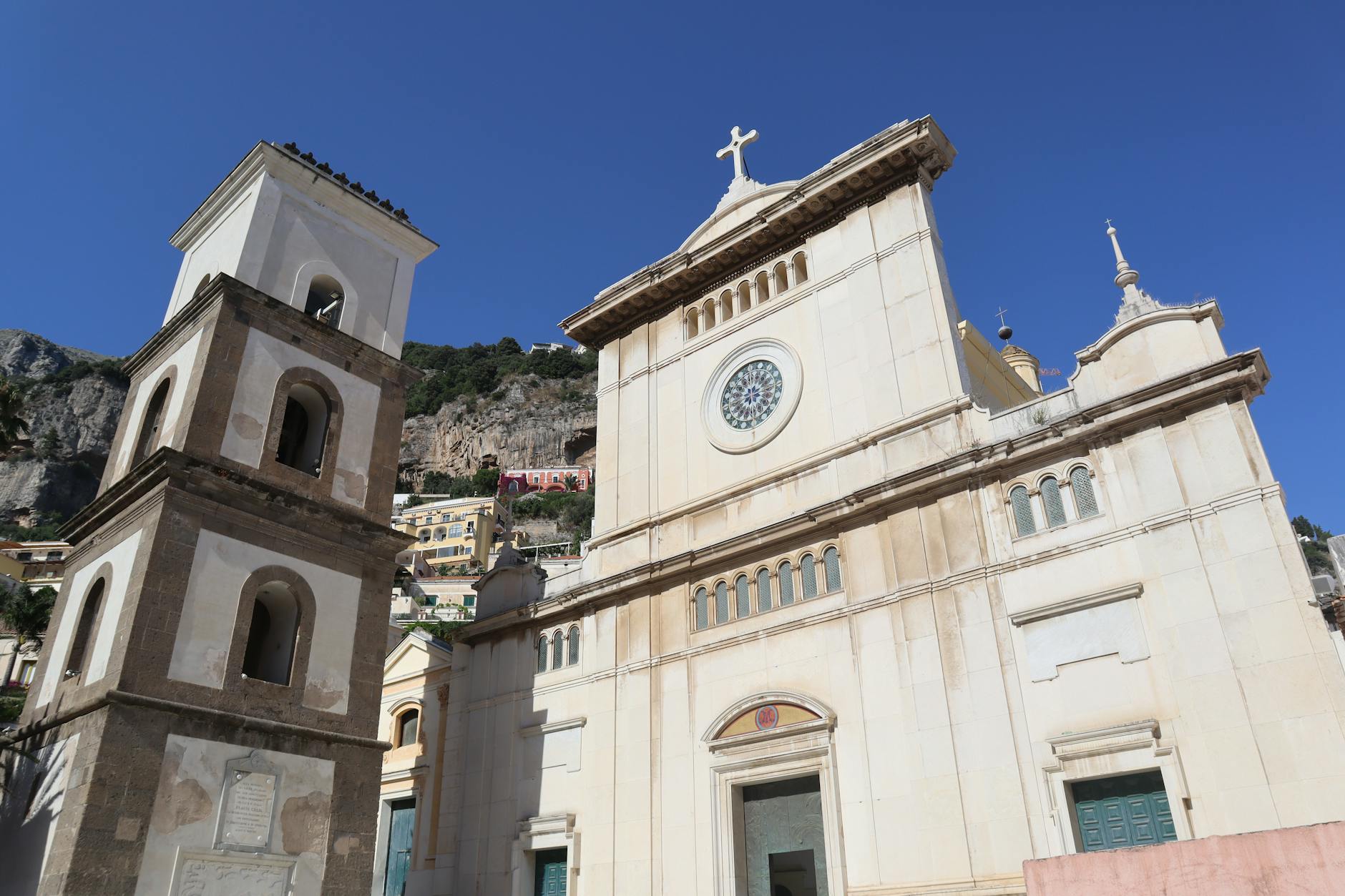 Photo: Mihaela Claudia Puscas / Pexels
- Attractions
- 7
- Trip length
- 2-3 days
- Best season
- April-May or September-October
Why Positano
Built from cited sources · see the method · How we make our guides →
Beneath the pastel facades lie first-century Roman thermal baths, their opus signinum floors visible only to licensed guides who navigate the damp crypts. The town’s modern identity emerged from geographic necessity. Postwar residents cut up embroidered bridal sheets to invent pezzari, a patchwork tailoring tradition that still dictates local fashion.
Evenings follow a strict tidal rhythm. Residents drift toward the harbor as the sun dips behind Punta Cristallo, swapping morning espresso for chilled fravaglie and glasses of Falanghina. Patience becomes mandatory.
Vertical Stair Networks
Positano grows upward before it grows outward. Over 300 steep stone staircases, called scalinatelle, thread through the town, replacing cars with footsteps and creating a pedestrian rhythm that hasn't changed since the 19th century.Pezzari Patchwork Tailoring
The 1960s textile shortage birthed a coastal fashion movement. Artisans still stitch together vintage lace, embroidered linens, and cotton into lightweight garments that catch the Mediterranean light exactly as they did at Antica Sartoria Positano.Sentiero degli Dei
The Path of the Gods climbs 7.8 kilometers from Nocelle to Bomerano, trading coastal traffic for limestone ridges and sweeping views of the Li Galli islands. The trailhead sits just a short SITA bus ride from town.Santa Maria Assunta
Built in the 13th century over Roman thermal foundations, this parish church houses a blackened Byzantine Madonna icon and a majolica-tiled dome that shifts from sea-blue to gold depending on the hour.
Neighborhoods
Where to wander, by quarter — each with its own rhythm.
Spiaggia Grande
This crescent of volcanic sand functions as the town’s living room and primary transit hub. Ferries dock at the eastern edge while striped umbrellas cast geometric shadows across the beach clubs. Evening reservations turn the shoreline into an open-air theater where the sea meets the sunset.Centro Storico
Steep staircases branch from Piazza dei Mulini into a pedestrian-only maze where the smell of roasted coffee cuts through the damp stone air. Artisan workshops occupy vaulted cellars, selling hand-painted Vietri ceramics and pezzari garments stitched from repurposed linen. Summer evenings bring the Vicoli in Arte festival, turning narrow alleys into impromptu galleries.Fornillo
A fifteen-minute coastal footpath separates this quieter cove from the main beach, filtering out the day-trippers. The pebble shore hosts intimate lounges where live jazz competes with the rhythmic slap of small waves. Locals favor the area for its slower pace and unobstructed views of the open water.Laurito
You reach this isolated inlet only by water taxi or a steep descent past terraced lemon groves. Family-run trattorias anchor the shore, serving spaghetti alle vongole prepared with clams pulled from the morning catch. The absence of commercial infrastructure keeps the atmosphere strictly maritime.Montepertuso
Perched high above the coastline, this residential tier trades tourist foot traffic for panoramic overlooks of the Sorrento peninsula. Dry-stone terraces hold back the hillside, creating narrow paths lined with wild oregano and caper bushes. The elevation drops the temperature by three degrees, making it a reliable refuge during August heatwaves.
Plan your trip
Before you go
- Getting There
- Positano has no airport or train station. Fly into Naples Capodichino (NAP), take the Alibus to Napoli Centrale, then catch the Circumvesuviana or Campania Express to Sorrento. From there, a SITA Sud bus (Route 5070) or seasonal ferry finishes the trip, while private NCC transfers in 2026 run €150–220 and cut travel time to roughly 90 minutes.
- Getting Around
- Walking handles most daily movement through the pedestrian-only stair networks. SITA Sud buses run the 5070 coastal line, while 2026 ferry schedules maintain April through October service. Buy single tickets or a UNICO 24-hour pass (€10–€12) at tabacchi before boarding, then validate immediately to avoid fines.
- Climate & Best Time
- April through June brings 17°C to 24°C days with manageable rainfall and fully operational ferry schedules. September and October mirror those temperatures while thinning the summer crowds. July and August push past 28°C, triggering frequent bus delays and steep accommodation rates.
- Safety & Terrain
- The coastal SS163 highway features sharp blind curves and heavy summer traffic, making motion sickness medication essential for bus riders. Steep, uneven stairways and sudden cliff edges demand sturdy footwear. Automated ANPR cameras enforce strict ZTL restrictions on non-resident vehicles, so leave rental cars in designated lots outside town.
From Roman Villas to Vertical Fashion
A timeline of exile, eruption, and coastal reinvention
- c. 30,000 BCE
Hunter-Gatherers Scale the Coastal Caves
Excavations at Grotto La Porta, 120 meters above the modern shoreline, reveal shells and stone tools left by Paleolithic foragers. They followed mollusc beds along the Tyrrhenian coast. The cave floor holds quiet proof of human survival in a harsh environment.
- c. 50 BCE
A Freedman Claims the Coastline
According to local tradition, Posides, a freedman of Emperor Claudius, commissioned a sprawling coastal villa beneath what is now Spiaggia Grande. Mosaic floors and frescoed walls followed the curve of the bay. The name Positano likely traces its roots to his estate.
- 79 CE
Vesuvius Ashes the Roman Shore
The eruption buried the villa under meters of volcanic tephra. Archaeologists found no human remains. They survived by running up the slopes. Frescoes froze in place, waiting nearly two millennia to see the Mediterranean sun again.
- c. 850
Refugees Forge a Vertical Village
Saracen naval raids drove survivors from Paestum and Agropoli up the steep slopes. They built dry-stone walls to hold soil for lemon groves and carved staircases directly into the bedrock. This desperate climb shaped the town’s signature vertical layout.
- c. 1000
The Amalfi Republic Claims the Port
Positano integrates into the Republic of Amalfi’s maritime network, serving as a subordinate trading and fishing hub. Ships carrying silk and timber docked along the narrow pebble beaches. Local shipwrights adopted Arabic-Norman construction techniques that still echo in the harbor’s architecture.
- c. 1250
The First Church Takes Root
Construction begins on the original Chiesa di Santa Maria Assunta, anchoring the growing settlement around a shared spiritual center. Fishermen gathered in the cool, stone nave to hear mass. The structure would eventually house a Byzantine icon that local legend claims dictated the town’s fate.
Show the full timeline (20 moments)
- 1758
A Swiss Cartographer Maps the Ruins
Karl Weber, excavator of Pompeii, drafts the first systematic survey of the buried Roman villa beneath the modern streets. His measurements reveal a sprawling complex of peristyles and bathhouses. The map sits in archives for centuries, a quiet promise of what lies beneath.
- c. 1840
Mass Exodus to the Americas
Poor inland roads and shifting Bourbon trade policies suffocate the local economy. Over half the population leaves. They board transatlantic ships bound for the Americas. The remaining residents survive on subsistence fishing and hand-woven textiles.
- 1919
Léonide Massine Buys the Siren Islands
The Russian ballet master acquires the Li Galli archipelago, drawn by myths of ancient sirens and the isolation of the limestone stacks. He commissions a stark, modernist villa on Gallo Lungo. His purchase marks the coast’s first modern artistic renaissance.
- 1939
A Sanctuary from Fascist Europe
Writers, anti-fascists, and Jewish refugees flee to Positano, finding shelter in whitewashed rooms and hidden hillside apartments. The town lacks strategic value, which ironically keeps it off Allied bombing lists. Stefan Andres and Essad Bey draft novels while woodsmoke mixes with sea salt.
- 1945
Allied Liberation Clears the Coast
Following the Salerno landings, Allied troops secure the Amalfi coastline. Rationing lifts slowly, but the town’s intact architecture offers immediate shelter to displaced families. The quiet harbor returns to fishing boats rather than supply vessels.
- 1953
John Steinbeck Pens a Coastal Manifesto
Harper’s Bazaar publishes his essay “Positano Bites Deep,” capturing the town’s vertical stairways and stubborn local pride. American readers respond instantly, booking passage to a place that previously appeared only on regional maps. The essay effectively invents the modern tourist itinerary for the coast.
- 1955
Pezzari Tailors Stitch the Coastline
Local seamstresses repurpose embroidered bridal sheets and lace doilies. They stitch them into lightweight summer garments. Coral and turquoise cotton drape over sun-bleached balconies. The Antica Sartoria workshop opens its doors, turning domestic necessity into a global fashion signature.
- 1959
Fornillo Beach Bans the Bikini
Municipal authorities enforce strict dress codes on the pebble shore. They fine visitors who wear two-piece swimwear deemed too provocative for a traditional fishing village. The ban eventually fades, but the tension between modern fashion and local custom lingers.
- 1970
Carlo Cinque Builds a Hillside Hotel
The hospitality pioneer breaks ground on Il San Pietro, carving a luxury hotel directly into the coastal cliffside. He routes private access roads through ancient terraces to preserve the original sightlines. The project establishes a new standard for Amalfi Coast hospitality.
- 1980
The Irpinia Quake Tests the Masonry
A magnitude 6.9 earthquake sends tremors through the terraced foundations. Engineers reinforce dry-stone walls with steel anchors to prevent landslides during winter rains. The town adapts, proving that centuries of seismic stress bred resilient architecture.
- 1989
Rudolf Nureyev Claims the Islands
The Soviet-born ballet star purchases Li Galli, treating the archipelago as a private retreat between grueling international tours. He maintains the modernist structures Massine built decades earlier. His residency cements the islands’ status as a cultural landmark within the municipal boundaries.
- 1995
Pedestrian Zones Replace Car Traffic
The municipal council implements strict ZTL restrictions. Private vehicles vanish from the historic core. Delivery carts navigate steep inclines while tourists walk the same paths fishermen once used. The quiet streets return the acoustic balance to footsteps and distant waves.
- 2003
Archaeologists Unearth the Imperial Villa
Systematic digs beneath Spiaggia Grande finally expose the peristyle gardens and bath chambers of the 1st-century estate. Trowels scrape away volcanic ash, revealing geometric mosaics that once reflected Mediterranean sunlight. The findings bridge the gap between Roman luxury and the medieval fishing village that grew above it.
- 2018
MAR Opens Beneath the Main Church
The Museo Archeologico Romano inaugurates in the crypt of Santa Maria Assunta. Visitors descend cool stone steps into climate-controlled galleries that sit meters above the high-tide line. The museum anchors the town’s narrative in physical evidence rather than postcard mythology.
Who lived here
-
Novelist · 1902–1968
John Ernst Steinbeck Jr.
Lived here in 1953
He arrived when Positano still carried wartime poverty and mass emigration scars. His Harper’s Bazaar essay painted the town as a vertical dream, effectively inventing its modern tourist economy. He would likely be dismayed by the summer queues, though the cliffside light still matches his prose.
-
Ballet Choreographer · 1896–1979
Léonide Fyodorovich Massine
Purchased Li Galli islands in 1919
He bought the Siren archipelago to escape the relentless touring circuit and commissioned a private villa on Gallo Lungo. The islands became a rehearsal sanctuary where he could stage choreography against a backdrop of ancient myth. Today, the retreats remain closed to the public, preserving his demand for artistic isolation.
-
Ballet Dancer · 1938–1993
Rudolf Khametovich Nureyev
Purchased Li Galli islands in 1989
He inherited Massine’s archipelago and used the wind-scoured terraces as a solitary escape from international stage glare. His ownership cemented the islands as a haven for artists seeking quiet rather than spectacle. Local stewards now maintain the strict privacy he demanded long before he passed away.
Where to Eat
Where locals actually book dinner — not the tourist menus.
-
Scialatielli ai Frutti di Mare
Thick, irregular hand-cut pasta tossed with fresh shellfish, garlic, and local white wine. The dough absorbs the brine of the catch, making every bite taste like the Tyrrhenian coast.
-
Delizia al Limone
A sponge shell soaked in limoncello, stuffed with lemon cream, and coated in white chocolate. It leans heavily on the Sorrento sfusato lemons grown in terraced limonaie just above the town.
-
Grigliata Mista di Pesce
Mixed grilled seafood served with a drizzle of extra virgin olive oil and a squeeze of lemon. Local trattorias at Laurito and Arienzo pull the day’s catch directly from the water.
-
Anchovies from Cetara
Preserved in vinegar and salt, these fish carry a sharp, clean salinity that cuts through rich coastal dishes. They arrive from the neighboring fishing village and appear on nearly every antipasto plate.
-
Limoncello Granita
Crushed ice blended with fresh lemon juice, sugar, and a touch of water. It melts quickly in the afternoon heat and serves as a standard mid-day refresher before dinner.
-
Mozzarella di Bufala Campana
Soft, milky cheese with a high moisture content, typically served at room temperature with ripe tomatoes and basil. The DOP designation guarantees it arrives from certified farms in the Campania plains.
-
Spaghetti alle Vongole
Thin pasta cooked with clams, white wine, parsley, and garlic. The shells open in the pan, releasing a briny broth that coats the noodles without heavy cream or tomato interference.
-
Sfogliatella
A ridged, layered pastry filled with sweet ricotta and candied citrus peel. Bakeries pull them fresh from the oven, and the shattering outer shell contrasts sharply with the dense interior.
Insider tips
Small things that change how the city treats you.
Buy Tickets Before Boarding
Purchase SITA bus passes at a tabacchi or newsstand before stepping onto the curb. Drivers sell nothing on board, and leaving the name field blank triggers automatic fines.Wear Flat Grippy Shoes
The historic center is a vertical maze of stone steps and sudden elevation changes. Wheeled luggage and stiff heels will fight you on every descent toward the water.Schedule Coastal Ferries Early
Book April or October crossings to avoid summer swells that cancel departures without warning. Keep a printed bus timetable in your daypack as a reliable backup.Eat Two Blocks Uphill
Waterfront tables charge a premium for unobstructed sea views. Walk toward Via Marconi for family-run trattorias serving fresh anchovies and house wine at local rates.Understand the Coperto Charge
Every sit-down meal adds a one to three euro cover fee. It is a mandatory billing standard, not a gratuity, so round up the final total only when service warrants it.
Gallery
The city, as it actually looks.


Frequently asked
Is Positano worth visiting?
Yes, if you prefer vertical architecture and coastal craftsmanship over flat resort towns. The steep climb rewards you with Byzantine frescoes and hand-dyed linen shops born from 1960s patchwork traditions. You will pay for the scenery, but the town's post-war cultural renaissance justifies the expense.
How many days in Positano?
Two full days covers the essentials without exhausting your legs. Dedicate one morning to the underground Roman museum and an afternoon to the Path of the Gods trailhead. A third day lets you take a ferry to Atrani without checking ferry departure times.
How to get to Positano from Naples airport?
Take the Alibus to Molo Beverello, then catch a direct ferry to the Positano dock. The combined trip runs about two hours and costs roughly thirty to sixty-five euros. If you travel outside the spring and autumn months, switch to the Circumvesuviana train to Sorrento followed by a SITA bus.
Is Positano wheelchair accessible?
Moving through the town with a wheelchair is extremely difficult. The historic core relies on steep staircases, narrow alleys, and sudden drops that predate modern accessibility standards. A few cliffside hotels maintain private elevators, but public pathways lack ramps or smooth gradients.
What is the cheapest month to visit Positano?
January and February offer the lowest accommodation rates and nearly empty streets. Many ferries suspend service and restaurants close for seasonal maintenance, so you will rely entirely on buses and limited dining options. The trade-off is quiet access to the archaeological museum and uninterrupted coastal views.
Pick up where you left off
Saved and recently read places — kept on this device only.
Photo credits (11)
- Mihaela Claudia Puscas — Pexels License (https://www.pexels.com/license/) — Source: https://www.pexels.com/photo/22703281/
- 84017 Positano, Province of Salerno, Italy - panoramio (1) — villlamania — CC BY 3.0 (https://creativecommons.org/licenses/by/3.0/) — Source: https://commons.wikimedia.org/wiki/File:84017_Positano,_Province_of_Salerno,_Italy_-_panoramio_(1).jpg
- 84017 Positano, Province of Salerno, Italy - panoramio — cowbridgeguide.co.uk — CC BY 3.0 (https://creativecommons.org/licenses/by/3.0/) — Source: https://commons.wikimedia.org/wiki/File:84017_Positano,_Province_of_Salerno,_Italy_-_panoramio.jpg
- 84017 Arienzo SA, Italy - panoramio — villlamania — CC BY 3.0 (https://creativecommons.org/licenses/by/3.0/) — Source: https://commons.wikimedia.org/wiki/File:84017_Arienzo_SA,_Italy_-_panoramio.jpg
- Amalfi Coast from Positano — miketnorton — CC BY 2.0 (https://creativecommons.org/licenses/by/2.0/) — Source: https://commons.wikimedia.org/wiki/File:Amalfi_Coast_from_Positano.jpg
- 84017 Arienzo SA, Italy - panoramio (2) — villlamania — CC BY 3.0 (https://creativecommons.org/licenses/by/3.0/) — Source: https://commons.wikimedia.org/wiki/File:84017_Arienzo_SA,_Italy_-_panoramio_(2).jpg
- Boat in Positano (41158688450) — Nan Palmero from San Antonio, TX, USA — CC BY 2.0 (https://creativecommons.org/licenses/by/2.0/) — Source: https://commons.wikimedia.org/wiki/File:Boat_in_Positano_(41158688450).jpg
- Going down (41659171165) — VV Nincic from Toronto, Canada — CC BY 2.0 (https://creativecommons.org/licenses/by/2.0/) — Source: https://commons.wikimedia.org/wiki/File:Going_down_(41659171165).jpg
- Golfo de Nápoles e Costa Amalfitana - Italia. (7372794498) — Gerardo Lazzari from São Paulo, Brasil — CC BY 2.0 (https://creativecommons.org/licenses/by/2.0/) — Source: https://commons.wikimedia.org/wiki/File:Golfo_de_Nápoles_e_Costa_Amalfitana_-_Italia._(7372794498).jpg
- Golfo de Nápoles e Costa Amalfitana - Italia. (7187559853) — Gerardo Lazzari from São Paulo, Brasil — CC BY 2.0 (https://creativecommons.org/licenses/by/2.0/) — Source: https://commons.wikimedia.org/wiki/File:Golfo_de_Nápoles_e_Costa_Amalfitana_-_Italia._(7187559853).jpg
- 84017 Arienzo SA, Italy - panoramio (1) — villlamania — CC BY 3.0 (https://creativecommons.org/licenses/by/3.0/) — Source: https://commons.wikimedia.org/wiki/File:84017_Arienzo_SA,_Italy_-_panoramio_(1).jpg
Photos may have been resized or cropped.