

Historical Background
Origins and Evolution
The Triangular Forum originated in the pre-Roman period, with archaeological evidence revealing religious activity from as early as the 3rd century BCE (pompeiisites.org). Its layout was shaped by the city’s natural terrain and urban development, creating a ceremonial space framed by Doric colonnades. Excavations have uncovered earlier structures—such as wells and tanks—beneath the forum, demonstrating continuous use and adaptation over centuries.
Religious and Civic Center
At the heart of the forum stands the Doric Temple, one of Pompeii’s oldest religious structures, possibly dedicated to Hercules or Minerva (pompeiitravel.com). The temple, votive pits, and ritual deposits confirm the site’s sacred role, hosting public worship, festivals, and processions. The forum also functioned as a gathering place for civic assemblies and social interaction, connecting major city streets and serving as a gateway to Pompeii’s entertainment quarter (evendo.com).
Social and Political Importance
The forum played a key role in expressing civic identity and elite patronage. The presence of monuments such as the Heroon—honoring mythic heroes—reinforced communal values and the prestige of local magistrates who oversaw its upkeep (mariamilani.com).
Architectural Features
Unique Layout
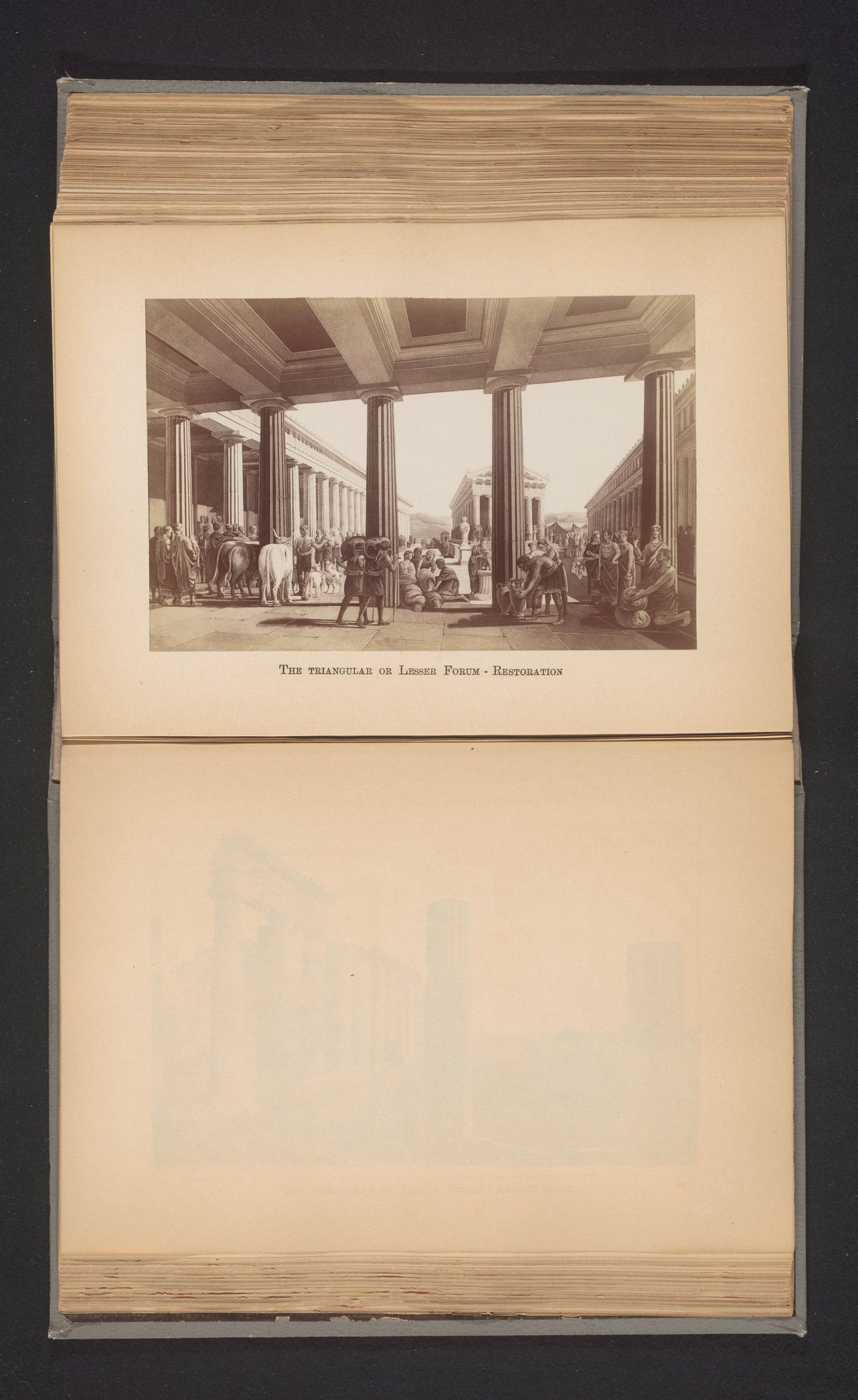
The forum’s triangular plan distinguishes it from other Roman forums. Its three-sided enclosure, about 80 meters along the longest side, is outlined by an impressive Doric colonnade (pompeiitravel.com), offering both architectural unity and ceremonial pathways.
Colonnades and Entrances
The 36 Doric columns—crafted from local tufa—exhibit early Greek influence, while the monumental propylaeum (entrance) features Ionic columns, blending architectural styles (pompeiitravel.com). This combination marks the transition from public streets to sacred space.
Sacred Structures
The Doric Temple, raised on a podium, features archaic design elements and once housed cult statues. Beside it, a circular tholos marks the site of a sacred well, highlighting the importance of water in ancient rituals (oxfordbibliographies.com). Remnants of altars, inscriptions, and commemorative statues further illustrate the forum’s layered history.
Integration with Theatres and Civic Life
A stairway connects the forum to the Large Theatre’s stage portico and the Samnite Gymnasium, emphasizing its function as a bridge between sacred, civic, and entertainment spaces (Planet Pompeii).
Cultural Significance
The Triangular Forum encapsulates Pompeii’s religious and communal life. Here, public rituals, festivals, athletic events, and processions unfolded against the backdrop of Mount Vesuvius. The forum’s architecture reflects the city’s openness to Greek and Italic traditions, while its panoramic setting underscores the symbolic link between the city and its natural environment (Italy Guides).
Visiting the Triangular Forum: Hours, Tickets, and Tips
Opening Hours
- April 1 – October 31 9:00 am – 7:30 pm (last entry 6:00 pm)
- November 1 – March 31 9:00 am – 5:30 pm (last entry 3:30 pm)
- Closed December 25, January 1, May 1 (walksofitaly.com)
Ticketing
- Tickets Entry to the Triangular Forum is included with general admission to Pompeii.
- Pricing Standard adult ticket €16; discounts for EU citizens under 25; free for children under 18.
- Advance Booking Strongly recommended due to daily visitor caps. Tickets require name registration (italythingstodo.com).
- First Sunday of Each Month Free entry, but expect crowds.
Accessibility
- Terrain Ancient paving and some steps; partial accessibility for wheelchair users.
- Accessible Itinerary “Pompeii for All” route covers major highlights; Triangular Forum may require assistance (walksofitaly.com).
Practical Tips
- Best Time to Visit Early morning or late afternoon for cooler temperatures and fewer crowds.
- Footwear Wear sturdy shoes due to uneven surfaces.
- Weather Prepare for heat in summer and rain in winter; bring hats, sunscreen, and water.
- Facilities No restrooms or refreshment points within the forum; nearest amenities are by main entrances.
- Photography Allowed throughout the site; tripods may need special permission.
- Site Conduct Do not climb on ruins or remove artifacts.
Nearby Attractions
- Large Theatre and Odeon Adjacent to the forum; central to Pompeii’s entertainment district.
- Samnite Gymnasium Ideal for a combined cultural and athletic history tour.
- Forum Baths and Stabian Baths Short walk away.
- Other Sites Explore the rest of Pompeii’s southern district for a comprehensive experience (pompeiitravel.com).
Frequently Asked Questions
Q: What are the Triangular Forum’s opening hours?
A: April to October, 9:00 am – 7:30 pm (last entry 6:00 pm); November to March, 9:00 am – 5:30 pm (last entry 3:30 pm).
Q: How do I buy tickets?
A: Online in advance or at main entrances; advance booking is recommended due to visitor caps (worldtoursitaly.com).
Q: Is the Triangular Forum wheelchair accessible?
A: Accessibility is partial; check park resources for the latest information.
Q: Are guided tours available?
A: Yes; both in-person and audio/virtual options exist.
Q: What other sites are nearby?
A: Theatres, gymnasiums, and baths are all close to the forum.
Safety and Preservation
Pompeii is an active archaeological site. Stay on marked paths, respect temporary closures, and follow staff guidance to protect the site and ensure your safety (walksofitaly.com).