Introduction
The Tomb of Publius Flavius Philoxsenus and Flavia Agathea, located in Pompeii’s Necropolis of Porta Nocera, is a remarkable monument that provides a vivid window into Roman funerary customs and the social identities of freedmen and middle-class citizens in ancient Pompeii. Set along the historic Via delle Tombe, this aedicula-style tomb not only exemplifies Roman architectural traditions but also illuminates the multicultural and aspirational fabric of the city’s society. For visitors, the tomb is accessible within the Pompeii Archaeological Park, offering a unique blend of historical intrigue and practical accessibility.
This comprehensive guide explores the tomb’s origins, architecture, social significance, and provides detailed visitor information—covering opening hours, ticketing, accessibility, and essential travel tips. Whether you are a scholar, archaeology enthusiast, or a traveler eager to engage with Pompeii’s rich history, this article will help you make the most of your visit to one of the city’s most evocative historical sites. Official resources such as the Pompeii Archaeological Park website and Pompeii in Pictures are invaluable for planning and further research.
Origins and Historical Context
The Tomb of Publius Flavius Philoxsenus and Flavia Agathea is situated just outside the southeastern city gate of Pompeii in the Porta Nocera necropolis. Roman laws required that burials be located outside city walls for religious and sanitary reasons, resulting in the creation of extensive necropoleis along main roads (deathinpompeii.com). Developed between the 1st century BCE and 1st century CE, Porta Nocera became a prominent burial ground reflecting the evolving funerary landscape of Pompeii.
Catalogued as tomb 7OS (South West sector, tomb 7), this monument is one of several lining the Via delle Tombe—Pompeii’s principal funerary avenue (Pompeii in Pictures). The individuals commemorated here, including Publius Flavius Philoxsenus and Flavia Agathea, were freedmen and women, and the tomb’s collective nature reflects the communal burial practices of Pompeii’s non-elite population.
Social Identity and Commemoration
The tomb’s inscriptions reveal crucial details about the social status and aspirations of those interred. Publius Flavius Philoxsenus, with his tria nomina, was likely a freedman of the Flavian gens, while Flavia Agathea’s name suggests similar origins. The presence of additional names, such as Acastus and Spiron, points to the inclusion of extended family members or burial collegia—groups formed for mutual burial support (deathinpompeii.com). These commemorative practices allowed freedmen to emulate the elite’s traditions and establish enduring legacies.
Notably, the inclusion of women like Flavia Agathea, sometimes honored as “patronae,” illustrates the important economic and social roles women could play in Roman society (Medium.com). The inscriptions and statuary serve both as records of status and as ongoing invitations for passersby to remember the deceased.
Architectural Features and Funerary Practices
Structure and Decoration
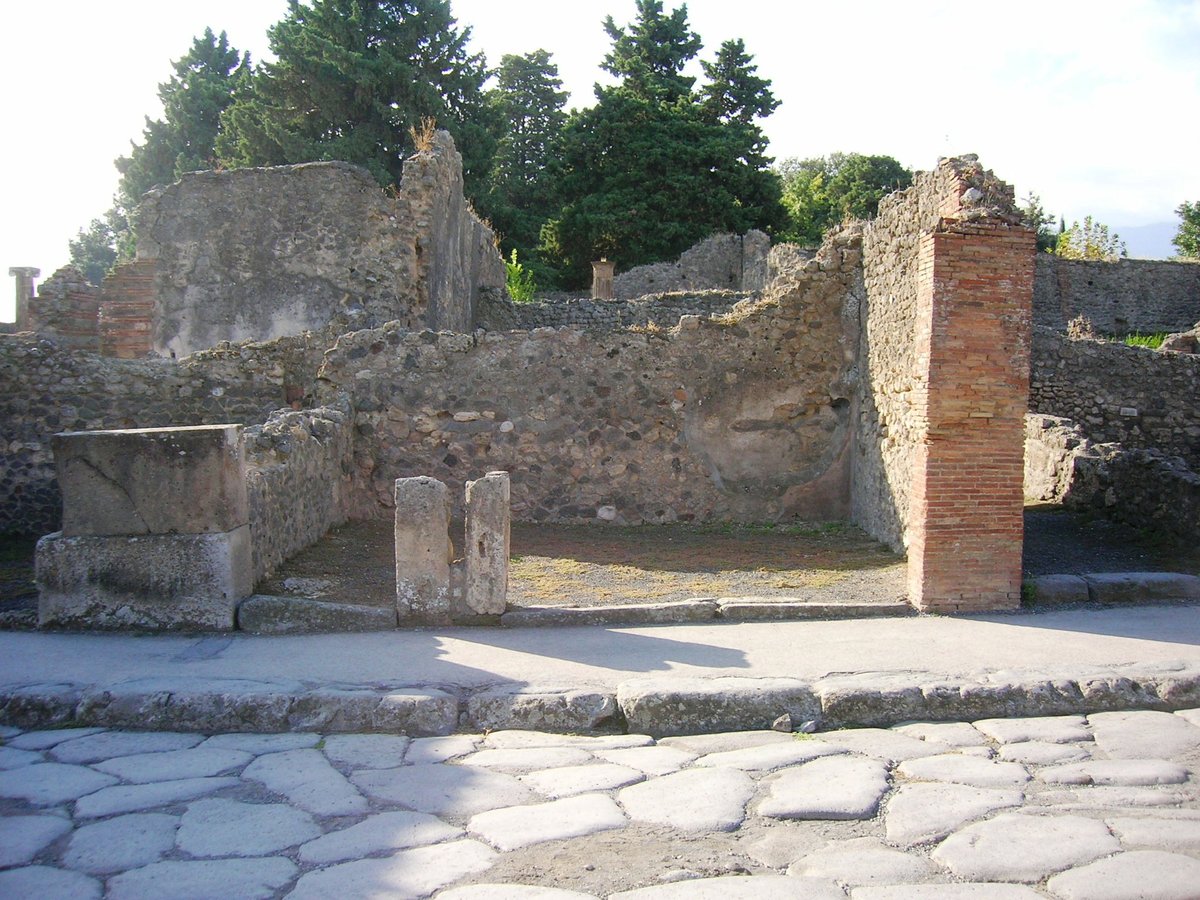
The tomb is a classic example of the aedicula style, featuring a shrine-like façade with columns or pilasters and a pediment reminiscent of Roman temples. It stands on a raised podium constructed from local volcanic stones such as tufa and basalt, with the façade once vividly painted (Pompeii in Pictures). The central entrance is flanked by six niches (three per side), and additional niches are located above the doorway, many of which originally contained busts and inscribed marble plaques.
Funeral Practices
Cremation was the dominant burial practice during the late Republic and early Empire, but inhumation gradually became more common. The tomb was designed for collective use, evidenced by multiple inscriptions and repeated usage across generations (deathinpompeii.com). Archaeological finds include a male skeleton and a dog discovered within the burial chamber, likely victims of the AD 79 eruption.
Epigraphic Evidence
The tomb’s marble plaques bear inscriptions such as “P(ublius) Flavius P(ublii) l(ibertus) Philoxenus” and “Flavia P(ublii) l(iberta) Agathea Saliniensis,” attesting to their freed status and, in Agathea’s case, her origin from the saltworks area (Pompei Sites). The use of both Latin and Greek names reflects Pompeii’s multicultural population, and the inscriptions often include dedications, professions, and appeals to visitors (“hospes”) to honor the dead (PompeiOnline.net).
Archaeological Research and Discoveries
Excavations led by the École française de Rome and the University of Lille 3 between 2003 and 2007 have significantly expanded our understanding of the tomb’s construction and use. Discoveries include not only architectural remains and inscriptions but also grave goods and evidence of funerary rituals (deathinpompeii.com). These finds have informed ongoing conservation and interpretation efforts, enhancing the visitor experience.
Visiting Information
Location and Access
- Address: Necropolis of Porta Nocera, south-west side of Via delle Tombe, outside the southeastern walls of ancient Pompeii (Planet Pompeii).
- Access: The Porta Nocera entrance is typically quieter than the main gates (Porta Marina and Piazza Anfiteatro), making it ideal for visitors seeking a less crowded route (Paul Passing Through).
Opening Hours
- General Hours: Daily from 9:00 AM to 7:00 PM (last entry at 5:30 PM).
- Seasonal Variation: Always check the official website for current times.
Tickets and Admission
- General Admission: Approximately €16 for adults; reduced and free tickets available for EU citizens under 25, children under 18, and other eligible groups.
- Purchase: Advance booking via the official TicketOne platform is strongly recommended (BeeLovedCity).
Accessibility and Facilities
- Paths: The necropolis features ancient stone paving; while generally flat, it can be uneven. Wheelchair access is limited.
- Facilities: Restrooms and water fountains are near the main entrances; plan ahead as none are directly at the necropolis.
- Bag Policy: Only small bags (max 30x30x15 cm) are allowed; larger bags must be stored at entrance lockers (Pompei Sites).
Guided Tours and Visitor Tips
- Guided Tours: Archaeologist-led tours and specialized funerary monument tours can be booked at information desks or online (BeeLovedCity).
- Audio Guides: Available for €5–8 at entrances; ID required as a deposit (Krista the Explorer).
- Tips: Wear comfortable shoes, bring water, sunscreen, and a hat. Early morning or late afternoon visits are best for avoiding crowds and heat (Paul Passing Through).
Nearby Attractions
The necropolis is close to other prominent tombs such as those of Eumachia and Publius Vesonius Phileros. Within the main park, highlights include the Forum, Amphitheatre, House of the Faun, and Villa of the Mysteries (Planet Pompeii).
Frequently Asked Questions (FAQ)
Q: What are the visiting hours?
A: Daily from 9:00 AM to 7:00 PM (last entry 5:30 PM), with seasonal variations.
Q: How do I buy tickets?
A: Online through the official Pompeii website or at the entrance.
Q: Is the site accessible for wheelchair users?
A: Portions of the necropolis have uneven stone paving; accessibility is limited.
Q: Are guided tours available?
A: Yes, both general and specialized tours can be booked at information desks or online.
Q: Can children visit the tomb?
A: Yes, but supervision is advised due to uneven ground.
Q: What should I bring?
A: Comfortable shoes, water, sunscreen, hat, and a small bag.
Listen to the full story in the app
Your Personal Curator, in Your Pocket.
Audio guides for 1,100+ cities across 96 countries. History, stories, and local insight — offline ready.
Audiala App
Available on iOS & Android
Join 50k+ Curators
Sources
- verified
- verified
- verified
- verified
- verified
- verified
- verified
- verified
- verified
Last reviewed: