Introduction
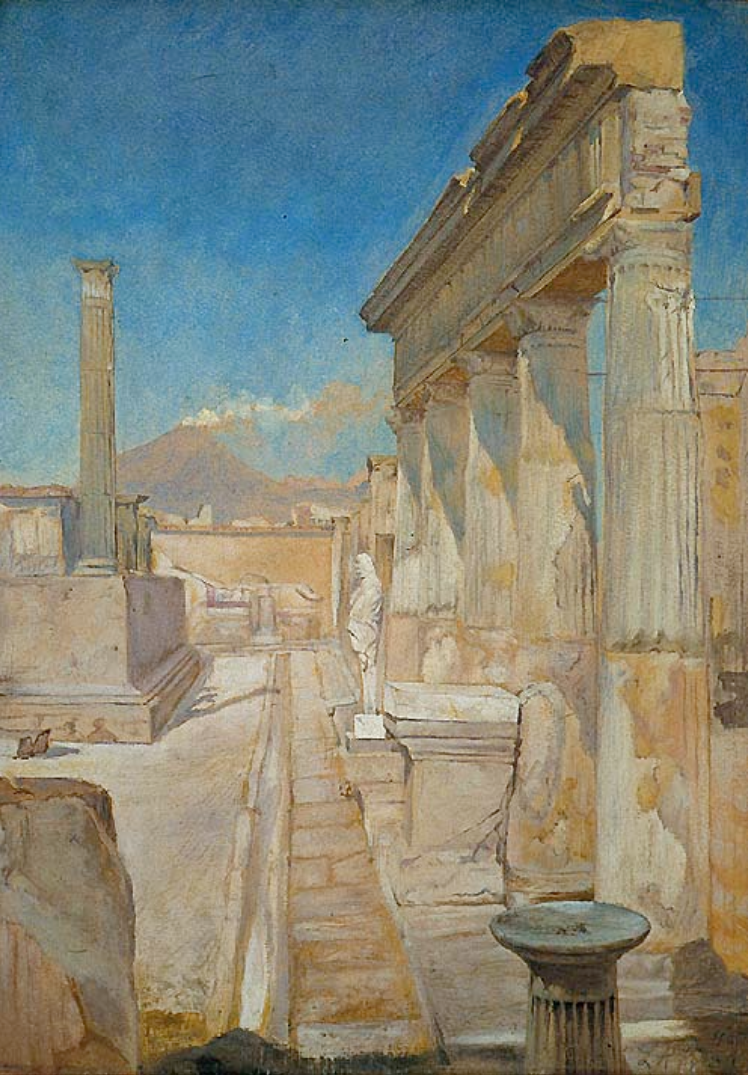
Pompeii, the ancient Roman city preserved under volcanic ash after Mount Vesuvius’s eruption in 79 CE, is a remarkable archaeological site that offers a detailed look into life nearly two millennia ago. Among Pompeii’s many well-preserved structures, Shop VIII.7.11 stands out as an important testament to the city’s vibrant commercial activity. Located in Insula VIII.7, near the Porta Stabia gate, this shop provides invaluable insights into the economic and social interactions of ancient Pompeians. This comprehensive guide explores Shop VIII.7.11’s history, archaeological significance, visiting hours, ticketing options, and practical tips for travelers. Whether you are planning a visit or simply curious about this snapshot of Roman daily life, this guide will enrich your understanding and experience of Pompeii’s commercial heritage.
Historical Background: Pompeii and Shop VIII.7.11
Pompeii originated in the 7th or 8th century BCE, founded by the Oscans in the fertile Campania region (History Tools). The city’s strategic position near the Sarno River and the Bay of Naples made it a hub for trade and agriculture, subsequently influenced by Greeks and Etruscans (Monuments & Sights). In the 4th century BCE, Pompeii became part of the expanding Roman Republic and flourished, particularly after becoming a Roman colony in 80 BCE. During this period, many of the city’s grand buildings, public baths, temples, and shops emerged.
Shop VIII.7.11 is situated in a busy commercial block near Porta Stabia, a main city entrance, along the Via Stabiana—one of Pompeii’s central thoroughfares (Pompeii Archaeological Research Project: Porta Stabia). This location, surrounded by other shops, workshops, and modest dwellings, epitomizes Pompeii’s mixed-use urban planning and the essential role of commerce in daily life (Pompeii Archaeological Park).
The Eruption of 79 CE and Its Aftermath
On August 24, 79 CE, Mount Vesuvius erupted, covering Pompeii in several meters of ash and pumice (Pompeii Archaeological Park). Shops like VIII.7.11 were suddenly abandoned, their contents sealed beneath the volcanic debris. This rapid burial preserved everyday objects—amphorae, coins, tools, and even food—offering an unparalleled snapshot of Roman commercial life (Encyclopedia.com). The site’s preservation allows archaeologists to reconstruct the economic activities and social dynamics that once defined these spaces.
Rediscovery and Archaeological Exploration
Pompeii remained hidden for nearly 1,700 years until its rediscovery in 1748 (Smarthistory). Early excavations evolved into systematic archaeological research, led by figures like Karl Weber and Giuseppe Fiorelli—who introduced the Regio, Insula, and Entrance numbering system still used today (Pompeii in Pictures). Shop VIII.7.11, identified by this system, is part of the Pompeii Archaeological Research Project: Porta Stabia (PARP:PS), which has revealed a wealth of information about the development of commercial blocks and everyday life (Academia.edu).
Recent excavations and research use advanced technologies—such as 3D scanning, stratigraphic analysis, and chemical studies—to further illuminate the shop’s function and context (The Archaeologist).
Shop VIII.7.11: Features and Economic Role
Architectural Features
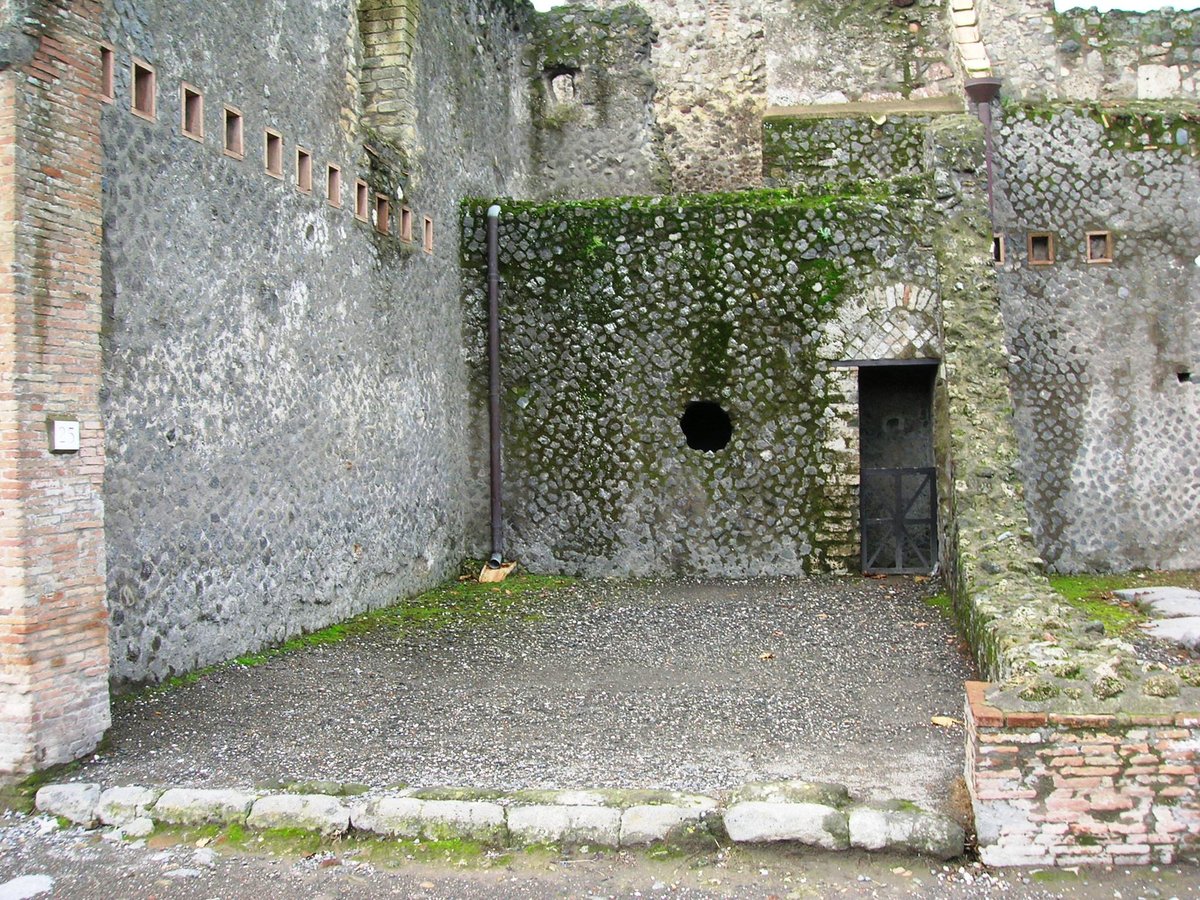
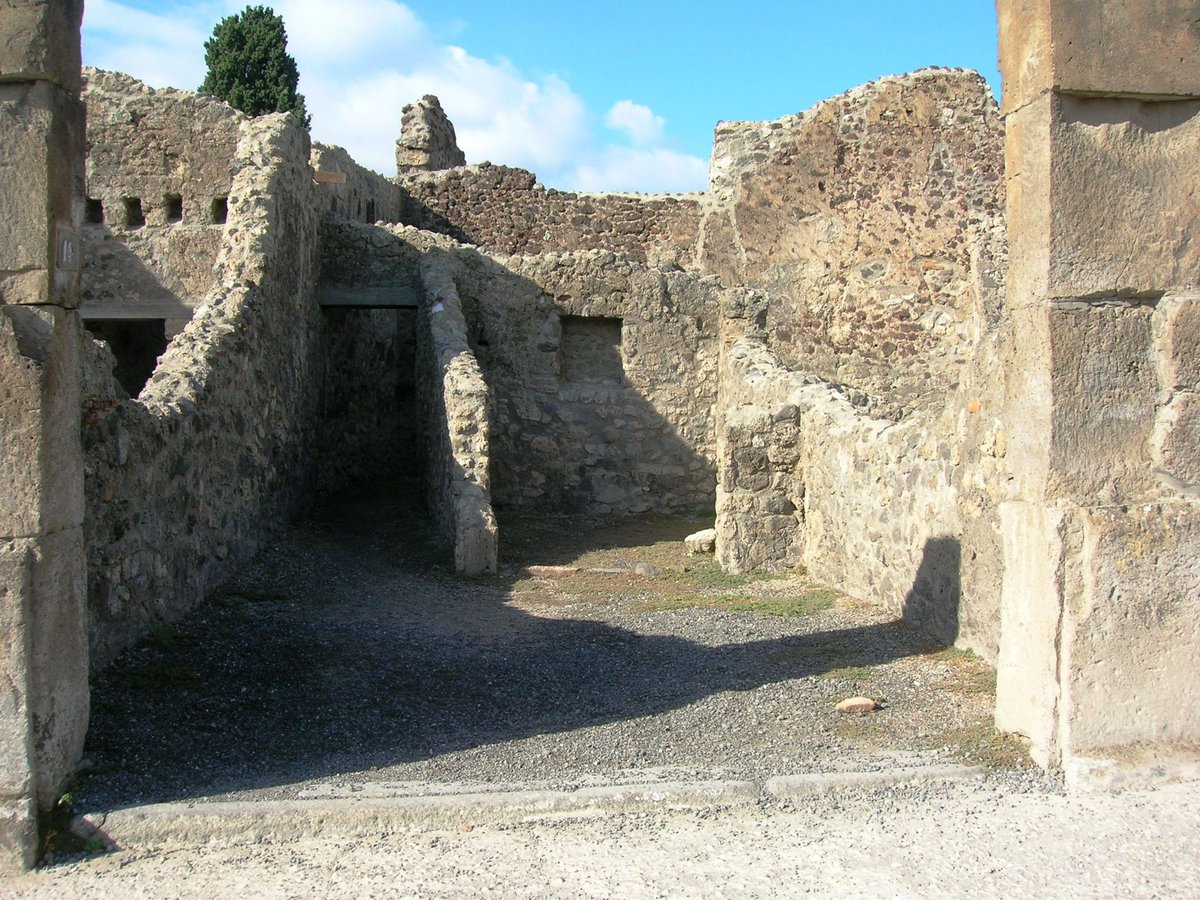
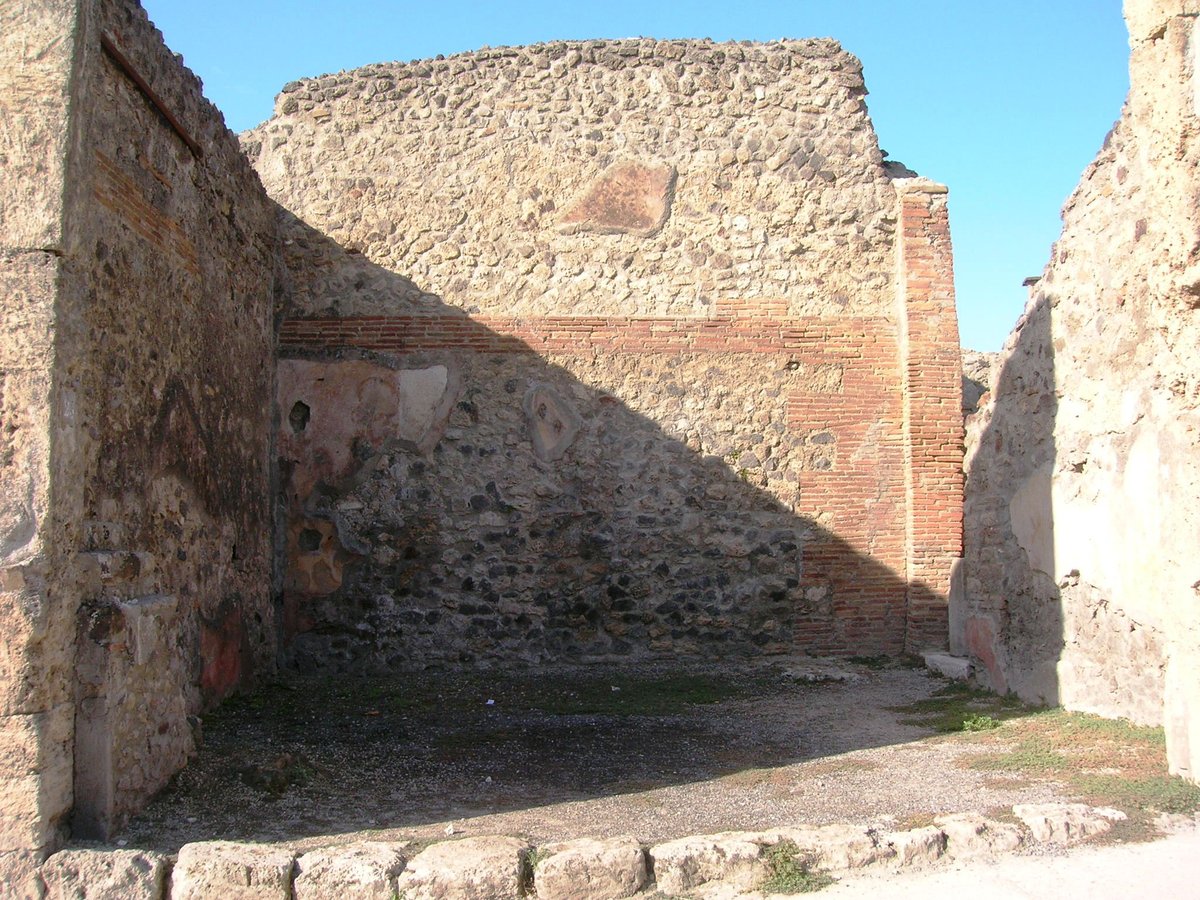
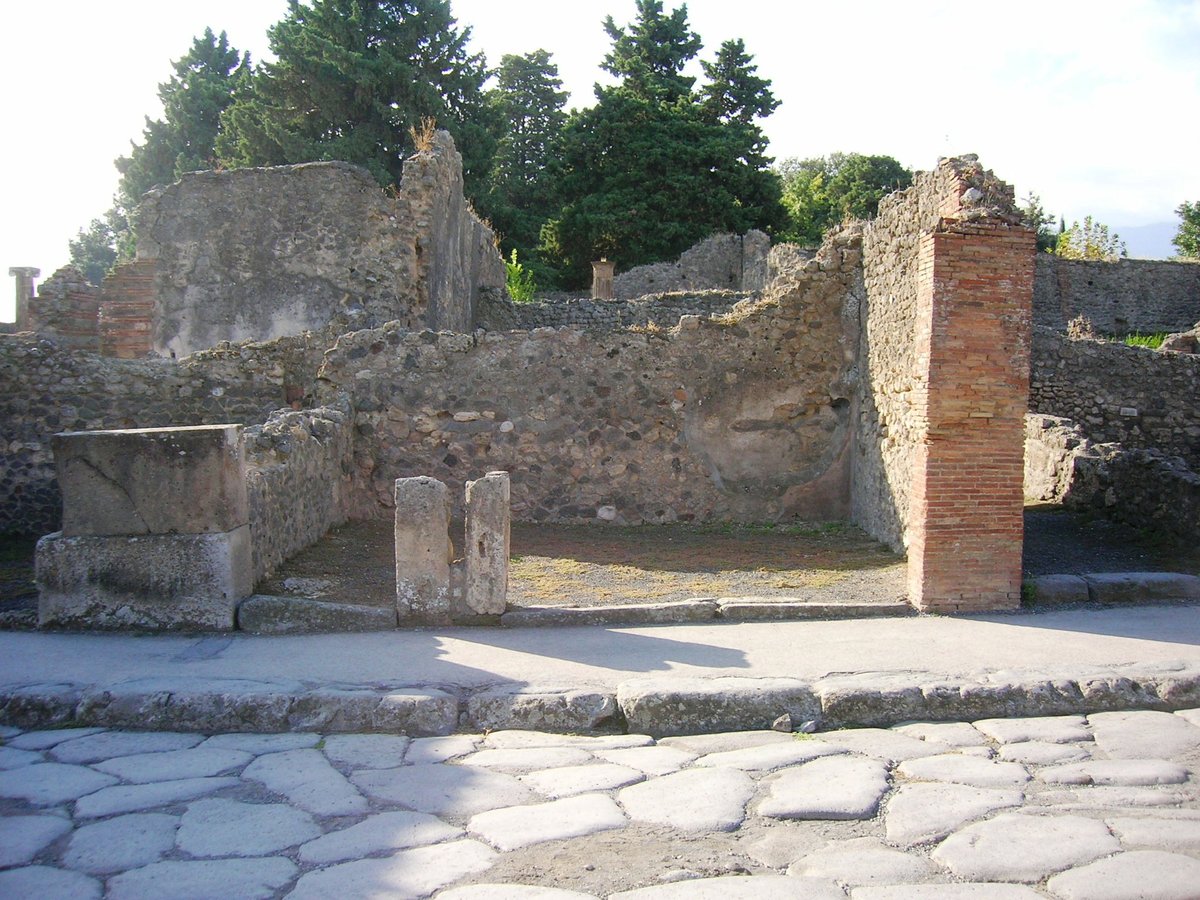
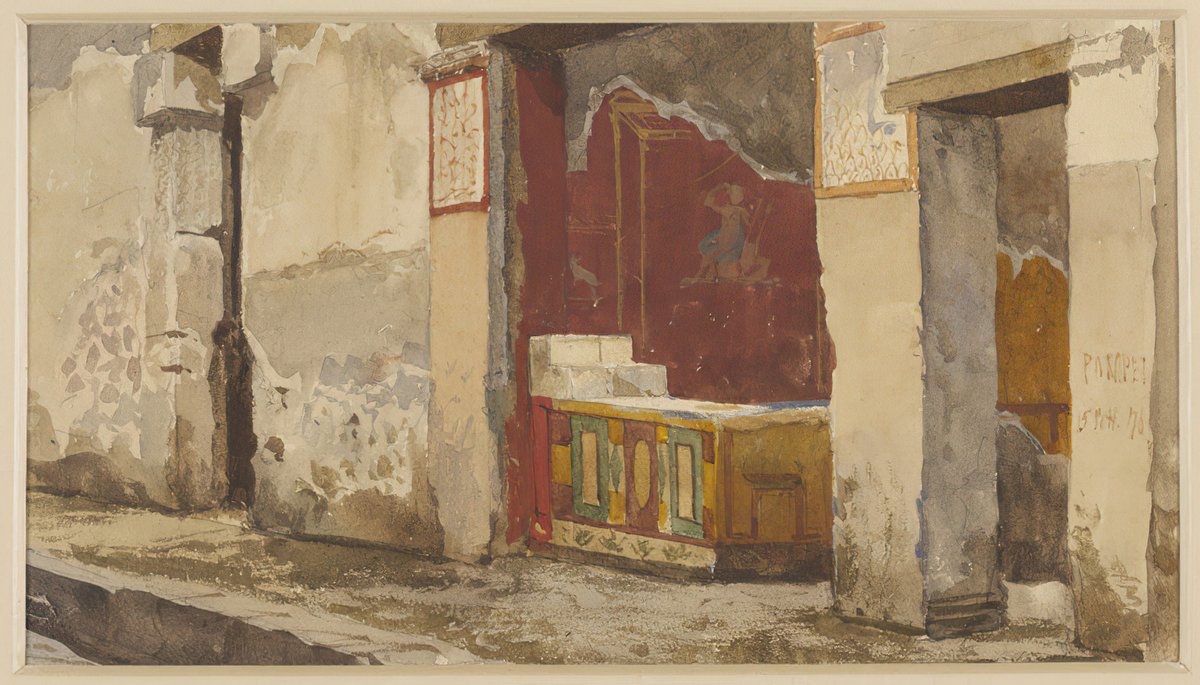
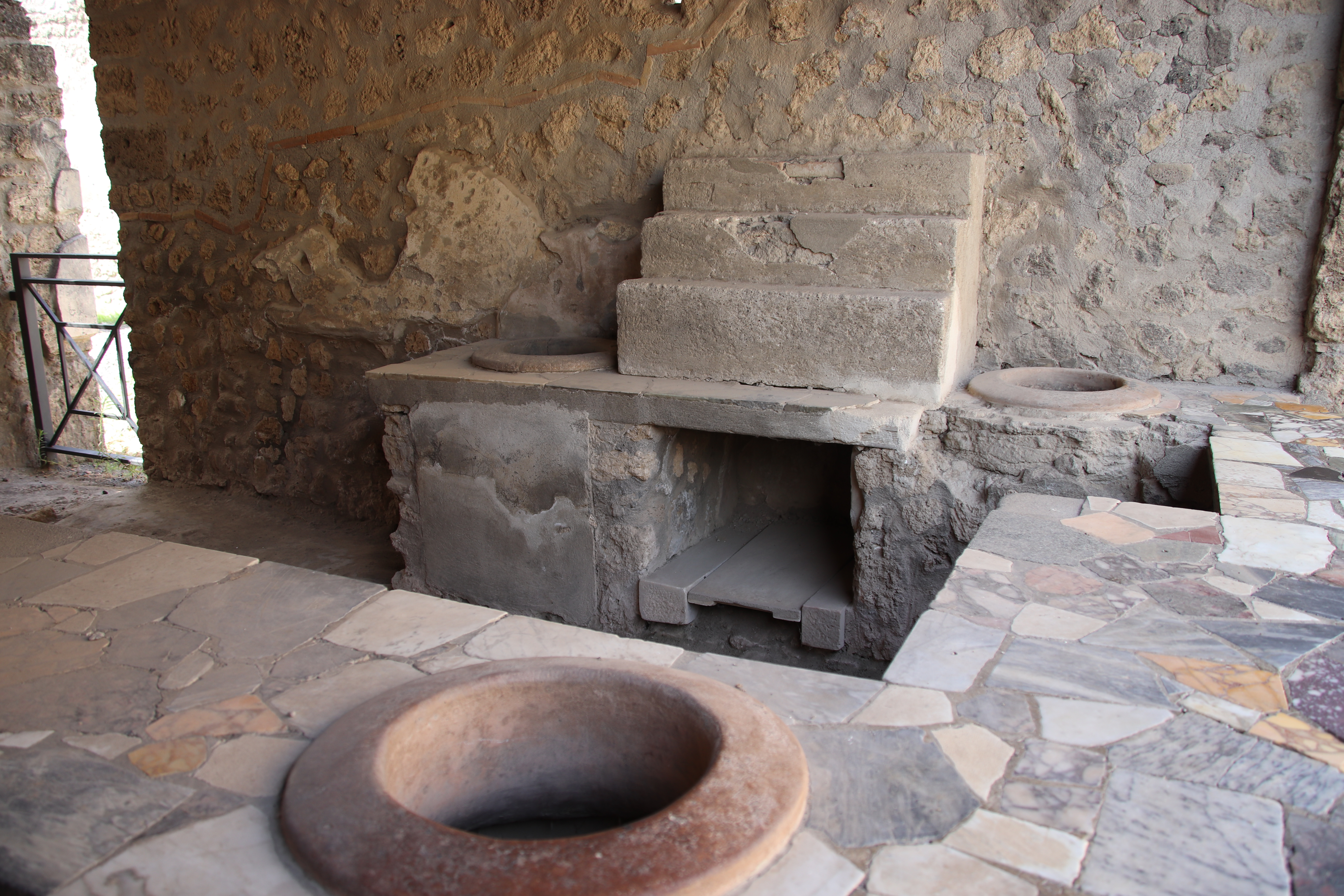
Shop VIII.7.11 is a classic example of a Roman taberna:
- Street-facing entrance: Wide doorway onto Via Stabiana for easy customer access.
- Sales counter: Remnants of a masonry counter for displaying goods and conducting transactions.
- Back room or storage: Likely used for storing goods or as basic living quarters.
- Mezzanine/loft: Some shops had upper-level lofts for storage or sleeping.
Walls constructed of local volcanic stone and brick may once have been decorated with painted advertisements or graffiti (The Archaeologist). Graffiti and painted inscriptions provide evidence of advertising, political messages, and daily interaction (Tour Guide Girl).
Economic and Social Role
Shops like VIII.7.11 sold a range of products and services, such as:
- Food and drink (thermopolia, bakeries, wine shops with embedded dolia for storage)
- Retail goods (pottery, lamps, textiles, metalwork)
- Crafts and services (barbers, cobblers, smiths)
These shops also served as social hubs, where news and opinions were exchanged daily. Archaeological finds from similar establishments include amphorae, scales, weights, and remnants of food and drink, reflecting the diversity of Pompeii’s commercial ecosystem (World Travel Connector).
Visiting Hours, Ticketing, and Accessibility
Visiting Hours
- April 1 – October 31: 9:00 am to 7:00 pm (last entry at 5:30 pm; some houses close after 6:00 pm)
- November 1 – March 31: 9:00 am to 5:00 pm (last entry at 3:30 pm; some houses close after 4:15 pm)
- Closed: Christmas Day, New Year’s Day, and occasionally May 1 (Helen on Her Holidays)
Tickets
- Standard adult ticket: Approximately €16
- Reduced rates: For EU citizens aged 18-25; free for children under 18
- Combination tickets: Available for other Naples historical sites
- Purchase: Buy tickets online via the official Pompeii website, at the entrance, or through authorized outlets. Advance online booking is strongly recommended, especially during peak season (The Geographical Cure).
From November 15, 2024, daily visitor numbers are capped at 20,000, with timed entry slots (Helen on Her Holidays). ID is required for ticket collection.
Accessibility
- Pompeii’s ancient streets are uneven and may be challenging for those with mobility issues.
- Some accessible paths and services are available. Consult the official accessibility guide for up-to-date information.
Practical Tips for Visitors
- Footwear: Wear sturdy, comfortable shoes with good grip for uneven, often slippery surfaces (Krista the Explorer).
- Clothing: Lightweight, breathable fabrics are best; shade is limited.
- Sun protection: Bring a hat, sunglasses, and high-SPF sunscreen; carry a refillable water bottle (The Pompeii).
- Bags: Only small bags are allowed; larger ones must be checked at the entrance.
- Maps: Pick up a free map at the entrance or use a mobile app for navigation (Pompeii Archaeological Park).
- Guides and Tours: Official guided tours and audio guides are available for deeper context (Helen on Her Holidays).
- Facilities: Restrooms are located near main entrances; on-site cafés offer refreshments but eating is only allowed in designated areas.
- Respect and Preservation: Do not touch frescoes or walls; stay on marked paths; respect barriers and signage (Nomadic Matt).
- Security: Be aware of pickpockets near entrances and crowds; buy tickets only from official sources.
Frequently Asked Questions (FAQ)
Q: What are the visiting hours for Shop VIII.7.11?
A: The shop follows Pompeii’s seasonal opening hours: 9:00 am–7:00 pm (April–October) and 9:00 am–5:00 pm (November–March).
Q: Are tickets required to visit Shop VIII.7.11?
A: Yes, entrance tickets to the Pompeii archaeological site grant access to Shop VIII.7.11. Advance online booking is suggested.
Q: Is Shop VIII.7.11 accessible for visitors with mobility issues?
A: Terrain is uneven and may pose difficulties. Consult the official accessibility guide for detailed information.
Q: Are guided tours available that include Shop VIII.7.11?
A: Many guided tours cover the Porta Stabia neighborhood and may include Shop VIII.7.11. Check with your tour provider.
Q: What should I bring?
A: Water, sun protection, a small bag, comfortable shoes, and your ticket/ID.
Listen to the full story in the app
Your Personal Curator, in Your Pocket.
Audio guides for 1,100+ cities across 96 countries. History, stories, and local insight — offline ready.
Audiala App
Available on iOS & Android
Join 50k+ Curators
Sources
- verified
- verified
- verified
- verified
- verified
- verified
- verified
Last reviewed: