Introduction to Shop VIII.5.25 in Pompeii: What Visitors Need to Know
The ancient city of Pompeii offers an unparalleled glimpse into Roman life, preserved through the catastrophic eruption of Mount Vesuvius in 79 CE. Among its many highlights, the city’s commercial shops—tabernae—stand as vivid reminders of the daily economic and social interactions that defined Pompeian urban life. Shop VIII.5.25, located in Regio VIII, Insula 5, along the bustling Via dell’Abbondanza, is a prime example of this vibrant commercial culture. This guide explores the history, features, and visitor information for Shop VIII.5.25, offering practical tips to enrich your exploration of Pompeii.
Photo Gallery
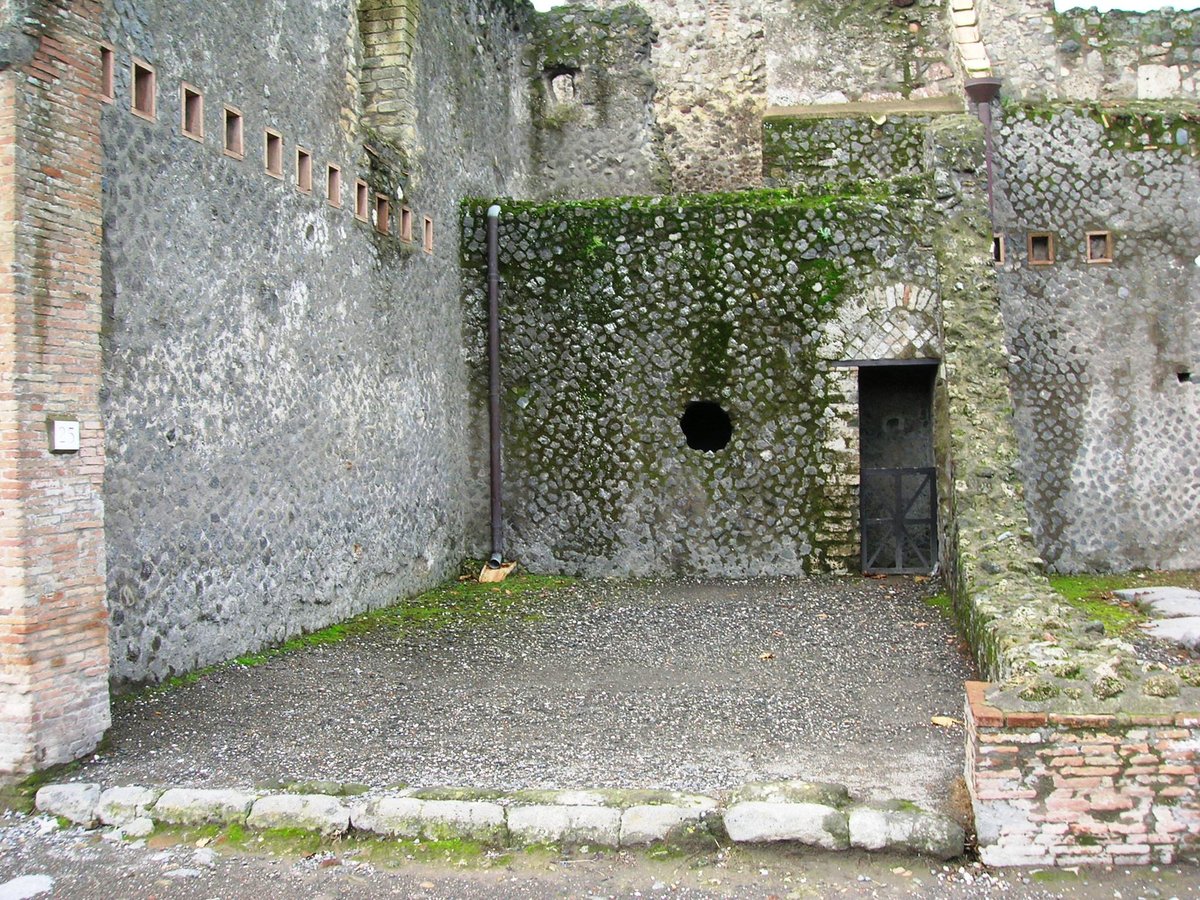
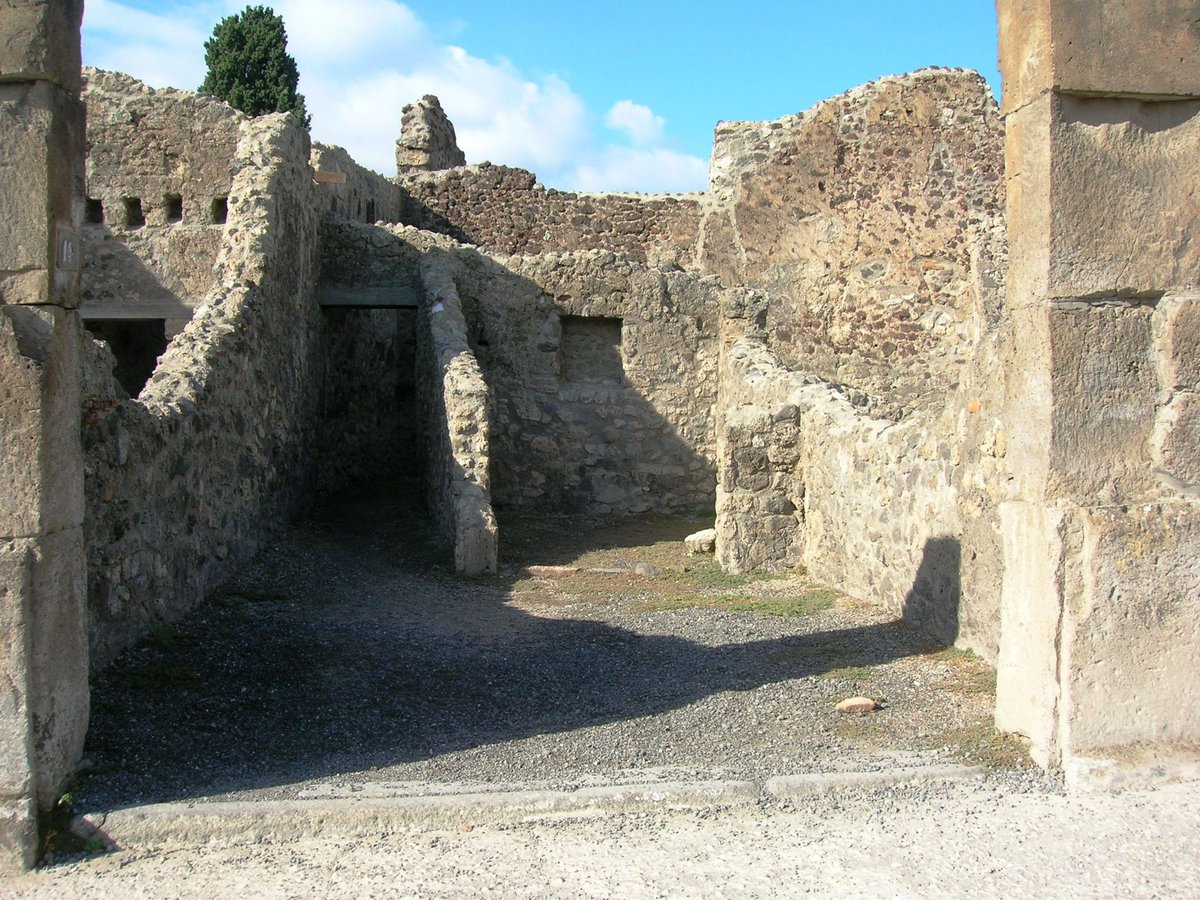
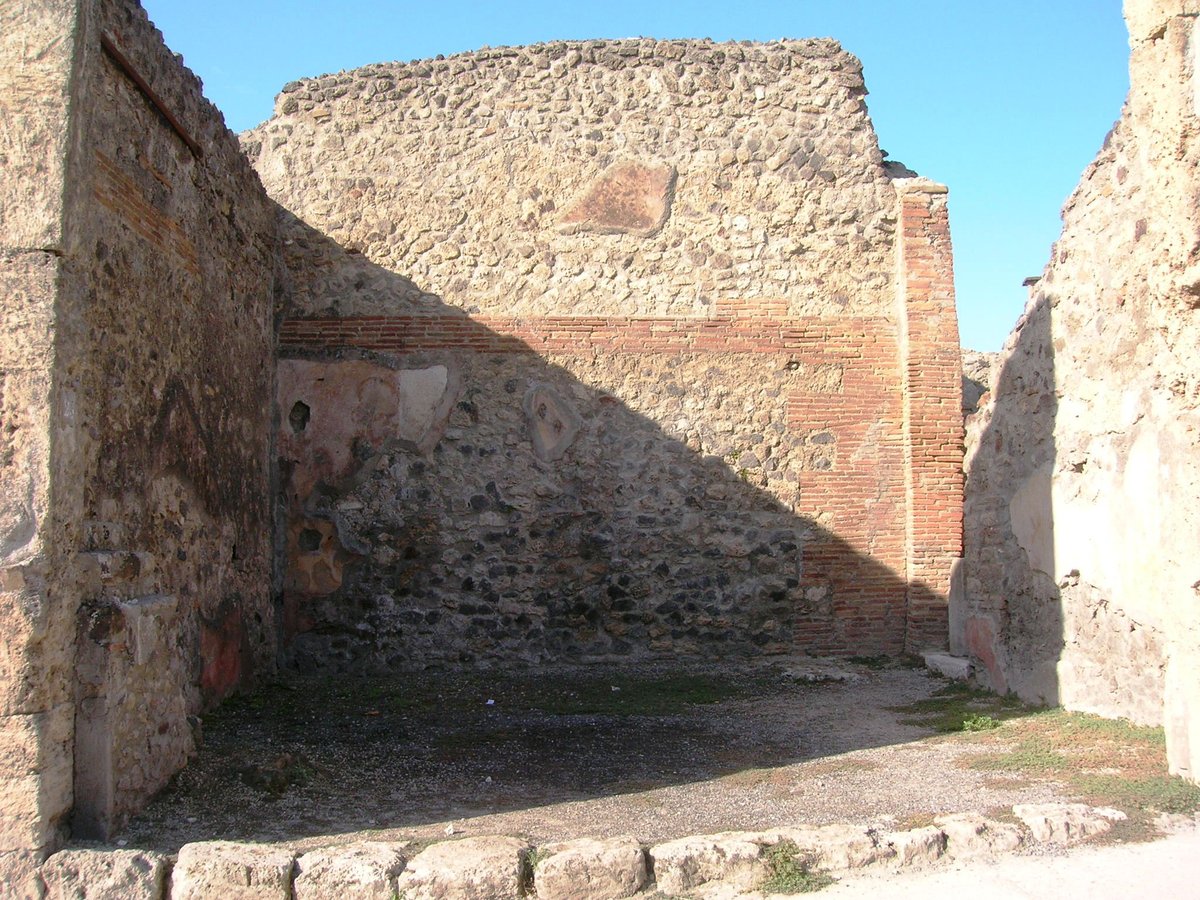
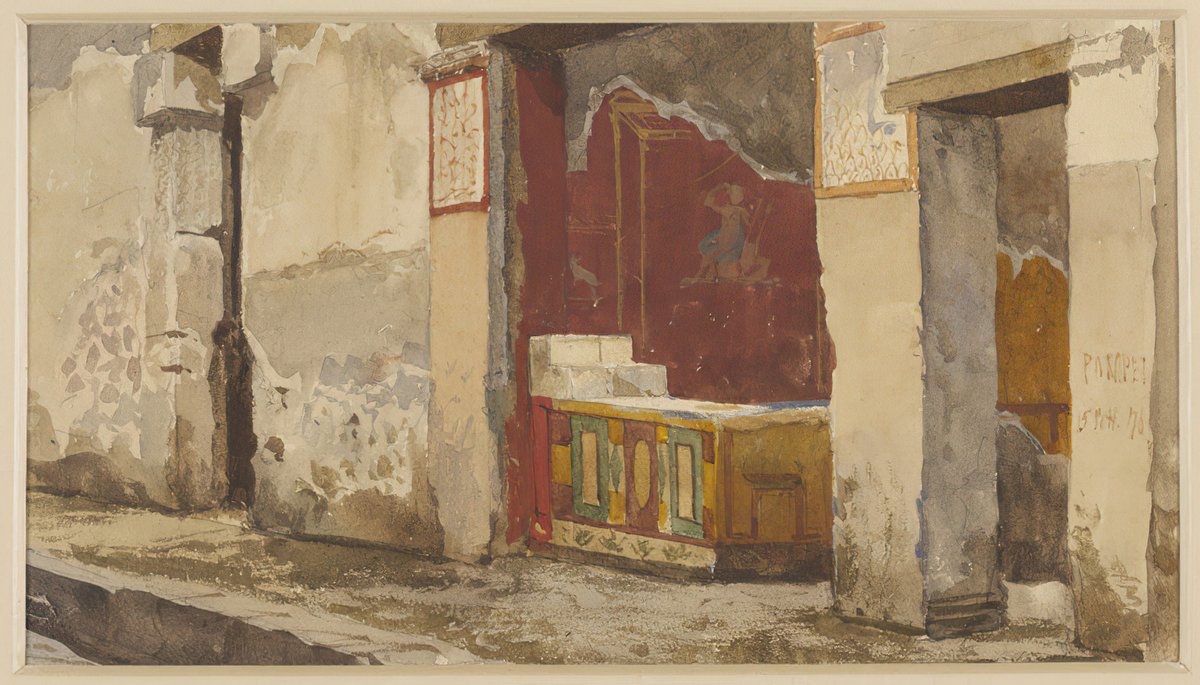
Explore Shop (Viii.5.25) in Pictures
Historical Background of Pompeii
Early Settlement and Development
Pompeii's roots reach back to the 8th century BCE, established by the Oscans. Its strategic location near the Sarno River and fertile volcanic soils fostered growth and attracted Greek and Etruscan influences. By the 6th century BCE, the city had adopted elements of Hellenic culture and architecture, as seen in the construction of temples and the development of trade networks (History Tools; Wikipedia).
Roman Conquest and Urban Transformation
In the 4th century BCE, Pompeii came under Roman control, culminating in full colonization after the Social War in 89 BCE. The city flourished under Roman rule, expanding to a population of roughly 11,000–20,000 and adopting a grid-like urban layout. Monumental buildings, aqueducts, paved roads, and thriving marketplaces signaled Pompeii’s prosperity and integration into the Roman world (UNESCO; World History Encyclopedia).
Daily Life and Social Structure
Pompeii’s archaeological remains reveal a dynamic society ranging from wealthy landowners to artisans, freedmen, slaves, and traveling merchants. The Forum served as a hub for religious, political, and commercial activities. Residences ranged from grand villas to modest workshops, often with shops fronting the street and living quarters behind or above (World Travel Connector).
The Eruption of Mount Vesuvius in 79 CE
The eruption on August 24, 79 CE, buried Pompeii under meters of ash and pumice, preserving buildings, artifacts, and even organic matter. This event created an archaeological time capsule, with voids left by decomposed bodies later filled with plaster to recreate the forms of victims (Britannica).
Rediscovery and Archaeological Exploration
Rediscovered in the 16th century, systematic excavations began in the 18th century. Modern archaeological methods have since uncovered most of the city, offering invaluable insights into ancient life. Today, Pompeii is a UNESCO World Heritage Site and a major tourist destination (Wikipedia).
Preservation, Research, and Public Access
Preservation is an ongoing challenge due to exposure and heavy tourism. Measures such as visitor limits and conservation programs help protect the site. The Antiquarium museum and Naples Archaeological Museum house many of Pompeii’s significant finds (World Travel Connector).
Shops in Pompeii: Economic and Social Significance
Commerce and Urban Life
Shops, or tabernae, lined Pompeii’s main streets, especially the Via dell’Abbondanza, and played a central role in daily life. These establishments included bakeries, fulleries, food stalls, and workshops. Over 600 businesses have been identified, reflecting the city’s commercial vitality (TSFX; pompeiiarchaeologicalpark.com).
Social Hierarchy and Urban Structure
Most shops were owned by wealthy elites and operated by freedmen or artisans, offering pathways for social mobility. They often formed the ground floor of residential buildings, with family quarters above, blurring the lines between work and home (pompeiiarchaeologicalpark.com).
Architectural Features and Layout
A typical shop featured a wide entrance, stone or masonry counter, storage jars, and sometimes painted signs or religious symbols. Shops clustered near public spaces and along major streets to maximize foot traffic (pompeiiarchaeologicalpark.com; TSFX).
Shop VIII.5.25: Features and Visitor Experience
Location and Identification
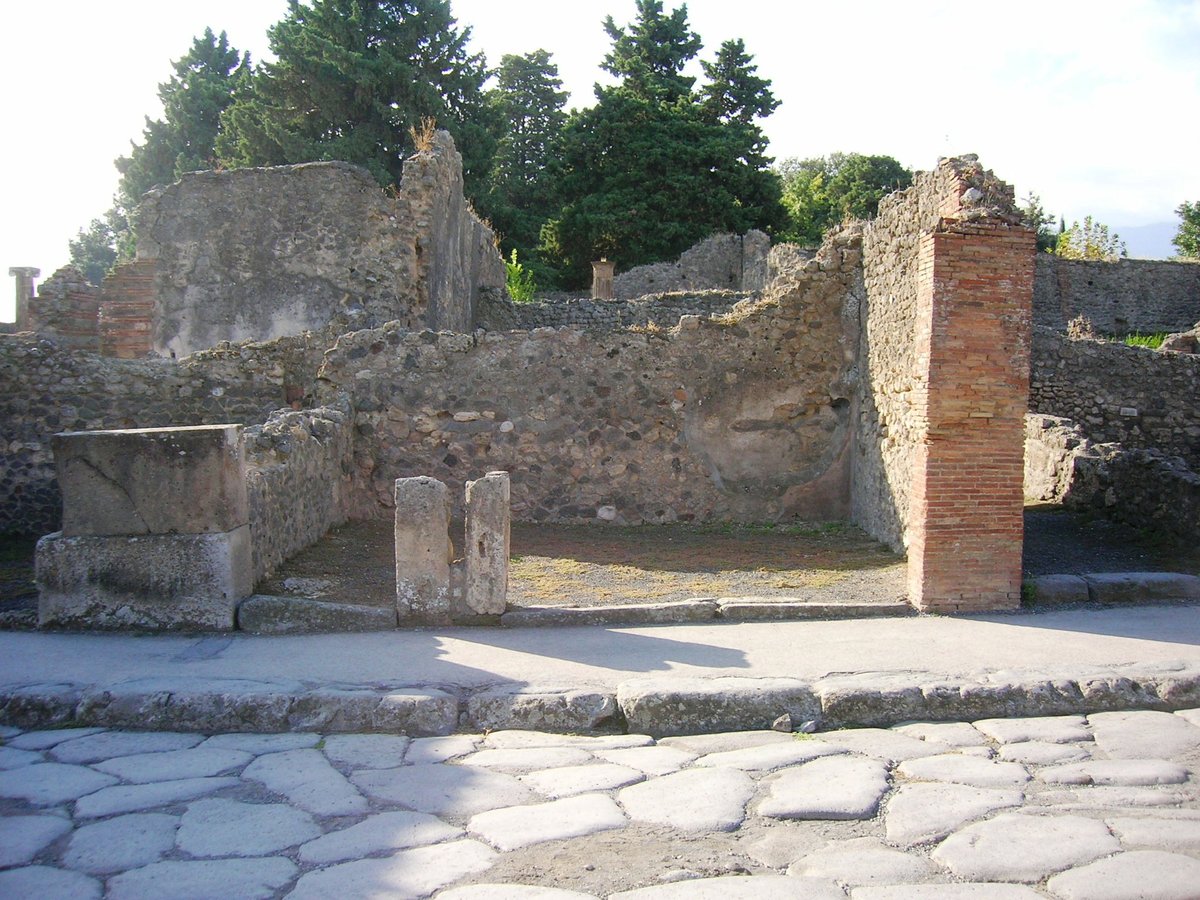
Shop VIII.5.25 is in Regio VIII, Insula 5, entrance 25, along the Via dell’Abbondanza—a prime commercial artery used by residents and visitors alike. Its proximity to theatres and the Forum positioned it within a vibrant urban core (Cultured Voyages; Pompeii in Pictures).
Architectural Structure and Features
- Facade and Entrance: Wide doorway with likely wooden shutters for security.
- Interior: Single main room (10–20 m² typical), with a stone counter, storage niches, and possibly embedded storage jars.
- Utilities: Likely shared access to nearby street fountains.
- Storage/Living Quarters: May have included a small rear space or mezzanine for storage; living quarters in such small shops are uncertain.
Archaeological and Cultural Significance
Shop VIII.5.25 exemplifies the small-scale retail enterprises that formed the backbone of Pompeii’s economy. Preserved counters and storage areas provide insights into ancient retail practices. Its location near major social venues highlights how commerce was interwoven with daily civic and entertainment life (The Archaeologist; italiaconcierge.com).
Pompeii Visitor Information
Visiting Hours
- April–October: 9:00 AM – 7:00 PM (last entry at 6:00 PM)
- November–March: 9:00 AM – 5:00 PM (last entry 1.5 hours before closing)
- Closed: January 1, May 1, December 25 (Savoring Italy; Italy Sights)
Tickets
- Standard Admission: €19 per adult
- Reduced/Free: EU citizens 18–25 reduced; under 18 free (ID required)
- Purchase: Online booking is highly recommended (Along Dusty Roads; Italy Sights)
Getting There
- By Train: Circumvesuviana line from Naples to Pompeii Scavi-Villa dei Misteri station
- By Car: Ample parking near entrances
- By Bus: Shuttle buses and taxis available
Accessibility
- Main routes are accessible, but ancient paving and steps may challenge those with limited mobility. Check the official site for current accessibility information.
Guided Tours and Amenities
- Guided tours (often led by archaeologists) and audio guides are available and highly recommended for context (Krista the Explorer).
- Restrooms and cafes are located near entrances.
- Official gift shops offer books and replicas; for more options, visit the modern town of Pompei.
Photography and Conservation
- Non-flash photography is allowed; respect all signage.
- Do not touch or climb on the ruins.
- Pets: Small dogs on leashes are allowed outside; must be carried inside buildings (Italy Sights).
Practical Tips for Visiting Shop VIII.5.25
- Footwear: Wear sturdy shoes for uneven paving (Savoring Italy).
- Sun Protection: Limited shade—bring hat, sunglasses, sunscreen.
- Water/Snacks: Limited availability inside; bring your own (Men of Pompeii).
- Cash: Some vendors may not accept cards.
- Maps: Download a site map or use official apps to locate Shop VIII.5.25 (Toorists).
- Crowds: Arrive early or visit outside peak seasons for a quieter experience.
- Combine Your Visit: Pair Shop VIII.5.25 with the theatres, Forum, and Stabian Baths for a comprehensive itinerary (Italy Sights).
- Museum: Artifacts are displayed at the Naples National Archaeological Museum.
Frequently Asked Questions (FAQ)
Q: What are the visiting hours for Shop VIII.5.25?
A: Accessible during Pompeii Archaeological Park’s opening hours—typically 9:00 AM to 7:00 PM (April–October), 9:00 AM to 5:00 PM (November–March).
Q: How do I buy tickets for Pompeii?
A: Purchase tickets online in advance or at the park entrances. Online booking is advised, especially during busy periods.
Q: Is Shop VIII.5.25 wheelchair accessible?
A: Main routes are accessible, but some shops have steps or uneven ground. Check the official site for updates.
Q: Are guided tours available?
A: Yes, guided tours often include Insula 5 and Shop VIII.5.25.
Q: Can I take photographs inside Shop VIII.5.25?
A: Yes, non-flash photography is generally permitted.
Summary Table: Shop VIII.5.25 Key Facts
| Feature | Details |
|---|---|
| Location | Regio VIII, Insula 5, Entrance 25; Via dell’Abbondanza |
| Type | Taberna (shop), likely single-room layout |
| Size | Estimated 10–20 m² |
| Structure | Street-facing entrance, stone counter, storage niches |
| Function | General retail (precise trade unknown) |
| Visitor Access | Open during park hours; less crowded than major monuments |
| Conservation Status | Fragile; observe preservation guidelines |
Discover More
Shop VIII.5.25 offers an intimate, tangible connection to Pompeii’s bustling ancient commerce. Its modest architecture, strategic location, and preserved features highlight the centrality of small-scale retail in sustaining Roman urban life. By planning ahead—checking hours, booking tickets, and considering a guided tour—you’ll enrich your understanding of both Shop VIII.5.25 and the wider city.
To further enhance your visit, download the Audiala app for expert audio guides, explore related Pompeii articles, and follow us on social media for updates and travel inspiration. Step back in time and experience the rhythms of daily life in one of history’s most remarkable cities.
Listen to the full story in the app
Your Personal Curator, in Your Pocket.
Audio guides for 1,100+ cities across 96 countries. History, stories, and local insight — offline ready.
Audiala App
Available on iOS & Android
Join 50k+ Curators
Sources
- verified
- verified
- verified
- verified
- verified
- verified
- verified
Last reviewed: