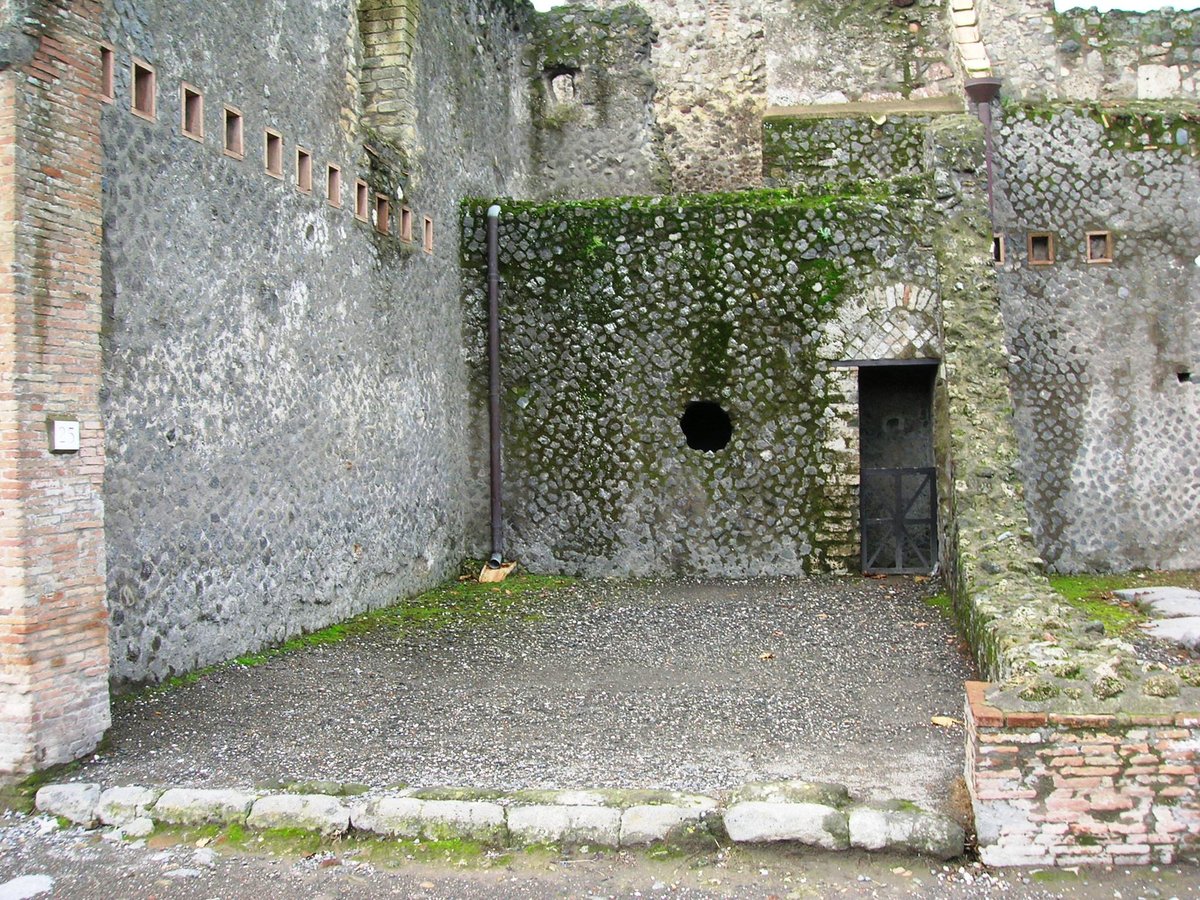
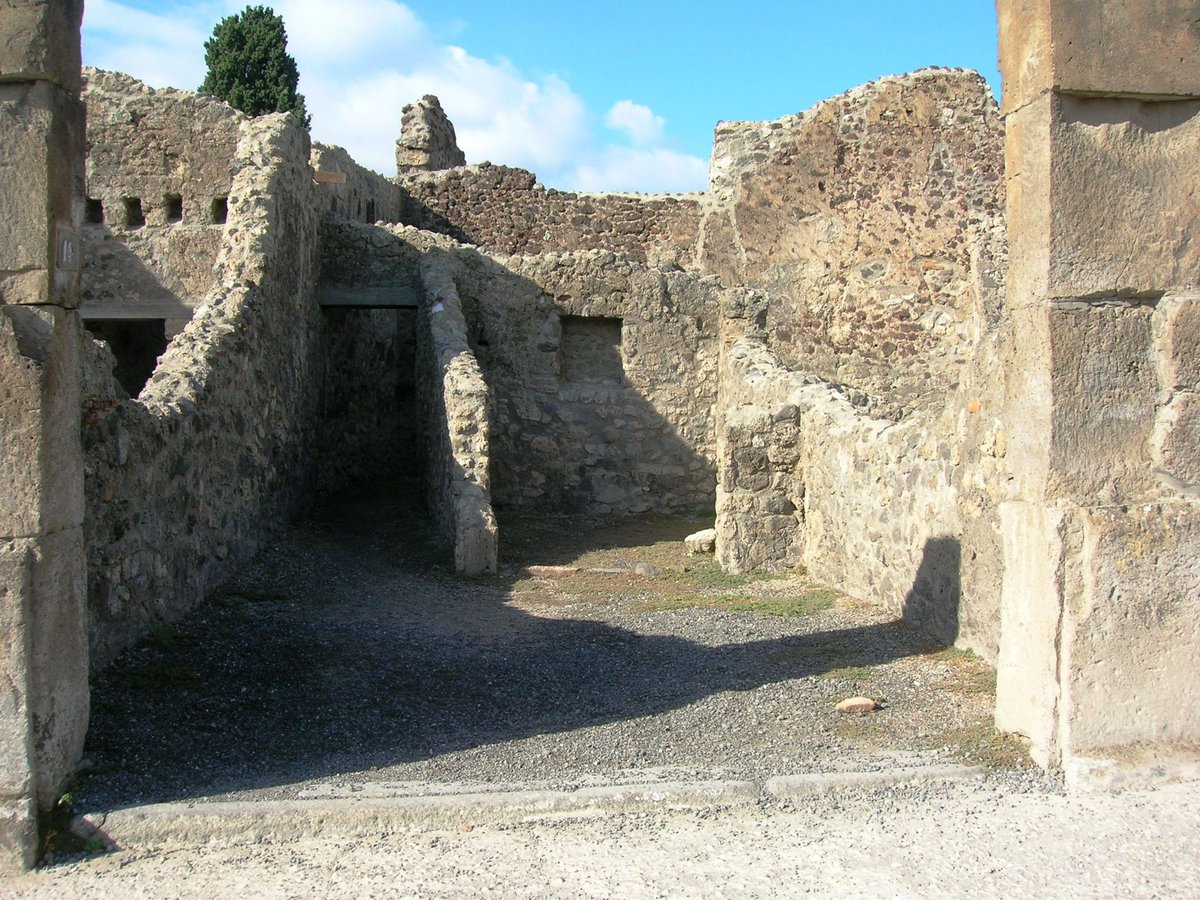
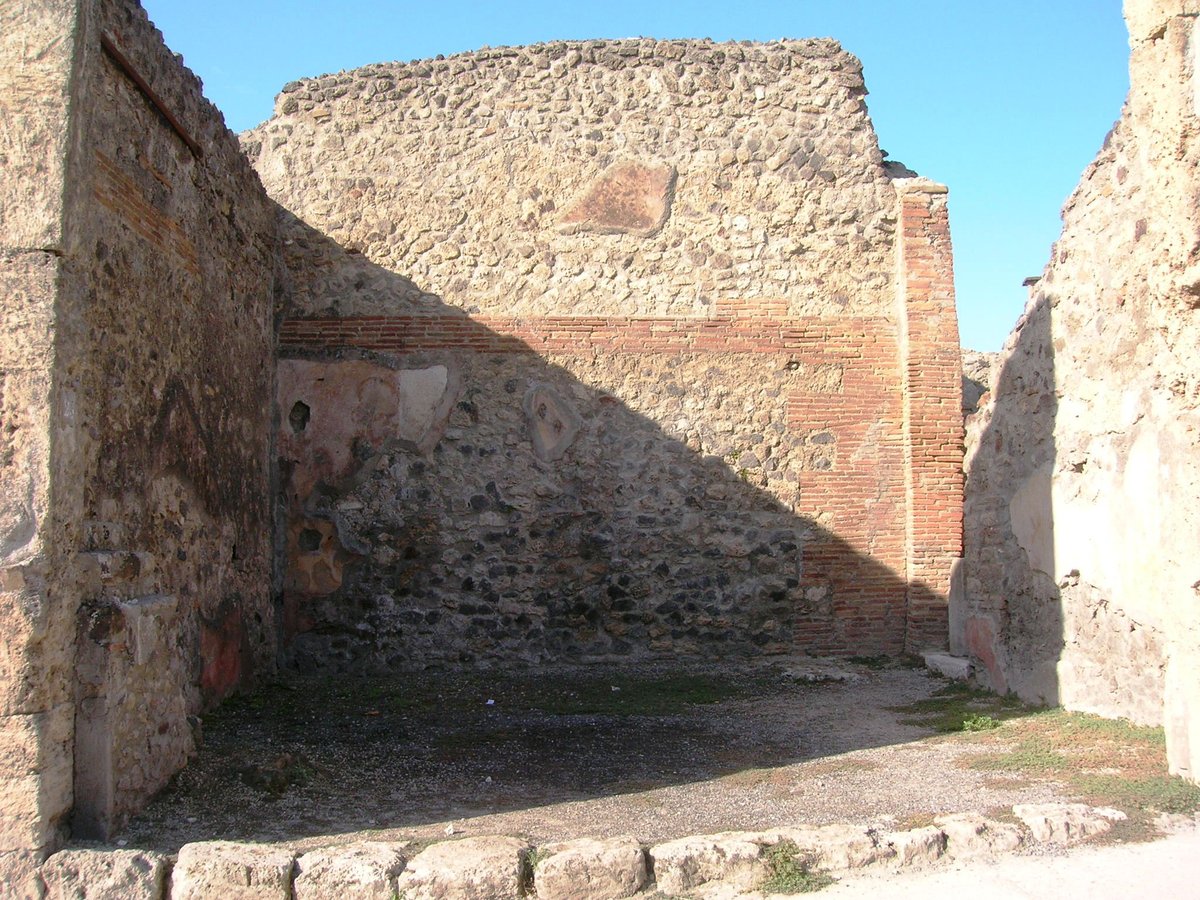
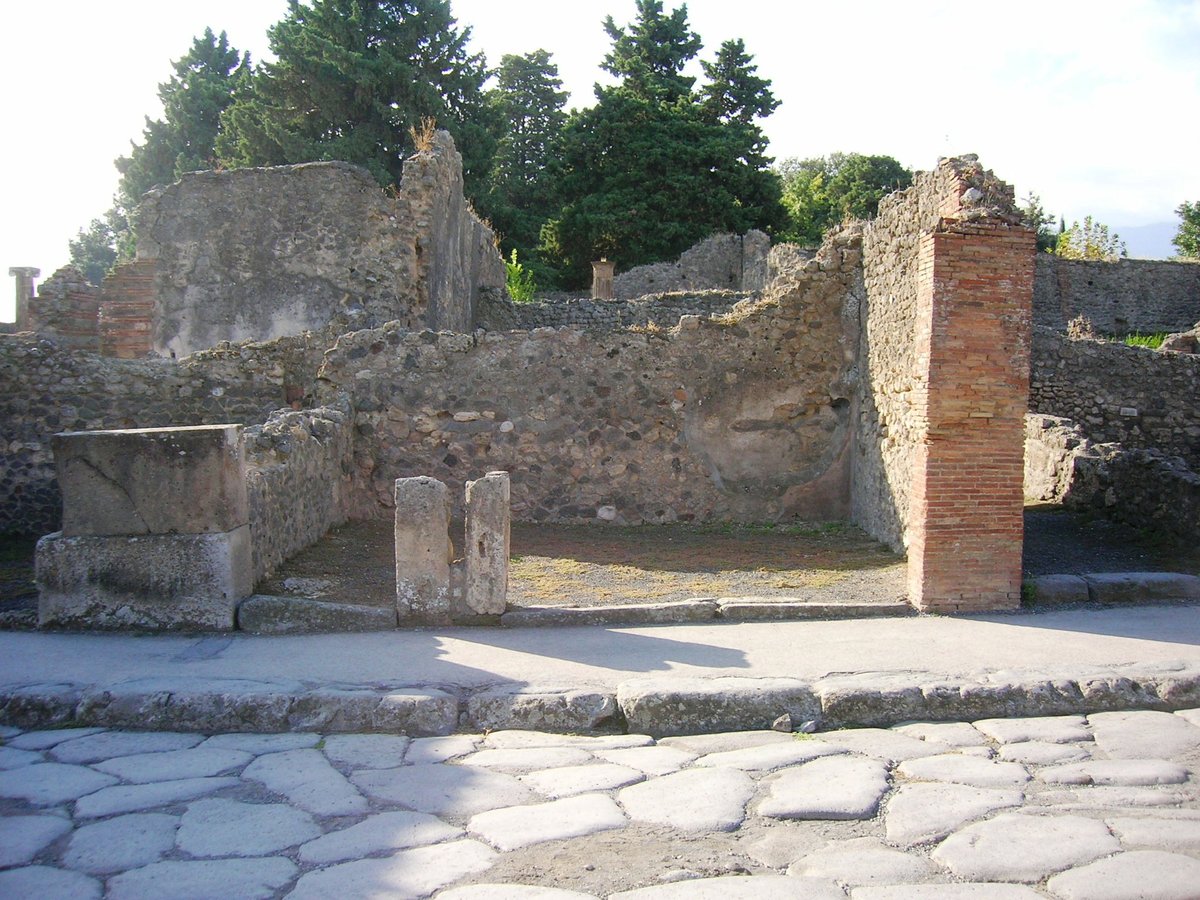
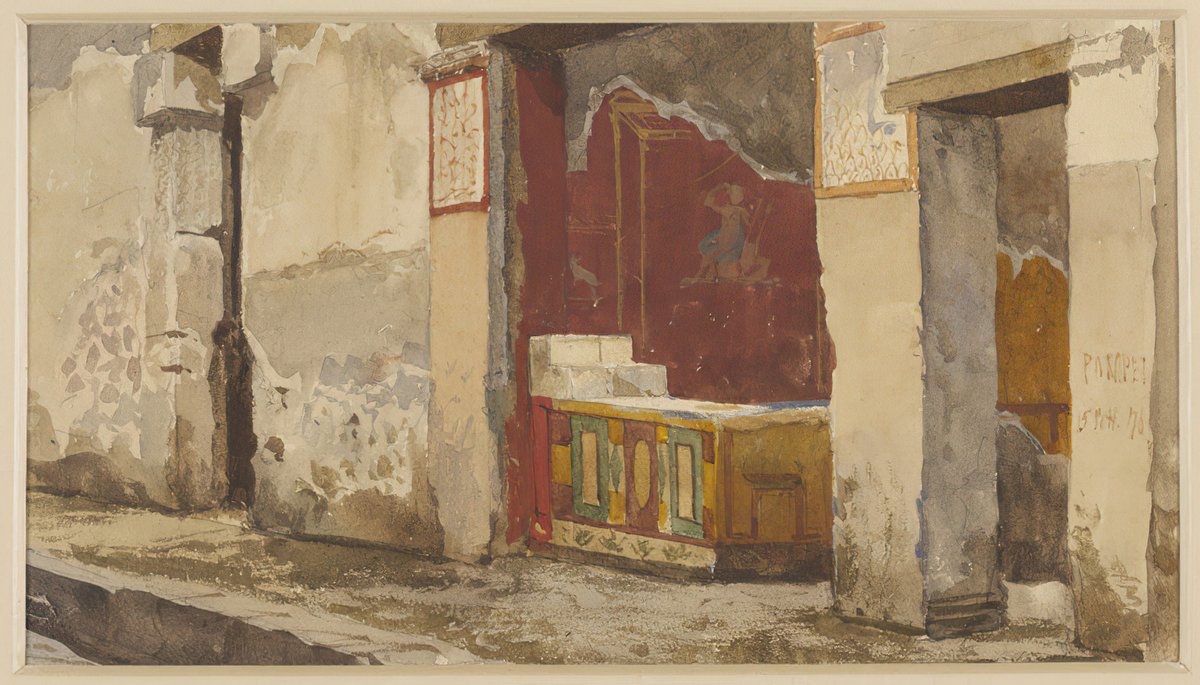
Introduction to House VIII.6.3 Pompeii
Pompeii, preserved by the catastrophic eruption of Mount Vesuvius in 79 CE, offers an unparalleled window into ancient Roman urban life. Within its complex cityscape, Regio VIII stands out for its blend of public monuments and private residences, including the notable House (VIII.6.3). This guide provides historical context, practical visitor information, and expert tips to ensure a fulfilling visit to House (VIII.6.3), Regio VIII, and the broader Pompeii Archaeological Park (Pompeii in Pictures; World Travel Connector).
The Historical Context of Pompeii and Regio VIII
Urban Development and City Structure
Pompeii, located in the Campania region near Naples, flourished as a Roman city until the eruption of Mount Vesuvius. With a population of up to 20,000, its urban planning featured a grid of streets, public squares, and advanced infrastructure, making it a commercial and leisure hub for Romans (Monuments & Sights; Toorists).
The city was divided into regions (regiones) and blocks (insulae), a system now crucial for archaeological study. Regio VIII, home to House (VIII.6.3), occupies a prominent area near the southern city walls and main civic buildings (Pompeii in Pictures).
Regio VIII: Features and Social Fabric
Regio VIII is rich in both public and private structures. Notable landmarks include the Great Theatre, Odeon, Temple of Isis, Triangular Forum, and Gladiators’ Barracks, reflecting the city’s vibrant cultural and religious life (World Travel Connector). The area’s residential blocks range from modest homes to luxurious domus with frescoes and mosaics, indicative of the wealth and tastes of their owners.
House (VIII.6.3) in Context
Situated in Insula 6, House (VIII.6.3) is a well-preserved domus, possibly serving as a private residence with a characteristic atrium, cubicula, tablinum, and peristyle garden. Its Fourth Style frescoes and mosaics highlight the artistry and sophistication of affluent Pompeians (pompeiiarchaeologicalpark.com; blogs.cornell.edu). Proximity to the Forum suggests the owners’ involvement in civic or commercial activities.
Social and Economic Life in Regio VIII
Regio VIII exemplified the integration of residential comfort with commercial activity. Shops, bakeries, and taverns lined the streets, while public baths like the Sarno Baths fostered social interaction (Academia.edu). Graffiti and inscriptions provide glimpses into daily life, humor, and politics (The Archaeologist).
Visiting Regio VIII: Tickets, Hours, and Practical Information
Pompeii Visiting Hours
- April–October: 9:00 AM – 7:00 PM (last entry 5:30 PM)
- November–March: 9:00 AM – 5:00 PM (last entry 3:30 PM)
- Closed: January 1, May 1, December 25
Hours may vary during holidays or special events. Check the official website for updates.
Tickets and Entry
- Tickets are available online and at the entrance.
- Discounts for EU citizens under 25; free entry for children under 18 (Toorists).
- Combined tickets for Pompeii and nearby attractions available.
Accessibility
- Partial accessibility: Some areas have ramps and paved paths, but ancient streets can be uneven.
- It is advisable to consult the park in advance for detailed accessibility information.
Guided Tours and Special Events
- Guided tours, audio guides, and expert-led walks are available.
- Special events, such as evening tours, may require advance booking.
Travel Tips
- Wear sturdy shoes and sun protection.
- Bring water; fountains are limited.
- Respect preservation rules.
- Avoid peak midday hours for a more comfortable visit.
Archaeological Discovery and Preservation
Pompeii was rediscovered in 1748, with ash preserving buildings, artwork, and daily objects (The Archaeologist). Two-thirds of the city has been excavated, revealing critical insights into Roman society. Ongoing research employs 3D scanning and advanced conservation techniques, though challenges from exposure and tourism persist (Along Dusty Roads).
House (VIII.6.3): In-Depth Guide
Architectural Features
House (VIII.6.3) exemplifies elite Roman domestic architecture:
- Atrium: Central hall with impluvium for rainwater collection.
- Cubicula and Alae: Bedrooms and side rooms surrounding the atrium.
- Tablinum: Main office or reception area.
- Peristyle Garden: Colonnaded courtyard with decorative plants, indicating affluence.
- Decor: Fourth Style frescoes, opus signinum flooring, and mosaics with mythological or architectural motifs (pompeiiarchaeologicalpark.com).
Archaeological Significance
- Elite Lifestyles: Layout and decoration reflect the social status and aspirations of the owners (blogs.cornell.edu).
- Art and Culture: Notable for high-quality frescoes and mosaics, with materials sourced from across the Roman world (archaeologymag.com).
- Preservation: Excavations have revealed household items, food remains, and evidence of daily life at the moment of the eruption (storiesbysoumya.com).
Visiting Hours and Tickets for House (VIII.6.3)
- Access is included with general Pompeii admission; no separate ticket is required (Time Travel Turtle).
- Opening hours follow general park times; some houses may close slightly earlier for conservation (helenonherholidays.com).
How to Visit: Tips
- Plan ahead: Schedule 20–30 minutes for the house and 3–5 hours for the full site (nomadepicureans.com).
- Guides: Consider joining a guided tour for deeper insights (Greta’s Travels).
- Comfort: Wear comfortable shoes and bring sun protection.
- Photography: Allowed without flash or tripods; drones require permission.
Accessibility
- Ancient paving can be uneven; partial accessible routes exist (findingtheuniverse.com).
Preservation and Research
- House (VIII.6.3) is the subject of ongoing research, employing advanced imaging and non-invasive methods to document and protect its art and architecture (blogs.cornell.edu).
Pompeian Houses: Broader Perspectives
Architectural Layout
Pompeian houses typically feature a fauces (entrance), atrium, cubicula, alae, tablinum, and peristyle, blending private and public functions. Wealthier homes include intricate mosaics and frescoes (SeePompeii; DarkRome).
Social Stratification
Residences range from simple dwellings to lavish villas, reflecting Pompeii's social hierarchy. Elite houses like the House of the Faun impressed guests and hosted public business (History Skills).
Artistic Expression
Pompeian interiors are decorated with frescoes and mosaics. August Mau’s four-style system tracks the evolution of Roman wall painting (Pompeii Archaeological Park; BBC History).
Economic and Domestic Activities
Many homes included shops (tabernae), workshops, and storerooms, illustrating the integration of commerce and family life (SeePompeii).
Urban Infrastructure
Streets were paved, with public fountains and close proximity to amenities, reflecting a vibrant community (History Skills).
Preservation and Significance
The 79 CE eruption preserved Pompeii’s houses, providing an extraordinary record of ancient daily life. Archaeological methods continue to evolve, enhancing conservation and research (BBC History).
Practical Visitor Information for House VIII.6.3
| Aspect | Details |
|---|---|
| Location | Regio VIII, Insula 6, Entrance 3, Pompeii Archaeological Park |
| Visiting Hours | 9:00 AM – 7:00 PM (Apr–Oct); 9:00 AM – 5:00 PM (Nov–Mar) |
| Tickets | Included in general admission; online purchase recommended |
| Accessibility | Uneven surfaces; limited wheelchair access |
| Recommended Visit Time | 20–30 minutes (house); 3–5 hours (entire site) |
| Facilities | Restrooms, water fountains, maps/booklets at entrances |
| Photography | Allowed (no flash/tripods) |
| Guided Tours | Highly recommended; book in advance |
| Essential Items | Comfortable shoes, sun protection, water, camera, guidebook or digital map |
Frequently Asked Questions (FAQ)
Q: What are the visiting hours for House (VIII.6.3)?
A: Open during Pompeii’s park hours, with some houses closing earlier for conservation.
Q: Is a separate ticket required?
A: No, access is included with general Pompeii admission.
Q: Is photography allowed?
A: Yes, without flash or tripods.
Q: Are guided tours available?
A: Yes, both official and private guides are available.
Q: Is the house accessible to those with mobility issues?
A: Partial accessibility; some areas remain challenging.
Enhance Your Visit
- Download the Audiala app for audio guides and interactive maps.
- Explore related articles: House of the Faun, Pompeii’s Forum, and Roman domestic architecture.
- Follow preservation etiquette to help protect this unique heritage for future generations.
Listen to the full story in the app
Your Personal Curator, in Your Pocket.
Audio guides for 1,100+ cities across 96 countries. History, stories, and local insight — offline ready.
Audiala App
Available on iOS & Android
Join 50k+ Curators
Sources
- verified
- verified
- verified
- verified
- verified
- verified
- verified
- verified
- verified
- verified
- verified
- verified
- verified
- verified
- verified
- verified
- verified
- verified
- verified
- verified
- verified
Last reviewed: