Introduction
The House of L. Caecilius Phoebus—also known as the House of Lucius Caecilius Iucundus—is one of Pompeii’s most fascinating sites, providing an unparalleled window into Roman urban life, commerce, and domestic architecture. Located at a prime intersection within the ancient city, this residence was owned by Lucius Caecilius Iucundus, a successful freedman banker and auctioneer in the 1st century CE. The house is celebrated for its architectural layout, elaborate frescoes, mosaics, and especially for the discovery of an extensive archive of wax tablets documenting the financial transactions and social hierarchy of Pompeii just before the catastrophic eruption of 79 CE.
For visitors eager to experience the legacy of ancient Rome, the House of L. Caecilius Phoebus is a must-see among Naples’ historical sites. This guide covers everything you need to plan your visit: opening hours, ticketing, accessibility, guided tours, and practical tips. Whether you’re a history enthusiast, an architecture lover, or simply curious about ancient life, this detailed overview will help you make the most of your trip.
(Pompeii Archaeological Park; History of Information; Pompeii in Pictures)
Historical Context and Social Setting
In the 1st century CE, Pompeii was a bustling Roman city with a population between 11,000 and 15,000. Its economy thrived on agriculture, trade, and crafts, benefiting from fertile volcanic soils and maritime commerce through the Bay of Naples. The city’s social structure was highly stratified, featuring Roman citizens, freedmen, slaves, and foreigners. Wealthy families, like the Caecilii, lived in grand houses situated alongside shops and workshops, reflecting the dynamic economic life of the city. (Britannica)
House Ownership and Economic Role
Lucius Caecilius Iucundus, the house’s owner, was a prominent freedman banker and auctioneer whose success is evident in both the scale and opulence of his home. Excavated in the late 19th century, the house displays the status and ambitions of the rising Pompeian elite. The discovery of over 150 wax tablets in a chest here provides invaluable information about the economic activity and social relations in the city. (History of Information; Wikipedia: Lucius Caecilius Iucundus)
Wax Tablet Archive: Economic Insights
The wax tablet archive found at the House of L. Caecilius Phoebus is a rare treasure. Consisting of 153 wooden tablets, it documents contracts, loans, auction receipts, and other financial transactions. These records offer remarkable insight into the complexity of Roman business, with triptych tablets sealed to ensure authenticity. Witness lists on these documents were arranged according to social rank, vividly illustrating the social hierarchy of Pompeii. (Wikipedia: Lucius Caecilius Iucundus)
Architectural Features and Layout
Location and Spatial Organization
The house is located at Regio V, Insula 1, doorway 26 (V.1.26), at a prominent crossroads on Via del Vesuvio in Pompeii. Its position reflects both social prestige and commercial opportunity, surrounded by elite residences, shops, taverns, and gardens. (Science Alert)
Entrance and Vestibule
Visitors enter through a modest doorway into the vestibule, where a famous mosaic of a reclining dog greets them—a decorative motif with a protective symbolism. (Pompeii in Pictures)
Atrium
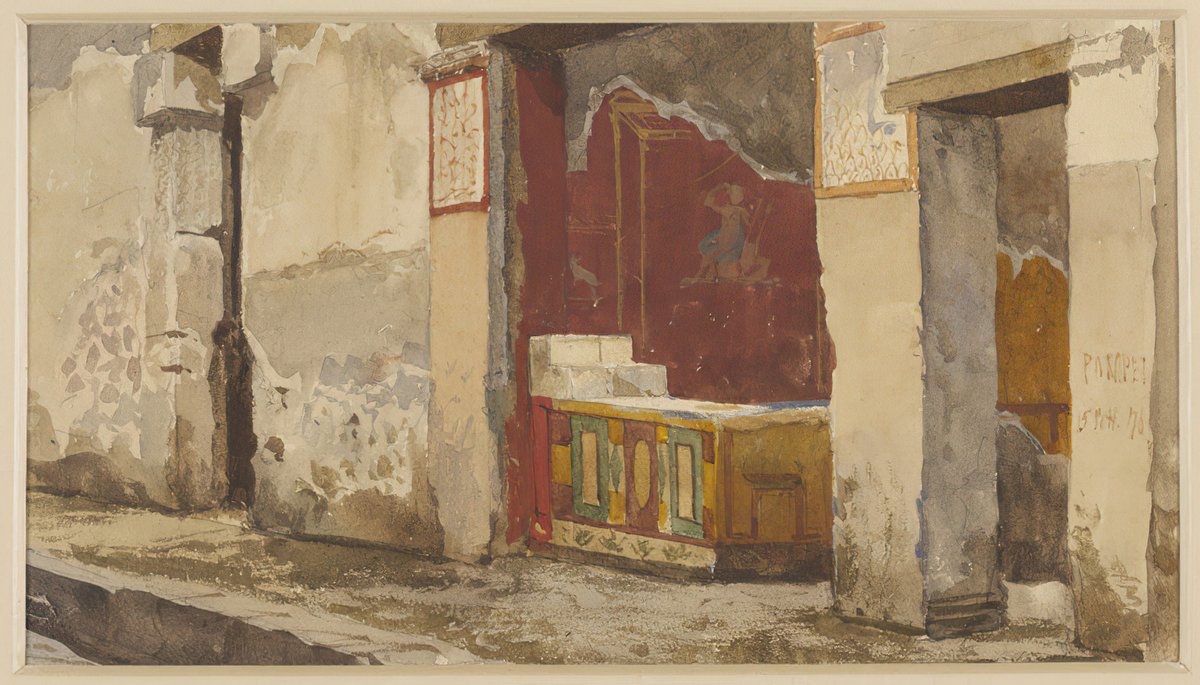
The house is organized around a central Tuscan-style atrium, featuring a rectangular impluvium (basin) for collecting rainwater. Marble and mosaic decorations, as well as a marble lararium (household shrine), mark the owner’s wealth and piety. The base of a money chest found here directly connects to Caecilius’s profession as a banker. (Pompeii in Pictures; Cambridge Amarantus)
Tablinum
The tablinum, or main office, lies beyond the atrium and was the heart of business activity. This room is richly decorated with frescoes depicting mythological scenes (e.g., Satyr and Nymph, Iphigenia in Tauris) and features a mosaic emblema at its center. (Pompeii in Pictures)
Peristyle Garden
Past the tablinum, the peristyle garden offers a tranquil setting decorated with ornamental shrubs, a marble wellhead, and a fluted marble basin. The garden was designed for leisure, light, and fresh air, exemplifying Roman ideals of domestic comfort.
Decorative Elements
Mosaics and frescoes throughout the house display the Fourth Pompeian Style, with intricate mythological and architectural motifs. Marble was used for the lararium, water features, and other decorative elements—clear markers of wealth and taste. (Science Alert)
Service Rooms and Storage
The house includes service areas, storerooms, and likely quarters for slaves. The archive chest containing the wax tablets was found in one of these spaces, underscoring the integration of business and domestic life. (Cambridge Amarantus)
Architectural Innovations
Recent digital reconstructions, including 3D models and virtual tours, allow visitors to appreciate how the house originally looked and functioned. These reconstructions highlight the use of natural light, integrated gardens, and innovative water systems. (ArchDaily)
Visiting Information: Hours, Tickets, and Accessibility
Opening Hours
- April–October: 09:00–19:00 (last entry at 17:30)
- November–March: 09:00–17:00 (last entry at 15:30)
- The house may have restricted access after 18:00 (summer) or 16:15 (winter) due to conservation measures. (Pompeii Archaeological Park; Helen on Her Holidays)
Tickets
- Standard adult tickets cost €18–€22.
- Reduced rates available for EU citizens aged 18–25; free entry for under 18s.
- Online ticket purchase is mandatory on Saturdays, Sundays, and public holidays. (Nomadic Matt)
- Your ticket grants access to the entire archaeological park; not all houses are open daily, so check schedules.
Accessibility
- Pompeii’s ancient streets can be uneven and challenging for those with limited mobility. Some accessible routes exist, but access to the House of Caecilius Iucundus may be restricted.
- Small bags only; larger items must be left at the cloakroom.
- Restrooms, water fountains, and food areas are available inside the park.
Guided Tours and Visitor Tips
- Guided tours are available in multiple languages, with prices ranging from €15–€60 depending on the group size and tour length.
- Audio guides and mobile apps (like Audiala and GPSmyCity) provide interactive, self-guided explorations. (GPSmyCity)
- For the best experience, arrive early or late afternoon to avoid crowds and heat.
- Wear durable shoes; bring water, sunscreen, and a hat.
- Photography is allowed, but flash, tripods, and drones are not permitted inside.
Cultural Legacy and Preservation
The House of L. Caecilius Phoebus is central to understanding Roman society, commerce, and domestic life. Its wax tablet archive is one of the most important records of Roman business, and its architecture illustrates the sophistication of elite Pompeian homes. Active preservation and research—such as the Swedish Pompeii Project’s digital reconstructions—continue to protect and reveal new facets of the site. (ArchDaily; Science Alert)
Frequently Asked Questions (FAQ)
Q: What are the visiting hours for the House of L. Caecilius Phoebus?
A: Open daily from 09:00–19:00 (high season) or 09:00–17:00 (low season); house access may be limited late in the day.
Q: How do I buy tickets?
A: Tickets can be purchased online or at the entrance; online booking is required on weekends and holidays.
Q: Is the house accessible to visitors with disabilities?
A: Some accessible routes exist in Pompeii, but the house itself may be challenging due to uneven terrain.
Q: Are guided tours available?
A: Yes, both group and self-guided audio tours are widely available.
Q: Can I take photographs?
A: Yes, but without flash or tripods inside the house.
Planning Your Visit
- Check the official Pompeii website for the latest updates on house openings and ticketing.
- Consider combining your visit with other highlights such as the Forum, Amphitheatre, and the National Archaeological Museum in Naples.
- Download the Audiala app for immersive audio guides and real-time visitor information.
- Respect preservation efforts by not touching surfaces and staying on marked paths.
Summary and Visitor Recommendations
The House of L. Caecilius Phoebus is a cornerstone for understanding the complexity and vibrancy of ancient Pompeii. Its architecture, art, and wax tablet archive offer a multidimensional glimpse into Roman life, combining business and domesticity in a unique setting. With careful planning—considering ticketing, guided tours, and accessibility—you can fully appreciate this extraordinary historical site. Enhance your visit with digital resources and by exploring related attractions in the region.
(Pompeii Archaeological Park; Wikipedia: Lucius Caecilius Iucundus; Science Alert)
Listen to the full story in the app
Your Personal Curator, in Your Pocket.
Audio guides for 1,100+ cities across 96 countries. History, stories, and local insight — offline ready.
Audiala App
Available on iOS & Android
Join 50k+ Curators
Sources
-
verified
Pompeii Archaeological Park, 2025 [https://pompeiisites.org/en/]
-
verified
History of Information, 2025 [https://www.historyofinformation.com/detail.php?id=4400]
-
verified
Wikipedia: Lucius Caecilius Iucundus, 2025 [https://en.wikipedia.org/wiki/Lucius_Caecilius_Iucundus]
-
verified
Pompeii in Pictures, 2025 [https://pompeiiinpictures.com/pompeiiinpictures/R5/5%2001%2026%20quickie.htm]
-
verified
Science Alert, 2025 [https://www.sciencealert.com/this-reconstructed-3d-home-reveals-ancient-pompeii-before-vesuvius-struck]
-
verified
Nomad Epicureans, 2025 [https://www.nomadepicureans.com/europe/italy/visit-pompeii/]
-
verified
Nomadic Matt, 2025 [https://www.nomadicmatt.com/travel-blogs/visiting-pompeii/]
-
verified
Cambridge Amarantus, 2025 [https://cambridgeamarantus.com/topics/topic-v/53/53-evidence]
-
verified
Armstrong Economics, 2025 [https://www.armstrongeconomics.com/history/ancient-economies/ancient-merchant-banking-the-house-of-lucius-caecilius-jucundus-the-banker-of-pompeii/]
-
verified
Pompeii.org.uk, 2025 [http://www.pompeii.org.uk/m.php/museum-house-of-caecilius-jucundus-pompeii-en-91-m.htm/]
-
verified
ArchDaily, 2025 [https://www.archdaily.com/797199/step-into-this-digitally-reconstructed-house-from-ancient-pompeii]
-
verified
Pompeii in Pictures (Lararium), 2025 [https://pompeiiinpictures.com/pompeiiinpictures/R5/5%2001%2026%20p2.htm]
-
verified
GPSmyCity, 2025 [https://www.gpsmycity.com/attractions/house-of-caecilius-iucundus-27871.html]
Last reviewed: