Introduction
Casa Senza Nome I.12.9, also known as the "House of the Painters at Work," stands as a captivating testament to the artistry and domestic life of ancient Pompeii. Located in Regio IX, Insula 12, doorway 9, within the renowned "Insula of the Chaste Lovers," this Roman domus offers visitors a unique opportunity to explore well-preserved frescoes—some left unfinished—and painter’s tools that provide a rare glimpse into the world of Roman artisans at the very moment Mount Vesuvius erupted in 79 AD. Recent archaeological campaigns (1982–2005 and 2023–2024) have uncovered new insights into the house’s architecture, decoration, and everyday life, making it a must-visit site for both scholars and travelers.
This comprehensive guide details the historical context, excavation history, artistic highlights, visitor logistics (including hours, tickets, and accessibility), preservation efforts, and practical travel tips to help you plan your visit and appreciate the profound cultural heritage preserved within Casa Senza Nome I.12.9 (Pompeii in Pictures; Pompeii Archaeological Park; Walks of Italy).
Historical Background
Casa Senza Nome I.12.9 occupies a prominent position in the heart of Pompeii’s Regio IX. The house lacks an ancient owner’s inscription, hence its modern name, meaning "House Without a Name". Its fame derives from the discovery of painter’s tools and frescoes left in various stages of completion, indicating that decorative work was actively underway when disaster struck. This unique snapshot illuminates the process of Roman wall painting and provides invaluable context for understanding everyday domestic rituals and artistic production in ancient Pompeii (Pompeii in Pictures).
Excavation History
Early and Modern Investigations
Excavation of Casa Senza Nome began in 1982 and continued intermittently through 2005, with renewed efforts in 2023–2024. These campaigns have clarified the boundaries between Casa Senza Nome and neighboring properties, and have refined scholarly understanding of room assignments and the house’s overall plan (Pompeii in Pictures). The house’s inclusion in the "House of the Day" program has further raised its profile, bringing attention to its unique archaeological and artistic value.
Archaeological Approach
Modern archaeological methodology at Casa Senza Nome emphasizes stratigraphic precision, conservation of delicate frescoes, and digital documentation using photogrammetry and 3D modeling. These advanced techniques help safeguard the site and enable ongoing research (Pompeii Archaeological Park).
Architectural Features and Layout
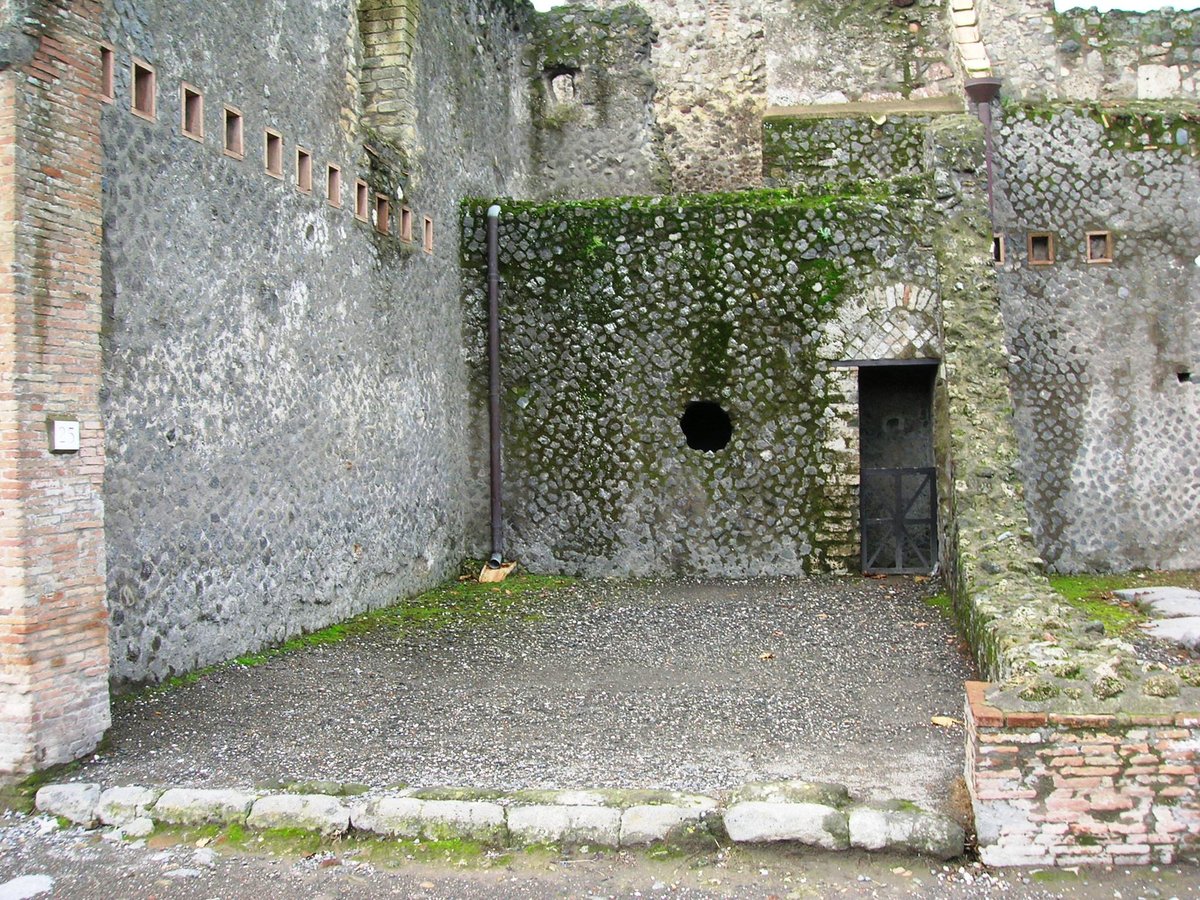
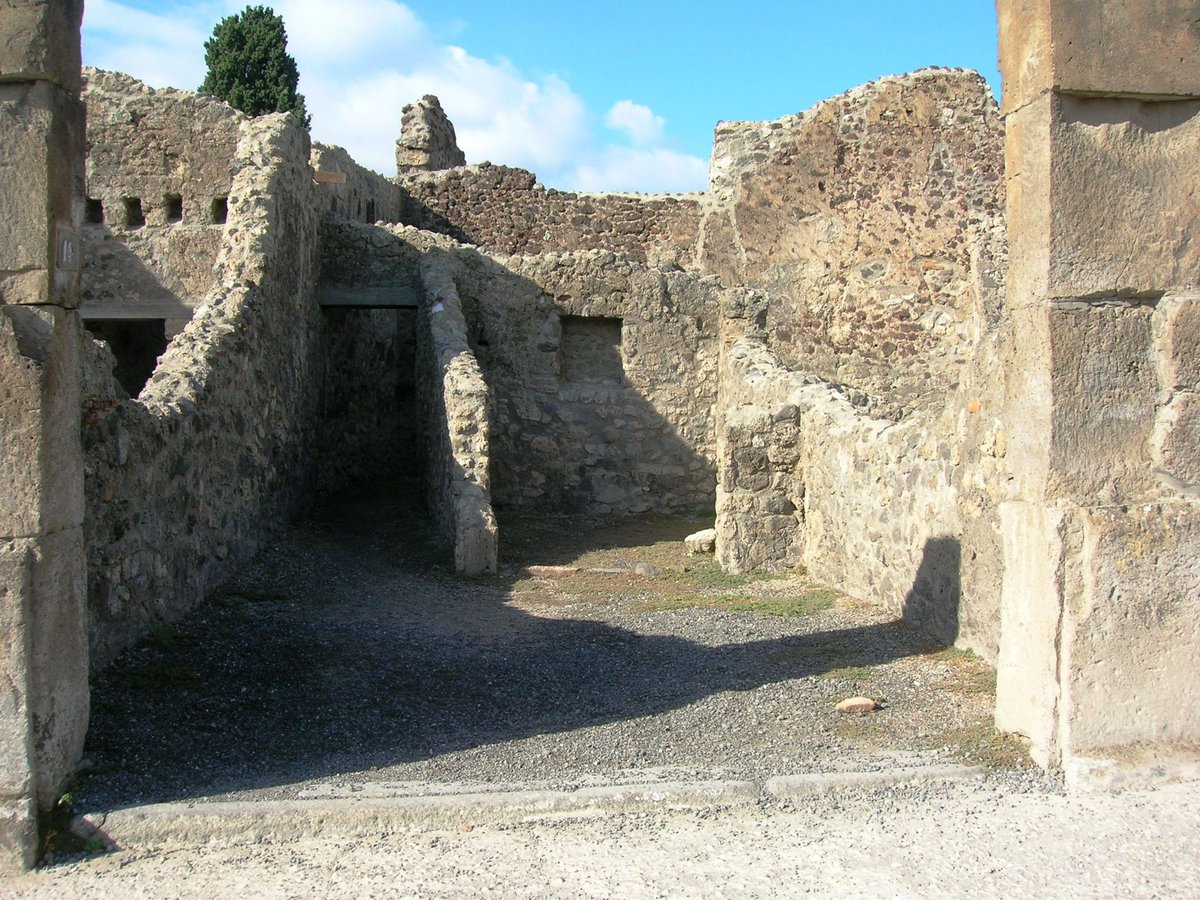
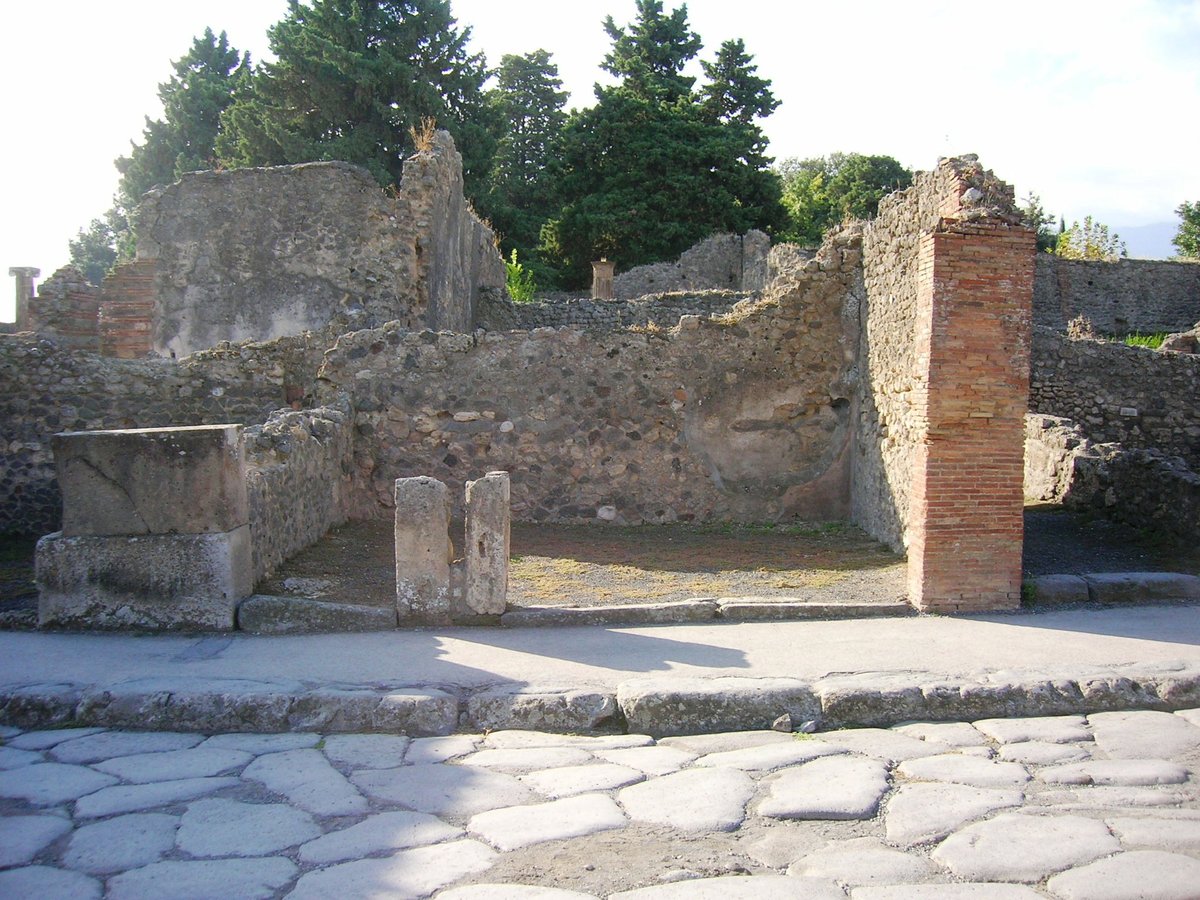
Casa Senza Nome exemplifies the mid-sized Roman domus, arranged around a central peristyle garden (Area 5) and designed to blend indoor and outdoor living. Key architectural highlights include:
- Peristyle Garden (Area 5): The focal point of the house, providing light and ventilation, surrounded by a portico and accessible from multiple rooms.
- Room 13: Features elaborate Fourth Style frescoes, multiple doorways, and direct access to the garden.
- Room 14: Adjacent to Room 13, with additional fine wall paintings.
- Service Areas (Room 1): Kitchen and latrine facilities, demonstrating integration of domestic functions.
- Large Oecus (Room u): Notable for its mosaic floor and unfinished wall paintings, including medallions with floating figures, revealing the painter’s process (Pompeii in Pictures).
Construction utilized local materials such as opus incertum and opus latericium, with water management features typical of Pompeian homes (pompeionline.net).
Artistic Significance and Notable Finds
Frescoes and Decorative Program
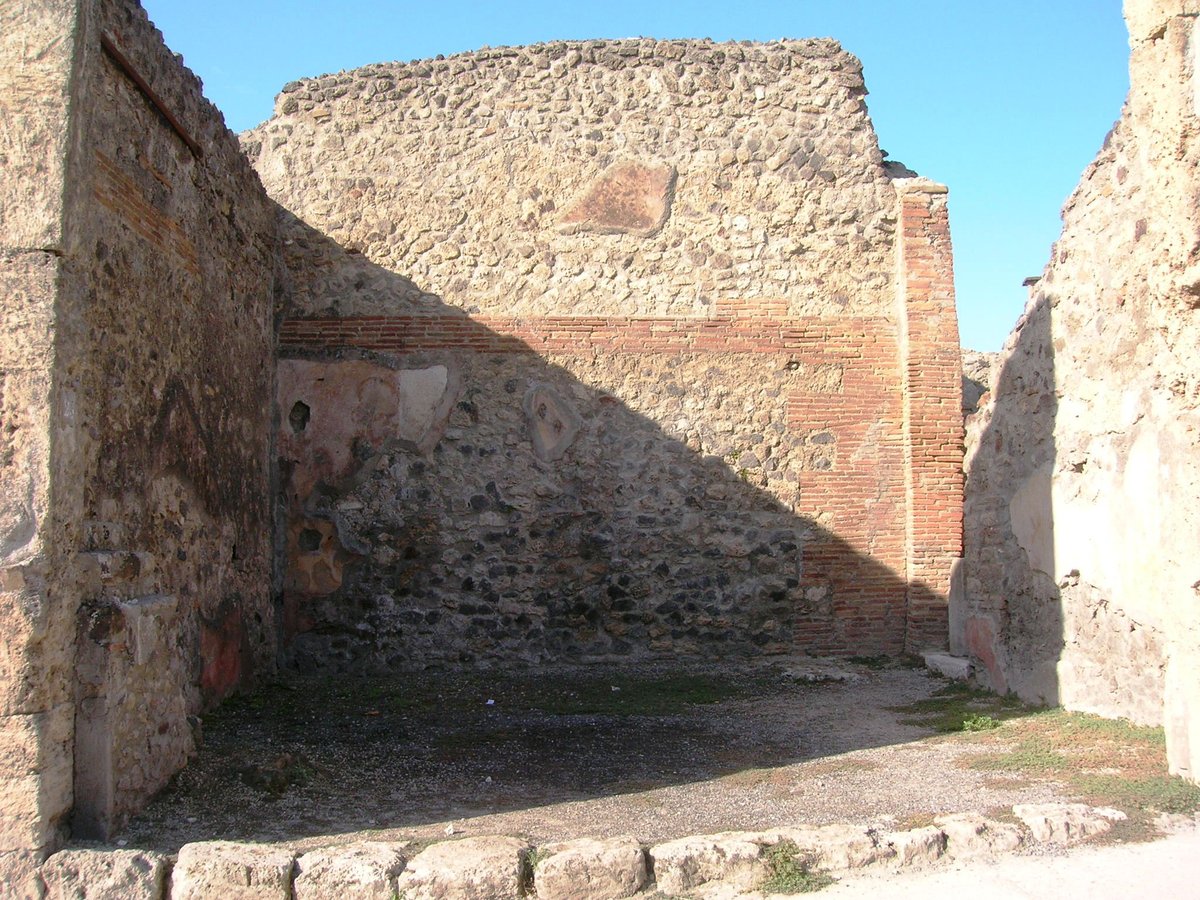
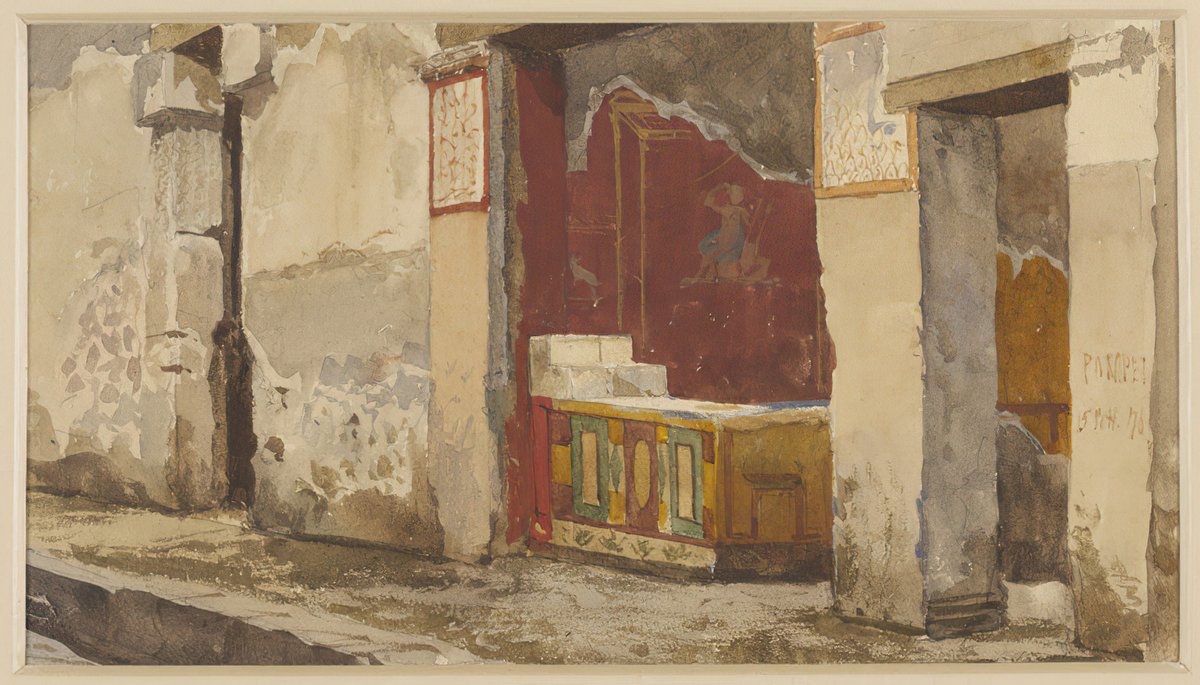
The house’s frescoes are exemplary of the Fourth Pompeian Style, characterized by architectural illusions, mythological scenes, and vivid color. Highlights include:
- Medallions with Floating Figures: Unfinished works in the oecus, showing underdrawing and painting techniques.
- Griffin Motifs: Symbolic decorations on upper walls in Rooms 12 and 13 (Pompeii in Pictures).
- Venus Pescatrice: A rare depiction of Venus as a fisherwoman in Room 12.
- Still-Life Panels: Detailed representations of food (fish, chicken, fruit), some exhibited in special shows like “L’altra Pompei, vite comuni all’ombra del Vesuvio.”
The unfinished frescoes, combined with tools found on site, offer unique insight into Roman artistic process (seepompeii.com).
Visitor Information
Hours and Tickets
- Opening Hours: Typically 9:00 AM to 7:00 PM (last entry one hour before closing). Hours vary seasonally; check the official website for updates.
- Ticketing: Included with Pompeii Archaeological Park entry. Tickets can be purchased online or at the entrance. Discounts apply for EU citizens aged 18–25; free entry for children under 18 and other eligible groups (Italy Heaven).
- Access: Casa Senza Nome is near Via dell’Abbondanza and is best reached from the Piazza Anfiteatro Gate.
Accessibility
- Pompeii’s ancient terrain is uneven; some main routes are wheelchair-accessible, but side streets (including Casa Senza Nome) pose challenges. Consult the accessibility map and contact staff for assistance.
Facilities
- Restrooms, water fountains, a café, and luggage storage are available at main entrances and key locations in the park.
- Only small bags are permitted inside; larger items can be stored at cloakrooms.
Guided Tours
- Licensed guides and audio guides can be arranged at entrances or online. These enhance your visit, providing expert context on the site’s significance.
Site Preservation and Conservation
Environmental and Structural Challenges
Casa Senza Nome’s ancient structures face threats from weather, moisture, salt crystallization, and seismic activity (The Travel). Ongoing excavations have exposed previously protected rooms, requiring increased conservation efforts.
Conservation Techniques
- Use of shelters, breathable covers, and stabilizing consolidants on frescoes and plasters.
- Adoption of 3D scanning and digital archiving for monitoring and research (Pompeii Archaeological Park).
- Some rooms remain unexcavated as a deliberate strategy for preservation (Along Dusty Roads).
Human Impact
Tourism is managed through designated paths, rotating open houses, and increased surveillance. Visitor compliance with preservation rules is essential to safeguard these irreplaceable resources.
Responsible Tourism and Practical Tips
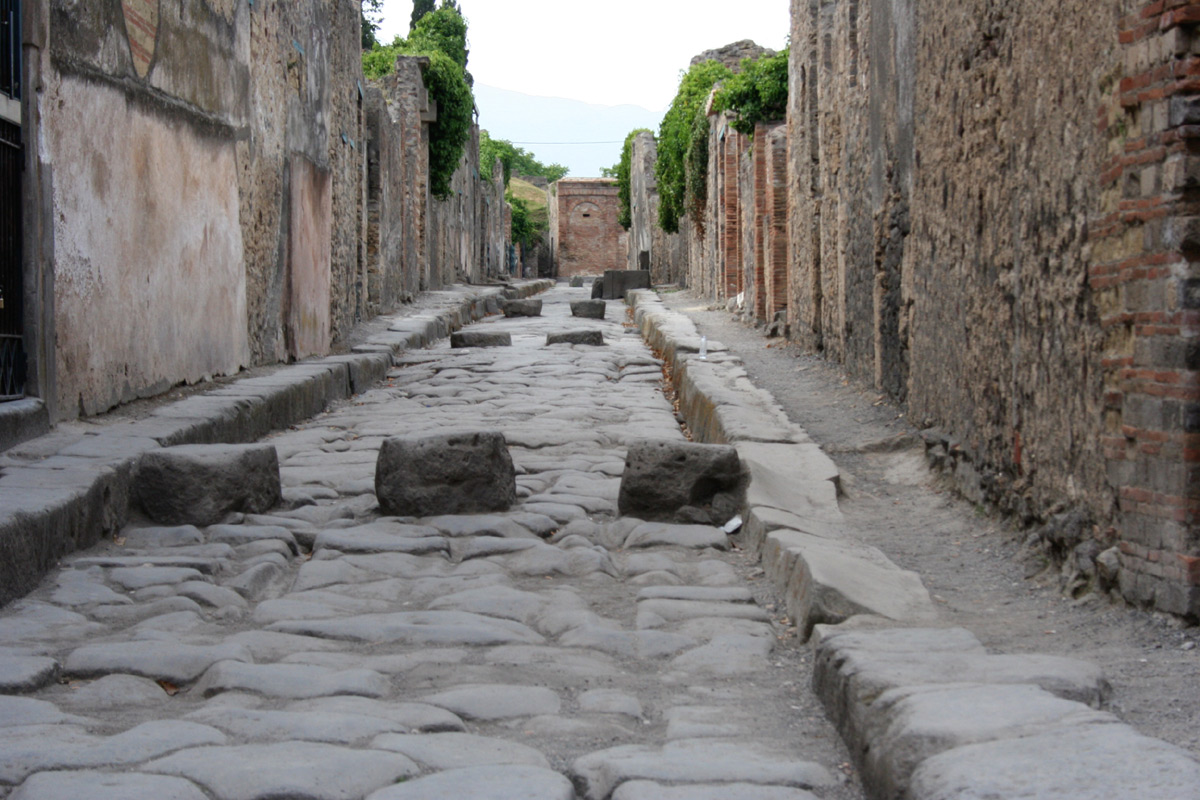
- Wear sturdy shoes—the site has uneven Roman paving stones.
- Bring sun protection—temperatures can be extreme in summer (Helen on Her Holidays).
- Stay hydrated—use on-site fountains for refills.
- Arrive early or off-season for a quieter, more comfortable visit (Krista the Explorer).
- Follow all signs and barriers; do not touch frescoes, mosaics, or walls.
- Photography is allowed without flash or tripods.
- Use official maps (Digital Maps of the Ancient World) and digital apps for navigation.
Frequently Asked Questions (FAQ)
Q: What are the opening hours of Casa Senza Nome?
A: Typically 9:00 AM to 7:00 PM, last entry one hour before closing. Check the official website for updates.
Q: How can I buy tickets?
A: Purchase online through the Pompeii Archaeological Park website or at park entrances.
Q: Is the site accessible for people with mobility impairments?
A: Some routes are accessible, but many areas are uneven. Check the accessibility map or contact park staff in advance.
Q: Are guided tours available?
A: Yes, through licensed guides or audio guides. Arrange at the entrance or online.
Q: Can I take photographs?
A: Yes, for personal use, without flash or tripods.
Listen to the full story in the app
Your Personal Curator, in Your Pocket.
Audio guides for 1,100+ cities across 96 countries. History, stories, and local insight — offline ready.
Audiala App
Available on iOS & Android
Join 50k+ Curators
Sources
- verified
- verified
- verified
- verified
- verified
- verified
- verified
- verified
Last reviewed: