Introduction
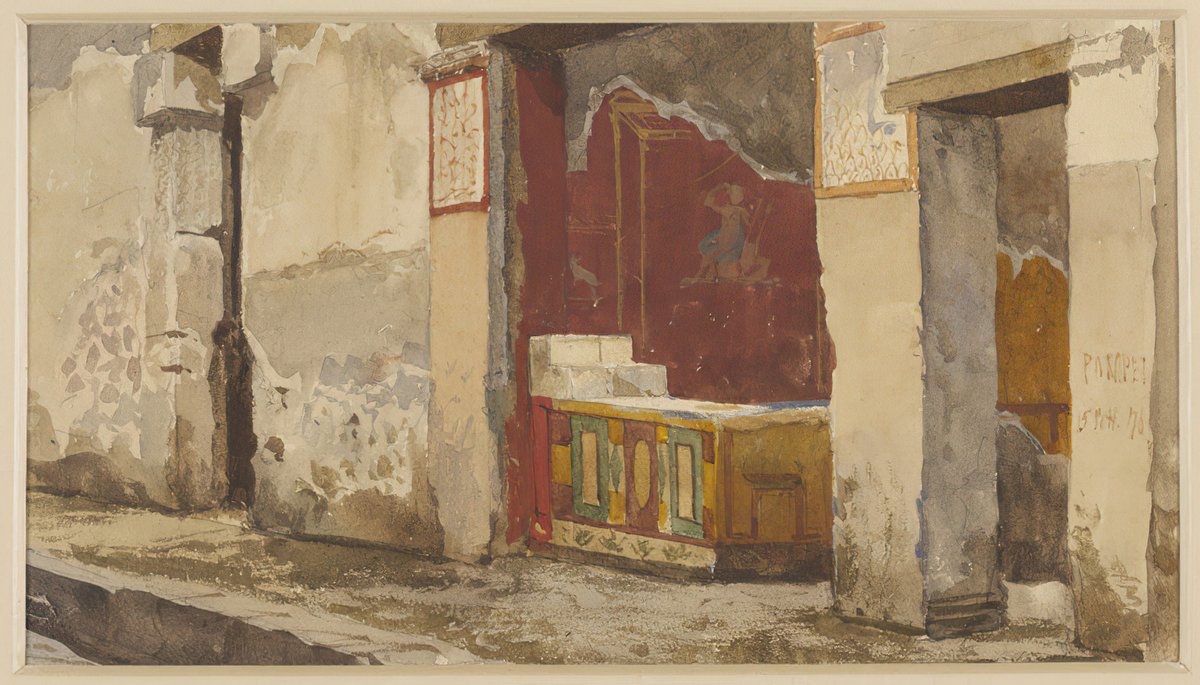
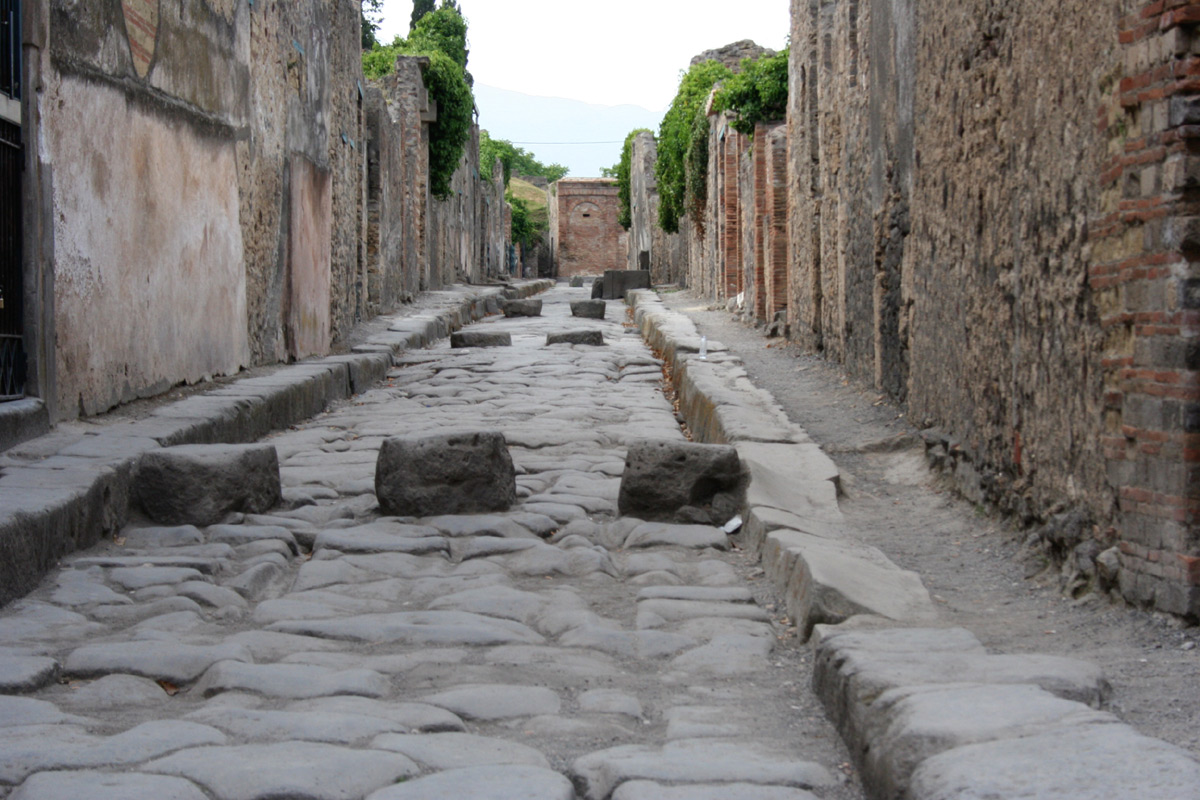
The Casa di Marco Lucrezio Frontone is one of Pompeii’s most remarkable and best-preserved Roman residences. Located in Regio V, Insula 4, entrance a (V.4.a), this domus offers visitors an immersive experience of elite Roman domestic life, artistic achievement, and architectural innovation. Owned by Marcus Lucretius Fronto—a prominent magistrate whose name survives in ancient graffiti and electoral inscriptions—the house is celebrated for its exquisite Third and Fourth Style frescoes, marble furnishings, and sophisticated garden hydraulics. This guide provides everything you need to plan your visit: historical context, artistic highlights, practical visiting information, travel tips, and recommendations for exploring nearby attractions.
For official updates and planning tools, consult the Pompeii Archaeological Park website and consider the Audiala app for guided tours.
Historical Background
Constructed in the 2nd century BCE during Pompeii’s expansion, the Casa di Marco Lucrezio Frontone was extensively renovated during the Augustan era (late 1st century BCE–early 1st century CE). The owner, Marcus Lucretius Fronto, was a high-ranking magistrate, as indicated by electoral inscriptions and graffiti found on the façade (Mediterraneo Antico). The house reflects both the social prestige of its owner and the evolving artistic tastes of Pompeian society, featuring frescoes in the elegant late Third Style and, following restoration after the 62 CE earthquake, in the increasingly elaborate Fourth Style.
Archaeological Discoveries and Modern Conservation
Early Bourbon excavations in the 18th and 19th centuries unearthed the house but caused significant damage. More systematic, stratigraphic excavations began in the late 19th and 20th centuries, revealing a wealth of artifacts—marble tables, bronze utensils, terracotta vases, a puteal, and vibrant frescoes. The “Grande Pompei” conservation project (2012–2014) stabilized the structure, conserved wall paintings, and improved visitor access.
Architectural Layout and Artistic Features
Atrium and Reception Spaces
Upon entering through the fauces (corridor), visitors arrive at the central atrium, notable for its marble-lined impluvium and geometric mosaic border (pompeiiinpictures.com). The surrounding cubicula (bedrooms), tablinum (main reception room), and service areas reflect the house’s function as both a residence and a space for public display and entertaining.
The tablinum is richly decorated with mythological frescoes, including the wedding of Mars and Venus, and opens directly to the peristyle garden, creating a visual axis through the home.
Peristyle Garden and Water Features
The peristyle garden is accessed from the tablinum and the triclinium (dining room), blending indoor and outdoor living. At its center stands a marble fountain with a statue of Silenus holding a wineskin, surrounded by statues of Dionysus, satyrs, and animals. The survival of original lead pipes and bronze taps demonstrates advanced Roman hydraulic engineering (museionline.info).
Decorative Schemes and Frescoes
The house’s frescoes are among Pompeii’s finest examples of the late Third and Fourth Styles:
- Tablinum: Features mythological scenes such as the marriage of Venus and Mars, Bacchic processions, and painted landscapes (pompeiiinpictures.com).
- Cubicula: Bedrooms display portrait medallions and emotionally resonant scenes like Pero suckling her father Micone.
- Other Rooms: Notable frescoes include Orestes killing Neoptolemus, the Toilet of Venus, and Theseus and Ariadne.
The floors throughout the domus showcase geometric mosaics and colored marbles, especially evident in the exedra. Garden statuary and frescoed hunting scenes reflect the owner’s taste for Hellenistic and Dionysian themes.
Visiting Information
Opening Hours
- The Casa di Marco Lucrezio Frontone is generally open daily from 9:00 AM to 7:00 PM (last entry one hour before closing). Hours may change seasonally or due to restoration; always check the official Pompeii website before visiting.
Tickets
- Admission to the house is included with the general Pompeii archaeological site ticket. As of July 2025, adult tickets cost approximately €18; reduced rates are available for EU citizens aged 18–25, and admission is free for children under 18 (official ticketing site).
- Advance online purchase is recommended to avoid queues.
Accessibility
- While the main entrance and atrium are accessible, uneven surfaces, steps, and the multi-level layout may present challenges, especially in the garden. The Pompeii for All initiative offers updated information on accessible routes.
Guided Tours and Events
- Guided tours, including specialized art and architecture walks, frequently feature the Casa di Marco Lucrezio Frontone. Audio guides and apps such as Audiala provide in-depth commentary.
- Special events and temporary exhibitions may occasionally highlight the domus; check the official schedule.
Photography Guidelines
- Non-flash photography is permitted for personal use. Tripods and flash may be restricted to protect the artworks. Always follow site regulations and avoid touching walls or mosaics.
Travel Tips and Nearby Attractions
- What to bring: Comfortable footwear, sun protection, water, and a site map or app.
- Facilities: Restrooms, water fountains, and shaded rest areas are located at main park entrances.
- Nearby Sites: Combine your visit with the House of the Vettii, House of the Faun, Villa of the Mysteries, the Forum, and the Amphitheater for a full Pompeii experience.
- Getting there: The site is accessible via train (Pompeii Scavi – Villa dei Misteri station) from Naples and Rome, with clear signage and site maps available.
Frequently Asked Questions (FAQ)
Q: What are the visiting hours for Casa di Marco Lucrezio Frontone?
A: Open daily from 9:00 AM to 7:00 PM; last entry at 6:00 PM. Confirm seasonal variations on the official website.
Q: How much are tickets and where can I buy them?
A: Admission is included in the general Pompeii ticket (~€18 for adults, with discounts and free entry for eligible groups). Purchase online or at the entrance.
Q: Is the house accessible for visitors with mobility challenges?
A: Some areas are accessible, but uneven flooring and stairs may pose difficulties. Refer to the Pompeii for All initiative for detailed info.
Q: Are guided tours available?
A: Yes, official tours and audio guides are available and recommended for an enhanced visit.
Q: Can I take photographs inside?
A: Yes, non-flash photography is permitted.
Listen to the full story in the app
Your Personal Curator, in Your Pocket.
Audio guides for 1,100+ cities across 96 countries. History, stories, and local insight — offline ready.
Audiala App
Available on iOS & Android
Join 50k+ Curators
Sources
- verified
- verified
- verified
- verified
- verified
Last reviewed: