Introduction
Nestled within the ancient ruins of Pompeii, the Casa di Ercole ed Auge (House of Hercules and Auge) offers a captivating window into Roman domestic life, artistic expression, and urban society before the catastrophic eruption of Mount Vesuvius in 79 CE. Renowned for its architectural features such as a central atrium, peristyle garden, and rooms adorned with mythological frescoes and mosaics, this mid-sized domus provides invaluable insights into the lifestyle and aspirations of Pompeii's elite.
Strategically located near Pompeii’s main arteries—including Via dell’Abbondanza and close to the city’s Forum—the Casa di Ercole ed Auge is intricately woven into the urban tapestry. Its excavation and ongoing preservation efforts have ensured that visitors today can experience its historical and cultural richness firsthand. This guide compiles all essential details for planning your visit, from opening hours and ticketing to accessibility, highlights, and practical visitor tips.
For further research and high-quality visuals, consult resources such as the Pompeii Archaeological Park website, Pompeii in Pictures, and scholarly analyses from JSTOR Daily and Archaeology Magazine.
Historical Context and Significance
Origins and Urban Development
Pompeii’s origins date back to at least the 10th century BCE. Influences from Greek and Etruscan settlers in the 8th–7th centuries BCE shaped the city’s urban framework and culture (Archaeology Magazine). The Casa di Ercole ed Auge was likely constructed during a period of prosperity, reflecting the prevailing tastes and wealth of its owners (Madain Project).
Architectural Features
This domus exemplifies the Roman house, with:
- Atrium: Reception hall with an impluvium (rainwater basin) and access to cubicula (bedrooms).
- Peristyle Garden: Colonnaded courtyard providing light and air, often adorned with statues and wall paintings.
- Triclinium: Formal dining area opening onto the garden.
- Decorative Schemes: Frescoes and mosaics, including mythological subjects, showcase both artistic trends and the homeowner’s cultural aspirations (JSTOR Daily).
The house’s name references a central fresco depicting Hercules and Auge, figures symbolizing protection and strength—a testament to the intertwining of art and Roman religious beliefs.
Excavation and Preservation
Systematic excavations began in the 19th century, with the Casa di Ercole ed Auge unearthed during these campaigns. Many of its original frescoes and artifacts are now preserved in the Naples Archaeological Museum (PompeiSites Guide). Ongoing restoration and digital documentation projects aim to stabilize and record the house’s features for future generations.
Location and Layout
Where to Find It
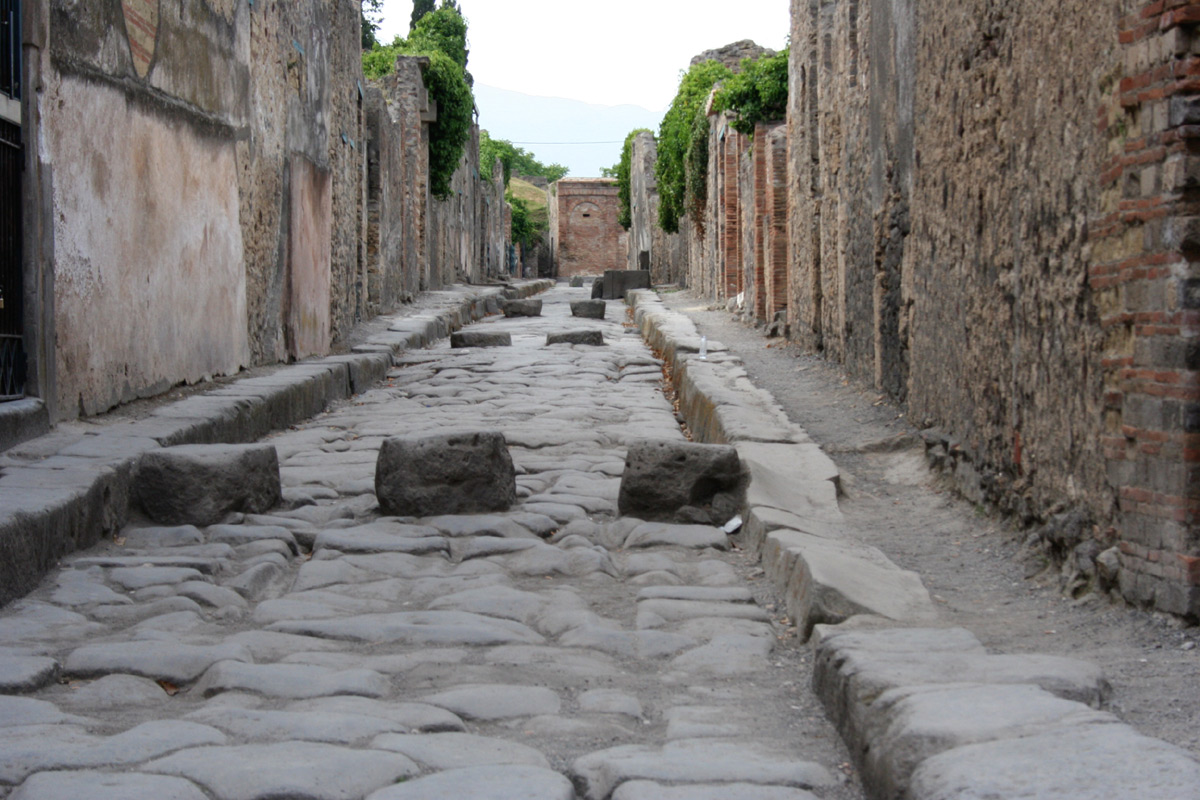
The Casa di Ercole ed Auge is situated at Regio II, Insula 8, Doorway 6 (II.8.6) along the east side of Via di Nocera, at the corner with Via della Palestra. This position provides easy access from major routes within the archaeological park (Pompei Sites).
House Layout
- Entrance Vestibule: Features a preserved door-stop and mosaic inscription “Cras credo” (“Tomorrow, I believe”), offering a distinctive greeting.
- Atrium: Central gathering space with original flooring and connections to various rooms.
- Peristyle Garden (Hortus): Rear courtyard, likely dedicated to Hercules, with decorative elements and potential shrine.
- Oecus and Cubicula: Formal salon and bedrooms positioned to maximize light and privacy.
- Service Areas: Remnants of a staircase suggest a second floor, while kitchens and storage rooms occupy the rear.
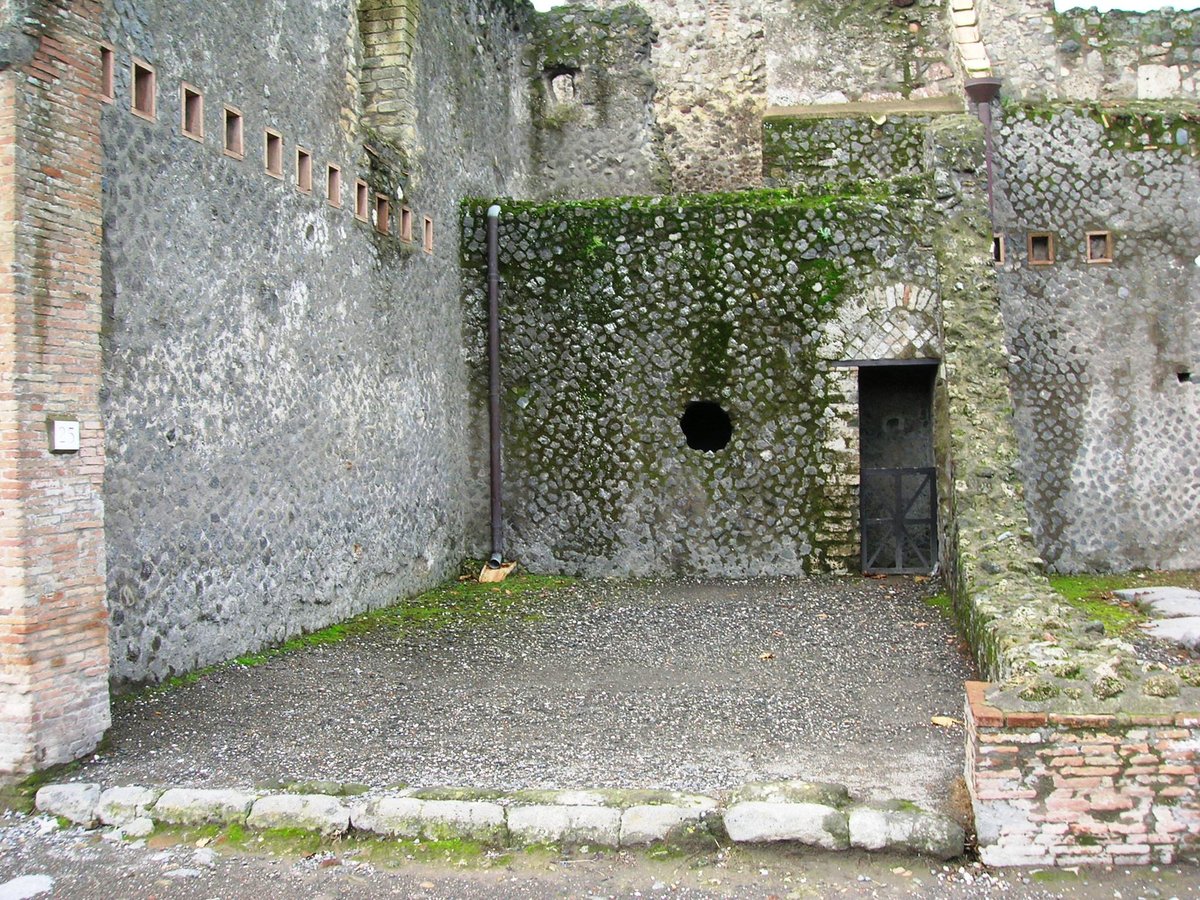
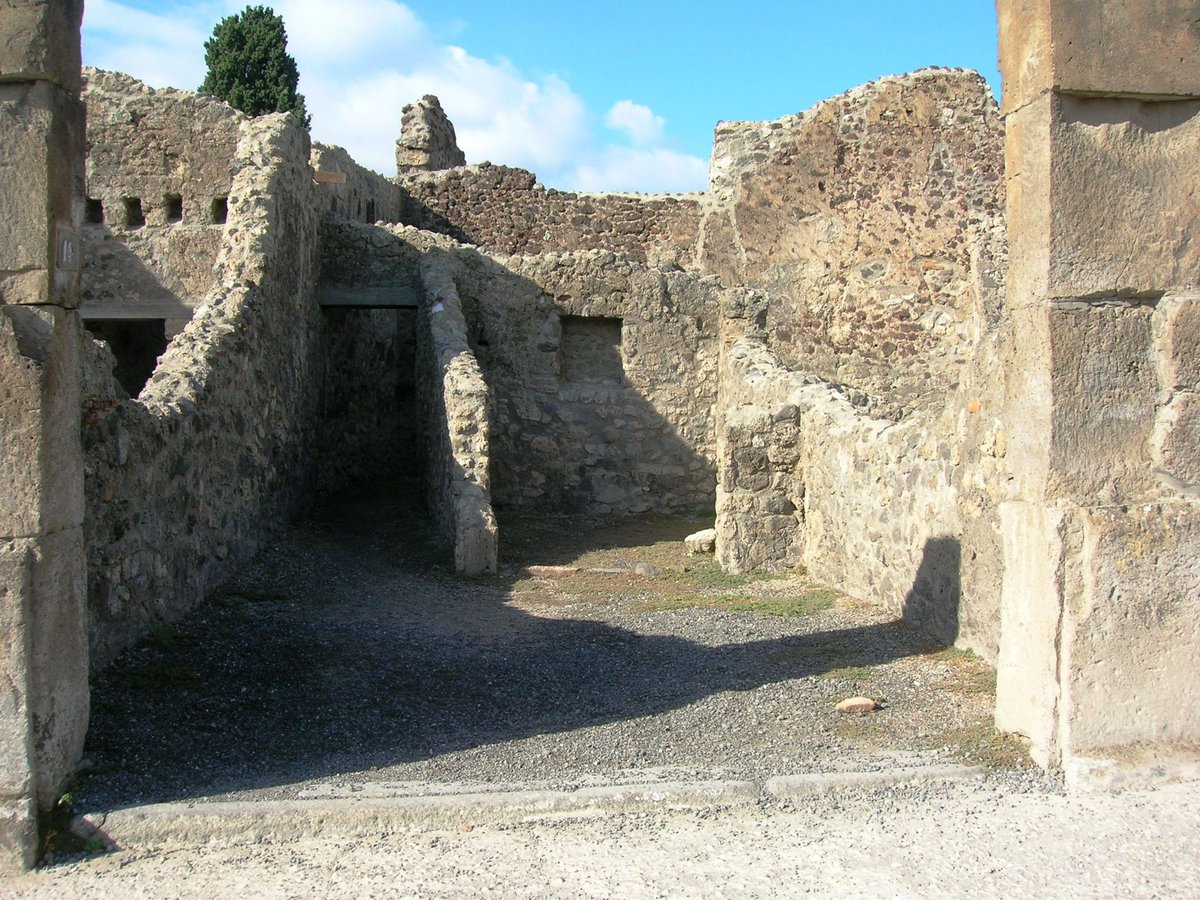
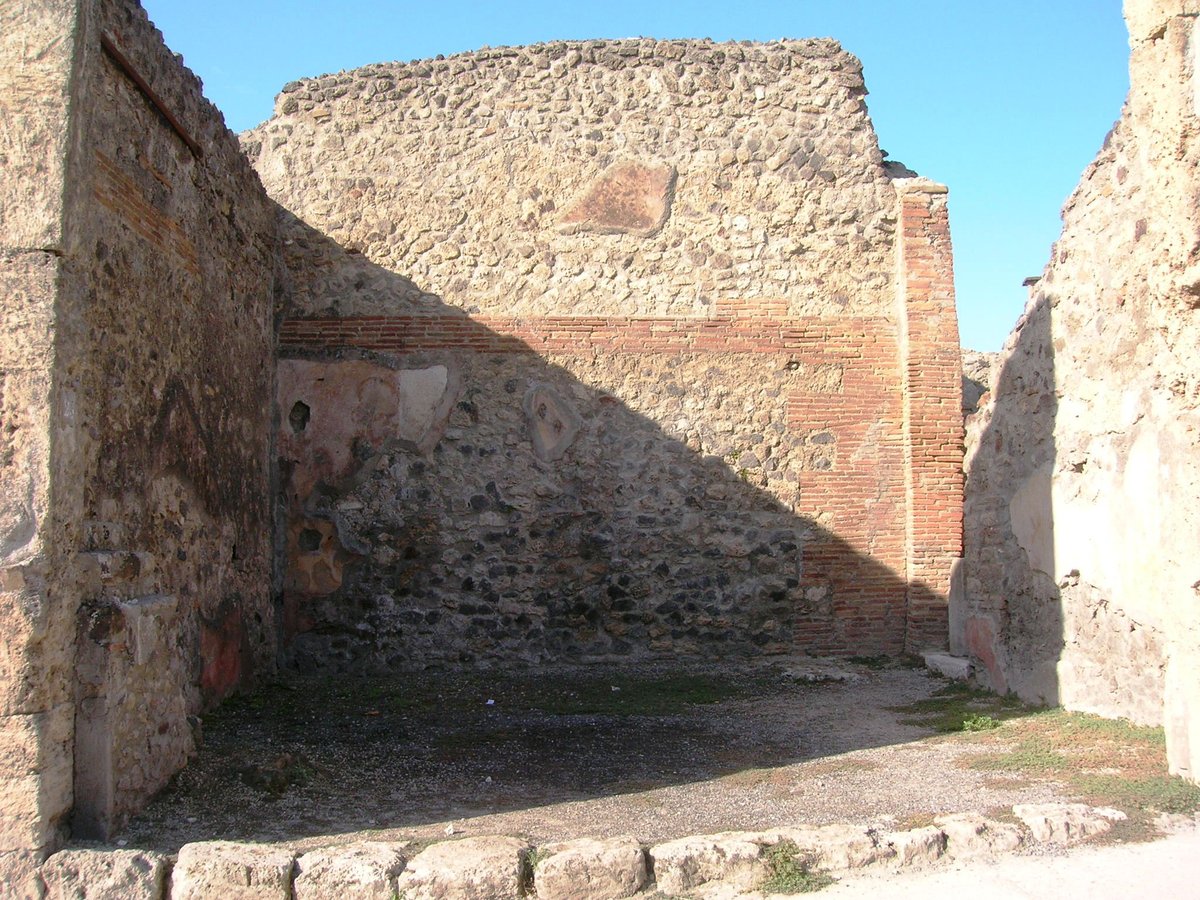
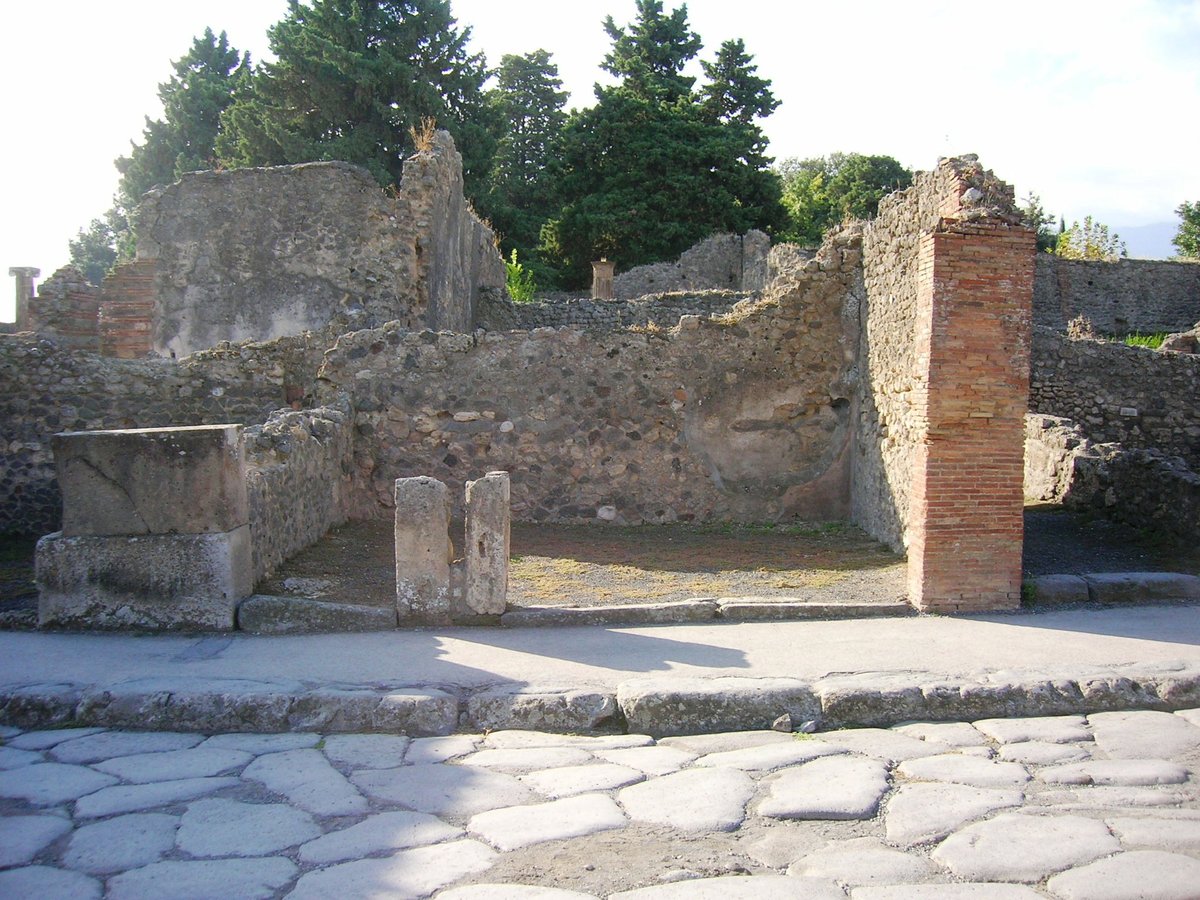
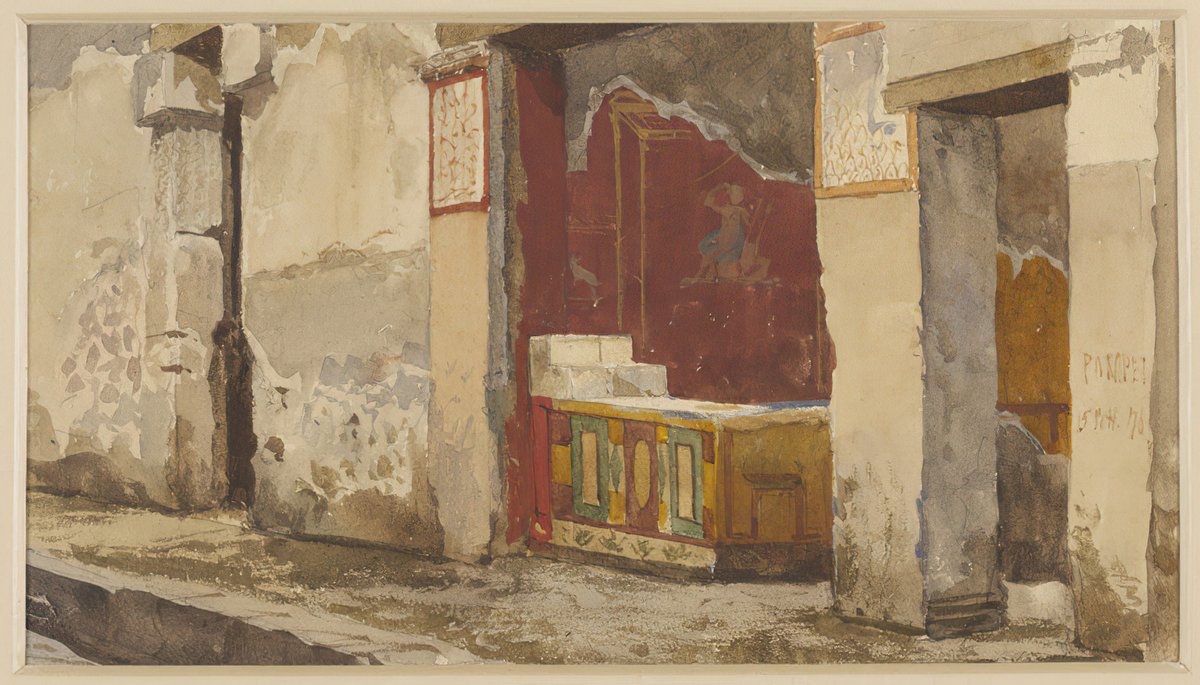
Casa di Ercole ed Auge Entrance
Artistic Highlights
Hercules and Auge Fresco
The house is named for its fresco depicting Hercules and Auge, originally located in the oecus. While the fresco’s condition deteriorated over time, early drawings and preservation at the Naples Archaeological Museum allow visitors to appreciate its iconography (catalogo.beniculturali.it).
Decorative Styles
Wall paintings reflect the Third and Fourth Pompeian Styles:
- Vivid Pigments: Rich reds and yellows, using mineral-based colors (walksofitaly.com).
- Mythological and Geometric Motifs: Scenes from mythology, floral designs, and intricate patterns.
- Architectural Illusions: Painted columns and trompe-l’œil effects to visually expand interior spaces.
Other noteworthy decorations include geometric mosaics, preserved flooring, and religious altars (lararia).
Visiting Information
Opening Hours
- Summer (April–October): 9:00 AM–7:00 PM (last entry at 5:30 PM)
- Winter (November–March): 9:00 AM–5:00 PM (last entry at 3:30 PM)
Note: Hours can change due to conservation work or special events. Always check the official Pompei Sites before your visit.
Tickets
- Adult Admission: €19
- Reduced Rates: Available for EU citizens 18–25
- Free: Children under 18; visitors with disabilities (+1 companion)
- Where to Buy: TicketOne platform or park ticket offices
- Visitor Cap: 20,000/day; advance booking recommended
- Free Entry: First Sunday of each month (expect crowds)
Accessibility
Pompeii’s “Pompeii for All” initiative has created a 3.5 km accessible route, including the Casa di Ercole ed Auge (seepompeii.com). Visitors with mobility challenges can utilize ramps, accessible toilets, and rental wheelchairs. Some areas, however, may remain difficult due to ancient surfaces.
- Entrances: Porta Marina and Piazza Anfiteatro are wheelchair accessible
- Facilities: Accessible toilets and cloakrooms available near main entrances
- Admission: Free for visitors with disabilities (with documentation)
Practical Visitor Tips
- Arrive Early or Late: To avoid crowds and heat, visit at opening or late afternoon
- Dress Appropriately: Wear sturdy shoes and sun protection
- Bring Water: Few refreshment points inside the park
- Photography: Permitted for personal use; commercial use requires authorization
- Combine Sites: Explore neighboring attractions like the Amphitheater, House of the Vettii, and Palaestra for a fuller Pompeii experience
Cultural Insights
Social and Religious Context
Casa di Ercole ed Auge reflects not just architectural trends, but also the social hierarchy and religious beliefs of Pompeii. Inscriptions and graffiti, such as the Oscan dedication to the Popidii family, reveal civic engagement, while religious altars and Hercules iconography highlight the interplay of public and private worship (pompeiiinpictures.com).
Urban Life
Located on Via dell’Abbondanza, the house was at the heart of city life, surrounded by shops and civic buildings. Its layout facilitated both private living and public entertaining—a hallmark of upper-class Roman society (thearchaeologist.org).
Facilities and Amenities
- Restrooms: Scattered throughout the park, not inside individual houses
- Food & Shops: Limited options; bring snacks and water
- Security: Staff and medical center on site
Frequently Asked Questions (FAQ)
Q: What are the visiting hours for Casa di Ercole ed Auge?
A: The house follows Pompeii Archaeological Park’s hours: 9:00 AM–7:00 PM (summer), 9:00 AM–5:00 PM (winter). Last entry is 90 minutes before closing.
Q: How do I buy tickets?
A: Purchase online via TicketOne or at the park’s ticket offices. Advance booking is strongly recommended.
Q: Is the house wheelchair accessible?
A: Yes, it is included on the accessible route, though some areas may require assistance due to ancient surfaces.
Q: Are guided tours available?
A: Yes, official guided and custom tours are available at the park.
Q: Can I take photographs?
A: Yes, for personal use. Commercial or academic photography requires prior approval.
Recommended Photographic Spots
- Mosaic Threshold: “Cras credo” inscription at entrance
- Peristyle Garden: Best captured in early morning or late afternoon light
- Wall Inscriptions: Political graffiti and Oscan dedications
Listen to the full story in the app
Your Personal Curator, in Your Pocket.
Audio guides for 1,100+ cities across 96 countries. History, stories, and local insight — offline ready.
Audiala App
Available on iOS & Android
Join 50k+ Curators
Sources
- verified
- verified
- verified
- verified
- verified
- verified
- verified
- verified
- verified
- verified
- verified
Last reviewed: