
The Origins and Strategic Role of the Quadrilatero
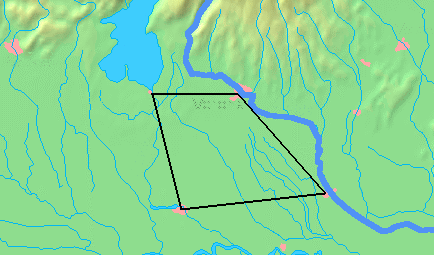
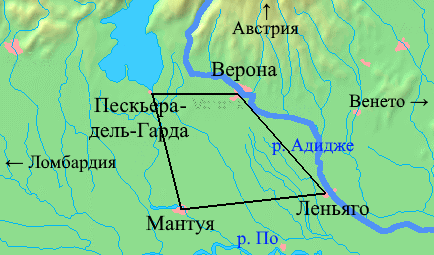
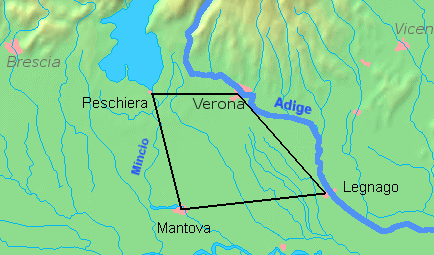
The Quadrilatero, meaning "Quadrilateral," refers to a defensive system with four main fortresses—Verona, Peschiera del Garda, Mantua, and Legnago—established by the Austrian Empire after the Napoleonic Wars. The fortresses, strategically placed between the Mincio, Po, and Adige rivers, formed a formidable barrier that shaped military and political dynamics during the turbulent decades leading to Italian unification (Wikipedia).
Verona’s strategic location as a crossroads between the Po Valley and Alpine passes, and the natural defense provided by the Adige River, made it central to the Quadrilatero’s effectiveness as both a military hub and a commercial center (Lions in the Piazza, it.wikipedia).
Evolution of Quadrilatero Architecture
Roman Foundations
Verona’s military importance began in Roman times. As a municipium from the 1st century BCE, its grid layout and defensive stone walls established the city as a stronghold. Notable Roman gates such as Porta Borsari and Porta Leoni remain, while the Arena and Arco dei Gavi showcase Verona’s enduring Roman legacy (Lions in the Piazza).
Medieval and Renaissance Fortifications
After Rome’s decline, the Scaligeri family (della Scala) fortified Verona further in the medieval period. Castelvecchio, built in the 14th century along the Adige, is a prime example—later adapted for Renaissance and Austrian military requirements (Lions in the Piazza).
Austrian Modernization
Following the Congress of Vienna in 1815, Austrians modernized Verona’s defenses, integrating bastions, ramparts, and barracks capable of withstanding contemporary artillery. The addition of the Venice-Milan railway further strengthened the city’s strategic role (Wikipedia, Verona Defensive System).
Visiting Information
Hours and Ticketing
- Castelvecchio Museum Tuesday–Sunday, 8:30 AM–7:30 PM; closed Mondays. Tickets: €10 (adults), €5 (EU citizens 18–25), free for children under 18. (italia.it)
- Arena di Verona Daily, 8:30 AM–7:00 PM (last admission 6:00 PM). Entry: €10; opera tickets vary by event. (Traveling Italian)
- Porta Borsari & Porta Leoni Open year-round, free access.
- Legnago Fortress (Fondazione Fioroni) Guided tours by appointment; tickets approx. €5. (Fondazione Fioroni)
- Verona Card €27 (24 hours), includes entry to major sites and unlimited city bus travel. (ItsJustBecks)
Accessibility and How to Get There
- Transport Verona Porta Nuova station is the main hub; sites within walking distance or accessible by local bus. Ample parking is available near the historic center.
- Accessibility Castelvecchio, Arena, and many museums are wheelchair-accessible; some historic ramparts have uneven terrain—check individual sites in advance (Full Suitcase).
Guided Tours and Photo Spots
- Guided Tours Specialized military history tours, art-focused walks, and audio guides are widely available—book online or at tourist offices.
- Photo Spots Castelvecchio Bridge, Porta Borsari at sunset, panoramic city views from the Torre dei Lamberti or bastions.
Cultural and Historical Significance
The Quadrilatero not only symbolizes Austrian imperial power and local resistance during the Risorgimento but also deeply influenced Verona’s urban development. Many fortifications have been repurposed—Castelvecchio now houses a major art museum; city gates serve as community anchors (Italy Chronicles, Lions in the Piazza). Piazza Bra, adjacent to the Arena, is a center for cultural life, hosting the world-famous summer opera festival (Lovely Italia).
Nearby Attractions and Travel Tips
- Historic Center Explore UNESCO-listed sites such as Piazza delle Erbe, Juliet’s House, and the Roman Theatre.
- Dining Try risotto all’Amarone and local wines at trattorias near the Quadrilatero (ItsJustBecks).
- Day Trips Mantua, Peschiera del Garda, and Legnago are accessible by train and offer additional fortification sites (The Travel Folk).
- Best Time to Visit Late spring/early autumn for pleasant weather and smaller crowds; book ahead for summer events.
Events and Local Experiences
- Opera Festival The Arena’s summer opera season is a highlight—book tickets well in advance (Traveling Italian).
- Historical Reenactments Experience living history during local festivals and guided tours in period costume (Visit Verona).
Practical Tips for Visitors
- Getting Around Walking is best in the Quadrilatero; city buses and bike rentals are useful for outlying sites.
- Dress Code Modest attire is required in churches; comfortable shoes are recommended for cobblestones (Lonely Planet).
- Safety The area is safe, but be mindful of pickpockets during peak times (Italy Heaven).
- Accessibility Some streets and sites have cobblestones or steps—contact attractions for details.
- Sustainability Use refillable water bottles; support local businesses; respect noise and waste guidelines.
Frequently Asked Questions (FAQs)
Q: What are the main opening hours for Quadrilatero sites?
A: Most sites are open 8:30/9:00 AM–7:00/7:30 PM; last entry 30–60 minutes before closing.
Q: Where do I buy tickets?
A: Online, at site entrances, or with the Verona Card at participating locations.
Q: Is the Verona Card worth it?
A: Yes, if visiting multiple sites and using public transport within 24–48 hours.
Q: Are guided tours available?
A: Yes, including military history walks, art tours, and audio guides.
Q: Is the Quadrilatero accessible for wheelchairs?
A: Major sites offer wheelchair access; check ahead for specific attractions.
