Plan and listen to Teatro Regio with Audiala.
Audio guide in your pocket, itinerary in your browser. Built for the way you actually visit.
Introduction
Teatro Regio di Parma stands as one of Italy’s most cherished opera houses—a symbol of neoclassical splendor and a pillar of Parma’s cultural identity. Commissioned in the early 19th century by Duchess Maria Luigia of Habsburg-Lorraine, the theater has continually elevated the city’s artistic reputation, hosting legendary performances and serving as a living testament to the enduring allure of Italian opera. This comprehensive guide explores Teatro Regio’s rich history, visiting hours, ticket information, accessibility, nearby attractions, and travel tips to help you make the most of your visit to this iconic venue (Teatro Regio Official, Italia.it).

Origins and Foundation
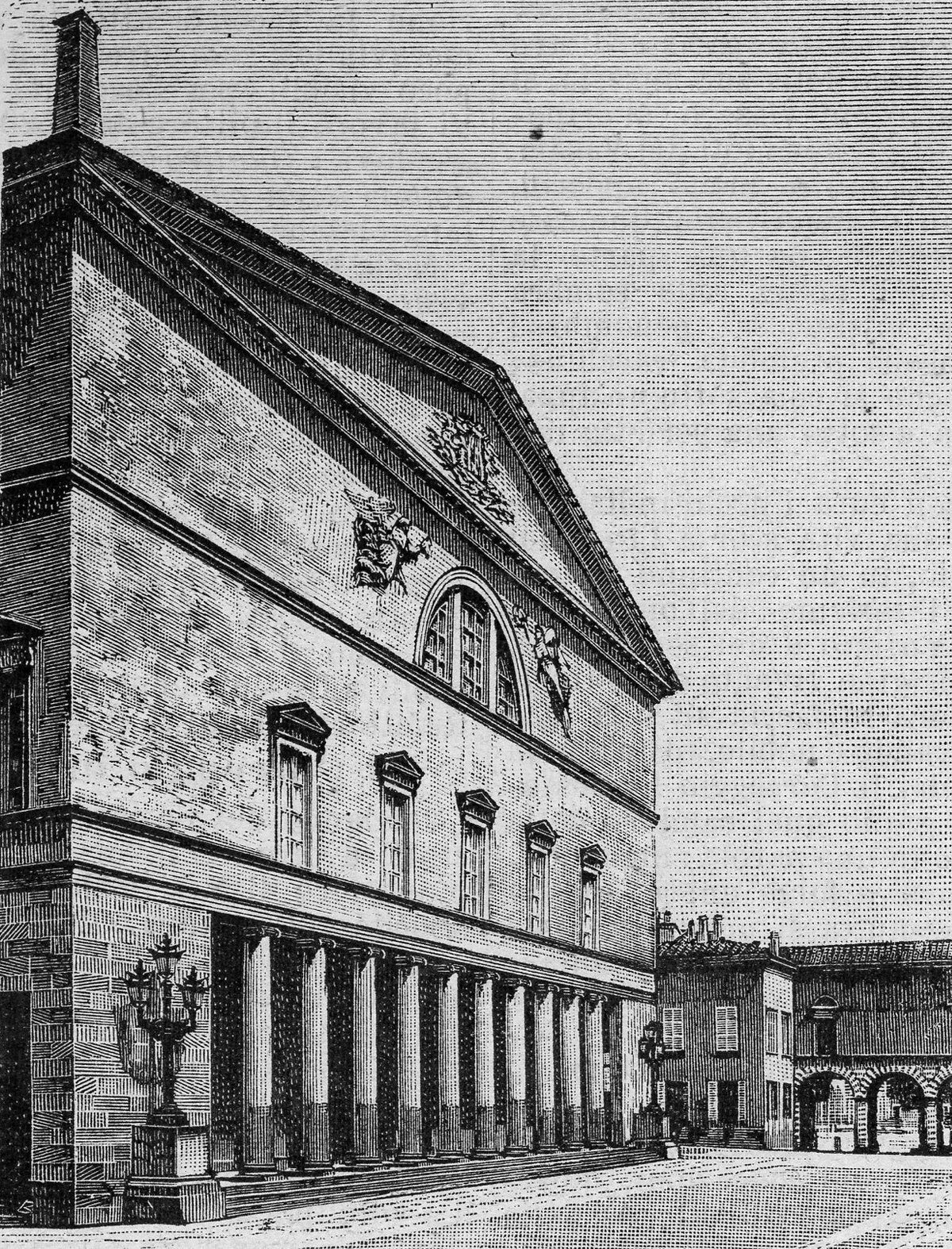
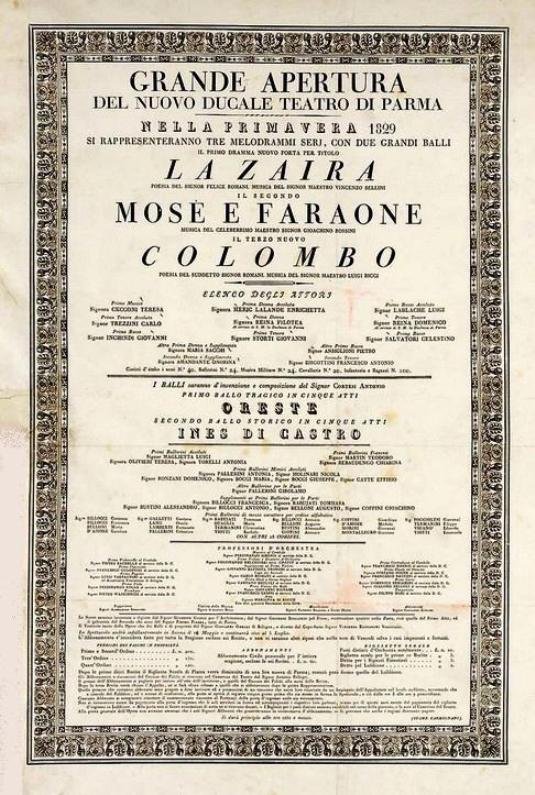
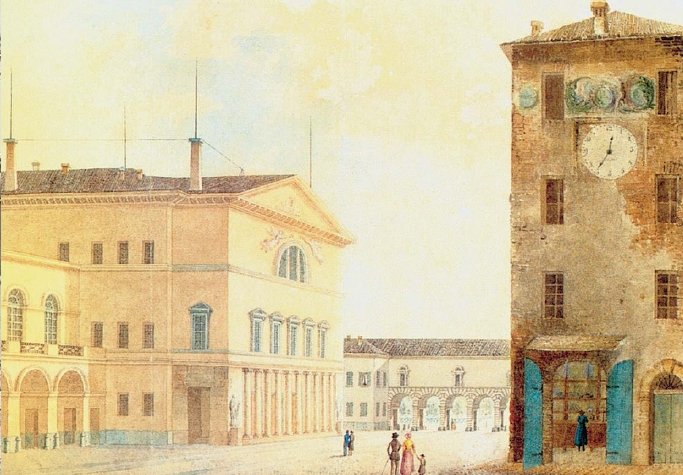
Commissioned by Duchess Maria Luigia of Habsburg-Lorraine, Teatro Regio di Parma was inaugurated on May 16, 1829, with Vincenzo Bellini’s opera Zaira. The theater was designed to replace the aging Teatro Ducale and reaffirm Parma’s cultural prominence. Architect Nicolò Bettoli was tasked with creating a neoclassical masterpiece, and his vision was realized through a harmonious façade, Ionic granite columns, and a grand semicircular window adorned with allegorical figures. The interior featured gilded stucco, a splendid ceiling painted by Giovan Battista Borghesi, and a rare 19th-century stage curtain depicting Maria Luigia as Minerva, symbolizing wisdom and artistic patronage (Italia.it, Italy Magazine).
Architectural Evolution
Neoclassical Foundations
Bettoli’s design established the Regio as a model of neoclassical theater architecture, with a spacious auditorium, ornate boxes, and a proscenium arch. The original curtain by Borghesi became a symbol of Parma’s enlightenment ideals (Teatro Regio Official).
19th-Century Transformations
In 1853, under Charles III of Bourbon, Girolamo Magnani led a significant renovation, introducing Neo-Renaissance elements, lavish gilded stuccoes, and the installation of the iconic Astrolampo chandelier. Modern gas lighting and a discreetly backlit clock signaled the theater’s embrace of technological innovation (Google Arts & Culture).
Preservation and Modernization
Teatro Regio has undergone extensive restoration and modernization, especially following World War II. Efforts have focused on preserving historical integrity while upgrading technical facilities and accessibility for all visitors, including barrier-free entry, reserved seating, and assistive listening devices (Teatro Regio PDF).
Cultural Significance
Operatic and Artistic Legacy
From its inception, the Regio has been a hub for Italian opera, ballet, and concerts. Its exceptional acoustics and intimate 1,400-seat auditorium have attracted world-renowned artists and conductors. The theater holds a special connection to Giuseppe Verdi, whose works are central to its identity. The annual Festival Verdi, launched in 2001, transforms Parma into an international destination for opera lovers, presenting classic and contemporary interpretations of Verdi’s masterpieces (Factsgem, Italia.it).
The Regio’s programming extends beyond opera to include contemporary works, ballet, and educational initiatives like RegioYoung, introducing new generations to the performing arts (Visitemilia.com).
Social and Civic Impact
The Regio has long served as a gathering place for Parma’s citizens, fostering a sense of community, education, and civic pride. Its audience is famously discerning and vocal, upholding a tradition of critical engagement that keeps artistic standards high (Wikipedia).
The theater’s outreach includes collaborations with the Conservatorio Arrigo Boito, interactive workshops, backstage tours, and performances for hospital patients and incarcerated individuals, emphasizing its commitment to inclusive culture (Visitemilia.com).
Notable Events and Milestones
- Inaugural Performance: Bellini’s Zaira (1829)
- Verdi Premieres: The Regio has hosted multiple Verdi opera premieres, including Luisa Miller and Stiffelio.
- Festival Verdi: The only festival dedicated entirely to Verdi’s oeuvre, drawing global attention, and awarded “Best Festival” at the International Opera Awards in 2017 (Google Arts & Culture).
- International Prestige: Hosted luminaries such as Maria Callas and Plácido Domingo; featured in films by Bertolucci and Argento (Factsgem, Wikipedia).
Visitor Information
Visiting Hours and Operation
- Guided Tours: Usually available Tuesday to Sunday, 10:00 AM–6:00 PM (check for seasonal variations and closures). Guided tours must be booked in advance and are offered in Italian and English (Teatro Regio Parma).
- Box Office:
- Tuesday, Thursday, Saturday: 10:00 AM–1:00 PM
- Wednesday, Friday: 10:00 AM–1:00 PM and 4:00 PM–6:00 PM
- Closed Sunday and Monday unless a performance is scheduled (Teatro Regio Parma Tickets).
- The box office opens 90 minutes before scheduled performances.
Ticketing and Policies
- Purchase: Tickets may be bought online, in person, by phone (+39 0521 203999), or email ([email protected]).
- Collection: Present your purchase receipt at the box office or event location.
- Refunds/Exchanges: Tickets are non-refundable except in case of event cancellation or postponement.
- Pricing: Opera tickets range from €20 (gallery) to over €100 (premium stalls/boxes); discounts for students, seniors, and groups may be available (TripHobo).
- Late Arrival: Admittance is only during intermissions if the performance has started.
Accessibility
- Barrier-free entrance and level routes to the main floor.
- Reserved wheelchair seating and assistance available upon advance notice (Teatro Regio Parma Tickets).
- Assistive listening devices and accessible restrooms.
Visitor Etiquette
- Photography and recording are prohibited during performances.
- Smart attire is encouraged, especially for evening events.
- Arrive at least 30 minutes early for ticket collection and seating.
- Mobile devices must be silenced.
Getting There and Nearby Attractions
- Address: Via Garibaldi, 16/A, 43121 Parma, Italy
- Transport: 15-minute walk from Parma railway station; central location makes it easy to combine with city sightseeing.
- Nearby Sites: Parma Cathedral, Baptistery, Palazzo della Pilotta, Parco Ducale, Piazza Garibaldi, and renowned trattorias for Parmigiano Reggiano and Prosciutto di Parma (The Crazy Tourist, Italia.it).
- Dining and Accommodation: Numerous options in the vicinity, from cafes to luxury hotels (Catis Out of the Office).
Unique Experiences and Visual Highlights
- Guided Tours: Explore the Foyer, stalls, Ridotto room, royal box, orchestra pit, and backstage areas.
- Photogenic Spots: Opulent auditorium, gilded ceilings, Astrolampo chandelier, and Verdi bust in the foyer.
- Educational Programs: RegioYoung performances and workshops for families; Academy of Teatro Regio professional training (Visitemilia.com).
Visual suggestions:
- Exterior photo of Teatro Regio di Parma with Ionic colonnade (alt: "Teatro Regio neoclassical facade")
- Interior view of auditorium with red velvet seats and gold trimmings (alt: "Opulent auditorium of Teatro Regio Parma")
- Bust of Giuseppe Verdi in the foyer (alt: "Bust of Giuseppe Verdi at Teatro Regio di Parma")
- Interactive map showing Teatro Regio’s position within Parma and nearby attractions
Frequently Asked Questions (FAQ)
Q: What are the visiting hours for Teatro Regio Parma?
A: Guided tours typically run from 10:00 AM–6:00 PM, Tuesday to Sunday. The box office is open select mornings and afternoons; always check the official website before visiting.
Q: How can I buy tickets?
A: Purchase online, at the box office, by phone, or email. Early booking is recommended, especially for Festival Verdi.
Q: Is the theater accessible?
A: Yes, with barrier-free entry, wheelchair seating, and assistive devices. Notify the box office in advance for special accommodations.
Q: Are guided tours available?
A: Yes, in multiple languages, with advance booking encouraged.
Q: What are the top nearby attractions?
A: Must-see sites include the Parma Cathedral, Baptistery, Palazzo della Pilotta, Parco Ducale, and local dining establishments.
Listen to the full story in the app
The whole Teatro Regio,
told well.
Listen to sourced travel stories with local history and practical context — ready offline.
Verified, and shown.
Researched and written by the Audiala editorial team from historical records, architectural archives, and local expertise.
Built from cited sources · see the method · How we make our guides →