Plan and listen to Quattro Canti with Audiala.
Audio guide in your pocket, itinerary in your browser. Built for the way you actually visit.
Introduction
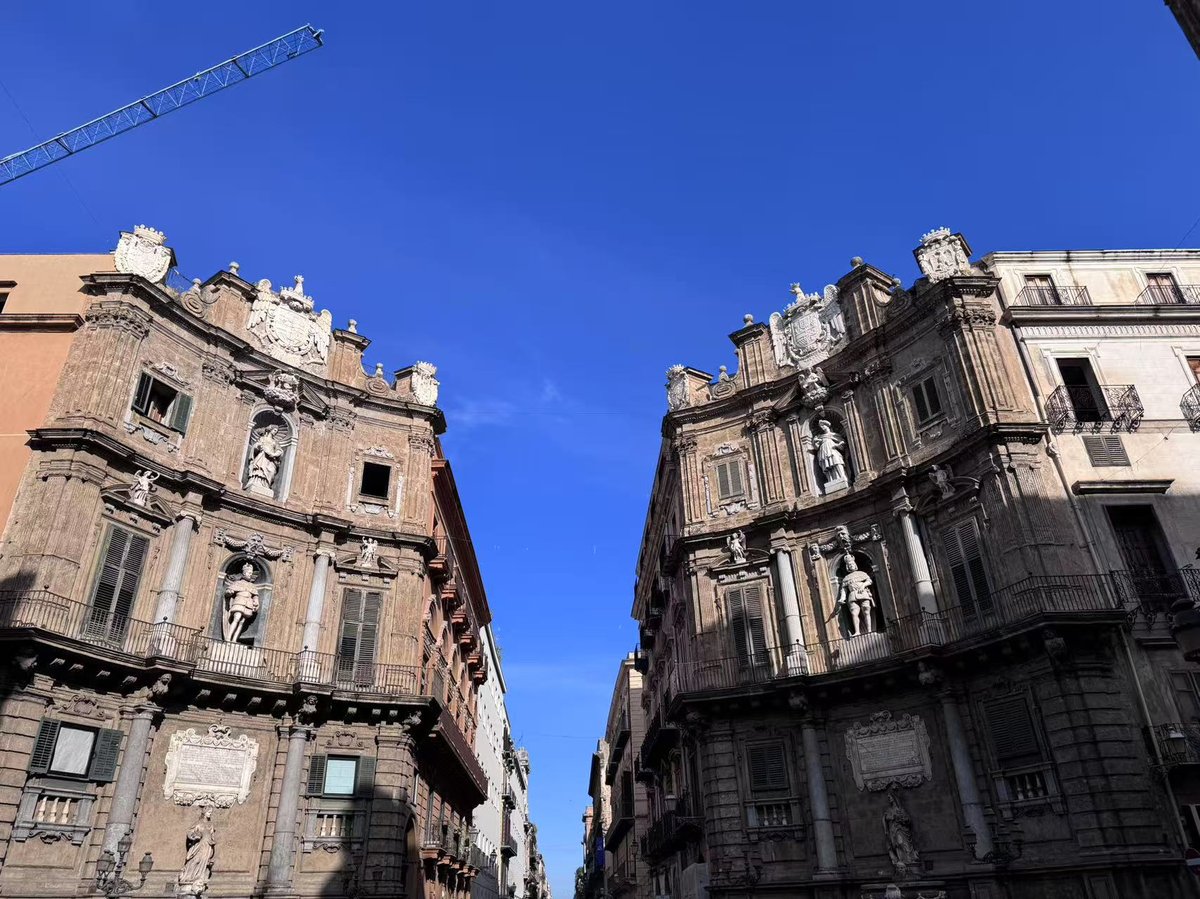
Welcome to Quattro Canti, also known as Piazza Vigliena, an iconic Baroque landmark located at the heart of Palermo, Italy. This monumental square, celebrated for its intricate architecture and historical significance, stands at the intersection of Via Maqueda and Corso Vittorio Emanuele. Constructed between 1608 and 1620 under the direction of the Florentine architect Giulio Lasso, Quattro Canti has become a symbol of Palermo's rich cultural and historical tapestry (Italy Guides). The square's unique design, featuring concave façades adorned with statues and fountains, represents a harmonious blend of artistic, political, and religious elements from the Baroque era (Visit Palermo). This guide aims to provide a comprehensive overview of Quattro Canti, covering its historical background, architectural significance, and practical visitor information, ensuring you make the most of your visit to this extraordinary site.

Historical Background of Quattro Canti, Palermo, Italy
Origins and Construction
Quattro Canti, also known as Piazza Vigliena, is a quintessential example of Baroque urban planning and architecture in Palermo, Italy. The construction of Quattro Canti began in 1608 and was completed in 1620 under the direction of the Florentine architect Giulio Lasso. The project was commissioned by the Spanish Viceroy of Sicily, the Duke of Maqueda, to create a grand intersection that would serve as a focal point for the city’s expanding urban landscape (Italy Guides).
Architectural Design
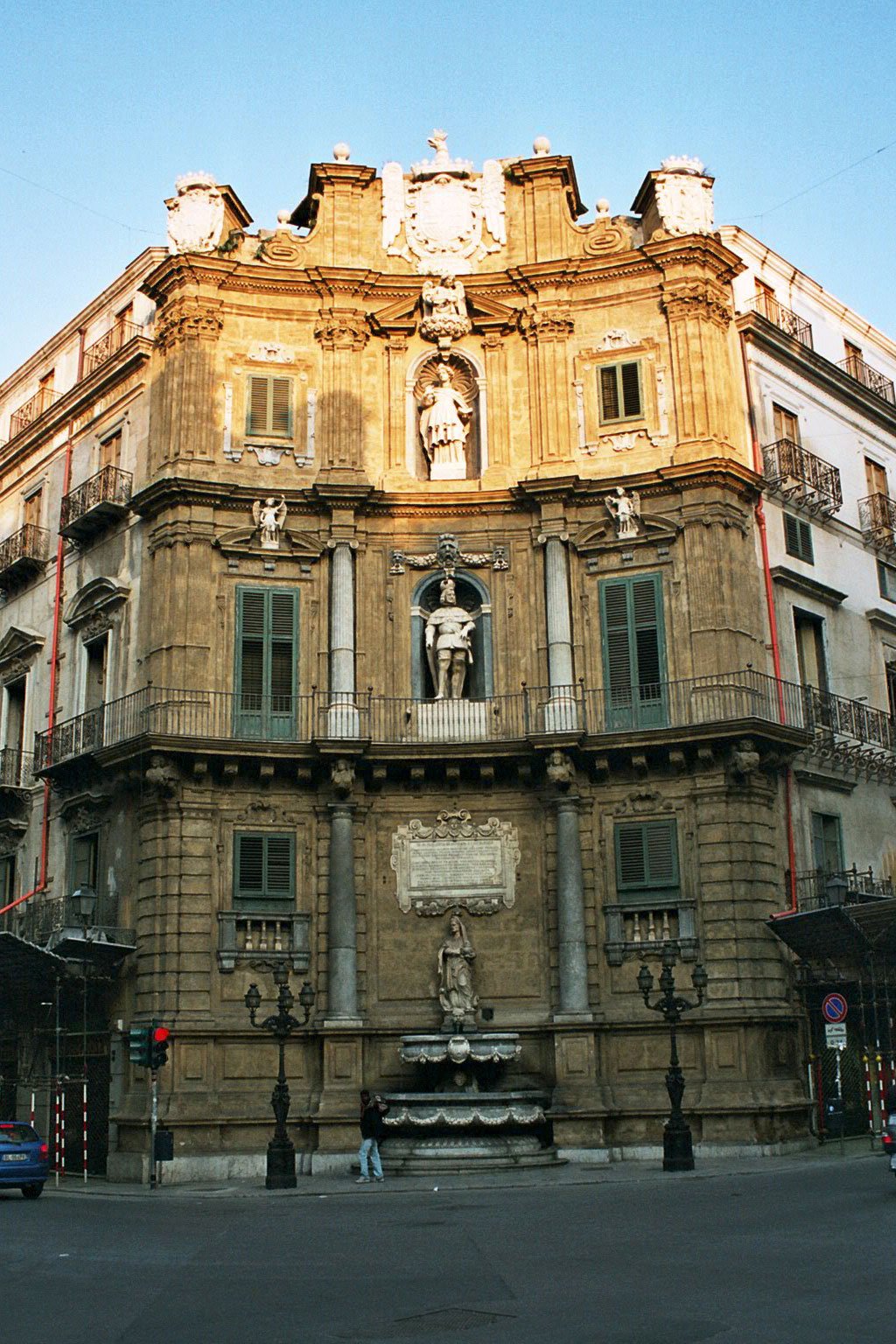
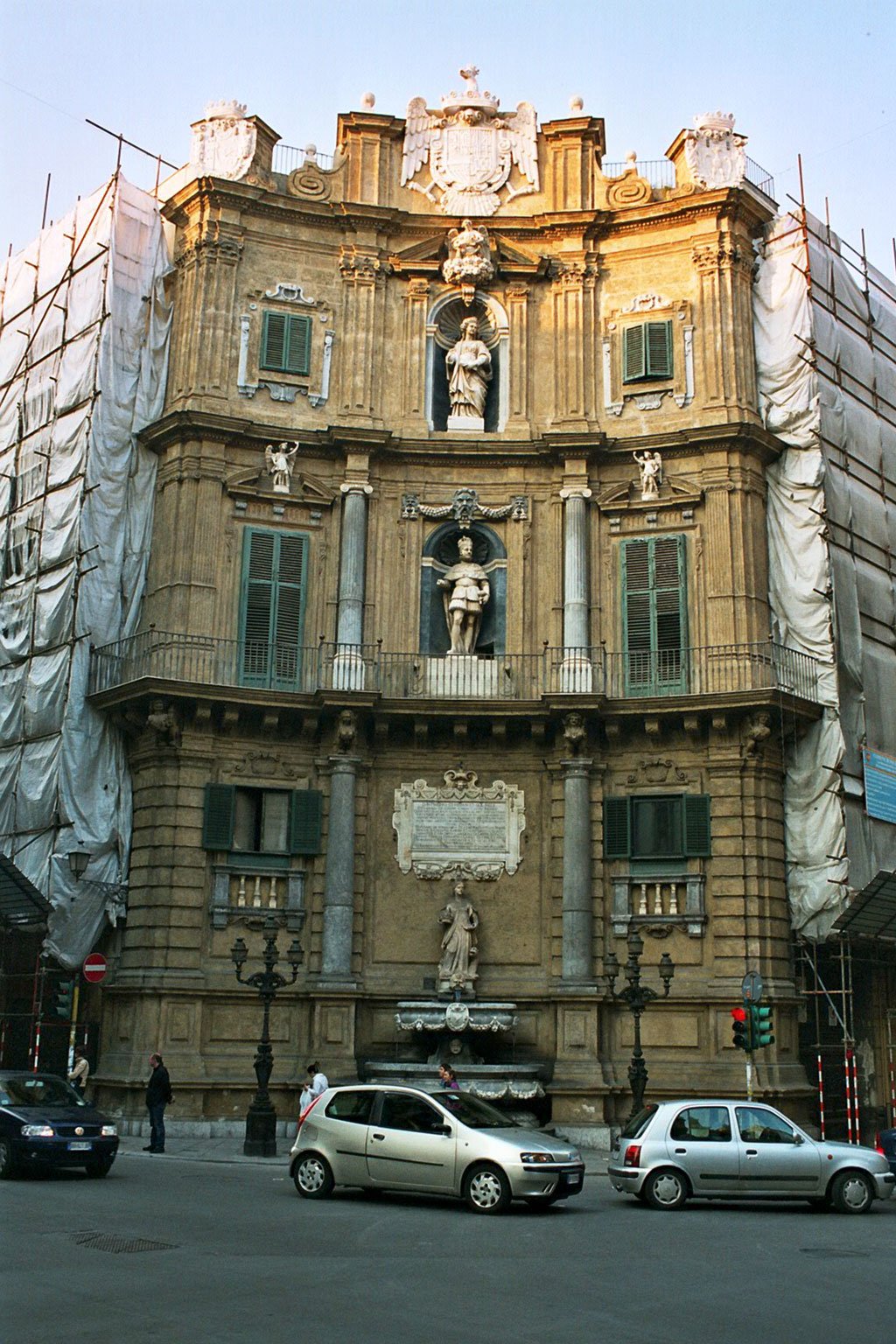
The design of Quattro Canti is a perfect octagon formed by the intersection of two of Palermo’s main streets - Via Maqueda and Corso Vittorio Emanuele. Each of the four corners of the intersection features a concave Baroque façade, creating a visually harmonious and symmetrical space. These façades are adorned with statues and fountains, each representing different aspects of Palermo’s history and culture. The lower tier of each corner features a fountain symbolizing one of the four seasons, while the middle tier showcases statues of Spanish kings, and the upper tier is dedicated to the four patron saints of Palermo - Saint Christina, Saint Ninfa, Saint Olivia, and Saint Agatha (Visit Palermo).
Symbolism and Cultural Significance
Quattro Canti is not just an architectural marvel but also a symbol of the political and religious power dynamics of its time. The inclusion of Spanish kings in the middle tier of the façades reflects the Spanish influence over Sicily during the 17th century. The patron saints on the upper tier signify the deep-rooted Catholic faith of the city’s inhabitants. The fountains representing the four seasons symbolize the passage of time and the cyclical nature of life, adding a philosophical dimension to the intersection’s design (Sicily.co.uk).
Historical Events and Transformations
Over the centuries, Quattro Canti has witnessed numerous historical events and transformations. During the 19th century, the area around Quattro Canti became a hub for political and social activities, especially during the Italian unification movement. The intersection has also been a focal point for various public celebrations, protests, and religious processions, making it a living testament to Palermo’s dynamic history (Palermo Viva).
Preservation and Restoration
Given its historical and architectural significance, Quattro Canti has been the subject of various preservation and restoration efforts. In the late 20th century, extensive restoration work was carried out to preserve the intricate Baroque details of the façades and statues. These efforts have ensured that Quattro Canti remains a well-preserved example of Baroque urban planning, attracting tourists and scholars alike (Italian Ways).
Influence on Urban Development
Quattro Canti has had a lasting influence on the urban development of Palermo. The intersection serves as a central point from which the city’s main streets radiate, effectively organizing the urban layout. This design has influenced subsequent urban planning projects in Palermo and other cities, making Quattro Canti a model of effective and aesthetically pleasing urban design (Lonely Planet).
Modern-Day Relevance
Today, Quattro Canti continues to be a vibrant part of Palermo’s urban fabric. It is a popular meeting point for locals and tourists, offering a glimpse into the city’s rich history and cultural heritage. The intersection is also a starting point for many guided tours, making it an essential stop for anyone looking to explore Palermo’s historical and architectural treasures (PlanetWare).
Visitor Information
Visiting Hours
Quattro Canti is an open public space and can be visited at any time of day. However, for the best experience, it's recommended to visit during daylight hours when the architectural details are most visible.
Tickets
There is no entrance fee to visit Quattro Canti as it is an open public space. However, guided tours that include Quattro Canti may have associated costs. It is advisable to check with local tour operators for pricing and availability.
Travel Tips
- Best Time to Visit: Early morning or late afternoon for the best lighting for photographs.
- Nearby Attractions: Palermo Cathedral, Teatro Massimo, and the Pretoria Fountain.
- Accessibility: The area is accessible on foot and is a short walk from many of Palermo's other historical sites. Public transportation options are also available.
FAQ
What is Quattro Canti?
Quattro Canti is a Baroque square in Palermo, Italy, known for its four concave façades adorned with statues and fountains.
How do I get to Quattro Canti?
Quattro Canti is located at the intersection of Via Maqueda and Corso Vittorio Emanuele in Palermo. It is easily accessible by foot or public transportation.
Are there any guided tours available?
Yes, there are several guided tours available that include Quattro Canti as a stop. Check with local tour operators for details.
Tickets & tours.
These are guided options from our partners — same price as booking direct.
Prices are indicative — final pricing and availability are confirmed at checkout. Audiala may earn a commission from bookings made through these links.
Listen to the full story in the app
The whole Quattro Canti,
told well.
Audio guides for 1,100+ cities across 96 countries. History, stories, and local insight — offline ready.
Verified, and shown.
Researched and written by the Audiala editorial team from historical records, architectural archives, and local expertise.
Quattro Canti
Quattro Canti
Quattro Canti
Quattro Canti
Quattro Canti, Palermo
Quattro Canti
Quattro Canti
Palermo Cathedral
Church of San Giuseppe dei Teatini
Fontana Pretoria
Researched from Wikidata, Wikipedia & official sources · fact-checked · How we make our guides →