Plan and listen to Equestrian Statue Of Gattamelata with Audiala.
Audio guide in your pocket, itinerary in your browser. Built for the way you actually visit.
Introduction
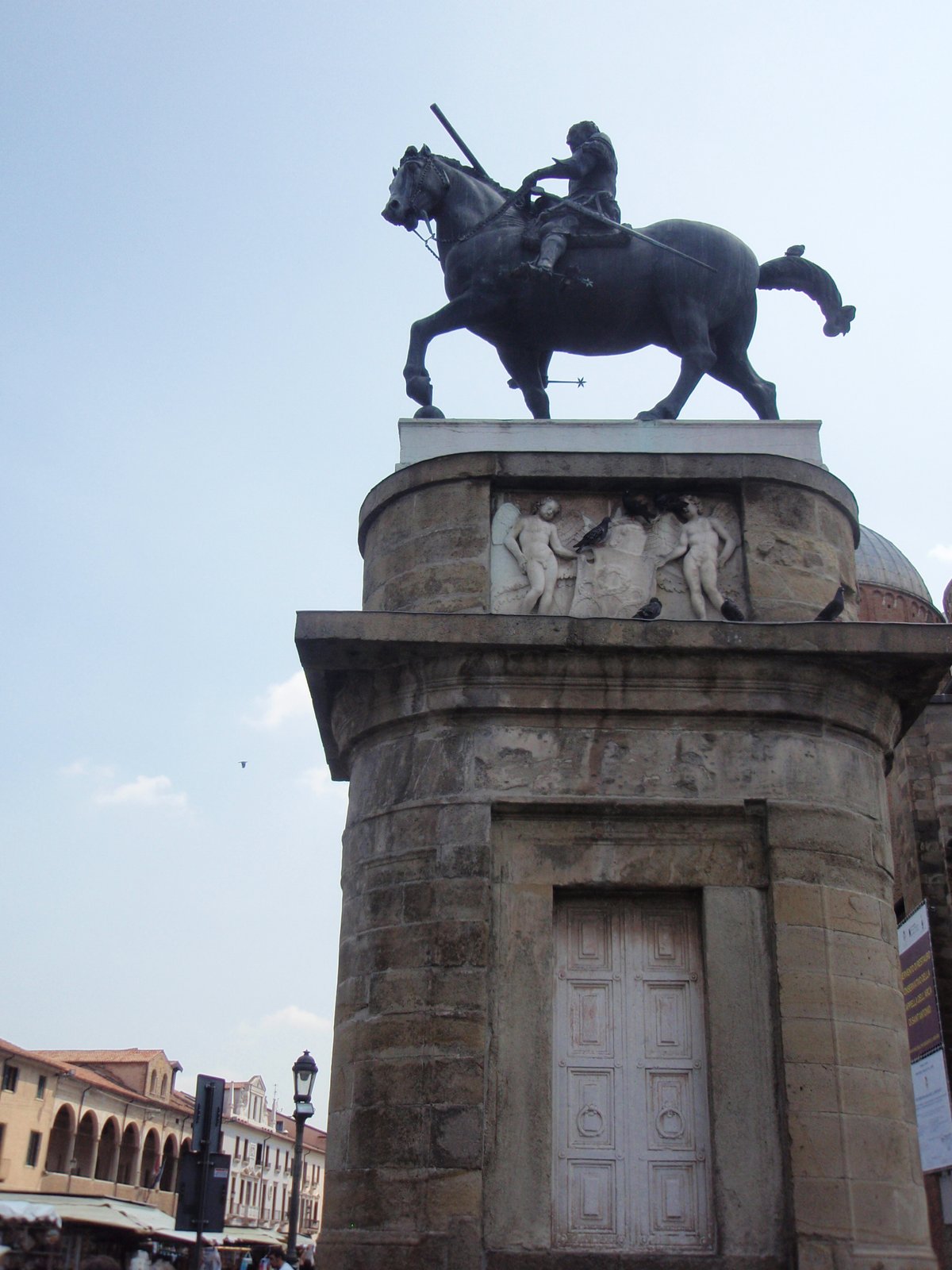
The Equestrian Statue of Gattamelata stands as a monumental testament to Padua’s vibrant history and the artistic brilliance of the Renaissance. Crafted by Donatello, the statue honors Erasmo da Narni—better known as Gattamelata—a renowned condottiere who served several Italian states, most notably the Republic of Venice. Set prominently in Piazza del Santo, in front of the Basilica del Santo, this bronze masterpiece is celebrated as the first full-sized equestrian statue since antiquity. For travelers and art enthusiasts alike, the statue is an essential highlight of Padua’s cultural landscape (art-facts.com, italianrenaissance.org).

Historical Background
Padua in the Renaissance
Located in northern Italy’s Veneto region, Padua flourished as a center of learning, art, and political activity during the Renaissance. When the Gattamelata statue was conceived in the mid-15th century, Padua was under Venetian rule, reflecting the city’s strategic importance in regional affairs (art-facts.com).
Erasmo da Narni: Gattamelata
Erasmo da Narni (1370–1443) earned fame as a condottiere—a mercenary leader—serving the Papal States, the Republic of Florence, and ultimately the Republic of Venice. His nickname, “Gattamelata” (“honeyed cat”), alludes to his tactical acumen and diplomatic skill. Upon his death, his family and the Venetian Republic sought to immortalize his achievements with a grand public monument (italianrenaissance.org).
Donatello and the Statue’s Commission
Donatello, a central figure in early Renaissance sculpture, began work on the statue in 1447, completing it by 1450. Its installation in Piazza del Santo in 1453 marked a departure from tradition, as equestrian statues were typically reserved for rulers. The Venetian Senate’s choice to honor Gattamelata in this way underscored both his extraordinary military service and the Republic’s appreciation of his leadership (art-facts.com).
Artistic and Cultural Significance
The statue revived the ancient tradition of equestrian monuments, which had lain dormant since the Roman era. Donatello’s design displays clear inspiration from the Equestrian Statue of Marcus Aurelius in Rome, but with a Renaissance emphasis on naturalism and humanism. Rather than monumental scale, Donatello opted for life-sized proportions, emphasizing psychological depth and realism (art-facts.com).
Symbolism and Design
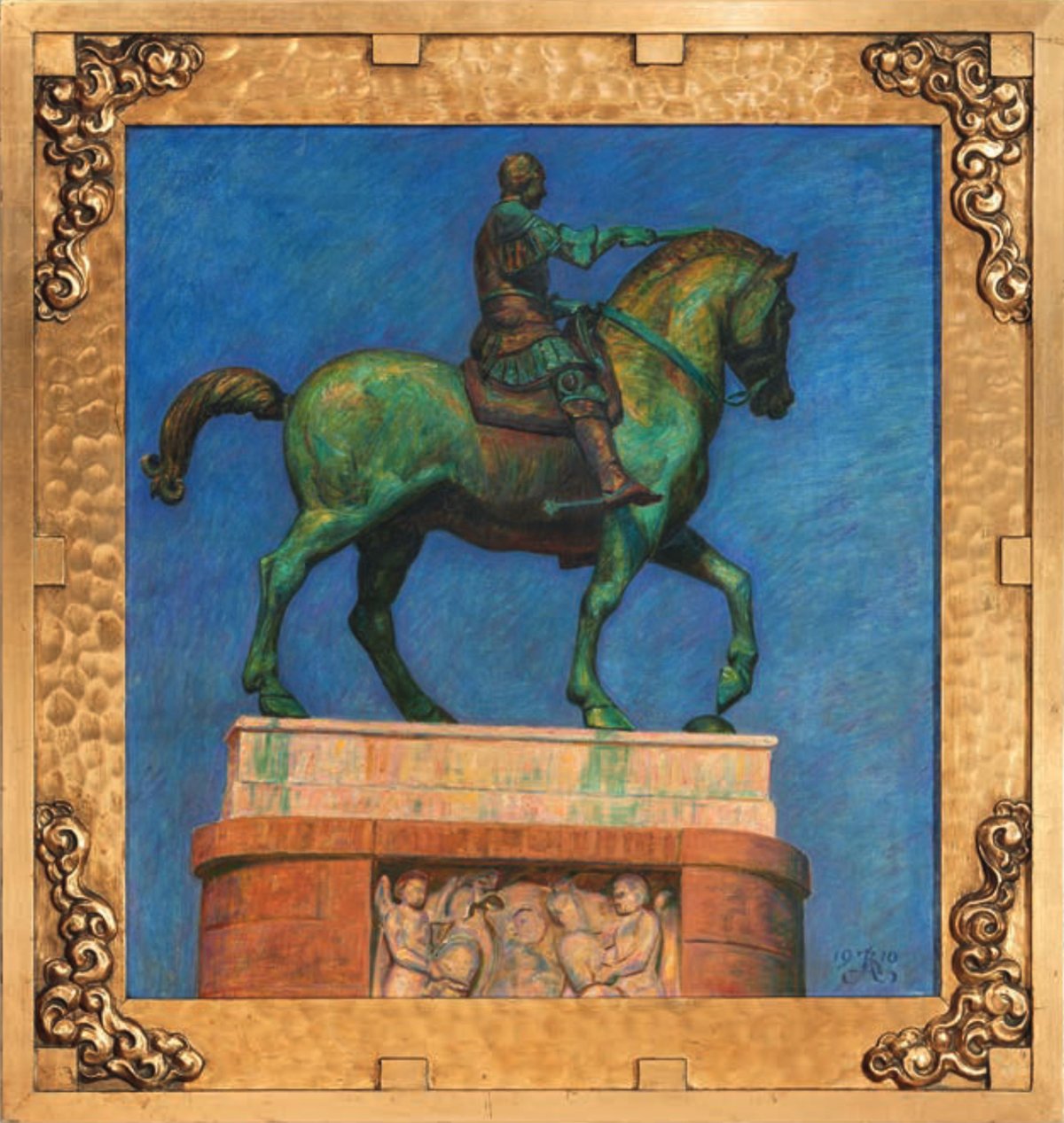
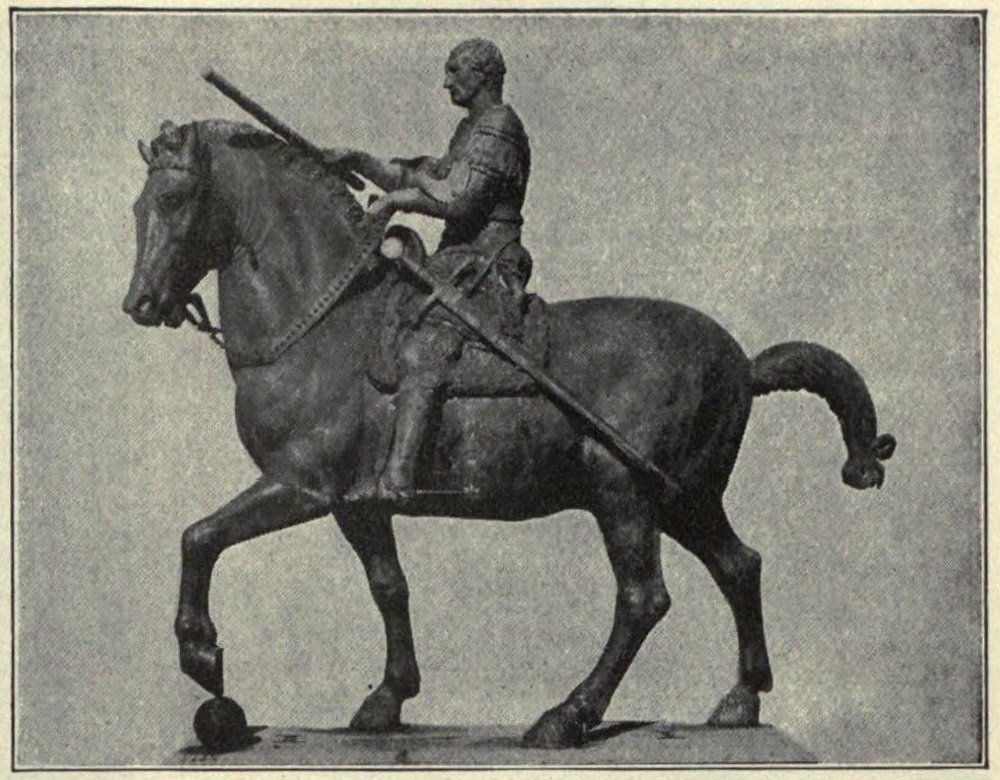
Gattamelata is depicted in full armor, his expression resolute and commanding. The horse’s left front hoof rests on a cannonball—a nod to military innovation and Venetian power. The pedestal features two reliefs: one with Gattamelata’s coat of arms flanked by putti, and another with angels and battle armor, symbolizing his military career. The inclusion of two fake doors on the pedestal is interpreted as a reference to the gates of the underworld, alluding to the hero’s death (theartpostblog.com).
Casting Technique
Donatello employed the lost-wax casting technique, allowing for intricate detail and a high degree of naturalism. This innovative method involved creating a wax model, encasing it in clay, melting away the wax, and pouring molten bronze into the hollow mold—a process that enabled the lifelike depiction of both horse and rider (art-facts.com).
Influence and Legacy
The Gattamelata statue set a precedent for equestrian monuments throughout Europe. Its blend of classical references and Renaissance naturalism influenced subsequent works, such as Andrea del Verrocchio’s Equestrian Statue of Bartolomeo Colleoni in Venice. Giorgio Vasari, the famous art historian, praised the statue’s movement, design, and realism, establishing it as one of Donatello’s greatest achievements (italianrenaissance.org, Totally History).
Visitor Information
- Ticket Prices: Free; no ticket required to view the statue.
- Opening Hours: The statue is located in a public square and accessible 24/7.
- Travel Tips:
- Visit during daylight hours to appreciate the details.
- The Piazza del Santo is centrally located and easily accessible by public transport.
- Wear comfortable shoes for exploring the cobblestone streets.
- Guided tours are available for deeper historical context and may require advance booking.
Nearby Attractions
- Basilica del Santo: One of Padua’s most important religious sites, located adjacent to the statue.
- Scrovegni Chapel: World-renowned for Giotto’s frescoes.
- Palazzo della Ragione: Historic civic building with a unique medieval market hall.
- Orto Botanico di Padova: The world’s oldest university botanical garden.
- Basilica di Santa Giustina and Scuola del Santo: Additional cultural highlights within walking distance (Trek Zone).
FAQ
What are the visiting hours for the Equestrian Statue of Gattamelata?
The statue is accessible at all hours, as it stands in a public square.
Is there an admission fee?
No. The statue can be viewed free of charge.
Are guided tours available?
Yes. Guided tours of Padua’s historic center often include the statue. Check with local agencies or the Basilica’s official website for details.
Is the site accessible for individuals with disabilities?
The square is generally accessible, though cobblestone surfaces may require caution.
What else should I visit nearby?
Include the Basilica del Santo, Scrovegni Chapel, and Palazzo della Ragione for a complete cultural experience.
Visuals


External Links
Tickets & tours.
These are guided options from our partners — same price as booking direct.
Prices are indicative — final pricing and availability are confirmed at checkout. Audiala may earn a commission from bookings made through these links.
Listen to the full story in the app
The whole Equestrian Statue Of Gattamelata,
told well.
Audio guides for 1,100+ cities across 96 countries. History, stories, and local insight — offline ready.
Verified, and shown.
Researched and written by the Audiala editorial team from historical records, architectural archives, and local expertise.
Researched from Wikidata, Wikipedia & official sources · fact-checked · How we make our guides →