Plan and listen to Palazzo Vescovile with Audiala.
Audio guide in your pocket, itinerary in your browser. Built for the way you actually visit.
Introduction
Palazzo Vescovile, also known as the Bishop’s Palace, is a cornerstone of Noto’s UNESCO-listed historic center in southeastern Sicily. This guide provides detailed information on the palace’s history, cultural and religious significance, architectural highlights, visitor access, and practical tips—making it the ideal resource for travelers seeking to explore "Palazzo Vescovile visiting hours," "tickets," and Noto’s Baroque marvels. Whether you’re a history buff, architecture enthusiast, or cultural traveler, Palazzo Vescovile offers a unique insight into the city’s ecclesiastical legacy and artistic grandeur (Italy Heaven; Best of Sicily; notoinforma.it).

The Baroque Rebirth of Noto: Historical Context
The 1693 Earthquake and Urban Renewal
Noto’s current splendor began after the catastrophic earthquake of 1693, which destroyed the original town (Noto Antica) and much of southeastern Sicily (Italy Heaven). Instead of rebuilding on the old site, civic leaders and architects chose a new location closer to the coast. The city’s layout was meticulously planned, emphasizing symmetry, wide streets, and harmonious Baroque perspectives. The main axis, Corso Vittorio Emanuele, became the spine for Noto’s most important civic and religious buildings, cementing its place as a UNESCO World Heritage site.
Rise of Baroque Architecture
The rebuilding coincided with the height of the Sicilian Baroque movement, characterized by ornate facades, dramatic stonework, and warm honey-colored limestone. Noto became a showcase for this style, with landmarks like the Cathedral (Duomo di San Nicolò), Palazzo Ducezio, and aristocratic palazzi creating a unified cityscape of theatrical beauty (Tourist Places Guide).
Palazzo Vescovile: History and Significance
Ecclesiastical Role and Origins
Constructed in the late 18th century, Palazzo Vescovile served as the residence and administrative center of the Bishop of Noto. Its proximity to the Cathedral on Piazza Municipio underscores the deep intertwining of religious and civic life in Baroque Sicily (Trip.com). The palace has hosted religious ceremonies, episcopal audiences, and administrative meetings, anchoring Noto’s ecclesiastical identity.
Architectural Features and Heritage
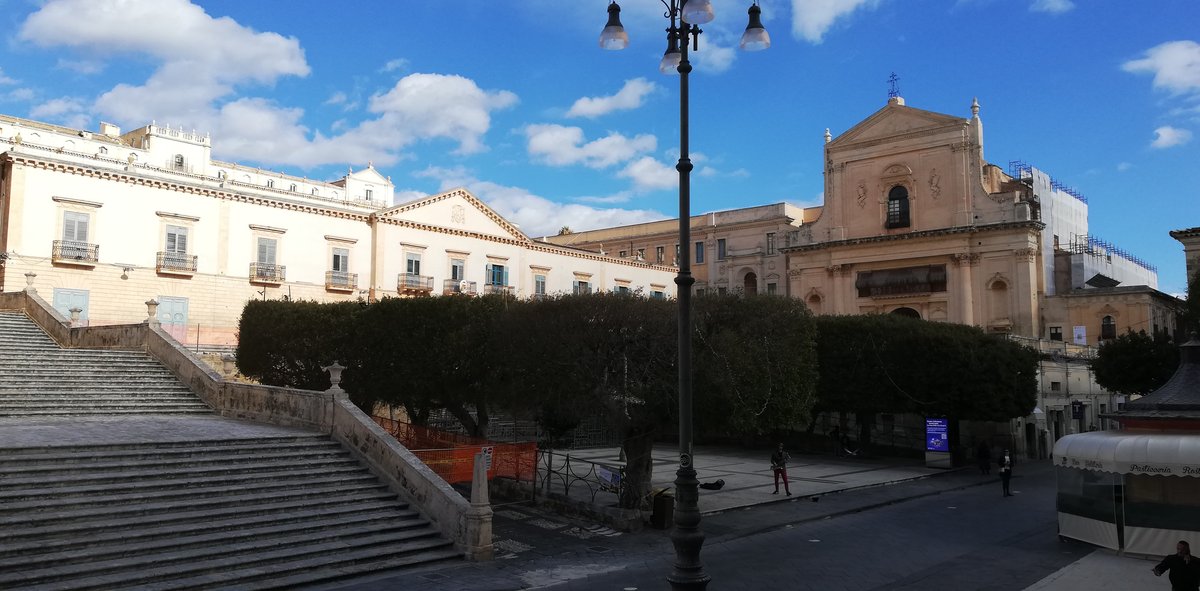
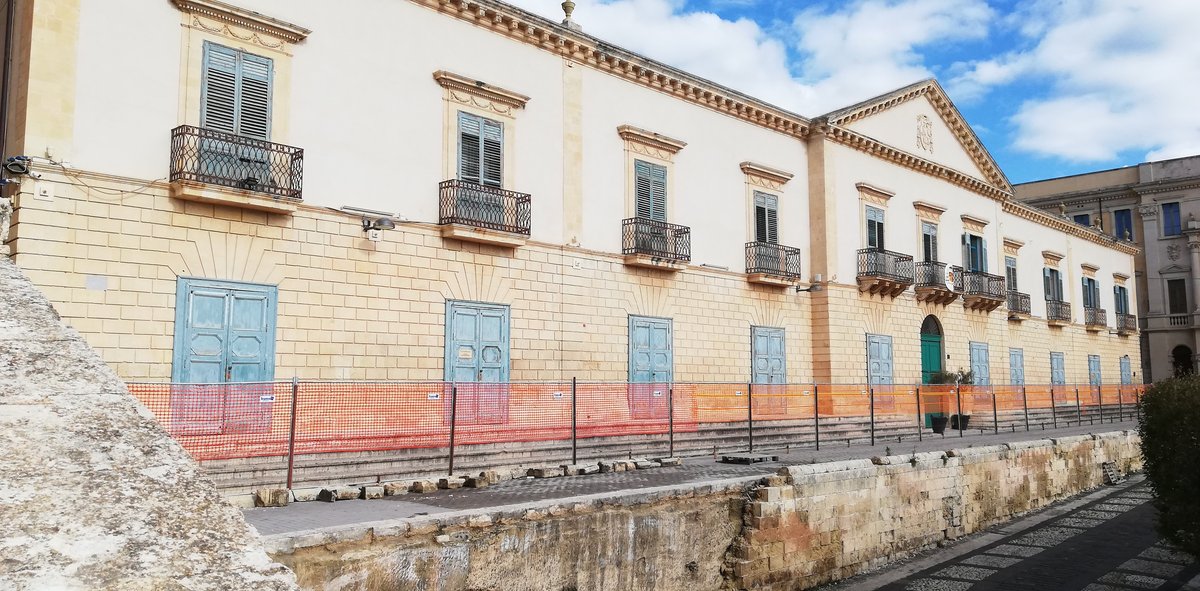
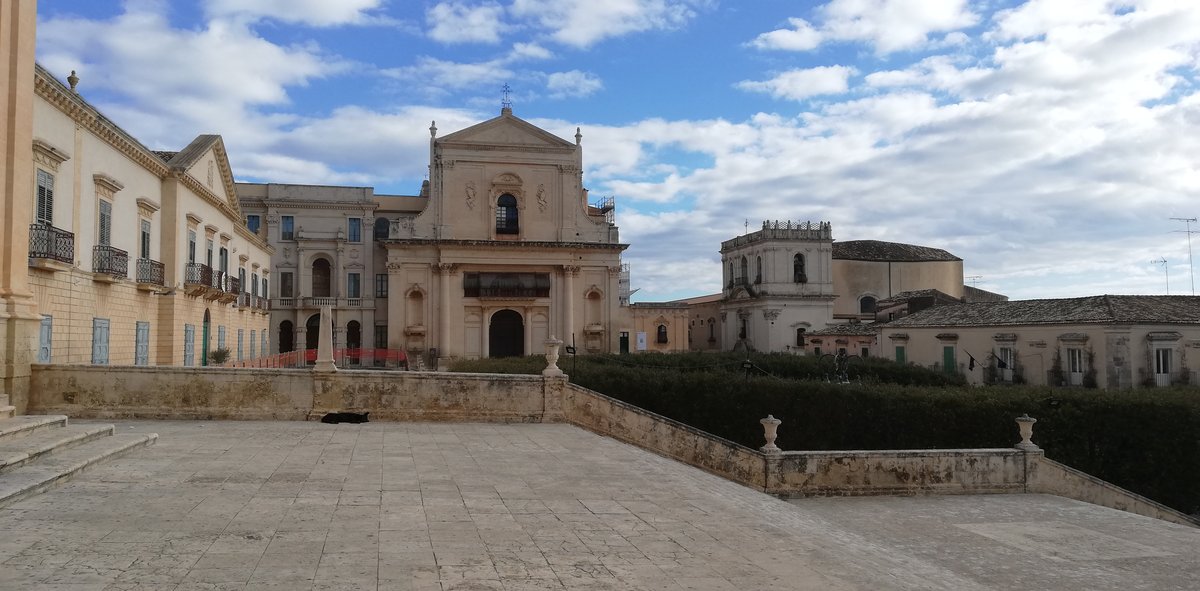
Palazzo Vescovile’s restrained Baroque facade features pilasters, elegant balconies, and a grand entrance portal crowned with Monsignor Mirone’s coat of arms (notoinforma.it). Its neoclassical lines complement Noto’s ornate Baroque buildings, while the interiors—adorned with frescoes and period furnishings—reflect its solemn institutional role. Two grand staircases lead to the diocesan offices, and the palace’s elevated position offers sweeping views of the city (Italy Heaven; Tourist Secrets).
Location and Urban Setting
Strategically situated between Noto Cathedral and the Basilica del SS. Salvatore, Palazzo Vescovile overlooks Piazza Municipio. This central location places it amid the city’s architectural heart, within easy walking distance of other key sites like Palazzo Ducezio and the ornate balconies of Palazzo Nicolaci (Best of Sicily). The palace’s harmonious facade enhances the visual unity of Noto’s historic center (Go Ask a Local).
Visitor Information: Access, Hours, and Tickets
Visiting Hours
Palazzo Vescovile is an active episcopal residence and diocesan curia, not a standard museum. There are no regular public visiting hours; visits are by appointment and require authorization from the Bishop of Noto (notoinforma.it). Special openings occur during local festivals or heritage days.
Tickets
No tickets are sold for general entry. Visits are free but must be arranged in advance. Contact the diocesan curia or Info Point Noto to request access or learn about special events.
Accessibility
The palace is accessed by a staircase from piazzetta Trigona, which may challenge visitors with mobility impairments. There is no public information on elevators or ramps; contact diocesan offices for specific needs.
How to Arrange a Visit
- Email or call the Diocesan Curia or Info Point Noto.
- Schedule your visit for special events or guided tours when available.
Cultural and Historical Insights
Palazzo Vescovile is more than an architectural gem; it symbolizes Noto’s religious autonomy and resilience after disaster. Its construction and continued use highlight the central role of the Church in local life. Today, the palace sometimes hosts exhibitions and cultural events, deepening its community ties (Evendo; Tourist Secrets).
Frequently Asked Questions (FAQ)
- What are the Palazzo Vescovile visiting hours?
- Visits are by appointment only; no standard hours.
- Are tickets required?
- No. Entry is granted with authorization; no fee is charged.
- Is the palace wheelchair accessible?
- Access is limited due to stairs; inquire in advance for accommodations.
- Are guided tours available?
- Occasionally, during festivals or heritage days. Check with Info Point Noto.
- Can I take photographs inside?
- Permission is required and may be restricted in official areas.
Nearby Attractions
- Noto Cathedral (Duomo di San Nicolò): Baroque landmark adjacent to the palace.
- Palazzo Ducezio: Town hall with the Hall of Mirrors.
- Palazzo Nicolaci di Villadorata: Famous for ornate balconies.
- Basilica del SS. Salvatore: Another key baroque monument.
- Teatro Tina Di Lorenzo: Historic theater often included in cultural tours.
Practical Tips and Recommendations
- Dress Code: Modest attire is required.
- Photography: Always ask before taking photos.
- Combine Visits: Explore the palace alongside nearby sites for a deeper Baroque experience.
- Best Time to Visit: Early mornings or late afternoons offer the best light and fewer crowds; plan around festivals for richer experiences.
- Local Amenities: Enjoy cafés and gelaterias on Piazza Municipio, with Caffè Sicilia being a standout for traditional treats (asinglewomantraveling.com).
Listen to the full story in the app
The whole Palazzo Vescovile,
told well.
Listen to sourced travel stories with local history and practical context — ready offline.
Verified, and shown.
Researched and written by the Audiala editorial team from historical records, architectural archives, and local expertise.
Palazzo Vescovile in Noto: Visiting Hours, Tickets, and Historical Guide to Noto’s Baroque Jewel. Retrieved from https://www.italyheaven.co.uk/sicily/noto/
Palazzo Vescovile in Noto: Visiting Hours, Tickets, and Guide to This Stunning Sicilian Baroque Landmark. Retrieved from http://www.bestofsicily.com/noto.htm
Palazzo Vescovile Visiting Hours, Tickets, and Guide to Noto’s Historic Bishop’s Palace. Retrieved from https://www.notoinforma.it/?p=1663
A Complete Guide to Noto, the Baroque Beauty of South East Sicily. Retrieved from https://www.touristsecrets.com/destinations/europe/italy/a-complete-guide-to-noto-the-baroque-beauty-of-south-east-sicily/
Palazzo Vescovile: Cultural Events and Exhibitions. Retrieved from https://evendo.com/locations/italy/naples/attraction/palazzo-vescovile
Palazzo Vescovile in Noto. Retrieved from https://us.trip.com/travel-guide/attraction/noto/palazzo-vescovile-131499865/
Top Tourist Attraction and Places Map of Noto, Italy. Retrieved from https://touristplaces.guide/top-tourist-attraction-and-places-map-of-noto-italy/
Travel Guide to Noto, Sicily. Retrieved from https://goaskalocal.com/blog/travel-guide-to-noto-sicily
Is Noto Worth Visiting? What to Expect. Retrieved from https://asinglewomantraveling.com/is-noto-worth-visiting-what-to-expect/
Built from cited sources · see the method · How we make our guides →