Plan and listen to Spire Of The Immaculate Virgin with Audiala.
Audio guide in your pocket, itinerary in your browser. Built for the way you actually visit.
Introduction
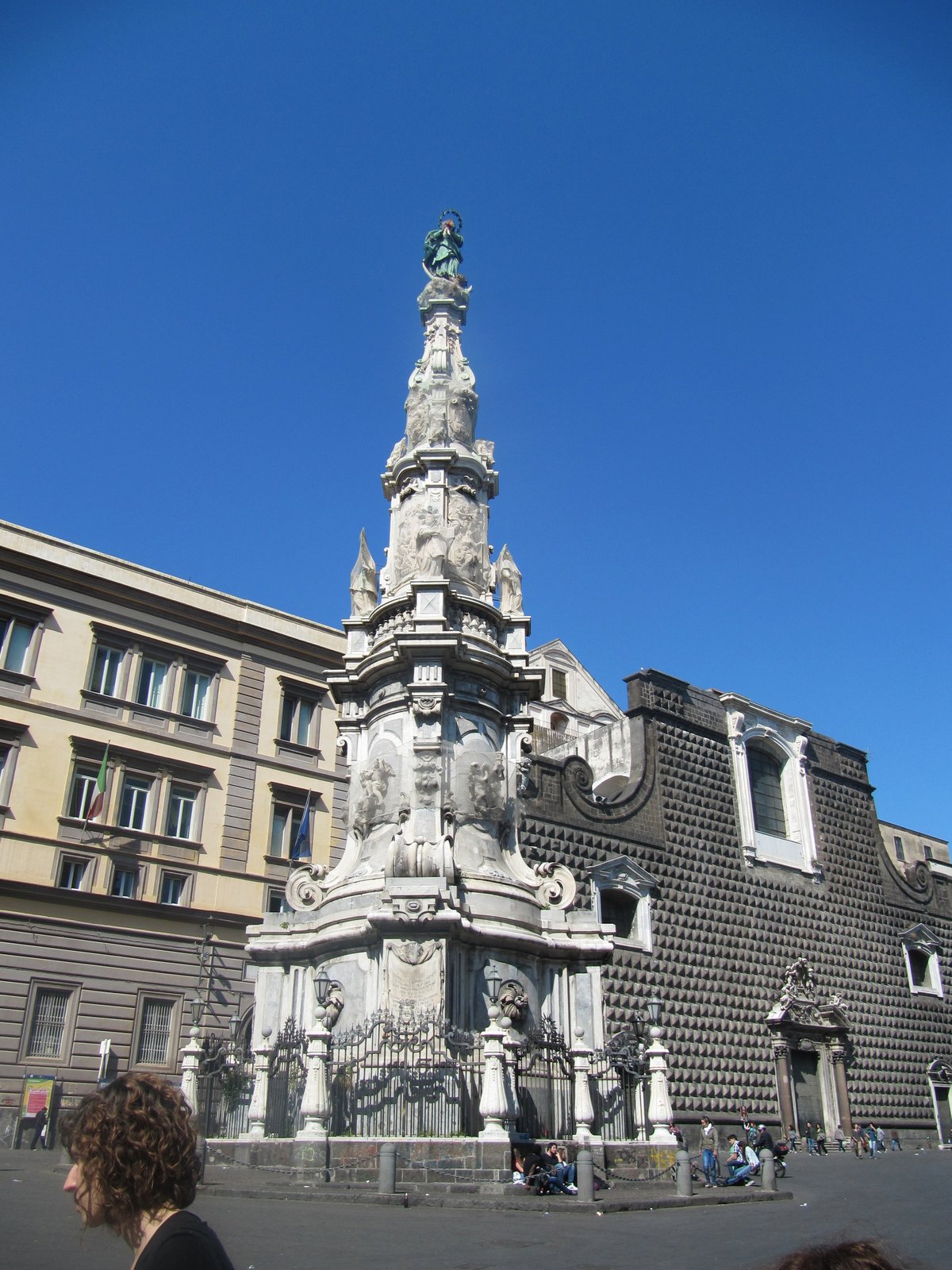
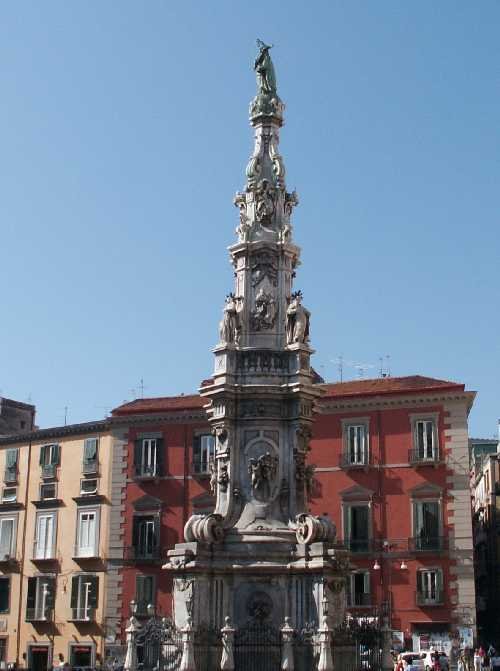
The Guglia dell'Immacolata, also known as the Spire of the Immaculate Conception, is a remarkable Baroque obelisk located in the heart of Naples, Italy. Situated in the bustling Piazza del Gesù Nuovo, this monumental column stands as a testament to the city's rich history, artistic heritage, and enduring religious devotion. Erected in the mid-18th century by the Jesuits, the Guglia dell'Immacolata was designed to honor the Virgin Mary and commemorate Naples' deliverance from the plague. Its intricate architecture, adorned with bas-relief depictions of Biblical scenes, and its cultural significance make it a must-visit landmark for anyone exploring Naples. Whether you are a history enthusiast, an architecture aficionado, or a devout pilgrim, the Guglia dell'Immacolata offers a profound glimpse into the soul of Naples. (Wikipedia, Renato Prosciutto, Lonely Planet)
The Guglia dell'Immacolata is a prominent Baroque obelisk located in the Piazza del Gesù Nuovo in Naples. This article explores the rich history, intricate architecture, and cultural significance of this monument, along with practical information for visitors, including ticket prices, visiting hours, and travel tips.

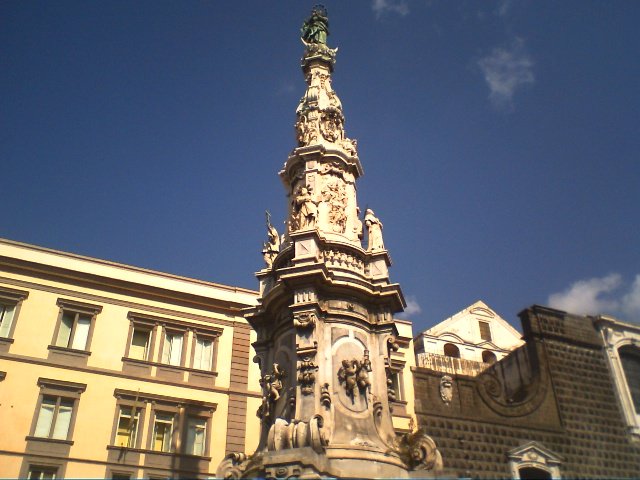
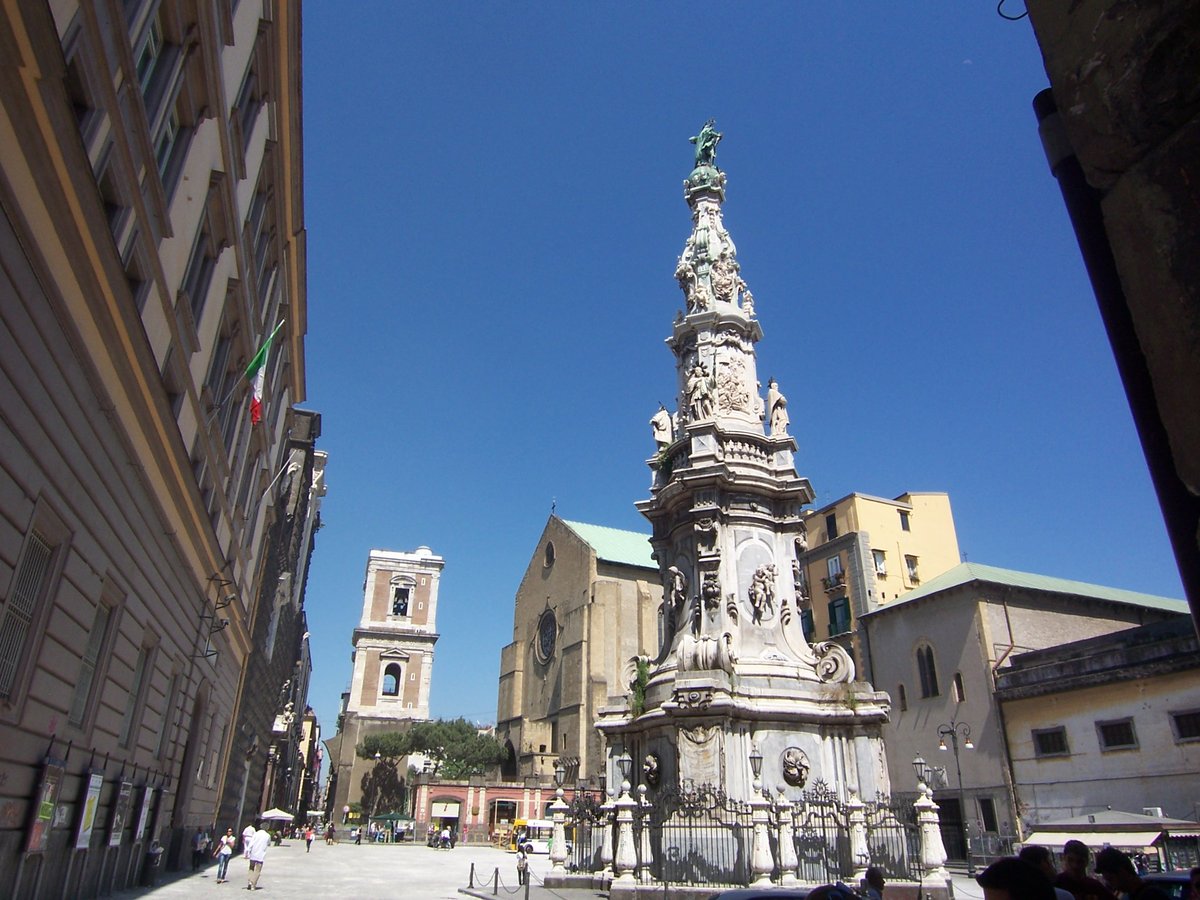
History of Guglia dell'Immacolata, Naples, Italy
Origins and Initial Conception
The site originally hosted an equestrian monument dedicated to Philip V, created by Lorenzo Vaccaro in 1705 to commemorate the Spanish king's visit to Naples in 1702. However, this statue was destroyed in 1707 when Austrian forces conquered Naples, marking the end of Spanish rule in the city (Renato Prosciutto).
Commissioning and Construction
The current obelisk was commissioned by the Jesuits in the mid-18th century. Initiated by Father Francesco Pepe, a Jesuit, the project envisioned a monument invoking the Virgin Mary's protection from the plague. Designed by Giuseppe Genoino and executed by Giuseppe di Fiore with assistance from Filippo d’Amato, construction began in 1746 and was funded through public collection (Wikipedia).
Architectural and Artistic Details
Standing at 22 meters high, the Guglia dell'Immacolata is the tallest and most ornate of the three major plague columns in Naples. It was completed in 1750, embodying Neapolitan Baroque architecture with its rich decorative elements. Sculptors Francesco Pagani and Matteo Bottiglieri contributed to the intricate Baroque decoration, which includes bas-relief depictions of significant Biblical scenes (Wikipedia).
Cultural and Religious Significance
The Guglia dell'Immacolata holds immense cultural and religious significance for the people of Naples. Built to celebrate deliverance from the plague, it is one of the three major plague columns in the city. Every year on December 8th, the Feast of the Immaculate Conception, a fireman climbs to the top of the obelisk to place a wreath of flowers on the statue of the Virgin Mary, highlighting the monument's enduring importance (Lonely Planet).
Visitor Information
Visiting Hours and Tickets
Visitors can view the Guglia dell'Immacolata at any time as it is an outdoor monument. There are no ticket prices associated with visiting the obelisk itself. However, guided tours of the surrounding area, including other historical sites, are available, and prices vary depending on the tour operator.
Travel Tips and Nearby Attractions
The Guglia dell'Immacolata is centrally located in Piazza del Gesù Nuovo. The nearest metro station is Dante, and the closest bus stop is Sant’Anna dei Lombardi, served by multiple bus lines including 139, 201, 301, 460, 584, 604, N3, and N8. Nearby attractions include the Gesù Nuovo Church and Santa Chiara Monastery, both rich in historical and cultural value (Delightfully Italy).
Restoration and Preservation
Over the centuries, the Guglia dell'Immacolata has undergone several restoration efforts to preserve its structural integrity and artistic details. These efforts are crucial for maintaining the monument's historical and cultural value. In recent years, the city of Naples has implemented measures to protect its historic monuments from environmental damage, including regular cleaning and maintenance, as well as the installation of protective barriers to prevent vandalism.
FAQ
Q: What are the visiting hours for the Guglia dell'Immacolata? A: The monument is accessible at any time as it is located outdoors in a public square.
Q: Are there any entry fees? A: There are no ticket prices for visiting the obelisk itself.
Q: How can I reach the Guglia dell'Immacolata? A: The nearest metro station is Dante, and the closest bus stop is Sant’Anna dei Lombardi.
Q: What nearby attractions can I visit? A: Nearby attractions include the Gesù Nuovo Church and Santa Chiara Monastery (Savoring Italy).
Listen to the full story in the app
The whole Spire Of The Immaculate Virgin,
told well.
Audio guides for 1,100+ cities across 96 countries. History, stories, and local insight — offline ready.
Verified, and shown.
Researched and written by the Audiala editorial team from historical records, architectural archives, and local expertise.
Researched from Wikidata, Wikipedia & official sources · fact-checked · How we make our guides →