Plan and listen to San Giovanni A Mare, Naples with Audiala.
Audio guide in your pocket, itinerary in your browser. Built for the way you actually visit.
Introduction: The Historical and Cultural Significance of San Giovanni a Mare
Located in the heart of Naples’ historic Mercato district, San Giovanni a Mare is a rare and evocative example of medieval Romanesque architecture amidst a city renowned for its Baroque and Renaissance landmarks. Founded in the mid-12th century by the Benedictine order, the church has witnessed centuries of religious devotion, social transformation, and urban change. Its position near the ancient port once made it a spiritual haven for seafarers, pilgrims, and the Knights of St. John of Jerusalem, who operated an adjoining hospital. Today, San Giovanni a Mare stands as a testament to Naples’ multicultural heritage, architectural resilience, and enduring identity (Comune di Napoli; Wikipedia - Chiesa di San Giovanni a Mare).
The church’s architectural features—spolia columns, vaulted ceilings, and a stark tuff stone façade—reflect not only medieval craftsmanship but also the layering of Byzantine, Arabic, and Catalan influences. Its cultural resonance is further embodied in the bust of "Donna Marianna," a Greek artifact symbolizing Naples’ ancient roots and collective spirit (Lonely Planet; NapoliToday).
This comprehensive guide details everything you need to know about visiting San Giovanni a Mare—including opening hours, admission, accessibility, guided tours, and travel tips—while delving into the site’s architectural highlights, artistic treasures, and ongoing role in Naples’ vibrant heritage (Visit Naples).
Origins and Historical Development
San Giovanni a Mare was established in the 12th century by the Benedictine order and soon entrusted to the Knights of St. John (Hospitallers), who managed an adjoining hospital serving travelers, crusaders, and the city’s maritime community (Wikipedia - Chiesa di San Giovanni a Mare). Historical records from 1186 and 1231 attest to the hospital’s importance, which continued until the Napoleonic era, when its assets were transferred to the state.
The church’s name, “a Mare” (“at sea”), reflects its original proximity to the waterfront before modern urban development shifted Naples’ coastline. Its strategic location made it not just a religious sanctuary but a place of social support and refuge, deeply embedding it in the city’s narrative (Napoli Turistica).
Medieval and Renaissance Transformations
Throughout the Middle Ages, San Giovanni a Mare underwent significant modifications while retaining its Romanesque core. In the 14th and 15th centuries, expansions reflected evolving architectural tastes, including the replacement of the original wooden truss roof with a vaulted ceiling during the Durazzo-Catalan period (Comune di Napoli).
The interior columns, many fashioned from spolia repurposed from ancient Roman buildings, are a hallmark of Benedictine architecture in Campania and underline Naples’ continuous dialogue with its classical past (Wikipedia - Chiesa di San Giovanni a Mare). Influences from Byzantine and Arabic art are visible in the apse columns and dome, testifying to the city’s multicultural exchanges (Lonely Planet).
Decline, Restoration, and Preservation
San Giovanni a Mare’s fortunes waned in the modern era. The Napoleonic suppression of religious orders led to the hospital’s closure and the church’s transfer to the Diocese of Naples in 1828. The 20th century brought further challenges, including bomb damage during World War II and partial incorporation into surrounding buildings during urban renewal projects (Comune di Napoli).
After decades of neglect, recent restoration efforts have stabilized the structure, conserved original elements, and reopened the church to visitors and scholars (NapoliToday).
Artistic and Cultural Highlights
Aside from its architectural significance, San Giovanni a Mare is a powerful symbol of Naples’ layered identity. The church’s atrium features a replica of the ancient Greek bust “Donna Marianna,” with the original housed in Palazzo San Giacomo. This artifact, shrouded in local legend, became a symbol of the city’s resilience and wit, often referenced in Neapolitan proverbs (Lonely Planet).
Festivals and rituals once centered on the church, including the vibrant June 23–24 celebration of St. John the Baptist, which blended Christian and pre-Christian traditions before being banned in the 17th century (Napoli Turistica; Cose di Napoli).
Architectural Features
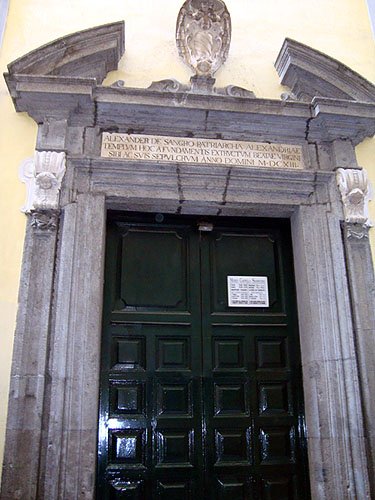
San Giovanni a Mare’s basilica layout—with a central nave, side aisles, and semicircular apse—is typical of Romanesque churches, yet the structure is enriched by later Gothic and Renaissance details. The entrance, now several meters below street level, starkly illustrates the layering of Naples’ urban landscape (Comune di Napoli).
Inside, the spolia columns and rounded arches evoke a sense of timelessness, while remnants of medieval frescoes and epigraphic inscriptions offer insight into centuries of religious and social life. The church’s crypt, with ancient sarcophagi, is a unique feature accessible via a narrow staircase (Architecture Adrenaline).
Visiting San Giovanni a Mare: Practical Information
Address
Via San Giovanni a Mare 9, Mercato district, Naples, Italy
Opening Hours
San Giovanni a Mare is generally open Tuesday to Sunday, 9:00 AM to 6:00 PM. Hours may vary during holidays or special events; visitors should check local listings or the official tourism website before planning their visit.
Tickets and Admission
Admission is free of charge. Donations are welcomed to support ongoing preservation initiatives.
Accessibility
Due to its medieval structure, accessibility is limited. The entrance is sunken below street level and the crypt is reached via stairs, making access challenging for visitors with mobility impairments. Some ramps are available, but not all areas are fully accessible. It is advisable to contact local tourist offices for current accessibility updates.
Guided Tours and Audio Guides
Guided tours and audio guides—such as those provided by the Audiala app—are available through local tour operators. These tours offer deeper insights into the church’s history, architecture, and cultural context. Booking in advance is recommended, especially during peak seasons (Naples Insider).
Getting There
The church is a short walk from Piazza Mercato and the Church of Sant’Eligio Maggiore. The nearest metro station is Università (Line 1), approximately a 10-minute walk away. The area is accessible via public buses; parking is limited.
Nearby Attractions and Travel Tips
- Sant’Eligio Maggiore: A nearby Gothic church with medieval origins.
- Castel Nuovo (Maschio Angioino): Iconic fortress near the port.
- Palazzo San Giacomo: Home to the original Donna Marianna bust.
- Spaccanapoli: The lively thoroughfare running through the historic center.
- Naples National Archaeological Museum: One of Italy’s top museums for classical art and artifacts (The Geographical Cure).
Travel Tips:
- Best Time to Visit: Early morning or late afternoon for quieter visits and favorable lighting.
- Dress Code: Modest attire is required—cover shoulders and knees.
- Safety: Naples is generally safe, but remain vigilant for pickpockets in crowded areas (Italian Trip Abroad).
- Combine with Local Cuisine: Nearby trattorias serve excellent Neapolitan pizza and seafood (Italian Trip Abroad).
Frequently Asked Questions (FAQ)
Q: What are the visiting hours of San Giovanni a Mare?
A: Generally Tuesday to Sunday, 9:00 AM to 6:00 PM. Check ahead for special closures.
Q: Is there an admission fee or do I need tickets?
A: Admission is free; no tickets are required. Donations are appreciated.
Q: Is San Giovanni a Mare accessible for people with disabilities?
A: Accessibility is limited due to steps and uneven surfaces. Contact local tourist services for updates.
Q: Are guided tours available?
A: Yes, through local operators and the Audiala app. Advance booking is recommended.
Q: What other historical sites are nearby?
A: Piazza Mercato, Church of Sant’Eligio Maggiore, Castel Nuovo, and other key sites in Naples’ historic center.
Visitor Recommendations
To maximize your visit:
- Use the Audiala app or join a guided tour for enriched context.
- Explore nearby historical sites for a fuller experience of Naples’ heritage.
- Respect local customs and religious practices during your visit.
- Plan ahead for accessibility needs and check current opening hours.
Listen to the full story in the app
The whole San Giovanni A Mare, Naples,
told well.
Audio guides for 1,100+ cities across 96 countries. History, stories, and local insight — offline ready.

Verified, and shown.
Researched and written by the Audiala editorial team from historical records, architectural archives, and local expertise.
Researched from Wikidata, Wikipedia & official sources · fact-checked · How we make our guides →