Plan and listen to San Giovanni A Carbonara with Audiala.
Audio guide in your pocket, itinerary in your browser. Built for the way you actually visit.
Introduction
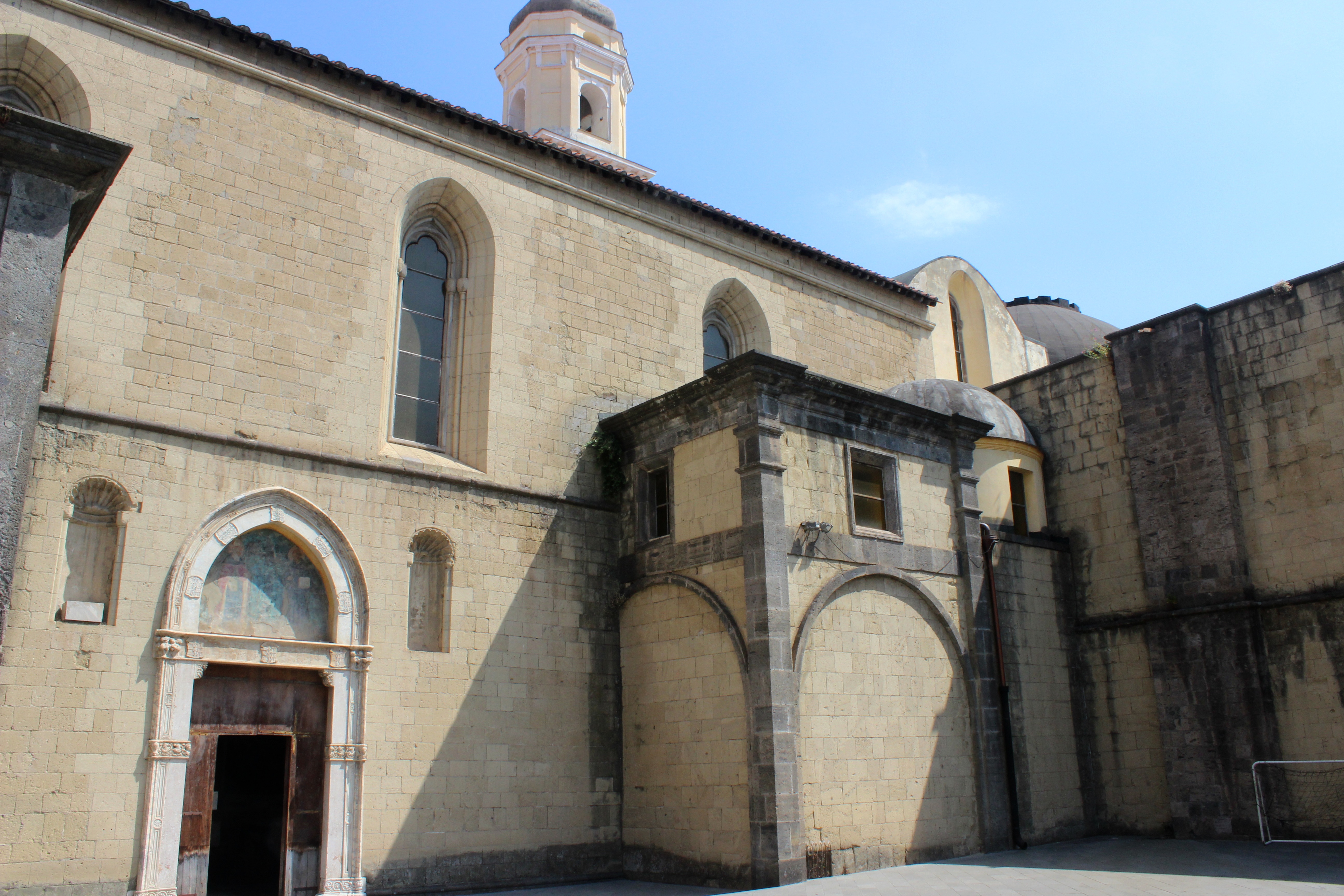
San Giovanni a Carbonara, situated in Naples' historic core, is a vivid emblem of the city's layered past, architectural grandeur, and cultural richness. Founded in 1339 by Augustinian friars, the church is renowned not only as a religious sanctuary but also as a magnificent mausoleum for Neapolitan royalty, including King Ladislaus of Durazzo and Queen Joan II. Over the centuries, San Giovanni a Carbonara has evolved from a simple Gothic structure into a treasure trove of Renaissance and Baroque artistry, featuring works by celebrated artists such as Andrea da Firenze and Ferdinando Sanfelice. Today, it stands as a must-visit destination for travelers, art lovers, and anyone seeking to explore Naples' dynastic and artistic heritage (Comune di Napoli; Visit Naples; Napoli Unplugged).
This comprehensive guide covers the church's origins, architectural evolution, visitor information, travel tips, and nearby attractions. Whether you are drawn to its royal tombs, monumental staircase, or vibrant art, this article will ensure your visit is well-informed and rewarding.
Origins and Foundation
San Giovanni a Carbonara was founded in 1339 by Augustinian friars on land outside Naples’ medieval walls, in an area named for its charcoal deposits. The original church reflected the order's values of simplicity and devotion, coinciding with a period of significant urban and religious expansion under the Angevin dynasty (Comune di Napoli).
Architectural Evolution
Gothic Beginnings
The initial structure, built in the Gothic style, featured pointed arches and ribbed vaults, with a Latin cross plan and single nave. French Gothic influences, brought by the Angevin rulers, shaped its early architectural character (Napoli Unplugged).
Renaissance Transformation
In the early 15th century, King Ladislaus of Durazzo selected the church as his dynastic mausoleum, prompting extensive renovations. Notably, the monumental tomb of Ladislaus, designed by Andrea da Firenze, introduced Renaissance elements while maintaining Gothic features, resulting in a unique architectural blend (Italia.it).
Baroque Additions
The 16th and 17th centuries saw further embellishments, including the grand staircase by Ferdinando Sanfelice and richly decorated chapels ordered by Neapolitan nobility. The result is a stratified architectural narrative reflecting the city’s evolution from the Middle Ages to the Baroque era (Visit Naples).
Cultural and Artistic Significance
Royal Mausoleum and Dynastic Symbolism
San Giovanni a Carbonara is the burial site of King Ladislaus and Queen Joan II. The tomb of Ladislaus, completed in 1428, is a celebrated example of funerary art, featuring statues of saints and allegorical figures and symbolizing the political and religious ambitions of the Angevin rulers (Museo di Capodimonte).
Artistic Masterpieces
The church houses numerous artistic treasures:
- Caracciolo del Sole Chapel: International Gothic frescoes by Perinetto and Leonardo da Besozzo (Napoli Sotterranea).
- Miroballo Chapel: Tomb of Ser Gianni Caracciolo, attributed to Jacopo della Pila.
- Somma Chapel: Works by Girolamo Santacroce and Giovanni da Nola.
- Main Altar: Designed by Ferdinando Sanfelice.
- Wooden Choir Stalls: Finely crafted, reflecting Neapolitan Renaissance artistry.
Notable Events and Historical Figures
- King Ladislaus of Durazzo: Elevated the church’s status through his burial and patronage (Enciclopedia Treccani).
- Queen Joan II: Her turbulent reign is reflected in the church's role as a royal mausoleum.
- The Caracciolo Family: Influential patrons who commissioned richly decorated chapels (Napoli Today).
- Augustinian Order: Oversaw administration, artistic patronage, and expansion.
Visitor Information
Visiting Hours
- Tuesday–Sunday: 9:00 AM – 5:00 PM
- Monday: Closed
- Note: Hours may vary during religious ceremonies or public holidays. Check the official website before your visit.
Tickets and Admission
- Admission: Free for all visitors; donations welcomed for restoration efforts.
- Guided Tours: Highly recommended, available in multiple languages. Book in advance via local associations or at the church.
- Audio Guides: Available for rent or via mobile app.
Accessibility
- Ramps at the entrance and some chapels are wheelchair-accessible, though certain areas may be challenging due to historic architecture. Contact the church administration ahead for assistance.
Photography
- Allowed without flash or tripods. Respect signage and the sacred atmosphere, especially during services.
How to Get There
- Metro: Line 1, “Dante” station (5-minute walk).
- Bus: Lines 201 and R4 stop near Via Carbonara.
- On Foot: 15 minutes from Naples' historic center.
- Car: Limited parking; public transport recommended.
Nearby Attractions
- Castel Nuovo (Maschio Angioino): Medieval fortress and city symbol.
- Piazza del Plebiscito: Naples' central square.
- Naples National Archaeological Museum: Greco-Roman artifacts.
- Spaccanapoli: Iconic street crossing the historic center.
FAQ
Q: What are the San Giovanni a Carbonara visiting hours?
A: Tuesday–Sunday, 9:00 AM–5:00 PM; closed Monday.
Q: Is there an admission fee?
A: Entry is free; donations are appreciated.
Q: Are guided tours available?
A: Yes, in multiple languages. Advance booking is recommended.
Q: Is the church accessible for people with disabilities?
A: Partially accessible; contact ahead for specific needs.
Q: Can I take photographs inside?
A: Yes, without flash or tripods.
Restoration and Preservation
The church has undergone several restorations, especially after damage during World War II and the 1980 Irpinia earthquake. Recent efforts by the Italian Ministry of Culture focus on preserving both its architecture and artistic masterpieces, ensuring continued public access and scholarly study (Ministero della Cultura).
Legacy in Neapolitan History
San Giovanni a Carbonara embodies the interplay of religion, politics, and art throughout Naples’ history. Its unique blend of Gothic, Renaissance, and Baroque elements, alongside its role as a royal mausoleum, makes it a living archive of the city’s transformation from medieval stronghold to Renaissance and Baroque metropolis (Visit Naples).
Plan Your Visit
- Dress Code: Modest attire; cover shoulders and knees.
- Best Times: Weekday mornings and late afternoons for quieter visits.
- Language: Most signage is in Italian; guided tours enhance understanding.
- Facilities: No on-site restrooms or cafés; nearby amenities available.
- Safety: Standard urban precautions apply.
For the latest information, consult official Naples tourism or local guides.
Listen to the full story in the app
The whole San Giovanni A Carbonara,
told well.
Audio guides for 1,100+ cities across 96 countries. History, stories, and local insight — offline ready.

Verified, and shown.
Researched and written by the Audiala editorial team from historical records, architectural archives, and local expertise.
San Giovanni a Carbonara. Retrieved from https://www.comune.napoli.it/flex/cm/pages/ServeBLOB.php/L/IT/IDPagina/14341
San Giovanni a Carbonara Church. Retrieved from https://www.visitnaples.eu/en/neapolitanity/discover-naples/san-giovanni-a-carbonara-church
San Giovanni a Carbonara. Retrieved from https://www.napoliunplugged.com/san-giovanni-a-carbonara.html
San Giovanni a Carbonara Church. Retrieved from https://www.italia.it/en/campania/naples/san-giovanni-a-carbonara-church
San Giovanni a Carbonara. Retrieved from https://www.museocapodimonte.beniculturali.it/san-giovanni-a-carbonara/
San Giovanni a Carbonara. Retrieved from https://www.napolitoday.it/eventi/cultura/san-giovanni-carbonara-napoli.html
Chiesa di San Giovanni a Carbonara. Retrieved from https://www.beniculturali.it/luogo/chiesa-di-san-giovanni-a-carbonara
Last reviewed
Researched from Wikidata, Wikipedia & official sources · fact-checked · How we make our guides →