Plan and listen to San Giacomo Degli Spagnoli with Audiala.
Audio guide in your pocket, itinerary in your browser. Built for the way you actually visit.
Introduction: A Spanish Jewel in the Heart of Naples
San Giacomo degli Spagnoli is a remarkable Renaissance basilica at the crossroads of Naples’ civic and religious life. Commissioned in 1540 by Pedro Álvarez de Toledo, the influential Spanish Viceroy, it stands as a vivid testament to the enduring legacy of Spanish rule in southern Italy. The church’s position in Piazza Municipio, adjacent to Castel Nuovo and integrated with Palazzo San Giacomo—Naples’ city hall—makes it a unique destination for those seeking to immerse themselves in the city’s layered past (Naples Historical Sites; Renato Prosciutto).
This guide provides detailed insights into San Giacomo degli Spagnoli’s history, artistic treasures, visitor logistics, and its significance to the cultural fabric of Naples.


Historical Background: Spanish Influence and Architectural Brilliance
Origins and Construction
San Giacomo degli Spagnoli was built in 1540 during a period of Spanish dominance, reflecting both the political authority and religious priorities of the Spanish Crown in Naples (Biblhertz). Architect Ferdinando Manlio designed the church in the Renaissance style, emphasizing symmetry, balance, and grandeur.
Civic and Religious Significance
From its inception, the basilica served as the spiritual home for Naples’ Spanish community. It became the national church of Spain in Naples, a role it continues to honor, hosting masses, ceremonies, and commemorations tied to Spanish tradition (Il Mattino).
Architectural Highlights and Artistic Heritage
Integration with Palazzo San Giacomo
In the 19th century, the construction of the Palazzo San Giacomo enveloped the church’s original façade, but preserved its interior and unique position within Naples’ civic core (Wikipedia). Visitors now enter through the city hall, experiencing a rare blend of sacred and secular architecture.
Interior Layout
- Nave and Chapels: A central nave with a barrel vault and lunettes, flanked by aisles topped with small domes, creates a harmonious space (myCityHunt).
- Main Dome: The dome above the transept and apse adds vertical drama.
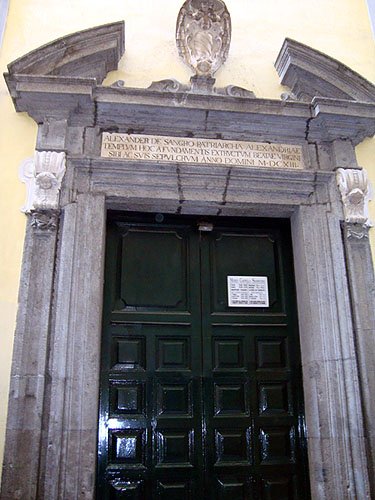
- Original Portal: Stone entrance reliefs and a statue of Saint James remain visible on the exterior (Viaggiare Sereni).
Artistic Masterpieces
The basilica boasts an impressive collection of Renaissance and Baroque art, including:
- The monumental tomb of Don Pedro de Toledo by Giovanni da Nola (1570), a Renaissance funerary masterpiece (myCityHunt; Renato Prosciutto)
- Sepulchral monuments of other Spanish dignitaries by Michelangelo Naccherino and Annibale Caccavello
- Polychrome marble altars and woodwork, including the high altar centered around Andrea Vaccaro’s bas-relief of the Dark Christ (Carnival)
- Paintings by Marco Pino, Andrea Vaccaro, Luca Giordano, Massimo Stanzione, Domenico Antonio Vaccaro, and Pietro Bardellino
- Decorative motifs, Spanish heraldry, geometric marble flooring, and a contemporary portrait of King Felipe VI of Spain by Giovanni Gasparro (myCityHunt)
Religious and Cultural Identity
San Giacomo degli Spagnoli remains a vital center of worship, especially for the Spanish community and devotees of Saint James the Apostle. The church is still used for religious services, concerts, and civic ceremonies, particularly during major Catholic and city festivals (Il Mattino).
Visitor Information
Location and Getting There
- Address: Piazza Municipio, Naples, Italy
- Metro: Municipio (Line 1), a short walk from the church
- By train: Napoli Centrale is 2.5 km away; metro or taxi recommended
- By cruise: Molo Beverello port is directly across the street
Opening Hours and Tickets
- Typical Hours: 9:00 AM–1:00 PM and 3:00 PM–6:00 PM, Tuesday to Sunday. Closed Mondays. Hours may vary due to restoration or events (Naples City Hall).
- Admission: Free; donations are appreciated for maintenance
- Tickets: Not required; group tours may have a fee
Accessibility
- Wheelchair Access: Partial; entrance via municipal building. Some historic areas may be difficult to access. Contact Naples City Hall in advance for specific needs
Guided Tours
- Available through local tour operators and by advance request. Audio guides are not provided on-site; consider using a city guide app like Audiala
Practical Travel Tips
- Dress Code: Modest attire required (cover shoulders and knees)
- Photography: Permitted, but no flash or tripods
- Facilities: No restrooms or cafés in the church; facilities available nearby
- Safety: Be vigilant with personal belongings, especially in crowded areas (The Road Reel)
- Language: Italian is primary; basic English spoken in tourist areas
Nearby Attractions
Combine your visit with these nearby sites:
- Castel Nuovo (Maschio Angioino): Medieval fortress and museum
- Royal Palace of Naples: Grand residence with lavish interiors
- Teatro di San Carlo: Italy’s oldest opera house
- Galleria Umberto I: Elegant 19th-century arcade
- Piazza del Plebiscito: Naples’ main civic square
Frequently Asked Questions (FAQ)
Q: What are the opening hours of San Giacomo degli Spagnoli?
A: Usually open from 9:00 AM–1:00 PM and 3:00 PM–6:00 PM, Tuesday to Sunday. Closed Mondays. Hours may vary; check Naples City Hall for updates.
Q: Do I need a ticket?
A: Admission is free; donations are encouraged.
Q: Is the church accessible for people with disabilities?
A: Access is partial; some areas have steps and uneven floors.
Q: Are guided tours available?
A: Yes, through private guides or local tour agencies; group tours may have a fee.
Q: Can I take photographs inside?
A: Yes, but without flash or tripods.
Best Times to Visit & Special Events
- Least crowded: Early morning or late afternoon, midweek
- Weather: April–June and September–October are ideal
- Events: Religious services for St. James and Spanish festivals; public concerts and exhibitions may be held—check Naples City Hall for schedules
Final Tips and Recommendations
- Download the Audiala app for up-to-date information, audio guides, and special event listings.
- Explore additional Naples historical sites for a fuller understanding of the city’s rich heritage.
- Use virtual tours and interactive maps online for planning or remote exploration.
Summary
San Giacomo degli Spagnoli encapsulates Naples’ centuries-old Spanish connection, blending Renaissance architecture, Baroque artistry, and spiritual tradition. Its central location and free entry make it a rewarding stop for any traveler. With a wealth of art, unique integration into the Palazzo San Giacomo, and proximity to other iconic landmarks, it offers a truly enriching cultural experience (Biblhertz; Renato Prosciutto; Il Mattino; myCityHunt; Napolike; Naples City Hall; Wikipedia; Visit Naples).
Listen to the full story in the app
The whole San Giacomo Degli Spagnoli,
told well.
Audio guides for 1,100+ cities across 96 countries. History, stories, and local insight — offline ready.
Verified, and shown.
Researched and written by the Audiala editorial team from historical records, architectural archives, and local expertise.
Researched from Wikidata, Wikipedia & official sources · fact-checked · How we make our guides →