Plan and listen to Palazzo Filomarino with Audiala.
Audio guide in your pocket, itinerary in your browser. Built for the way you actually visit.
Introduction
Palazzo Filomarino, located in the vibrant heart of Naples’ historic center, is a distinguished emblem of the city’s rich cultural, architectural, and intellectual legacy. This palace, with its unique blend of Renaissance, Baroque, and Neoclassical styles, stands as a testament to centuries of transformation, resilience, and scholarly pursuit. Beyond its architectural grandeur, Palazzo Filomarino is renowned for its association with philosopher Benedetto Croce and continues to serve as a hub for cultural and academic activities (Le Voci di Napoli, Il Risveglio di Parthenope, Digital History).
For those planning a visit, this guide offers a detailed overview of the palace’s history, architectural highlights, visiting hours, ticketing policies, accessibility, and tips for exploring both Palazzo Filomarino and nearby Naples attractions.


Medieval and Renaissance Foundations
Palazzo Filomarino’s origins trace back to the Angevin period, with its earliest structures dating to the late Middle Ages. The initial property belonged to Giovannello Brancaccio and later passed to the Sanseverino family, who expanded it significantly. In 1512, the palace underwent a major Renaissance transformation under the direction of architect Giovanni Francesco di Palma (“il Mormando”), who designed the arcaded courtyard and loggia—hallmarks of Renaissance architecture (Wikipedia, Le Voci di Napoli).
Baroque Enhancements
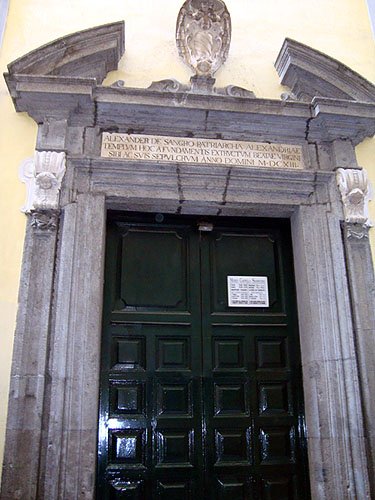
The Filomarino family, prominent Neapolitan nobles, acquired the palace in the early 17th century. During the tumultuous Masaniello revolt (1647–1648), the palace served as a refuge and suffered damage, particularly to its portico. Restoration in the 18th century by Ferdinando Sanfelice introduced the striking Baroque piperno portal and grand staircase, which remain among its most celebrated features (Grande Napoli, Le Voci di Napoli).
19th and 20th Century Changes
Further modifications in the 19th century included the addition of Neoclassical balconies and the subdivision of the building into apartments. Restoration efforts in the 20th century uncovered medieval ogival arches and preserved key historical elements, ensuring the palace’s continued architectural prominence (Palazzi di Napoli).
The Filomarino Family and Key Historical Moments
The Filomarino family played significant roles in Naples’ civic and religious life, particularly during the 17th century. Cardinal Ascanio Filomarino, an influential figure, resided here, and the palace was central during the Masaniello uprising. Despite wartime damage, the palace’s essential structures were restored, solidifying its place in Neapolitan history (Il Risveglio di Parthenope, Digital History).
The Croce Legacy and Modern Cultural Role
In the 20th century, Palazzo Filomarino became the residence of Benedetto Croce (1866–1952), one of Italy’s leading philosophers and historians. Here, Croce established the Istituto Italiano per gli Studi Storici in 1946 and curated an extensive personal library, now preserved by the Fondazione Biblioteca Benedetto Croce (Gaeta.it). Today, the palace remains a vibrant cultural center, hosting seminars, exhibitions, and public events, and serving as an important resource for scholars (Napoli da Vivere, ANSA).
Visiting Palazzo Filomarino: Practical Information
Opening Hours
- Regular Access: Palazzo Filomarino is primarily a working research institute and library, and is not open for daily casual visits.
- Special Openings: During cultural events such as the "Maggio dei Monumenti" festival, the palace opens to the public, typically from 10:00 AM to 6:00 PM. Exact times may vary by event (Rai News).
Tickets and Booking
- General Admission: Entry is often free during public cultural events; some exhibitions or guided tours may require a ticket (usually €8 for adults, €5 for students/seniors).
- Booking: Advance reservation is strongly recommended for special events and guided tours due to limited capacity. Visit the Istituto Italiano per gli Studi Storici and Fondazione Biblioteca Benedetto Croce websites for up-to-date ticketing information.
How to Get There
- Address: Via Benedetto Croce 12 (or Via Filomarino, 39, for alternate entrances), in the heart of Spaccanapoli.
- Public Transport: Reachable by Metro Line 1 (Dante or Toledo stations) and various bus lines. The palace is a short walk from Piazza del Gesù Nuovo and Piazza San Domenico Maggiore (Petit Futé).
Accessibility
- Wheelchair Access: The palace offers partial accessibility, with elevators and ramps available for main areas. Some historic sections (like the grand staircase) may be challenging; contact the administration in advance for assistance.
Guided Tours and Special Events
- Guided Tours: Offered during special openings and by appointment. Tours focus on architectural, artistic, and intellectual highlights.
- Cultural Events: Palazzo Filomarino regularly hosts exhibitions, readings, and seminars—especially during the “Un angolo di Napoli dalle pagine di Benedetto Croce” series and other commemorative events (Napoli da Vivere).
Photography Policy
- Photography: Permitted in most public areas, but may be restricted in library and archival spaces. Always check signage or inquire with staff.
Nearby Attractions and Travel Tips
- Nearby Landmarks: Basilica di Santa Chiara, Church of Gesù Nuovo, Piazza San Domenico Maggiore, Naples National Archaeological Museum.
- Dining and Shopping: The Spaccanapoli district is lined with cafés, artisan shops, and bakeries—ideal for sampling Neapolitan cuisine.
- Travel Tips: Wear comfortable shoes for cobblestone streets; book tickets in advance for major attractions during peak seasons (PlanetWare, Travel Safe Abroad).
Frequently Asked Questions (FAQ)
Q: What are the visiting hours of Palazzo Filomarino?
A: The palace is generally open to the public only during special events, usually from 10:00 AM to 6:00 PM. Check official sources for current schedules.
Q: How can I get tickets?
A: During events, tickets can be booked through the Istituto Italiano per gli Studi Storici or Fondazione Biblioteca Benedetto Croce.
Q: Is the palace wheelchair accessible?
A: Main areas are accessible, but some historical sections have limited access. Contact the administration for assistance.
Q: Are guided tours available?
A: Yes, especially during public openings and by reservation.
Q: Can I take photographs?
A: Generally allowed in public spaces, but may be restricted in library areas.
Listen to the full story in the app
The whole Palazzo Filomarino,
told well.
Audio guides for 1,100+ cities across 96 countries. History, stories, and local insight — offline ready.
Verified, and shown.
Researched and written by the Audiala editorial team from historical records, architectural archives, and local expertise.
Researched from Wikidata, Wikipedia & official sources · fact-checked · How we make our guides →