Type 2+ letters to search all countries, cities, and places
/Ctrl KEsc
travel_explore
Type 2+ letters to search all countries, cities, and places
Press Enter to open the top result
Mount Vesuvius
Naples·Italy·40° N · 14° E·Updated Apr 2026
600,000 people live inside Vesuvius's red evacuation zone by choice. Europe's most dangerous volcano hasn't erupted since 1944 — but Naples isn't worried.
The wine that Romans drank from this mountain's slopes was branded "Vesuvinum" and dedicated to Bacchus — six decades before the mountain killed everyone who made it. Mount Vesuvius, rising 1,281 meters above the Bay of Naples in southern Italy, is the only active volcano on mainland Europe, and standing on its rim is one of the most unsettling thrills the continent offers. You look down into a crater that has erupted roughly once per century since 1631, then out across a city of three million people living in its shadow.
The mountain you see today isn't the mountain the Romans knew. Before 79 AD, Vesuvius was a single, taller, vine-covered peak — locals worshipped it as a manifestation of Jupiter and painted it in household shrines. The blast that buried Pompeii collapsed the original summit into a caldera, and the current cone, the Gran Cono, grew inside the older ring of Monte Somma like a fist pushing through a broken bowl. Two mountains nested inside each other, one the scar tissue of the other.
The hike to the crater rim takes about 25 minutes from the car park at 1,000 meters, a gravel path switchbacking through surprisingly fragrant broom and lichen-crusted lava. At the top, sulfur wisps curl from fumaroles along the inner walls — a reminder that "quiescent" is a volcanologist's word, not a promise. On clear days, you can see the full arc from Sorrento to Ischia, with Naples spread below like a map of everything at stake.
What makes Vesuvius worth the visit isn't the view, though the view is extraordinary. It's the cognitive dissonance: the mountain is beautiful, the soil is fertile, the air smells of pine and warm rock — and none of that changes the fact that 600,000 people live inside the official Red Zone evacuation boundary. Vesuvius doesn't feel dangerous. That's precisely what makes it dangerous.
Researched by the Audiala editorial team from historical records, architectural archives, and local expertise.
What to see
The Gran Cono Crater Rim
You expect drama from an active volcano. What you don't expect is the sound — or rather, the absence of it. After 860 meters of switchbacks crunching through black-red scoria that slides back underfoot like coarse beach sand, you reach the lip of a crater 450 meters wide and 300 meters deep, and the wind takes everything else away. The crater interior is a geology textbook sliced open: stratified bands of red, ochre, grey-green, and obsidian black, each layer a different eruption's signature stacked over millennia. Small fumaroles vent sulphurous steam along the inner walls — faint, like a struck match held at arm's length — with yellow mineral deposits staining the rock around them. Walk the full accessible arc of the rim, roughly a quarter of the circumference, and you'll count three or four active vents most visitors photograph once and miss entirely. The Bay of Naples unfurls behind you as you turn: Ercolano directly below, the city spreading west, then Capri, Ischia, and Procida floating on the horizon like a painter's afterthought. Come in autumn or early morning when cool air makes the fumarole steam visible and the haze lifts off the islands.
Valle dell'Inferno and the Somma Caldera
Here's what 99% of visitors to Vesuvius never see: the Gran Cono — the cone you climb — sits inside the shattered remnants of a much older volcano called Mount Somma, and between the two lies the Valle dell'Inferno, the Valley of Hell. It earns the name. The floor is a frozen sea of black pahoehoe lava from 19th- and 20th-century eruptions, ropy and rippled as if it stopped flowing five minutes ago rather than eighty years. The silence down here is different from the wind-scoured rim above — heavier, mineral, broken only by the hollow ceramic tink of kicked scoria, so porous with trapped gas bubbles it rings like cheap pottery instead of thudding like ordinary stone. From the Sentiero dei Cognoli trail along the Somma rim — 14 kilometers, roughly 7 hours, the most panoramic route in the park — you get the reverse view: looking across at the Gran Cono's perfect cone, the crater visible in profile, the double-rim silhouette that defines Naples's skyline suddenly legible as two separate mountains. Almost nobody takes this trail. That's exactly why you should.
The Osservatorio Vesuviano
Ferdinand II of Bourbon commissioned this pink-stuccoed neoclassical building in 1841, making it the world's first volcanological observatory — a full century before most countries thought to monitor their volcanoes at all. Its Pompeian-red walls deliberately echo the buried Roman cities downslope, a detail that feels either poetic or darkly funny depending on your mood. Inside, brass seismographs from the 1800s still sit in their original wooden cases alongside lava bombs, sulphur crystals, and mineral specimens ejected over centuries of eruptions. Giuseppe Mercalli — yes, that Mercalli, whose intensity scale you learned in school — directed the observatory in the early 1900s. Most crater-bound visitors drive straight past without a glance. Stop. The instruments alone are worth twenty minutes, and the building offers a rare human-scaled counterpoint to the geological enormity above.
The Full Ascent: Olivine Underfoot, Ginestra in the Air
Start early — before 9 a.m. — and pay attention to what's beneath your boots. Among the grey-black gravel of the Gran Cono switchbacks, tiny bright green grains catch the sunlight. These are olivine crystals, a magnesium-iron silicate that formed deep in the magma chamber and was blasted to the surface during eruptions. You're walking on millions of crystallized magma fragments, and almost nobody looks down long enough to notice. Pick up a pinch and rub it between your fingers. The green sparkle is unmistakable. Lower on the slopes, especially in May and June, yellow ginestra — the broom plant Leopardi immortalized in his 1836 poem La Ginestra — blooms across the volcanic soil, filling the air with a sweet resinous scent that mixes improbably with pine. The whole ascent takes about 30 minutes from the Piazzale di Quota 1000 trailhead, and the sensory shift is abrupt: smooth asphalt gives way to crunching volcanic gravel in a single step, city noise drops to wind, and the view from Parco Virgiliano across the bay suddenly makes sense in reverse — you're now the silhouette on the skyline.
Plan your visit
Getting There
From Naples, take the Circumvesuviana train from Napoli Garibaldi to Ercolano Scavi (15 min, €2.20) and catch the Vesuvio Express shuttle opposite the station (€10 round-trip). Alternatively, ride to Pompei Scavi–Villa dei Misteri (40 min, €2.80) and take the EAV bus (€3.10 each way, ~45 min uphill). By car, exit the A3 motorway at Torre del Greco and follow brown signs — but cars park at ~800 m elevation, adding an extra 30-minute walk before the main trail even begins.
Opening Hours
As of 2026, the Gran Cono trail (Sentiero 5) opens at 9:00 year-round, with last entry varying by season: 15:00 in November–February, 16:00 in March and October, 17:00 in April–June and September, 18:00 in July–August. Arrive at least 90 minutes before closing to allow for the climb. Winter closures for snow, fog, or high winds are frequent and announced same-day — check before you travel.
Time Needed
A quick summit visit takes about 2 hours at the mountain itself: 25 minutes up, 15 down, plus time at the crater rim. A relaxed visit with photos and the rim walk runs closer to 3 hours. Budget a full 5–6 hours door-to-door from central Naples, including transit and waiting for your timed entry slot.
Tickets
As of 2026, Gran Cono entry costs approximately €10–12 per adult, booked online only through the official Vivaticket portal — there is no ticket booth at the trailhead. Entry is by timed slot, with groups of 60 admitted every 10 minutes, so book at least a month ahead in high season. Mobile signal at Quota 1000 is weak to nonexistent; download your ticket to your phone before you leave Naples.
Accessibility
The Gran Cono summit trail is not wheelchair accessible — it's a steep 1 km climb on loose volcanic gravel with 280 m of elevation gain and zero shade. The national park does offer a separate flat 1.5 km trail through pine forest that is wheelchair-friendly. Companions who can't make the climb can wait at the café near the Quota 1000 trailhead.
Photo Gallery
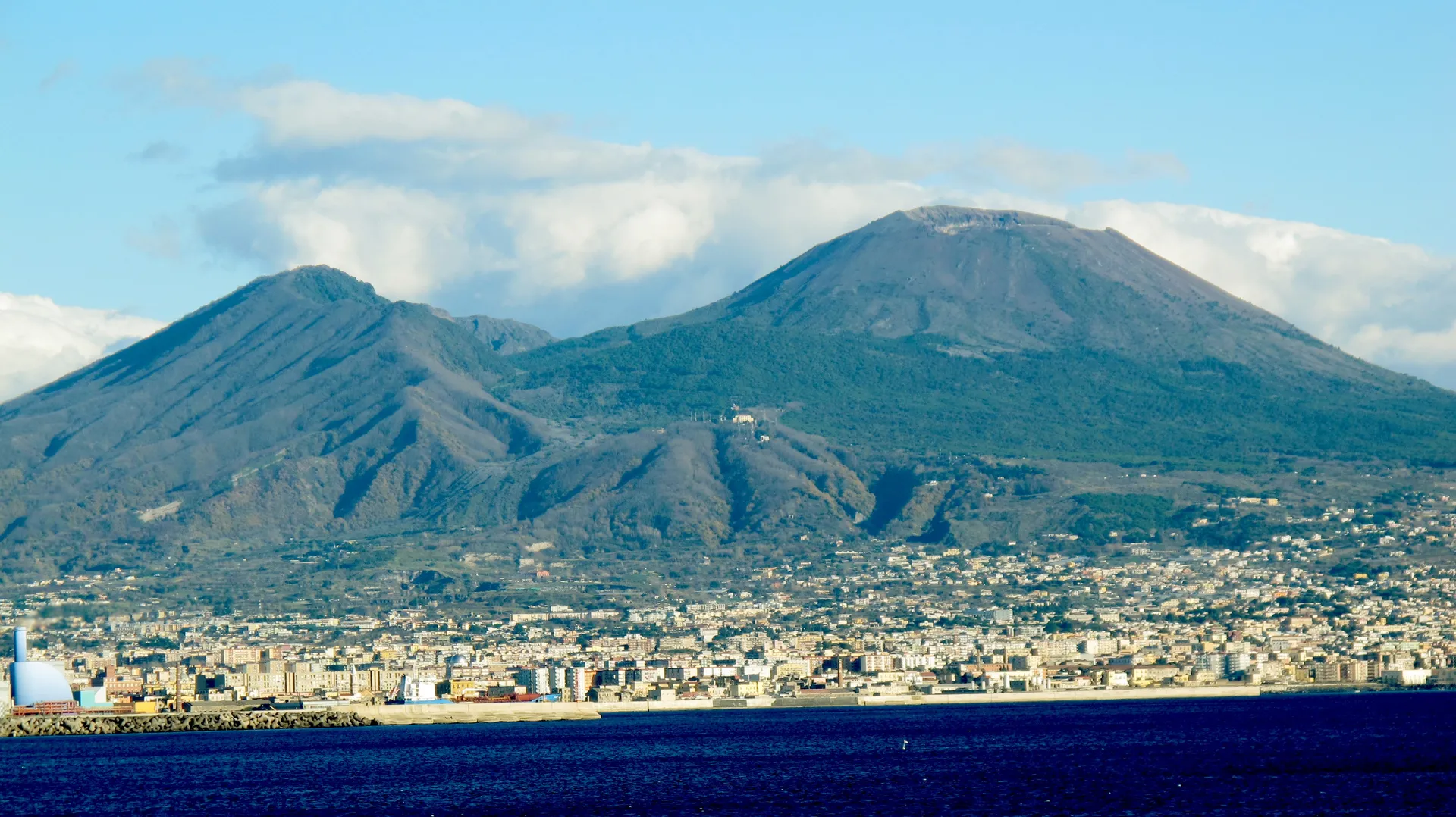
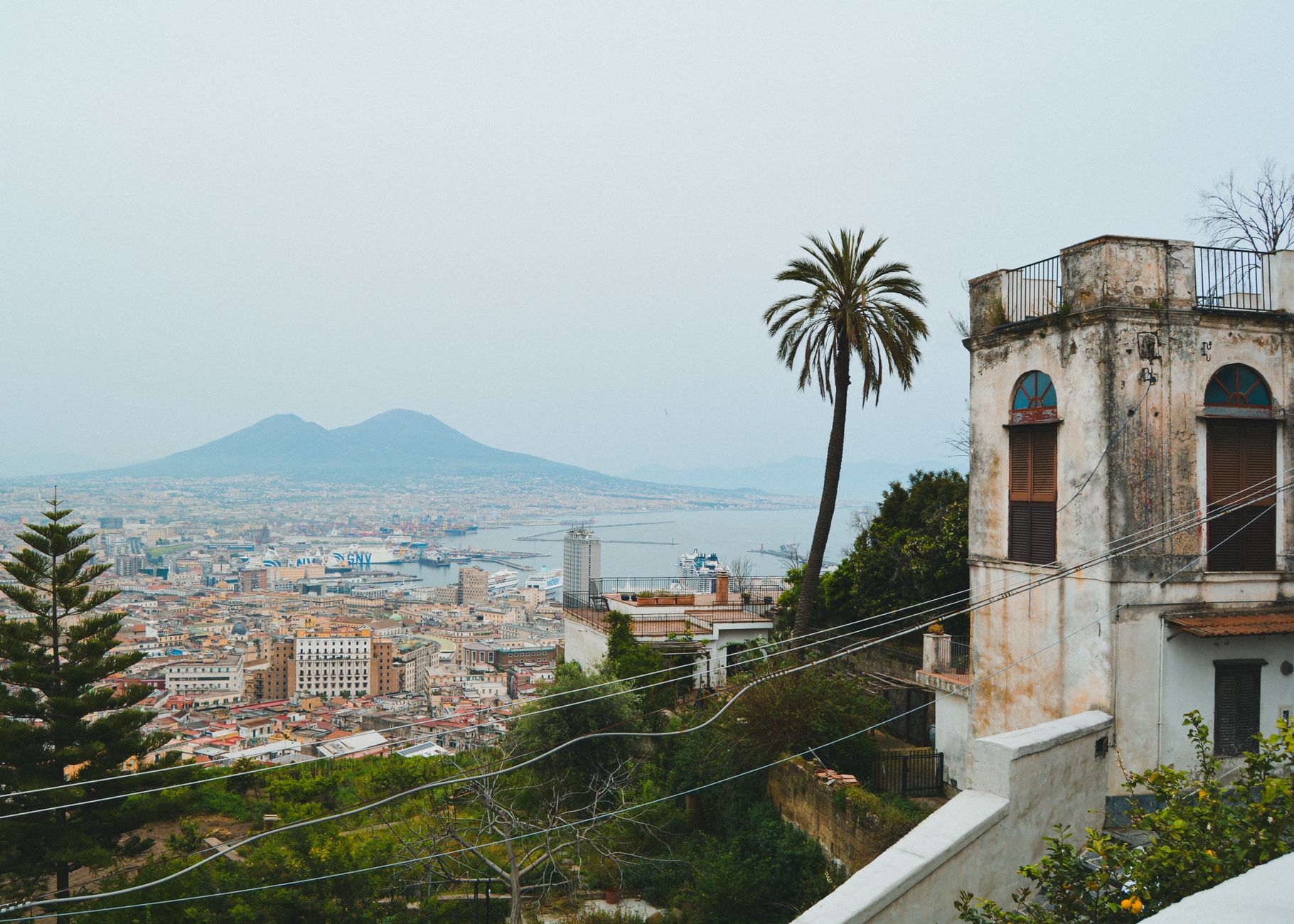
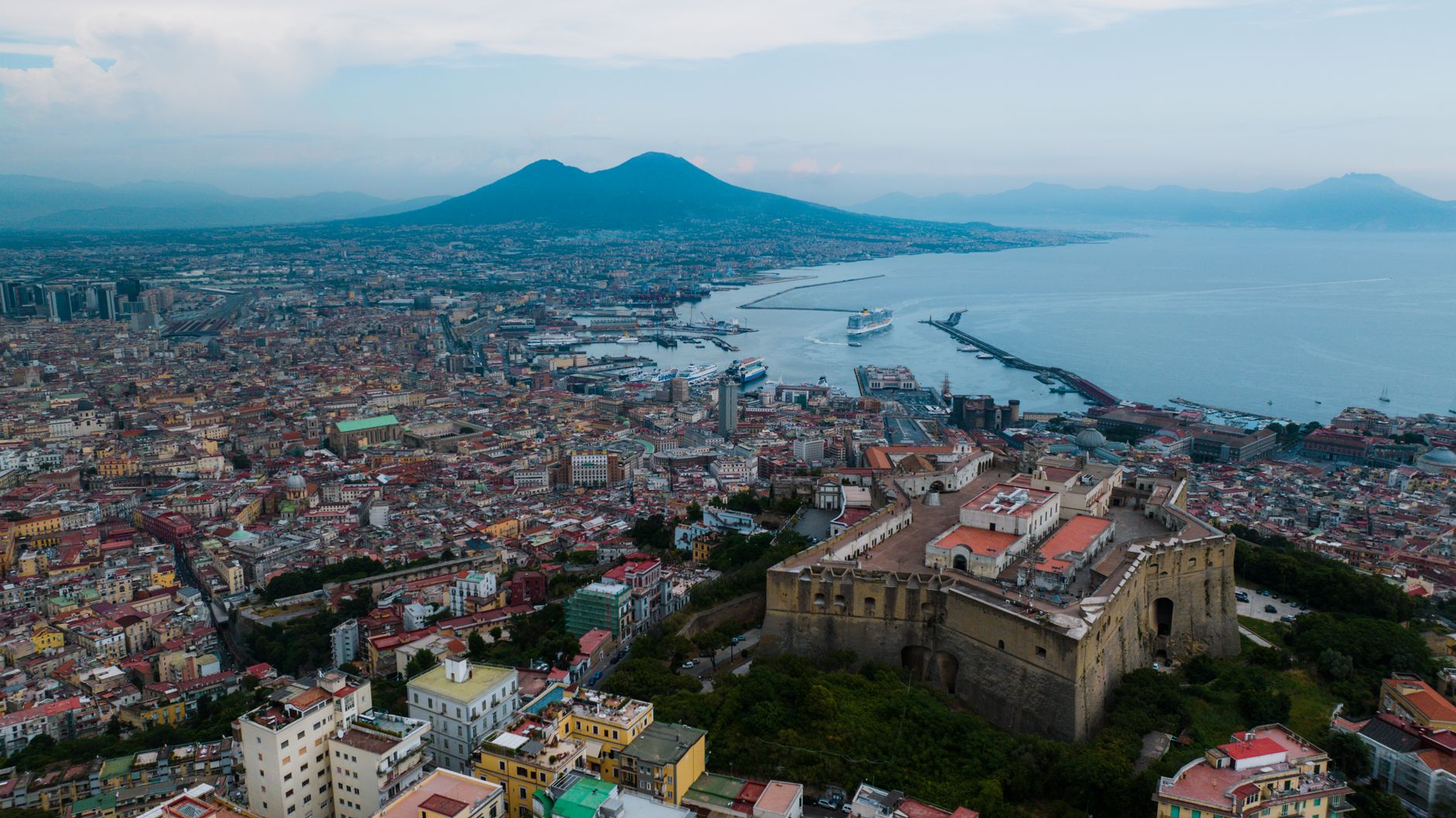
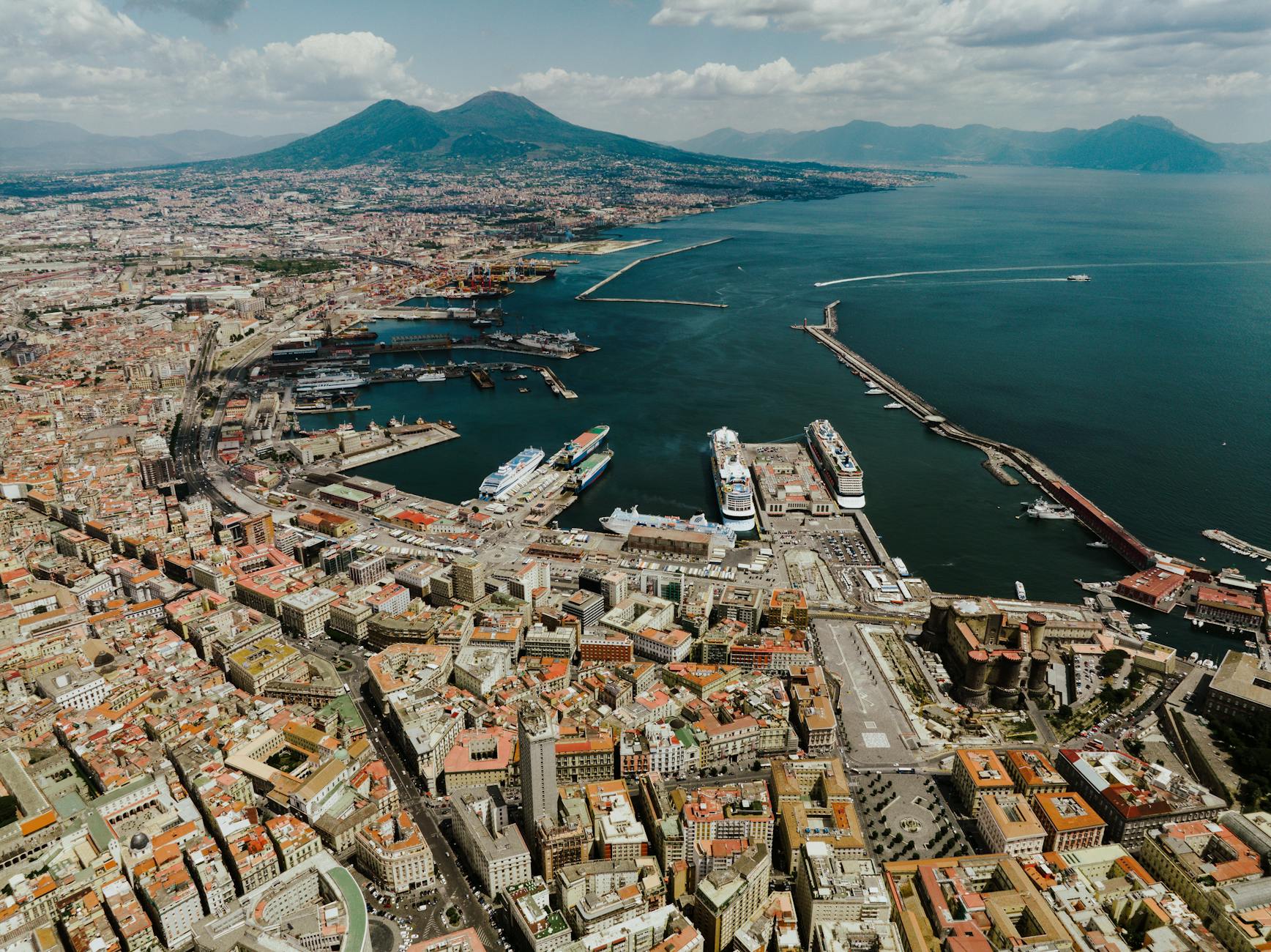
Mount Vesuvius looms over Naples and its working harbor, with the Bay of Naples stretching into soft afternoon haze. The elevated view captures the city’s dense waterfront and volcanic backdrop in one frame. · K on PexelsMount Vesuvius rises beyond Naples and its busy bay, seen from a hillside lined with old villas, palms, and terraces. Soft haze gives the city and coastline a muted afternoon glow. · Mert Çelik on PexelsNaples spreads from its dense historic streets to the harbor, with Castel Sant'Elmo in the foreground. Mount Vesuvius rises beyond the bay under pale, cloudy light. · K on PexelsMount Vesuvius rises behind the dense waterfront of Naples, with the bay stretching across the foreground under scattered afternoon clouds. · Kei Scampa on PexelsNaples spreads around its busy harbor beneath Mount Vesuvius, with ferries, breakwaters, and dense city blocks meeting the Bay of Naples. · K on PexelsMount Vesuvius rises in silhouette beyond the lights of Naples and its curved waterfront. Marinas, historic buildings, and reflections on the bay give the city a sharp night-time glow. · Catalin Moraru on PexelsNaples climbs the hillside above its marina, with Mount Vesuvius fading into the blue distance across the bay. Bright daylight sharpens the city’s stacked facades and waterfront. · Alberto Capparelli on Pexels
History
Fire Dressed as Farmland
For most of its recorded history, Vesuvius was not feared. It was farmed. Romans planted vineyards up to its crater, stamped amphorae with its name, and built luxury villas at its feet. The mountain's volcanic nature was so thoroughly forgotten that when Spartacus and seventy escaped gladiators hid in its forested crater in 73 BC, no one — Roman or slave — considered the ground beneath them anything but solid.
That amnesia cost roughly 16,000 lives in 79 AD, then another 4,000 in 1631, and has shaped Neapolitan culture ever since — from the cult of San Gennaro to the founding of the world's first volcanological observatory. Vesuvius doesn't just have a history. It has a habit of ending other people's histories and starting new ones.
The turning point
Spartacus, the Grapevines, and the Cliff
In 73 BC, a Thracian gladiator named Spartacus led roughly seventy enslaved fighters out of a training school in Capua and up the forested slopes of Vesuvius. The Roman praetor Gaius Claudius Glaber didn't bother assembling proper legions — he gathered 3,000 militia, marched them to the mountain, and blocked the only known path down. For Spartacus, capture meant crucifixion. For Glaber, this was pest control, not war.
What Glaber didn't know — what no Roman yet understood — was that Vesuvius's slopes were covered in wild grapevines, the same vines that would later produce the celebrated Vesuvinum wine. Spartacus's men cut those vines, braided them into ropes and crude ladders, and in darkness rappelled down the sheer cliffs on the mountain's unguarded side. They circled the base, struck Glaber's camp from behind, and annihilated his force.
The humiliation transformed a slave breakout into the Third Servile War, one of Rome's gravest internal crises, eventually requiring Crassus and eight legions to suppress. And the mountain that made it possible — whose vines saved Spartacus, whose forests hid him — would reveal its true nature 146 years later, when it killed the descendants of the very people who'd chased him up its slopes.
The Night Naples Found Its Saint
On 16 December 1631, after roughly three centuries of silence, Vesuvius exploded with a convective column reaching an estimated 13 kilometers. Over two days, pyroclastic flows destroyed Boscoreale, Torre del Greco, and San Sebastiano al Vesuvio, killing some 4,000 people — the roar reportedly audible as far as Calabria and the Marche. According to Neapolitan tradition, the archbishop processed the bust and blood ampoule of San Gennaro to the city walls, and the lava stopped. Whether miracle or coincidence, the event permanently cemented San Gennaro as Naples' protector against eruptions, and December 16 became one of three annual dates when the saint's blood is publicly tested for liquefaction at the Naples Cathedral. The 1631 disaster also broke the illusion that Vesuvius was finished — it triggered 50 more eruptions over the next 313 years.
Bombers Buried in Ash
When Vesuvius erupted on 18 March 1944, the Allied forces had been in Naples for six months. The 340th Bomb Group's B-25 Mitchell bombers sat parked at Pompeii Airfield near Terzigno, directly in the path of falling tephra and lava flows. Over five days, roughly 88 aircraft were destroyed — not by the Luftwaffe, but by the volcano. Fragments of those bombers still surface in local fields. The eruption temporarily halted US bombing operations over Italy, making Vesuvius arguably the only geological feature to materially affect Allied air strategy in the Second World War. It remains the last eruption to date — an 80-year silence that is, by the volcano's own standards since 1631, ominously long.
Tips for visitors
Wear Closed Shoes
The trail is loose volcanic lapilli — fine, sharp gravel that floods into sandals instantly and turns flip-flops into a punishment. Rangers have been known to turn back visitors in open footwear, and they're right to do so.
Dodge the Touts
At Ercolano Scavi station, men will shout "Vesuvio! Vesuvio!" and quote €20–30 for a jeep ride up — these are unlicensed operators with inflated prices. The legitimate Vesuvio Express shuttle is directly opposite the station exit at €10 round-trip; book online beforehand to avoid the scrum.
Eat on the Slopes
Skip the €5 espressos at the Quota 1000 trailhead and descend to the Vesuvian wine country instead. Cantina del Vesuvio in Trecase offers a panoramic terrace with Lacryma Christi tastings and a four-course lunch for around €30–40; Casa Setaro nearby does biodynamic wines with food pairings.
Book the 9 AM Slot
Tour buses from Sorrento and the Amalfi Coast arrive mid-morning, clogging the trail by 11:00. The first slot at 9:00 gives you the crater rim nearly to yourself, cooler temperatures, and the clearest views before afternoon haze rolls in.
Leave the Drone Home
Personal photography is unrestricted, but drones are forbidden without prior park authority authorization — and the area falls under Naples Capodichino airport airspace restrictions. Carabinieri Forestali rangers actively confiscate them.
Bring a Windbreaker
The crater rim sits at 1,281 m with no wind shelter — temperatures run 8–10 °C cooler than Naples even in July, and gusts can be fierce. A light packable jacket saves you from cutting your visit short while everyone around you shivers in tank tops.
Where to Eat
local_dining
Don't Leave Without Trying
Pizza Napoletana (Margherita, Marinara)Pizza frittaCuoppo napoletano (mixed fried seafood or vegetables)Sfogliatella ricciaBabà al rumPastiera napoletanaMozzarella di bufala campanaTaralli 'nzogna e pepeZiti alla genoveseSalsiccia e friarielli
Cantina Del Vesuvio Winery Russo Family since 1930
local favorite
Winery & Neapolitan Cuisine€€star4.9(3678)
Order: The 3-course wine-tasting lunch (€45) — the crisp rosé and the spaghetti with meatballs are standouts, and the tour of the vineyards adds an unforgettable sense of place.
A family-run winery since 1930 on the slopes of Vesuvius. The peaceful vineyard setting, panoramic volcano views, and warm, informative tours make it feel like a countryside escape, not a tasting room.
Order: The 'Open Your Mind' tasting menu (€65) — beautifully balanced, creative courses that change with the seasons, paired with a local Vesuvius wine.
A true hidden gem in Pompeii. The enthusiastic team delivers refined yet unpretentious dishes with genuine warmth, and they handle dietary needs (like lactose intolerance) gracefully. Outdoor seating adds to the charm.
Order: Let the owner guide you — the off-menu specials are the soul of this place. The monkfish ravioli and the house tiramisu have left diners from Ireland to Naples raving.
A cozy, family-feel spot in Pompeii where the chef-owner personally checks on every table. Impeccable service and a knack for surprising regulars and first-timers alike with precisely what they didn't know they wanted.
Order: The ziti alla genovese and the Salsiccia e friarielli are textbook Neapolitan comfort food. Pair with a quartino of local red and, if you still have room, the trippa alla napoletana.
A small, softly lit locanda that feels like dining in a neighbourhood home. Vegetarian and gluten-free options sit alongside classic meat dishes, all at fair prices in the historic centre.
checkMany family-run trattorie close Sunday evening or all day Monday — always check ahead if you're planning a weekend visit.
checkPizzerias stay open late and are busiest after 21:00. An 8 p.m. dinner is early by Neapolitan standards.
checkLunch is typically served 12:30–15:00. Arrive by 13:00 to grab a table before the midday rush.
checkAperitivo runs from 18:30 to 20:30 — it's the ritual of a spritz and light snacks before dinner, and a great way to eat like a local.
checkMercato della Pignasecca (Mon–Sat, approx. 9:00–19:00) is Naples' oldest food market — mornings give you the fullest vendor turnout and ultimate street-food crawl.
checkPorta Nolana fish market is a must for seafood lovers; it opens around 8:00–14:00 Tue–Sat and Sunday mornings, but Monday is often closed.
checkBreakfast is a quick stand-up affair: an espresso and a cornetto or sfogliatella at the bar counter, typically 7:00–10:00.
Food districts:Mercato della Pignasecca / Montesanto – the pulsing historic food market and street-food heart of Naples.Porta Nolana – legendary open-air fish market near the central station, best visited in the morning.Chiaia – home to the covered Mercato della Torretta and refined food boutiques.Vomero / Arenella – Mercato di Antignano, a local's market mixing fresh produce, pastries, and household goods.
Restaurant data powered by Google
Watch & Explore Mount Vesuvius.
Mount Vesuvius Is RECHARGING: The Deadliest Eruption May Be Ahead!
Earthly11 min104K
The Active Volcano in Italy; Mount Vesuvius
GeologyHub5 min100K
One Day Trip to Pompeii and Hiking Mount Vesuvius! 🇮🇹
Helen and Tim Travel11 min21K
Frequently asked
Is Mount Vesuvius worth visiting?
Yes — standing on the rim of Europe's most infamous active volcano, looking 300 meters down into the crater while the entire Bay of Naples stretches behind you, is unlike anything else in Italy. The hike is short (about 30 minutes up from the car park at 1,000 m elevation), and the sensory details reward you: sulphur wisps from fumaroles, tiny green olivine crystals glinting in the trail gravel underfoot, and a wind that whips over the rim even on hot summer days. Pair it with a visit to Herculaneum at the base for a half-day that connects the destroyer with the destroyed.
How long do you need at Mount Vesuvius?
Budget 2–3 hours at the mountain itself: 20–30 minutes hiking up, 30–45 minutes walking the crater rim, and 15 minutes back down. A round trip from Naples takes 5–6 hours door-to-door once you factor in the Circumvesuviana train and shuttle bus. If you're using the Vesuvio Express shuttle from Ercolano, you get a strict 90-minute window at the top — tight but doable if you move with purpose.
How do I get to Mount Vesuvius from Naples?
Take the Circumvesuviana train from Napoli Garibaldi station to either Ercolano Scavi (15 minutes, about €2.20) or Pompei Scavi – Villa dei Misteri (40 minutes, about €2.80), then catch a shuttle bus up the mountain. From Ercolano, the Vesuvio Express runs round-trip for €10 plus your €10 park entry; from Pompei, the EAV public bus costs about €3.10 each way. Both drop you at the Piazzale Quota 1000 car park at roughly 1,000 m elevation, where the 860-meter trail to the crater begins.
What is the best time to visit Mount Vesuvius?
Early April through mid-June and September through October offer the clearest skies, mildest temperatures, and thinnest crowds. Book the earliest morning slot — the 9:00 opening — to beat tour buses and midday heat, since the trail has zero shade. In winter the trail frequently closes for snow or wind, and in high summer the exposed volcanic gravel radiates heat like a kiln. One golden rule: if clouds are sitting on the summit when you look up from below, don't climb — you'll see nothing but white.
Can you visit Mount Vesuvius for free?
No — the Gran Cono crater trail requires a timed-entry ticket of around €10–12, purchased online in advance through the official Vivaticket portal. There is no ticket booth at the trailhead, and mobile signal at 1,000 m is weak, so buy your slot before you leave your hotel. No sources confirm that Vesuvius participates in Italy's free-Sunday museum scheme.
What should I not miss at Mount Vesuvius?
Walk the full accessible arc of the crater rim, not just the first viewpoint — three or four active fumarole zones with yellow sulphur deposits reveal themselves along the way. Look down at the trail gravel in your hands: the bright green specks are olivine crystals, crystallized deep in the magma chamber and blasted out during eruptions. Most visitors skip the Osservatorio Vesuviano lower on the slope — the world's oldest volcanological observatory, founded in 1841, with 19th-century brass seismographs still in their original wooden cases.
Is the Mount Vesuvius hike hard?
It's short but steeper and rougher than guidebooks suggest. The trail covers about 860 meters with 280 meters of elevation gain on loose volcanic gravel — each step slides back slightly, like walking on coarse wet sand mixed with sharp pebbles. Wear sturdy closed shoes (rangers may turn back visitors in sandals), bring at least a liter of water, and grab one of the wooden walking sticks offered at the trailhead for a few euros. Most reasonably fit adults manage it in 25–30 minutes up.
Is Mount Vesuvius safe to visit?
The volcano has been quiescent since its last eruption in March 1944 — its longest silence in over 400 years — and is under continuous monitoring by the Osservatorio Vesuviano (INGV). The physical risks are more mundane: loose footing on volcanic gravel, strong winds at the rim, and intense sun with no shade. Watch for overpriced jeep-tour touts at Ercolano station and don't leave valuables visible in parked cars at the lower lots.
Sources & attribution30
Researched and written by the Audiala editorial team from historical records, architectural archives, and local expertise. Last updated April 2026.
Wikipedia — Mount Vesuvius — General overview of geology, eruption history, Decade Volcano status, Red Zone population figures, and cultural references including Pompeian lararia frescoes.
Pompeii in Pictures — Vesuvius History — Detailed eruption timeline, Battle of Mount Vesuvius (73 BC, Spartacus), Battle of Mons Lactarius (552/553 AD), and 1944 eruption details including B-25 bomber losses.
Italian Civil Protection — Eruption of 1631 — Official Italian government account of the 1631 sub-Plinian eruption, hour-by-hour timeline, and pyroclastic flow descriptions.
Saved and recently read places — kept on this device only.
Photo credits (10)
Il cratere del Vulcano - panoramio — pietro scerrato — CC BY 3.0 (https://creativecommons.org/licenses/by/3.0/) — Source: https://commons.wikimedia.org/wiki/File:Il_cratere_del_Vulcano_-_panoramio.jpg
K — Pexels License (https://www.pexels.com/license/) — Source: https://www.pexels.com/photo/12464311/
Mert Çelik — Pexels License (https://www.pexels.com/license/) — Source: https://www.pexels.com/photo/33634590/
K — Pexels License (https://www.pexels.com/license/) — Source: https://www.pexels.com/photo/12530468/
Strictly necessary cookies keep the site working. Analytics (PostHog, Google Analytics) measures how each visitor uses our pages. Marketing loads YouTube videos and walking-route maps without a tap and lets Google Analytics set advertising cookies. We never sell your data. You can change this any time from the footer.
Privacy
Cookie preferences
Pick what you're okay with. You can change this any time from the footer.
Strictly necessary
Always on
Sign-in, language, navigation. Always on.
Product analytics
PostHog (EU) and Google Analytics record which pages you view and how you use them, under a random identifier stored in your browser. Helps us see which pages work and which need fixing. Google's ad personalisation stays off. No selling.
Marketing
Loads YouTube videos and the walking-route maps (OpenFreeMap) without a tap; without it, they load only when you tap them. If analytics is also on, Google Analytics may set advertising cookies. Ad personalisation stays off.