Plan and listen to Fontana Del Gigante with Audiala.
Audio guide in your pocket, itinerary in your browser. Built for the way you actually visit.
Introduction
The Fontana del Gigante, also known as the Immacolatella Fountain, is a distinguished landmark located in the heart of Naples, Italy. This stunning masterpiece of Baroque architecture stands as a testament to the city's historical and cultural richness. Originally commissioned by Spanish Viceroy Pedro Álvarez de Toledo and brought to life by the esteemed architects Pietro Bernini and Michelangelo Naccherino, the fountain was completed in 1606 (Naples Tourism). Its intricate design, featuring grand arches and mythological figures, reflects the opulence of the Baroque period and the Spanish influence on Naples during the early 17th century (Baroque Art).
Over the centuries, the Fontana del Gigante has undergone several relocations and restorations, each contributing to its enduring charm and structural integrity. Today, it resides near the Castel dell'Ovo, enhancing the beauty of Naples' seafront and serving as a beloved gathering spot for both locals and visitors. This guide aims to provide a comprehensive overview of the Fontana del Gigante's historical significance, visitor information, and travel tips to ensure an enriching and memorable visit.


History of Fontana del Gigante
Origins and Construction
The Fontana del Gigante, commissioned by Spanish Viceroy Pedro Álvarez de Toledo, began construction in 1601 and was completed in 1606. Designed by renowned Baroque architects Pietro Bernini and Michelangelo Naccherino, the fountain exemplifies the grandeur of Baroque architecture (Naples Tourism).
Architectural Features
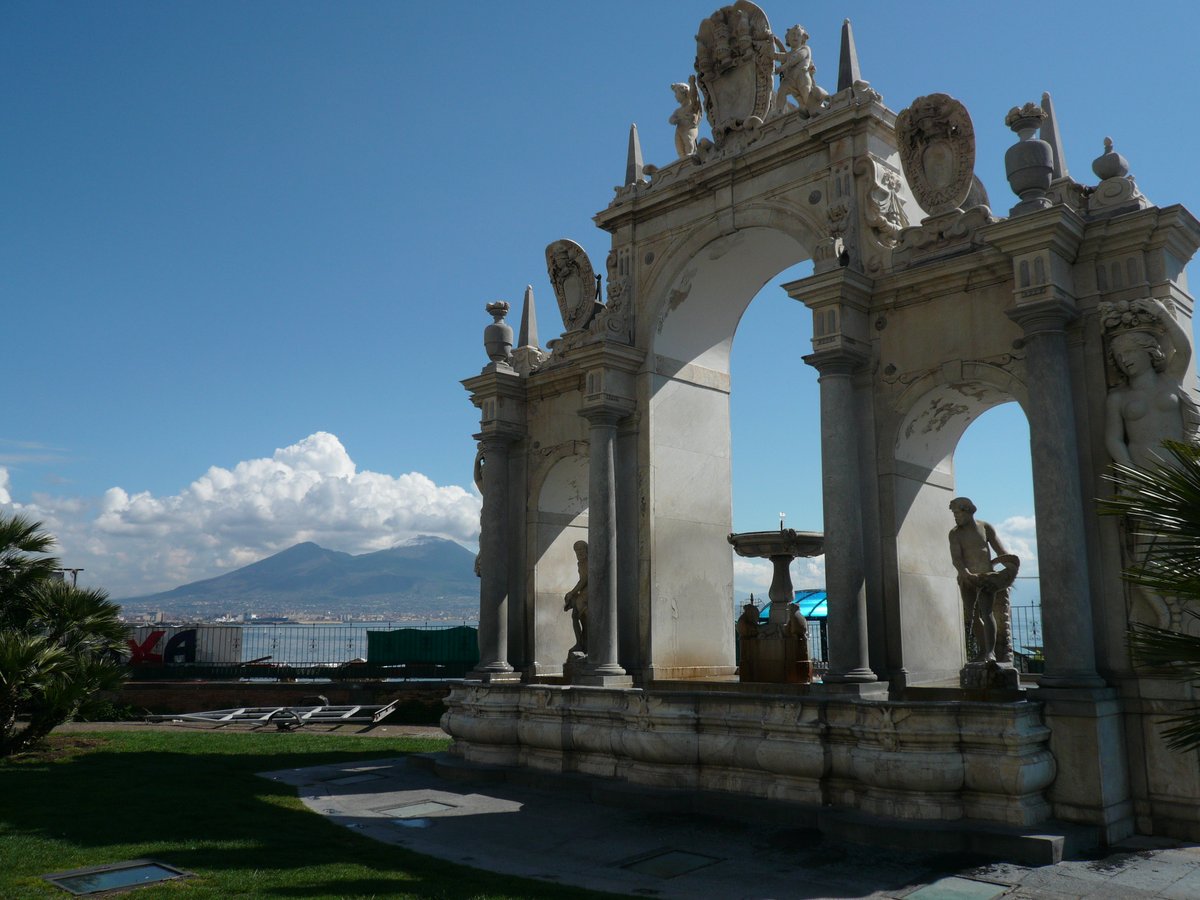
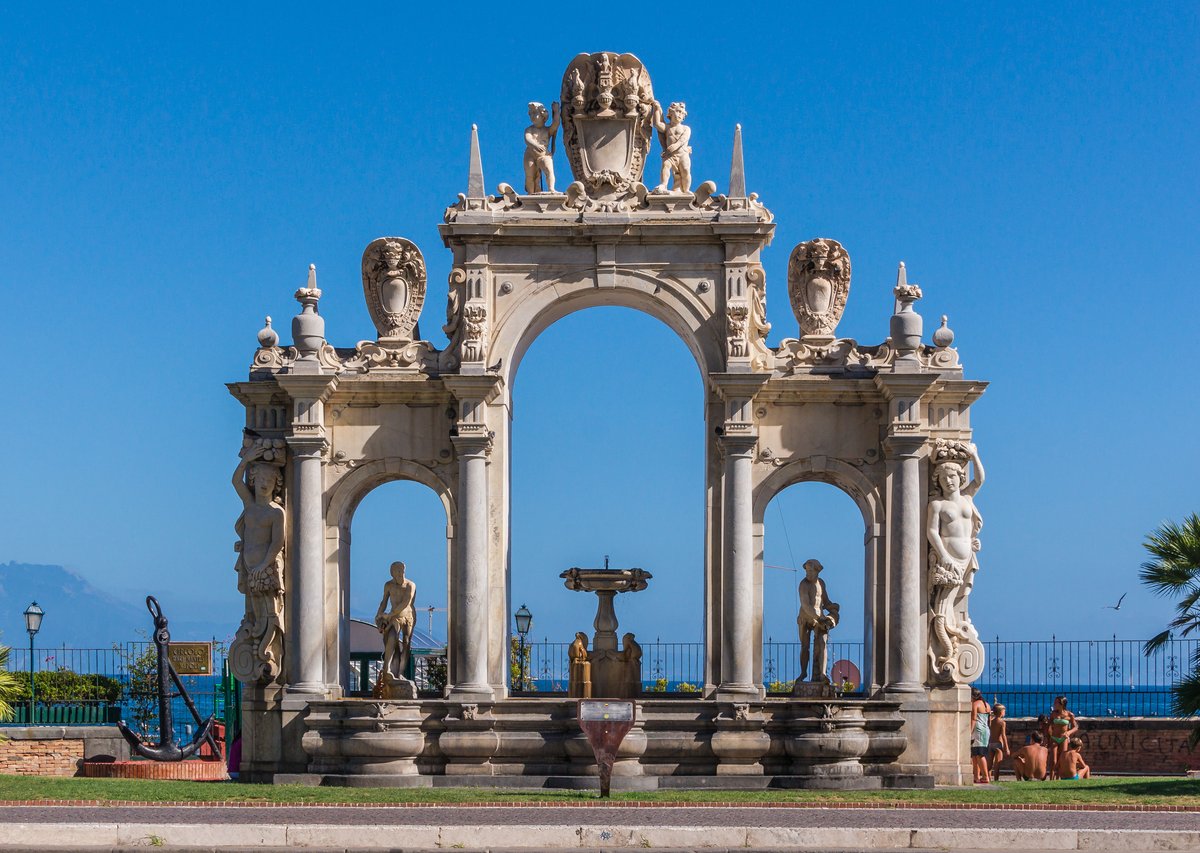
The fountain features three large arches supported by Corinthian columns, each housing statues of mythological figures like Neptune and two Tritons. The central niche is adorned with the coat of arms of the Spanish Viceroy, symbolizing Spanish influence in Naples (Baroque Art).
Relocation and Restoration
Originally located near the Royal Palace of Naples, the fountain was moved in 1815 to its current location near the Castel dell'Ovo. This relocation was part of an urban development plan to enhance the seafront's aesthetic appeal. Significant restorations in the 19th and 20th centuries have preserved its structural integrity and artistic value (Naples Historical Society).
Visitor Information
Visiting Hours and Tickets
The Fontana del Gigante is accessible 24/7 and there is no admission fee, making it perfect for a spontaneous visit. However, guided tours are available, providing detailed insights into its history and architecture (Naples Tourism Board).
Travel Tips
- Best Time to Visit: Early morning or late afternoon for the best light and fewer crowds.
- Nearby Attractions: Castel dell'Ovo, the seafront promenade, and several cafes and restaurants.
- Accessibility: The site is wheelchair accessible and well-connected by public transportation.
- Photography: The intricate sculptures and seafront backdrop make it a perfect spot for photography. Early morning light offers the best conditions for capturing stunning images.
Special Events and Guided Tours
The fountain often features in cultural events and festivals, adding to its allure. Guided tours can be booked in advance and provide an in-depth look at the fountain's history, design, and significance.
Cultural Impact and Preservation Efforts
The Fontana del Gigante is not just a historical monument but a cultural symbol of Naples. Regular maintenance and advanced restoration techniques ensure its preservation for future generations. Local authorities and cultural organizations prioritize its upkeep to protect it from environmental damage and vandalism (Cultural Preservation Society).
Frequently Asked Questions (FAQ)
Q: What are the Fontana del Gigante visiting hours?
- A: The fountain is accessible 24/7.
Q: Do I need tickets to visit Fontana del Gigante?
- A: No, there is no admission fee.
Q: What is the best time to visit?
- A: Early morning or late afternoon.
Q: Are there guided tours available?
- A: Yes, guided tours can be booked for a more detailed exploration.
Listen to the full story in the app
The whole Fontana Del Gigante,
told well.
Audio guides for 1,100+ cities across 96 countries. History, stories, and local insight — offline ready.
Verified, and shown.
Researched and written by the Audiala editorial team from historical records, architectural archives, and local expertise.
Researched from Wikidata, Wikipedia & official sources · fact-checked · How we make our guides →