Plan and listen to Palazzina Vigarani with Audiala.
Audio guide in your pocket, itinerary in your browser. Built for the way you actually visit.
Introduction
Set within Modena’s lush Giardini Ducali (Ducal Gardens), the Palazzina Vigarani stands as a prominent symbol of Baroque architecture and cultural vitality. Commissioned in the 17th century by Duke Francesco I d’Este and designed by Gaspare Vigarani, this pavilion reflects the Este dynasty’s profound impact on the city’s urban and artistic legacy. Today, the Palazzina Vigarani offers visitors a blend of historical grandeur, contemporary exhibitions, and tranquil garden settings, making it an essential destination for travelers, art aficionados, and history enthusiasts alike. This comprehensive guide details visiting hours, ticketing, accessibility, and highlights key cultural and historical insights to help you plan your visit. For up-to-date information, refer to official resources such as FMAV Palazzina dei Giardini, Visit Modena, and the Comune di Modena.
- Introduction
- History and Architectural Context
- Este Family Influence and Baroque Modena
- Architectural Features and Restoration
- Visitor Information
- Events and Photographic Opportunities
- Nearby Attractions
- FAQs
- Preservation and Modern Use
- Plan Your Visit
1. History and Architectural Context
The Palazzina Vigarani, also known as Palazzina dei Giardini, epitomizes Baroque elegance within Modena. Built between 1634 and 1638 under the auspices of Duke Francesco I d’Este, the pavilion was designed by Gaspare Vigarani, a master of architecture and scenography. Its initial purpose was to host courtly entertainments, receptions, and theatrical events, mirroring the Este court’s devotion to the arts (Comune di Modena).
Strategically situated in the northern section of the Giardini Ducali, the Palazzina originally served as a refined retreat, seamlessly integrating architecture with meticulously landscaped gardens. Its Baroque style—characterized by symmetry, grand proportions, and ornate details—has endured through centuries, despite several modifications and careful restorations (Emilia Romagna Turismo).
2. Este Family Influence and Baroque Modena
Relocating their capital from Ferrara to Modena in 1598, the Este family ignited a period of intense urban renaissance. Duke Francesco I d’Este spearheaded ambitious projects, including the expansion of the Ducal Palace and the creation of spaces like the Palazzina Vigarani. Gaspare Vigarani’s design harmonized theatrical sensibility with architectural sophistication, making the pavilion a focal point for courtly life and public spectacle (Visit Modena).
3. Architectural Features and Restoration
The Palazzina Vigarani’s two-story structure is defined by a rectangular plan, large arched ground-floor openings, and an elegant staircase leading to upper reception halls. Baroque flourishes such as pilasters, tympanums, statues, and a prominent sundial accentuate its façade (La Guida di Modena).
Subsequent enhancements in the late 18th and 19th centuries introduced lateral wings and interior frescoes, further enriching its appearance. After periods of neglect and utilitarian use, major restoration in the late 20th century preserved its original character, adapting the space for contemporary cultural programming (Artsupp).
4. Visitor Information
Visiting Hours
- Tuesday – Sunday: 10:00 AM – 6:00 PM
- Closed: Mondays and public holidays
Hours may vary during events or exhibitions; consult the FMAV website for updates.
Tickets and Guided Tours
- General Admission: €5
- Reduced Admission: €3 (students, seniors)
- Free Entry: Children under 12 and Modena residents
- Booking: Tickets available onsite or online; group tours and educational visits should be booked in advance.
Some exhibitions and events may have separate ticketing policies; always check the latest information via official channels.
Accessibility
- Wheelchair Access: Ramps and elevators are available.
- Accessible Facilities: Restrooms and assistance available upon request.
- Indoor/Outdoor Seating: The café and public areas provide accessible seating; note that the first floor is accessible only by spiral staircase.
5. Events and Photographic Opportunities
The Palazzina Vigarani is a year-round venue for contemporary art exhibitions, concerts, workshops, and community events. The Giardini Ducali’s manicured parterres and tree-lined avenues, along with the Palazzina’s Baroque façade and grand interiors, offer exceptional settings for photography and relaxation (FMAV Palazzina dei Giardini).
6. Nearby Attractions
Enhance your visit by exploring these nearby Modena highlights:
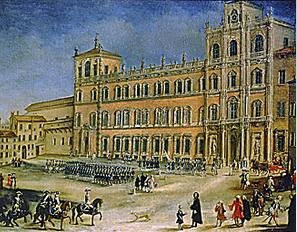
- Ducal Palace (Palazzo Ducale): Former Este residence, now the Italian Military Academy.
- Modena Cathedral & Piazza Grande: UNESCO World Heritage sites showcasing Romanesque architecture.
- Enzo Ferrari Museum: A must for automotive aficionados.
- Galleria Estense & Albinelli Market: Rich collections and vibrant local culture.
For more, see Visit Modena.
7. Frequently Asked Questions (FAQs)
Q: What are the visiting hours?
A: Tuesday to Sunday, 10:00 AM – 6:00 PM; closed Mondays and public holidays.
Q: What are the ticket prices?
A: €5 general, €3 reduced, free for children under 12 and Modena residents.
Q: Is the Palazzina accessible?
A: Yes, ground-floor spaces are accessible; inquire about specific needs in advance.
Q: Are guided tours available?
A: Yes, through FMAV and as part of special programs and exhibitions.
Q: Can I take photographs?
A: Photography is allowed for personal use, but flash and tripods may be restricted during exhibitions.
Q: How do I get there?
A: The Palazzina is a 10-15 minute walk from Modena’s train station. Bus lines 3 and 6 stop nearby; limited parking is available (Travelemiliaromagna.it).
8. Preservation and Modern Use
Managed by the Fondazione Modena Arti Visive (FMAV), the Palazzina Vigarani is both a heritage site and a venue for contemporary culture. Restoration projects led by the Comune di Modena ensure its ongoing preservation and adaptability for exhibitions, performances, and community engagement (Comune di Modena).
9. Plan Your Visit
To optimize your experience:
- Download the Audiala app for audio guides and event updates.
- Check official websites for schedules and ticketing.
- Explore related articles and virtual tours for inspiration:
10. Summary
The Palazzina Vigarani embodies Modena’s fusion of Baroque heritage and contemporary creativity. Its accessible location, rich programming, and proximity to major attractions make it an essential stop for any visitor. Enjoy the serenity of the Giardini Ducali, immerse yourself in art and history, and discover why this historic pavilion continues to captivate locals and travelers alike. For the latest details on hours, tickets, and events, always refer to the official FMAV, Visit Modena, and Comune di Modena resources.
Listen to the full story in the app
The whole Palazzina Vigarani,
told well.
Listen to sourced travel stories with local history and practical context — ready offline.

Verified, and shown.
Researched and written by the Audiala editorial team from historical records, architectural archives, and local expertise.
Built from cited sources · see the method · How we make our guides →