Introduction
The Lapidario Romano dei Musei Civici di Modena, housed within the elegant Palazzo dei Musei in the heart of Modena, Italy, is an essential destination for anyone interested in exploring the city’s deep Roman heritage. This unique museum offers an unprecedented window into the ancient city of Mutina, which became a Roman colony in 183 BCE. Showcasing an extensive array of Roman-era stone inscriptions, funerary monuments, sarcophagi, architectural fragments, and everyday artifacts, the Lapidario Romano is not only a repository of ancient art but also a vital center for historical interpretation and public engagement (laguidadimodena.it, modenatoday.it, visitmodena.it).
Whether you are a history enthusiast, a scholar, a family seeking a cultural outing, or a curious traveler, the Lapidario Romano offers an immersive and accessible experience. This guide provides all the essential information you need to plan your visit, including opening hours, ticketing, accessibility, collection highlights, and practical travel tips.
Historical Context and Development
Modena as Mutina: An Ancient Roman Colony
The foundation of Modena as Mutina in 183 BCE marked the city as a major node along the Via Aemilia, facilitating economic, cultural, and military exchanges across northern Italy. As a Roman colony, Mutina quickly grew in strategic importance, becoming the scene of significant events such as the siege involving Mark Antony and Octavian. Over centuries, the city's necropolises and public spaces accumulated a wealth of stone inscriptions and monuments that now form the backbone of the Lapidario Romano’s collection (modenatoday.it).
Origins and Growth of the Lapidario Romano
The Lapidario Romano’s origins are closely tied to the 19th-century movement to democratize art and history following Italian unification. The systematic collection of Roman lapidary artifacts began in earnest in the early 19th century, accelerating as Modena expanded and archaeological excavations unearthed new finds. The collection grew through discoveries, scholarly initiatives, and private donations, making it the most representative collection of Roman funerary monuments in Emilia-Romagna (laguidadimodena.it).
The Collection: Highlights and Interpretation
Funerary Monuments and Sarcophagi
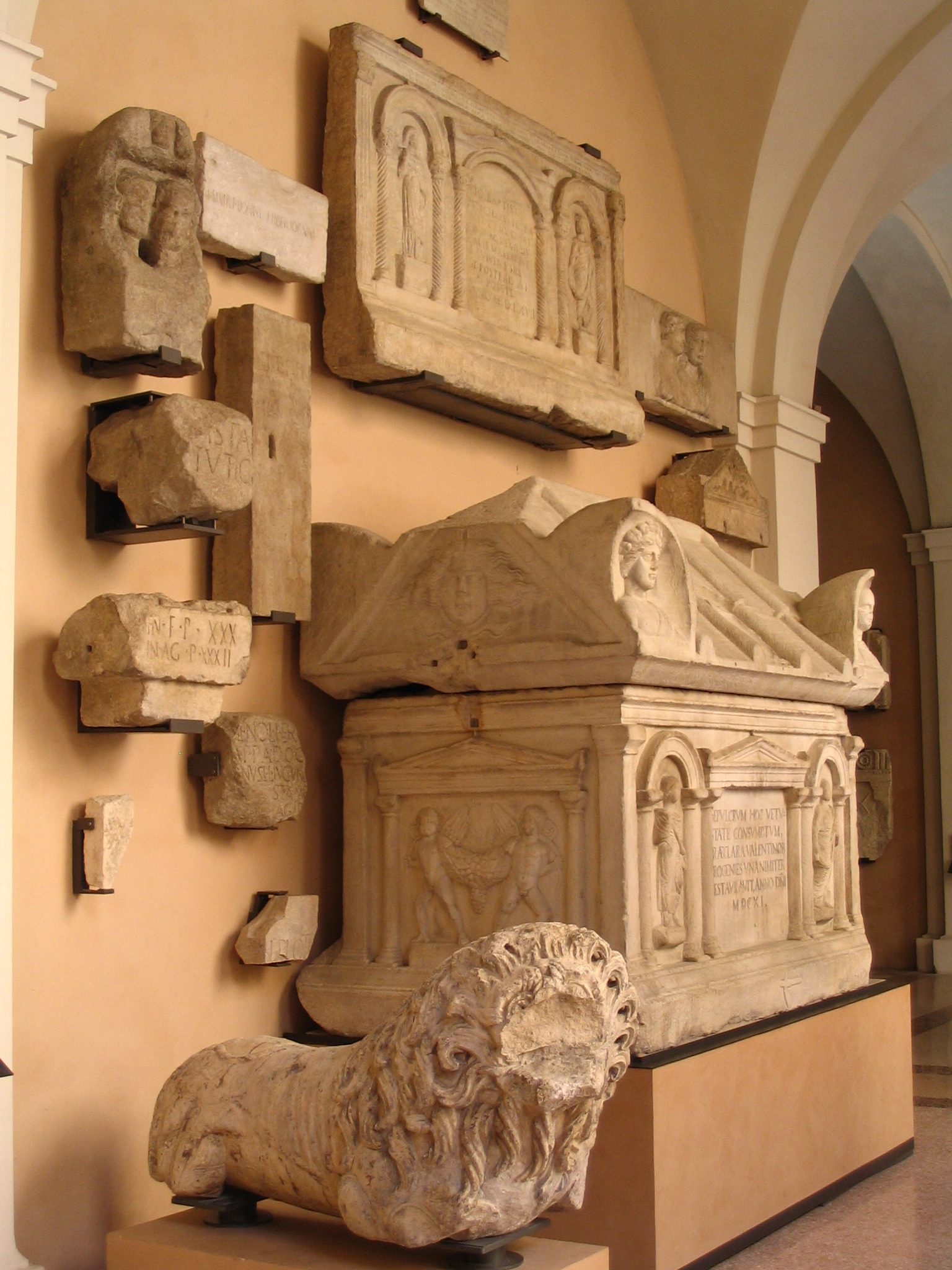
The Lapidario Romano is especially noted for its monumental sarcophagi and funerary altars, many of which were transferred from the city’s cathedral area and surrounding necropolises. These richly decorated artifacts feature mythological scenes, portraits, and symbolic motifs, providing insight into Roman funerary practices and artistic trends.
A standout is the Ara di Vetilia Egloge, a funerary altar with intricate carvings and a clear Latin inscription commemorating a prominent woman of Roman Mutina (laguidadimodena.it).
Epigraphic Heritage
The collection’s Latin inscriptions, primarily funerary, reveal names, professions, family relationships, and civic offices. Notable stelae include:
- The funerary altar of Centurion Clodius, which details his military career and local honors.
- Fragments depicting maritime symbols, possibly linked to fleet commanders from the Augustan age.
- Stelae commemorating artisans and freedmen, offering a diverse portrait of Modena’s Roman society (modenatoday.it).
Architectural Fragments and Everyday Objects
Beyond funerary monuments, the Lapidario Romano displays capitals, cornices, mosaics, and utilitarian items such as milestones and weights. These enrich our understanding of ancient Mutina’s built environment and material culture.
Evidence of Reuse
Many Roman stone monuments were repurposed in later centuries for burials and construction, illustrating continuity and transformation in Modena’s urban fabric (modenatoday.it).
Visiting Information: Hours, Tickets, and Accessibility
Opening Hours
- Monday to Saturday: 8:00 – 19:30
- Sunday and Public Holidays: 9:30 – 19:30
Hours may vary for special events or holidays; always double-check the official website before visiting.
Tickets and Admission
- General Admission: Free of charge for all visitors.
- Special Exhibitions/Guided Tours: Some events or tours may require a fee; advance booking is recommended for groups (visitmodena.it).
Accessibility
- Fully accessible for visitors with disabilities, including elevators, ramps, and tactile exhibits for the visually impaired.
- Dedicated pathways and clear signage ensure a barrier-free experience.
Location
- Address: Palazzo dei Musei, Largo Porta Sant’Agostino 337, Modena
- Entrances: Largo Porta Sant’Agostino 337 and Viale Vittorio Veneto 5
- Well-connected by public transport; parking is available nearby, but walking is recommended due to limited traffic zones (comune.modena.it).
Visitor Services and Facilities
- Reception Desk: Multilingual staff provide information, maps, and assistance.
- Bookshop: Offers guides, catalogs, souvenirs, and educational materials.
- Cafeteria: On-site for refreshments and meals.
- Restrooms and Cloakroom: Accessible facilities and free cloakroom service.
- Wi-Fi: Free throughout the Palazzo dei Musei.
Travel Tips and Nearby Attractions
- Best Time to Visit: Weekday mornings for a quieter experience; weekends and special events are busier.
- Photography: Non-flash photography is allowed for personal use; tripods and commercial shoots require prior approval.
- Language: Bilingual signage (Italian/English); English materials and audio guides available.
- Duration: Plan 45–60 minutes for the Lapidario Romano; a combined visit with other Palazzo dei Musei sections may take 2–3 hours.
- Family-Friendly: Interactive resources and workshops engage visitors of all ages.
- Nearby Sites: The Duomo di Modena, Piazza Grande, and the Ghirlandina Tower are all within walking distance (thetravelfolk.com).
Frequently Asked Questions (FAQ)
Q: What are the opening hours?
A: Monday–Saturday 8:00–19:30, Sunday and holidays 9:30–19:30. Check the official website for updates.
Q: Do I need to buy a ticket?
A: General admission is free; fees may apply for special events or guided tours.
Q: Is the museum accessible for visitors with disabilities?
A: Yes, with elevators and barrier-free paths throughout.
Q: Are guided tours available?
A: Yes, regularly scheduled in multiple languages; advance booking recommended for groups.
Q: Can I take photographs?
A: Non-flash photography is permitted for personal use.
Q: Is there a virtual tour?
A: Yes, accessible via the museum’s website.
Listen to the full story in the app
Your Personal Curator, in Your Pocket.
Audio guides for 1,100+ cities across 96 countries. History, stories, and local insight — offline ready.
Audiala App
Available on iOS & Android
Join 50k+ Curators
Sources
- verified
- verified
- verified
- verified
Last reviewed: