Introduction
Located in the heart of Milan, the Terme Erculee (Baths of Hercules) are among the most significant archaeological vestiges of the city’s Roman past. Erected in the late 3rd to early 4th centuries CE, during the reign of Emperor Maximian—who took on the name "Herculius" to evoke strength and divine protection—these baths underscored Milan’s transformation into the capital of the Western Roman Empire. Today, the site stands as a testament to the city’s imperial heritage and offers visitors a rare glimpse into the engineering, architecture, and social customs of ancient Mediolanum (Official Milan Tourism; Italian Traditions).
This comprehensive guide explores the history, architectural features, archaeological discoveries, and practical information about visiting the Terme Erculee, ensuring you have all the details needed for a meaningful visit.
Origins and Construction
The Terme Erculee were constructed between the late 3rd and early 4th centuries CE, reflecting the city’s ascension as the imperial capital of the Western Roman Empire under Emperor Maximian. The baths derive their name from Maximian’s association with Hercules, symbolizing strength and heroism. Located in the northeastern quarter of ancient Mediolanum, the complex was a centerpiece of the “ampliamento massimianeo,” a citywide expansion that showcased Milan’s new political and cultural status (Official Milan Tourism; Italian Traditions).
Architectural Features and Urban Significance
The Terme Erculee were designed following the grand traditions of Roman bath architecture, with a layout organized for both utility and social interaction. The complex, spanning up to 14,500 square meters, featured:
- Frigidarium, Tepidarium, Caldarium: The canonical cold, warm, and hot rooms, all heated by an advanced hypocaust (underfloor heating) system.
- Natatio: A large, open-air swimming pool.
- Palaestrae: Gymnasia for exercise and sports.
- Apodyteria: Spacious changing rooms.
- Colonnaded Entrances: Monumental entryways adorned with marble and statuary.
The baths were decorated with imported marbles and intricate mosaics, some of which survive today. Water was supplied by the Acqualunga canal, ensuring constant flow and cleanliness (milanodavedere.it; Museo Archeologico di Milano).
Role in Roman and Milanese Society
Far from being mere bathing facilities, the Terme Erculee were vibrant social hubs. They served as gathering places for citizens of all classes, facilitating relaxation, exercise, business, and socialization. The baths’ accessibility and the absence or low cost of entry made them a democratizing force in Roman society. Their scale and decoration also reflected the wealth and cosmopolitan character of Milan during its imperial heyday (Italian Traditions; The Tour Guy).
Decline and Rediscovery
After the fall of the Western Roman Empire, the Terme Erculee fell into neglect, suffering damage during barbarian invasions and later during the 12th-century siege of Milan by Frederick Barbarossa. Over the centuries, the complex was quarried for building materials, and new structures were built atop its foundations. Rediscovery began in the 19th century, with more systematic archaeological investigations in the 20th century unveiling significant remains beneath modern Milan (Wikipedia; Cattolica News).
Archaeological Discoveries and Remains
Key Discoveries
- Mosaic Floors: Geometric and figurative mosaics, including the "Nodi di Salomone" motif and seasonal personifications, some preserved at the Museo Archeologico di Milano and Biblioteca Ambrosiana.
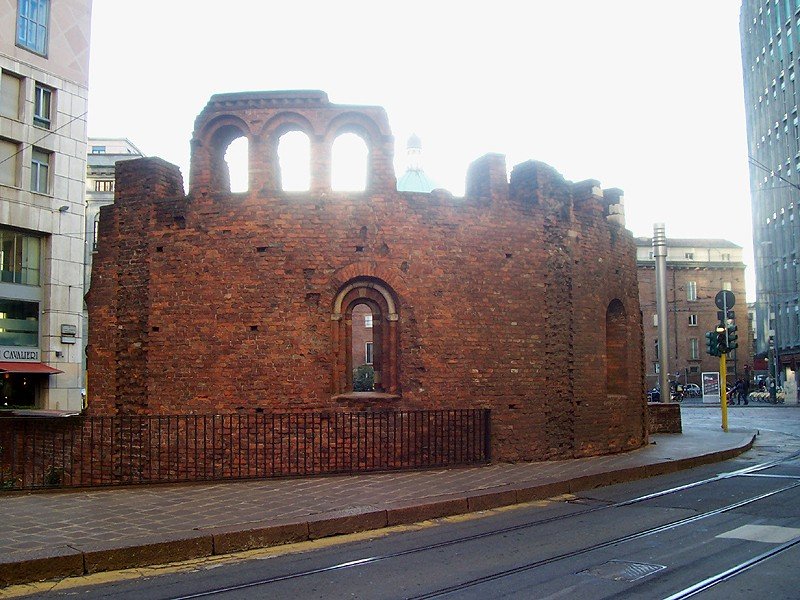
- Structural Remains: Foundation walls, pillars, and hypocaust system elements, visible in locations like Largo Corsia dei Servi and the gardens of San Vito al Pasquirolo.
- Artifacts: Statuary fragments, including a colossal marble torso of Hercules, and marble slabs from the frigidarium, now displayed in museums or integrated into later buildings (Museo Archeologico di Milano).
Where to See the Remains
- Museo Archeologico di Milano: Houses mosaics, artifacts, and interpretive displays from the baths.
- Palazzo Litta Cusini Modignani (Corso Europa 16): Contains in-situ mosaics, accessible by appointment.
- San Vito al Pasquirolo gardens: Features a preserved Roman wall segment (Wikipedia).
Visiting the Terme Erculee: Practical Information
Visiting Hours
- Museo Archeologico di Milano:
- Tuesday to Sunday, 9:00 AM – 5:30 PM
- Closed Mondays and certain holidays
- On-site remains (Largo Corsia dei Servi, San Vito al Pasquirolo gardens):
- Publicly accessible during daylight hours; no ticket required
- Palazzo Litta Cusini Modignani mosaics:
- Accessible by appointment; contact local tourism offices or the museum for details (Museo Archeologico di Milano)
Tickets
- Museo Archeologico di Milano:
- General admission €5; reduced rates for students, seniors, and free entry on select days (Museo Archeologico di Milano)
- On-site archaeological remains:
- Free of charge
Guided Tours
- Guided tours of the museum and select remains are available through the museum and local tour operators.
- Special tours may be offered during cultural festivals or events (The Tour Guy).
Accessibility
- Museo Archeologico di Milano: Fully wheelchair accessible.
- On-site remains: Street-level remains are viewable from sidewalks; some areas in private buildings or basements may not be accessible to all visitors.
Getting There
- Metro: San Babila (M1), Montenapoleone (M3)
- Tram/Bus: Several lines serve the area around Corso Europa and Piazza San Babila
- Walking: The baths are a short walk from the Duomo and other major attractions (Introducing Milan)
Nearby Attractions and Travel Tips
- Combine your visit with the Duomo, Basilica di San Lorenzo, Columns of San Lorenzo, and the Archaeological Museum.
- Dining: Enjoy Milanese aperitivo in local cafés and restaurants nearby (Italy Travel Plan).
- Best visiting times: Spring and autumn are ideal for walking tours.
- Guided walking tours offer deeper context into Roman Milan’s history.
Modern Significance
The Terme Erculee, though less monumental than some Roman ruins, remain deeply woven into Milan’s urban identity. Their legacy is visible in local place names, reused architectural fragments, and modern wellness centers inspired by Roman traditions (Lombardia Segreta). Ongoing preservation and public engagement ensure that these ancient baths continue to inform and inspire both residents and visitors.
Frequently Asked Questions (FAQ)
Q: What are the Terme Erculee visiting hours?
A: The museum is open Tuesday to Sunday, 9:00 AM to 5:30 PM. Archaeological remains in public areas are accessible during daylight hours.
Q: Do I need tickets?
A: Museum entry requires a ticket (approx. €5), but visiting the open-air remains is free.
Q: Are guided tours available?
A: Yes, through the museum and local operators. Special tours may be available during festivals.
Q: Is the site wheelchair accessible?
A: The museum and public gardens are accessible. Some ruins in private buildings may not be.
Q: How do I get there?
A: Easily accessible via Metro (San Babila, Montenapoleone), trams, and buses.
Q: Can I take photographs?
A: Yes, non-commercial photography is allowed at the ruins and in the museum.
Listen to the full story in the app
Your Personal Curator, in Your Pocket.
Audio guides for 1,100+ cities across 96 countries. History, stories, and local insight — offline ready.
Audiala App
Available on iOS & Android
Join 50k+ Curators
Sources
- verified
- verified
- verified
- verified
- verified
- verified
- verified
- verified
- verified
- verified
Last reviewed: