Introduction
The Spanish Walls of Milan, or "Mura Spagnole," are a remarkable testament to the city’s layered history, Renaissance military engineering, and urban evolution. Erected in the mid-16th century under Spanish Habsburg rule, these bastioned fortifications once formed Milan’s third and final major defensive ring, enclosing the city in a perimeter of advanced military architecture. Although much of the original system was dismantled in the 19th century during Milan’s modernization, several monumental gates and sections remain, offering visitors a compelling journey through Milan’s storied past and vibrant present.
This guide provides everything you need to explore the Spanish Walls: their origins, architectural features, cultural significance, and practical visitor information, including free access, visiting hours, accessibility, and nearby attractions. Whether you’re tracing the route on a self-guided walk, joining a guided tour, or seeking iconic photo spots, the Spanish Walls are an essential destination for history enthusiasts, architecture lovers, and curious travelers alike.
For authoritative background and visitor advice, consult sources such as the Politecnico di Milano, ItalianNotebook, and the official Milan tourism website.
Photo Gallery
Explore Spanish Walls in Pictures

Detailed black and white engraving by Antoine Aveline from around 1725 depicting Milan, Italy. The image highlights the large city known for its citadel, the notable archbishopric including St. Ambrose and St. Charles Borromeo, 22 gates, 230 churches, and significant commerce.

Detailed vintage map of Milan featured in Baedeker's Switzerland travel guide from 1881, showcasing historical city layout and landmarks.

A classic white and red Braun Milano hair dryer showcasing vintage design from the mid-20th century.

Braun Milano UBHD electric shaver featuring ergonomic design and advanced shaving technology for men's grooming
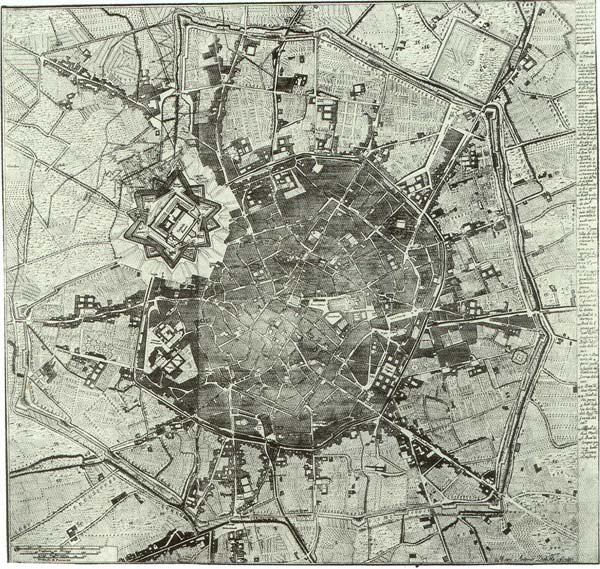
Detailed historical map of Milan created in 1734 by artist Marc'Antonio Dal Re, showcasing the city's layout and landmarks in the 18th century.

Historical 1860 map of Milan showing the Naviglio della Martesana and Naviglio di San Marco canals from north to south, including landmarks like Conca dell'Incoronata, San Marco pond, Spanish walls, and Cerchia dei Navigli canal system.

Detailed high resolution historical map of Milan created by Giovanni Brenna in 1860, published by Vallaardi in Milan.

A detailed antique map of Milan, Italy, from the year 1600 featuring historical city views, illustrations, and modern hand coloring for enhanced visual appeal.

Detailed 1832 map of Milan, Italy showcasing historical city layout and landmarks

Detailed 1573 topographical map of Milan capturing the city's layout, streets, landmarks and surrounding geography in the Renaissance period.

Detailed historical map depicting the city of Milan as it was in 1621, showcasing streets, landmarks, and city layout in early 17th century.

Detailed 1884 draft of Milan urban plan created by engineer Cesare Beruto showing city layout and infrastructure design.
Historical Origins and Construction
The Spanish Walls were constructed beginning in 1548, after the Spanish Habsburgs gained control of Milan in 1535. Their design responded to evolving military technology, particularly the advent of powerful artillery. Stretching approximately 11 kilometers, the walls replaced earlier Roman and medieval fortifications and included twelve monumental gates (porte) and numerous smaller posterns (pusterle). Built of brick, earth, and stone, and reinforced with deep moats and angular bastions, these fortifications were state-of-the-art for their era (ItalianNotebook).
Architectural Features and Urban Impact
The walls’ bastioned design was both defensive and influential in shaping Milan’s urban fabric. Key gates—such as Porta Romana, Porta Venezia, and Porta Ticinese—served as both fortifications and ceremonial entrances. The line of the walls is still visible in modern Milan, especially in the Cerchia dei Bastioni ring roads and the city's street patterns (Politecnico di Milano). Remnants of embankments, ramparts, and gates are integrated into contemporary parks, gardens, and neighborhoods.
Historical Evolution and Demolition
By the 19th century, the Spanish Walls became obsolete due to military advances and the city’s expansion. The Beruto Plan of 1889 initiated the dismantling of large sections, making way for new boulevards and neighborhoods. Despite this, the spatial organization established by the walls—visible in the Cerchia dei Bastioni and the positioning of historic gates—continues to shape Milan’s urban landscape (Politecnico di Milano).
Visiting the Spanish Walls: Practical Information
Location and Access
The Spanish Walls’ remnants and historic gates—Porta Romana, Porta Venezia, Porta Ticinese, and Porta Nuova—form a rough ring around central Milan.
- Metro: M3 (Yellow) line for Porta Romana; M1 (Red) and M2 (Green) lines for Porta Venezia.
- Tram: Lines 3 and 9 for Porta Ticinese.
- Walking/Cycling: The gates are within walking and cycling distance from central Milan. BikeMi bike-sharing services are available.
Visiting Hours
The walls and gates are outdoor historical monuments integrated into public spaces. They are accessible year-round, 24/7. For safety and best experience, visit during daylight hours.
Tickets and Entry
There are no entrance fees for visiting the Spanish Walls or gates, as these are open-air sites. Some museums or guided tours in the vicinity may have admission fees.
Guided Tours
Local operators offer historical walking and cycling tours focusing on the Spanish Walls and Milan’s broader fortifications. Prices generally range from €10 to €25 per person, depending on duration and inclusions. For updated schedules, see the official Milan tourism website.
Accessibility
Most gates and public spaces along the walls are accessible, though some cobblestone streets and older structures may present challenges for visitors with limited mobility. Milan’s public transportation system is equipped with elevators and ramps at major stations.
Key Sites and What to See
Porta Romana
The best-preserved gate from the Spanish Walls era, Porta Romana features an imposing arch commemorating Emperor Charles V’s entry. The surrounding Piazza Medaglie d’Oro and nearby ramparts offer tangible connections to the city’s defensive past.
Porta Venezia
Once the main eastern gate, Porta Venezia is now a neoclassical landmark surrounded by gardens and Art Nouveau architecture. The adjacent Giardini Pubblici Indro Montanelli is a popular spot for relaxation.
Porta Ticinese
This southwestern gate, rebuilt in the 19th century, marks the entry to the vibrant Navigli district. Nearby, the Darsena (historic dock) and the Basilica di San Lorenzo offer additional points of interest.
Porta Nuova
The original gate is no longer standing, but the area now showcases Milan’s contemporary architecture. The contrast between the historic route and modern skyscrapers is striking.
Viale Monte Nero and Viale Vittorio Veneto
These avenues feature small public gardens and preserved fragments of the Spanish Walls, blending green spaces with history.
Suggested Walking Route
A self-guided walking or cycling tour of the Cerchia dei Bastioni (approximately 11 km) allows visitors to trace the route of the Spanish Walls:
- Start at Porta Romana: Explore ramparts and nearby cafes.
- Continue to Porta Venezia: Enjoy the gardens and vibrant city life.
- Pass through Viale Monte Nero and Viale Vittorio Veneto: Relax in green spaces with wall remnants.
- Reach Porta Ticinese and the Navigli district: Experience the lively canal-side atmosphere and local dining.
- Conclude at Porta Nuova: Observe the fusion of history and modernity.
All major points are accessible via public transport, and the route passes through several of Milan’s most atmospheric neighborhoods.
Best Times to Visit
- Ideal Months: April–June and September–October, when temperatures are mild (18–24°C/64–75°F) and crowds are lighter.
- Avoid: August, as many businesses close for holidays and the weather can be uncomfortably hot.
- Photography: Early morning or late afternoon ("golden hour") offers the best lighting for photos.
Amenities and Facilities
- Public Toilets: Available in major squares and metro stations (usually for a small fee).
- Food & Drink: Numerous cafes, bakeries, and restaurants along the route.
- Shopping: Boutique stores and markets, especially near Porta Venezia and Porta Romana.
- Maps: Interactive maps and virtual tours are available online and at tourist information centers.
Safety and Etiquette
- Milan is generally safe; use standard precautions against pickpockets in crowded areas.
- Respect the historic structures—do not climb or deface the walls or gates.
- Photography is encouraged but be considerate of local residents.
Preservation and Sustainability
Help preserve Milan’s heritage by disposing of litter responsibly, avoiding damage to historic structures, and supporting local businesses. Participating in certified guided tours helps fund ongoing conservation efforts.
Frequently Asked Questions (FAQs)
Q: What are the visiting hours for the Spanish Walls of Milan?
A: The walls and gates are accessible year-round, 24/7, as outdoor public monuments. Daylight visits are recommended.
Q: Is there an entrance fee?
A: No, visiting the Spanish Walls and gates is free.
Q: Are guided tours available?
A: Yes, several operators provide guided walking and cycling tours, typically costing €10–€25.
Q: How do I reach the Spanish Walls via public transport?
A: Metro and tram lines serve all major gates. For example, Porta Romana (M3), Porta Venezia (M1/M2), and Porta Ticinese (tram 3/9).
Q: Are the Spanish Walls accessible for visitors with limited mobility?
A: Most sites are accessible, though some areas have uneven surfaces. Milan’s public transport provides accessibility features at major stations.
Integrating the Spanish Walls into Your Milan Itinerary
Combine your exploration of the Spanish Walls with other top attractions such as the Duomo di Milano, Sforza Castle, and the Navigli canals for a comprehensive experience. The route’s proximity to lively neighborhoods ensures easy access to dining, shopping, and cultural venues.
For enhanced guidance, consider downloading the Audiala app for maps, audio tours, and up-to-date advice on Milan’s historical sites. Stay connected via social media for event updates and travel inspiration.
Listen to the full story in the app
Your Personal Curator, in Your Pocket.
Audio guides for 1,100+ cities across 96 countries. History, stories, and local insight — offline ready.
Audiala App
Available on iOS & Android
Join 50k+ Curators
Last reviewed: